1. Background
Vitiligo is a disorder that leads to the loss of epidermal melanocytes (1). Pigment cell destruction in different individuals can occur by several mechanisms including autoimmune phenomena, genetic disorder, the defect of free radical defense, accumulation of neurochemicals, and chemical substances (4-tertiary butyl phenol), psychological factors, and internal deficiency in melanocytes function. Recently, the role of vitamin D in the pathological mechanism of vitiligo and its probable effect on the treatment of the disease has received more attention (2). Autoimmunity plays an important role in pathogenesis of vitiligo, and it has been found that many autoimmune disorders are associated with low vitamin D levels.
Vitamin D can control the activation, proliferation, and migration of melanocytes. It can also regulate activation of T cells and reduce the damage to autoimmune melanocytes (3). The exact mechanism of NBUVB function in vitiligo is unknown. NBUVB treatment has 2 steps. Firstly, the local and systemic immune systems are balanced against the melanocytes, then, the melanocytes are stimulated to migrate towards epidermis and to make melanin. NBUVB leads to increased synthesis of IL1, TNFα, LTC4, and these cytokines cause mitogenesis of the melanocytes, melanogenesis, and migration of the melanocytes (4).
UVB (ultraviolent beam) in the range of 280 to 320 could convert the 7-dehydrocholesterol to vitamin D3. Moreover, several studies have shown that UVB increases the serum vitamin D levels (5). Vitamin D may cause immature melanocytes to produce melanin in the hair follicle bulge by stimulating distinction between them and the effect on the endothelin receptor type B (6). The present study aimed at investigating the relationship between the rate of recovery of patients with their increased vitamin D levels compared to the base value.
2. Objectives
Due to the high incidence of vitiligo in our society and its social and economic problems, we decided to conduct this study in the Iranian society to find the relationship between vitamin D levels and vitiligo disease.
3. Methods
3.1. Study Design and Population
This clinical trial was conducted on 30 patients with generalized vitiligo (less than 30% body surface), with no age and gender limitation, and with equal number of age and gender matched controls, who were referred to Imam Khomeini hospital from April 2015 to March 2016. This study was approved by the ethics committee of Ahvaz Jundishapur University of Medical Sciences, and all patients signed an informed consent prior to enrollment.
3.2. Inclusion Criteria
Patients with generalized vitiligo (less than 30% body surface), with no age and gender limitation, were included in the study.
3.3. Exclusion Criteria
1, Patients treated for vitiligo within 2 recent months; 2, those with concurrent diabetes mellitus; 3, thyroid disorder; 4, skin tumors; 5, other malignancies; 6, photosensitivity, 7, taking drugs of photosensitivity; and 8, accounts of previous intolerance or failure of phototherapy.
3.4. Patients
In this study, 35 patients with generalized vitiligo (less than 30% body surface), with no age and gender limitation, were enrolled.
3.5. Vitamin D Measurement
Vitamin D level was measured by Electrochemiluminescence (ECL) (7). Of the individuals, 30 were selected as the control group, without restrictions on age and gender, and the level of 25 (OH) D was measured as a basis. We selected the control group from healthy people who referred to the dermatology department of Imam hospital for a check-up.
3.6. NBUVB Phototherapy
In vitiligo patients, 25 (OH) D was measured at baseline and after 30 NBUVB therapy sessions. During our study, patients did not receive any vitamin D supplement.
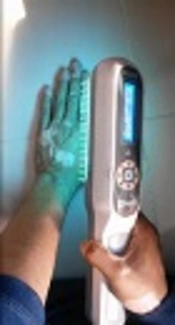
NBUVB phototherapy was given using Waldmann UV 1000 L (TL 01) machine.
3.7. Intervention
The intervention group received an initial dose of 0.3 J/cm2, the minimum dose, which makes erythema conditions, and then, it was increased to 20% in each visit until erythematous conditions subside. In the case of symptomatic erythematous skin, such as burning or pain and blister, we discontinued the phototherapy until the symptoms improved. We considered each unit of depigmented hand area as 1%.
The radiation dose for this subgroup was 20% less than the dose of radiation, which may create erythema or blister, and the dose increased by 10% in each session. The NBUVB phototherapy was given twice a week. Genitalia and eyes were covered to be protected against radiation. The VASI (Vitiligo Area and Severity Index) was measured to assess the response of vitiligo to NBUVB therapy at baseline and at the end of the study.
3.8. Outcome Measures
Levels of 25 (OH) D and VASI were calculated at 0 (baseline) and after 30 sessions of NBUVB therapy. Baseline [25 (OH) D] levels were measured in controls. The following formula was used to calculate the VASI.
VASI = ∑ (hand unit) × residual depigmentation (2).
The evaluation of depigmentation in a vitiligo patch is presented in Table 1.
Table 1.
Evaluation of Depigmentation in a Vitiligo Patch
| Clinical Evaluation of Pigmentation | Depigmentation’s Percentage |
|---|---|
| No pigment is present. | 100% |
| Specks of pigment are present. | 90% |
| Depigmented area exceeds the pigmented area. | 75% |
| Depigmented and pigmented are equal | 50% |
| Pigmented area exceeds the depigmented area. | 25% |
| Only specks of depigmentation are present. | 10% |
3.9. Statistical Analysis
Statistical analyses were conducted using SPSS Version 22 (statistical package for the social sciences, version 22, SPSS Inc., Chicago, Illinois, USA). Quantitative variables were summarized with mean ± SD, and the categorical and nominal variables were presented with frequency (percentage). A P value less than 0.05 was considered statistically significant. Spearman’s correlation (ρ) and t test were used for statistical analysis and statistical significance was set at P value ≤ 0.05.
4. Results
In this study, 30 patients with vitiligo and 30 healthy participants were evaluated. A total of 5 patients left the study because of immigration. In the patient group, 12 cases (40%) and in the control group 11 (36.7%) were male (Table 2). The mean age of the patient group was 36.93 ± 14.5 (range: 7 - 72), and it was 32.03 ± 15.08 years (range: 13 - 68) in the healthy group (Table 2). We observed that neither the patient group, nor the healthy group had a history of underlying diseases. At baseline, the mean score of vitamin D level in the patient group was 15.30 ± 14.65 nmol/L, and it was 10.71 ± 6.51 nmol/L in the control group, indicating a statistically significant difference (P = 0.01). The end-of-treatment average of vitamin D in the patient group was 25.96 ± 13.03 nmol/L, which was significantly higher than its baseline value (P = 0.03). The Pearson correlation between baseline and end-of-treatment values of vitamin D levels was 0.39.
Table 2.
Demographic Variables of Patient and Control Groupsa
| Variables | Values | P Value | ||
|---|---|---|---|---|
| Vitiligo Group | Healthy Group | |||
| Age, mean ± SD (range), years | 36.93 ± 14.5 (range: 7 - 72) | 32.03 ± 15.08 years (range: 13 - 68) | ||
| Gender | P1 | P2 | ||
| Male | 12 | 11 | ||
| Female | 18 | 19 | ||
| Mean Vit D level base line | 15.30 ± 14.65 nmol/L | 10.71 ± 6.51 nmol/L | 0.01 | 0.03 |
| End of treatment | 25.96 ± 13.03 nmol/L | |||
aP1, significant level between baselines in vitiligo vs. healthy group; P2, significant level between baselines and end of treatment vitiligo group.
In the patient group, 14 patients (46.7%) had vitamin D deficiency of (vitamin D level ≤ 10 nmol/L), 13 (43.3 %) inadequate vitamin D (vitamin D level range: 10 - 29 nmol/L), and 3 (10%) sufficient vitamin D (vitamin D level range: 30 - 100 nmol/L), while in the control group, 18 participants (60%) had vitamin D deficiency, 10 (33.3%) insufficient vitamin D, and 2 (6.7%) sufficient level of vitamin D (Table 3).
Table 3.
A Comparison Between Vitamin D Levels in Two Groups of Vitiligo and Healthy Individuals at Baseline Levels of 25 (OH) in the Vitiligo Patients and the Controlsa
| Vitiligo Group | Healthy Group | P Value | |||
|---|---|---|---|---|---|
| P1 | P2 | ||||
| Vitamin D level | Baseline | End of treatment | Baseline | 0.579 | 0.03 |
| Deficient (< 10 nmol/L) | 14 persons (46.7%) | no person | 18 persons (60%) | ||
| Insufficient (10 - 29 nmol/L) | 13 persons (43.3%) | 22 persons (73.3%) | 10 persons (33.3%) | ||
| Normal (30 - 100 nmol/L) | 3 persons (10%) | 8 persons (26.7%) | 2 persons (6.7%) | ||
aP1, significant level between baselines in vitiligo vs. healthy group; P2, significant level between baselines and end of treatment vitiligo group.
Table 4 presents the serum vitamin D level at baseline and end-of-treatment and also its correlation with the VASI score. The mean area of the VASI score at baseline (8.61 ± 7.76) was significantly higher than its value at the end-of-treatment (3.81 ± 3.99) (P < 0.0001). Serum vitamin D level had a significant correlation neither at baseline (ρ = -0.3; P value = 0.875), nor at the end-of treatment (ρ = 0.147; P value = 0.439), with the VASI score. The mean score of serum vitamin D level increased significantly at the end-of-treatment (25.96 ± 13.03 nmol/L) compared with baseline (15.30 ± 14.65 nmol/L) (P < 0.0001).
Table 4.
Serum Vitamin D Level at Baseline and at the End-of-Treatment and Its Correlation with VASI Score in the Patient Group
| Vitamin D Level | VASI Score | Correlation Coefficient (ρ) | P Value | |
|---|---|---|---|---|
| Baseline | 15.30 ± 14.65 nmol/L | 8.61 ± 7.76 | -0.3 | 0.875 |
| End-of-treatment | 25.96 ± 13.03 nmol/L | 3.81 ± 3.99 | 0.147 | 0.439 |
Abbreviations: 25(OH)D, 25-hydroxyvitamin D; β, beta; ECL, electrochemiluminescence; IL, interleukin; LTC4, leukotriene C4; NBUVB, narrow band ultraviolet bean; PG, prostaglandin; SD, standard deviation; SPSS, statistical package for the social science; TNFα, tumor necrosis factor Alfa; UV, ultra violets; VASI score, vitiligo area and severity index.
5. Discussion
Vitiligo is an acquired common skin disorder that occurs with the loss of skin pigmentation due to a decrease in melanin pigment, which is caused by destruction of melanocytes (8). To date, different theories have been presented about the destruction of melanocyte cells in vitiligo including autoimmune, neurogenic, and metabolic theories (9, 10). Some of the involved factors include imbalances of calcium, Apa1polymorphism of vitamin D receptor, and low levels of serum vitamin D (2). Patients underwent NBUVM therapy 2 times a week for 15 weeks. We measured vitamin D at weeks 0 and 15 (30 sessions) 2 times a week.
Patients undergoing NBUVB therapy showed an increase in serum vitamin D level. However, molecular studies have demonstrated that vitamin D increases the contents of tyrosinase of melanocytes and causes immature melanocytes to produce melanin in the bulge of hair follicle. Therefore, vitamin D modifies melanogenesis in cell surface (2).
Since the circulating levels of 25 (OH) vitamin D change with any changes in the successful therapeutic sessions of NBUVB and because its surface is associated with clinical repigmentation, we became interested in conducting this study.
In our study, the average primary vitamin D in the patient group was 15.30 ± 14.65, and it was 10.71 ± 6.51 in the control group; and the relationship was significant (P value = 0.01). In this regard, the average vitamin D in the patient group was higher than that of the control group, which was inconsistent with the study conducted by Manu S et al. In India, the average vitamin D in the patient group was significantly less than the control group (2). Vitamin D deficiency may be associated with inadequate nutrition and geographic issues; however, the level of 25 (OH) D was not associated with the onset of vitiligo in our society, which is consistent with the study conducted by Xin X in China (11).
We found no correlation between level of serum vitamin D and the VASI score at baseline and at the end-of the treatment. This finding is consistent with a previously published study (11). The present study found that the NBUVB therapy could increase vitamin D level significantly compared with baseline, which confirmed the findings of previous studies (5, 12).
In any case, the role of TNFα and IL1 in melanogenesis is controversial and it has been seen in some studies. Englaro et al. found that TNFα inhibits the incidence and activity of tyrosinase, which is a key enzyme in melanin synthesis. The inhibition of melanogenesis by TNFα is secondary to nuclear factor-KB activation. IL1 causes stimulation of the synthesis of endothelin-1, which plays a role in mitogenesis and melanogenesis. Paradoxically, IL-1α reduces the proliferation of melanocytes and melanogenesis, while IL-1β reduces the tyrosinase activity on melanocytes without any effect on their proliferation. Imokawal et al. revealed that the incidence of endothelin-1, IL1, and tyrosinase in the human keratinocytes increases after UVB therapy in in vitro and in vivo, indicating the role of a possible mechanism in the repigmentation. Another mechanism of phototherapy is the release of PGE2 and pGF2. PGE2 is made in the skin, develops the performance of the melanocytes, regulates the Langerhans cells, and develops mitogenesis of melanocytes (4).
Level of vitamin D decreased after treatment in 3 patients (2 males and 1 female) with the initial normal level of vitamin D, which was at the normal range for male patients, but it was inadequate in the female patient; and this was consistent with previous studies (13, 14).
Such a similar relationship in response to 25 (OH) D to radiation and its relationship with initial level of 25 (OH) D in a study is seen in our sun bed in healthy individuals as well, but it was not associated with body mass index, oral intake of vitamin D, and gender. Furthermore, it was found that when 25 (OH) D level reaches above 100 mol /L, 24-hydroxylase synthesis also increases and 25 (OH) D is inactivated. Only 10% to 15% of the 7-Dehydrocholesterol can be converted into the previtamin D in response to sunlight. Some believe that only 7% of 7-Dehydrocholesterol can be converted into the previtamin D. Thus, it seems that the availability of the substrate may be variable: people with a base level lower than 25 (OH) D, which could also increase in response to UVB, have more availability of substrate compared to those with a higher base level of 25 (OH) (13).
In our study, the average area of secondary involvement (VASI Score) in patients was lower than the initial average area of involvement, indicating the effectiveness of NBUVB therapy in the treatment of vitiligo, which is consistent with previous studies (2, 15).
In accordance with previously published studies, current findings revealed that VASI score at the end-of-treatment decreased significantly compared with baseline. The results indicated that this decline in VASI score was attributed to the effectiveness of NBUVB therapy and increasing the serum vitamin D level, which can be used as adjunct therapy in association with NBUVB therapy.
In conclusion, NBUVB therapy is an effective and safe method for treating vitiligo and can be considered as an appropriate method for targeted patients. We found that vitamin D alone cannot clinically improve vitiligo, and perhaps it can be used as adjuvant therapy to reach the desired results more rapidly. As a final point, to make a better judgment on the role of vitamin D in the treatment of patients with vitiligo, conducting similar studies with larger sample size and long periods are highly recommended.