There are several classes of toxins in nature that are harmful to human health. Furthermore, synthetic materials may exert similar toxic effects on the human body. BPA is a toxic substance used in various industries to produce polycarbonate plastics. BPA is the commonly used name for 4’4-isopropylidenediphenol (CAS NO.80-05-7) with the molecular weight of 228.29 g/mol and chemical structure of C
15H
16O
2. BPA could enter the body via digestive, respiratory, and dermal tracts (
23), mimicking the effects of natural estrogen derived from the similarity of phenol groups on BPA and estradiol, which enable this synthetic molecule to trigger estrogenic pathways in the human body.
Typically, the phenol-containing molecules that are similar to BPA exert weak estrogenic effects and act as endocrine disruptors, exhibiting estrogen-like and anti-androgen properties and causing damage to various tissues and organs, including the reproductive system (
23). Epidemiological evidence confirms that the reproductive system is a vital target organ of BPA, the primary effects of which are interrupting the exertion and activity of sex hormones and influencing the development and function of the reproductive system. According to the literature, BPA could increase estradiol, progesterone, serum luteinizing hormone, and testosterone levels. BPA has also been shown to reduce sperm quality, sexual function, and even the fertility rate (
24).
Today, human societies tend to plant elements and extracts for disease treatment and protection against the debilitative effects of chemical drugs. On the other hand, pharmaceutical companies have defined numerous drugs based on herbal elements. Herbal medicines have no similar side-effects to chemical medicines and also contain a high percentage of natural antioxidants (
25). BROM is an enzymatic extract derived from the stems of pineapples and has a history of folk medicine use. As an ingredient, it is used in cosmetics, medication, and meat tenderizers. BROM has numerous therapeutic benefits for conditions such as angina pectoris, bronchitis, sinusitis, surgical trauma, thrombophlebitis, wound debridement, and improving the absorption of drugs, particularly antibiotics. It also relieves osteoarthritis, diarrhea, and various cardiovascular disorders. BROM also possesses anti-cancer activities and promotes apoptotic cell death (
26). BROM contains various thiol endopeptidases and other components such as phosphatases, glucosidase, peroxidases, cellulases, glycoproteins, carbohydrates, as well as several protease inhibitors.
The medicinal properties of BROM are attributed to the combination of sulfur-containing protein-digesting enzymes known as proteolytic enzymes or proteases and several other substances in smaller quantities. Other substances typically include peroxidase, acid phosphatase, protease inhibitors, and calcium. The potency of BROM is rooted in its enzymes and proteins, which stimulate chemical activities in the body (
27). In the present study, the therapeutic effects of BROM were observed on the testicular damages induced by BPA. Furthermore, the antioxidant properties of BROM could ameliorate the debilitative damages to the male reproductive system.
Numerous articles have cited the three main biological effects of BROM, which are anti-inflammatory, proliferative (
28), and antioxidant effects (
22). In addition, some studies have demonstrated the anti-proliferative effects of this extract on cancer cells (
29). Substances with antioxidant properties cause the generation of free radicals. Following contact with toxins and pathological substances such as BPA, the normal and physiological activities of the entire cell are disrupted, and lipid peroxidation occurs. In these cases, cell membranes such as plasma membranes, nuclear membranes, and mitochondria are prone to damage (
30). With plasma membrane disintegration, cell cohesion is completely lost, thereby leading to premature cell death. If there is an abnormality in the membrane of organs such as mitochondria, the leakage of enzymes into the matrix of this organ occurs, thereby leading to the onset of apoptosis. These pathological processes could eventually cause cell death and decrease the number of tissue-active cells, thereby reducing the size and weight of the tissue over time (
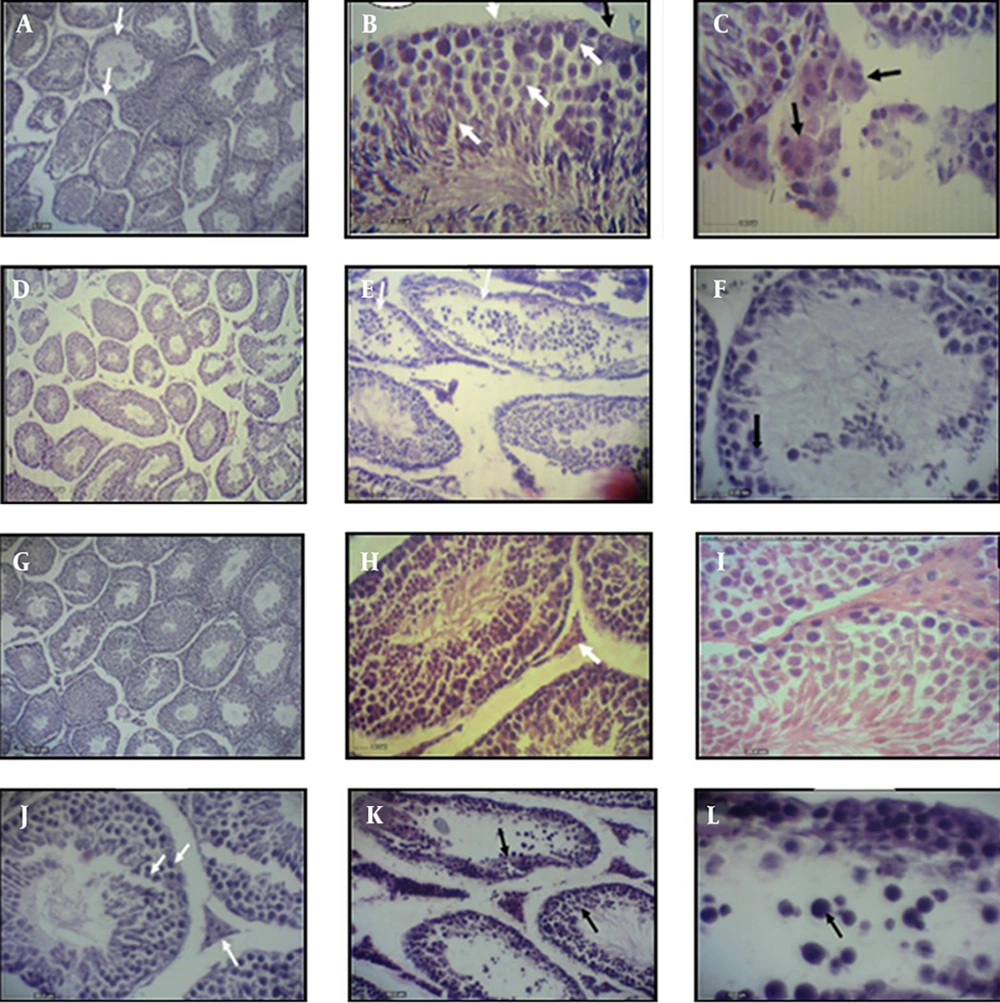
31). In the current research, the density of Leydig cells and the spermatogenic lineage and the production of sperm cells in the lumen of the seminiferous tubules showed a descending trend.
Plant-based medicinal extracts contain various effective antioxidants. These enzymatic substances reduce the antioxidant level of cells via two main pathways; antioxidants either act inherently by removing the active oxygen species and oxidative mediators or activate the intracellular antioxidant system to eliminate harmful agents (
32). With its inherent antioxidant properties, BROM increases cell viability. This plant substance also helps eliminate antioxidants by activating intracellular enzymes through antioxidant properties. By reducing the oxidative level of cellular ester, the rate of apoptosis reduces, and the necessary opportunity for cell repair is provided. BROM also stimulates tissue repair by providing stable conditions and cell life (
22).
Inflammation is a physiological process that increases blood flow to the tissues and lymphocyte infiltration for organ repair. Although inflammation is a physiological process, it uses mechanisms causing tissue damage in some cases (
33). During the inflammatory process, the amount of the cytokines secreted by macrophages increases, thereby inducing apoptosis in parenchymal tissue cells. Extensive apoptosis following tissue inflammation could also increase the rate of cell death and decrease the weight and size of the organs. Using BPA with the onset of inflammation in the tissue leads to the mentioned pathological processes.
According to the current research, the exposure of healthy cells in the body to BPA reduced the testicular size and sperm production of the animals. The anti-inflammatory properties of BROM have been confirmed in several studies (
28). BROM inhibits inflammation by inhibiting lymphocyte infiltration and inhibiting the presence of macrophages and their cytokine secretions, in which case the rate of cell apoptosis reduces, and the spermatogenic lineage is maintained to produce healthy and abundant sperm cells.
After the tissue damage caused by exposure to toxic substances such as BPA, cell density in tissue decreases. Therefore, the optimal alternative to compensating for tissue cell deficiency is the use of natural materials with proliferative properties. Several studies have highlighted the proliferative properties of BROM (
34). BROM increases cell division by employing intracellular mechanisms, thereby increasing the density of the loose connective tissue cells containing Leydig cells, as well as the density of the spermatogenic lineage cells. With the proliferation of Leydig cells after using BROM, blood testosterone levels rise to normal levels. As a result, Sertoli cells are affected, and the spermatogenic lineage begins to proliferate. Following the consumption of BROM in the present study, the rate of cell density in the interstitial tissue and Leydig and Sertoli cells of the animals increased. Moreover, the spermatogenic lineage proliferated and increased sperm production. The high rate of cell proliferation could be attributed to the mitogenic properties of the administered BROM extract.
5.1. Conclusions
According to the results, BPA had detrimental effects on the spermatic cell lineage, which decreased sperm production and subfertility levels. On the other hand, the anti-oxidative properties of BROM resulted in the repair of the induced reproductive damage in the animals. The therapeutic properties of this herbal agent also induced the proliferation of various cell types, including Leydig cells, the spermatogenic lineage, Sertoli cells, and sperms. Therefore, BROM could be used as a natural antioxidant to ameliorate testicular damage and enhance fertility in BPA-induced male toxicity.