
1. Background
Cardiovascular diseases are the most common cause of death worldwide (1). As the final result of all heart diseases, heart failure is a major global health problem with a prevalence of 5.8 million per year in the United States, over 23 million worldwide, and a 5-year mortality of over 75% (2). In Iran, heart diseases are among the most important causes of death. According to the statistics of the Iranian Ministry of Health, more than 46% of deaths in Iran are due to this disease (3). Cardiac patients should be continuously cared for, and cardiac rehabilitation within the framework of regular exercise acts as an essential component of a comprehensive secondary prevention program that can reduce cardiac mortality by 25 - 50% (4). The rate of left ventricular ejection fraction is the most critical factor in the prognosis of patients after coronary artery bypass surgery (CABG), heart failure, especially systolic heart failure, and is an index by which the degree of failure is measured. The main goal of rehabilitation programs is to improve this index (4). Cardiac rehabilitation with targeted efforts focused on exercise, lipid control, hypertension control, and smoking cessation can reduce cardiovascular mortality (5). However, rehabilitation services are lower than expected. Various data in the United States indicate that only 31% of qualified patients who have undergone coronary artery bypass surgery participate in rehabilitation programs. According to studies, this value is less than 15% in Iran. A reason can be the lack of correct knowledge of cardiac rehabilitation’s very beneficial therapeutic effects (6). Despite many studies in the field of rehabilitation, neglecting heart failure leads to heart surgery (7, 8).
Other studies have shown the effect of cardiac rehabilitation on heart function and emphasized that exercise has a unique role in increasing the functional capacity, heart function, and quality of life of heart failure patients due to its low cost (9, 10). Although there have been many studies about the effects of exercise, there has yet to be a consensus about the intensity, duration, and especially the type of exercise program. Safikhani et al. (11) reported that resistance and combined exercise had no significant effect on heart systolic function. However, Omidi et al. reported that the development of aerobic exercises on the systolic part of the heart is practical, but they do not affect the diastolic function (3, 12). Inconsistencies and little domestic research compare combined and aerobic exercise in heart failure patients following coronary artery bypass surgery.
2. Objectives
In this study aimed to compare the effect of eight weeks of combined and aerobic training on the systolic function of the heart in heart failure after coronary artery bypass surgery.
3. Methods
In this clinical trial, 30 middle-aged male patients (50 - 60 years), who were admitted to the Imam Ali Heart Hospital of Kermanshah, Iran, and underwent coronary bypass surgery more than eight weeks ago with contractile function below 50%, were divided into three groups of 10 people. In the first group, the control group includes patients who are inactive and do not want to do the rehabilitation program or do the rehabilitation in the later stages. The second group underwent a combined resistance and aerobic training protocol, and the 3rd group underwent an aerobic training protocol alone.
Before entering the study, the subjects underwent a complete examination by a cardiologist and sports medicine physician and did not have any limiting factors such as smoking, orthopedic problems, advanced diabetes, and advanced peripheral vascular disease. They were completely cardiac stable and pain-free and gave informed consent. After the initial evaluation, a cardiologist and sports medicine specialist recorded history and physical activity records. In addition, a trained nurse’s date of admission to rehabilitation, cardiovascular risk factors, and medications taken was reported. People were thoroughly examined on the day of entering the study. After 20 minutes of complete rest in a sitting position, their vital signs, including blood pressure and pulse, were checked. Comprehensive echocardiography was performed with a 7 Vivid device in the United States by the same cardiologist in all stages. The LVEF of the patients was accurately calculated using the Simpson method.
The aerobic protocol for the patients included 24 exercise sessions, three sessions per week. Each session had a 10-minute warm-up in the form of soft movements, stretching, and fast walking. Then there were 20 - 30 minutes of running on the Cosmos rotating treadmill made in Germany with an intensity of 70% of the maximum heart rate, followed by cooling down by walking on the treadmill for 10 minutes. The considered combination protocol includes aerobic exercise, as described above. Then, for 20 minutes, resistance exercise was performed with the opinion of a sports medicine specialist in the form of upper limb strengthening exercises (deltoid and pectoralis major muscles) and lower limb strengthening exercises (hamstrings and quadriceps muscles) in three sets with ten repetitions. A minute of rest between sets started at 50% of 1RM. Every two weeks, it increased by 10% to 80% of 1RM, and after each session, there was a 5-minute cool down with stretching exercise.
3.1. Exclusion Criteria from the Research
Development of new symptoms or illness, voluntary withdrawal, and absence of more than two training sessions.
3.2. Population and Statistical Sample
The population included 30 male patients aged 50 - 60 with heart failure admitted to Imam Ali Hospital in Kermanshah, Iran, who were randomly selected. Eight weeks have passed since their coronary artery bypass surgery, and their ejection fraction was below 50%. The population was divided into three groups of 10: Control, mixed and aerobic.
3.3. Data Analysis
The data were imported to SPSS software version 22, and descriptive statistics, including mean and standard deviation, were used. The Shapiro-Wilk test was utilized for quantitative data and the normality of data distribution. A one-way analysis of the statistical variance test was used to compare significant differences in three groups, and Tukey’s post hoc test was used to compare two groups. A significance level of 5% has been considered for all tests (P < 0.05).
4. Results
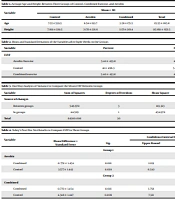
Table 1 shows the average age and height between 3 groups of control, combined exercise, and aerobic training. These variables do not change due to the intervention. Therefore, in this table, three groups are compared. An Independent t-test was used to compare age and height.
Table 1.
Average Age and Height Between Three Groups of Control, Combined Exercise, and Aerobic
| Variables | Mean ± SD | P-Value | |||
|---|---|---|---|---|---|
| Control | Aerobic | Combined | Total | ||
| Age | 7.55 ± 539.5 | 8.54 ± 193.7 | 3.56 ± 173.5 | 25.55 ± 265.6 | 757.0 |
| Height | 7.169 ± 229.5 | 2.170 ± 321.6 | 2.171 ± 361.4 | 95.169 ± 652.5 | 849.0 |
Table 2 presents the average of the variables along with SD and SEM before and after the intervention for the groups. These variables can change due to the intervention, so they were checked before and after.
Table 2.
Mean and Standard Deviation of the Variables after Eight Weeks in the Groups
| Variable | Pre-test | Post-test |
|---|---|---|
| LVEF | ||
| Aerobic Exercise | 5.42 ± 433.6 | 47 ± 164.5 |
| Control | 41 ± 496.3 | 5.43 ± 581.1 |
| Combined exercise | 5.40 ± 433.6 | 47 ± 134.4 |
4.1. Inferential Statistics
In this section, the Shapiro-Wilk test was used to check the data distribution, and the data had a normal distribution in the groups (P = 0.65). Then, Levene’s test was used to check the homogeneity of variances; the variances of the groups were homogeneous (P = 0.09). According to the above two conditions, a one-way analysis of variance was performed to compare the results between groups, and then Tukey’s post hoc test was used to compare the two groups.
Table 3 indicates a significant difference between the groups (P = 0.000) by one-way analysis of variance to compare the results in the control and intervention groups for the LVEF variable.
Table 3.
One-Way Analysis of Variance to Compare the Mean LVEF Between Groups
| Variable | Sum of Squares | Degrees of Freedom | Mean Square | F | P-Value |
|---|---|---|---|---|---|
| Source of changes | |||||
| Between groups | 549.970 | 3 | 183.323 | 17.651 | 0.000 |
| In groups | 44.529 | 1 | 454.970 | ||
| Total | 64300.000 | 30 |
Tukey’s test was used to compare two groups. The results of paired tests showed no significant difference between aerobic and aerobic-resistance training before and after (P = 0.6). However, these two groups significantly differ from the control group (P = 0.02, P = 0.006) (Table 4).
Table 4.
Tukey’s Post Hoc Test Results to Compare LVEF in Three Groups
| Variable | Mean Difference ± Standard Error | Sig. | Confidence Interval for Difference 95% | |
|---|---|---|---|---|
| Upper Bound | Lower Bound | |||
| Group 1 | ||||
| Aerobic | ||||
| Combined | -0.770 ± 1.454 | 0.601 | 2.219 | -3.758 |
| Control | 3.577 ± 1.443 | 0.020 | 6.542 | 0.611 |
| Group 2 | ||||
| Combined | ||||
| Combined | 0.770 ± 1.454 | 0.601 | 3.758 | -2.219 |
| Control | 4.346 ± 1.447 | 0.006 | 7.321 | 1.372 |
5. Discussion
The results showed that the systolic function of the heart in heart failure patients improved significantly in the groups with regular aerobic and combined training, unlike the control group. Despite the higher recovery rate in the combined training group, there was no significant difference between the two experimental groups. In line with the present study, in Haykowsky et al., the recovery effects of aerobic exercise were mentioned as equivalent to the impact of drugs that inhibit the angiotensin-renin-aldosterone system and even comparable to the treatment with three-chamber coordinator (CRT) (13). Basati et al., Belardinelli et al. (12, 14), Behzad Khameslo et al., and Omidi et al. reported an increase in cardiac ejection fraction after aerobic exercise in heart failure patients after coronary artery bypass surgery (3, 15). Some other studies have shown that resistance and combined exercise increase the systolic performance of the heart (16, 17). In Safikhani et al. (11), although combined and aerobic exercises increased functional capacity, they did not significantly affect the systolic performance of the heart, which is inconsistent with the recent study. The reason for this could be that the current study was conducted on people diagnosed with heart failure and impaired heart function. However, in the study mentioned above, people with normal systolic function were included, so no significant difference was seen in the whole study. However, the results of Yu et al. and Gondoni et al. are inconsistent with our results (18, 19). A shorter training period (3 weeks compared to 8 weeks in our study) or a lower training intensity may account for the difference between these results. Erbs et al. suggested that continuous and long-term endurance exercise in the heart of animals with heart failure significantly increases the displacement and sensitivity of the myocardial tissue to calcium, thereby improving the contractile function and increasing the ejection fraction of the heart (20). This can justify the effect of exercise training in our study and aligned exercises. Continuity and long training time can play a significant role in explaining the difference in results. A meta-analysis conducted by Tucker et al. (21) on 18 clinical trials shows that both moderate-intensity and high-intensity aerobic exercise in heart failure patients were able to increase cardiac ejection fraction. A short period of up to three months will have a less significant effect, while a more extended period of up to six months will have a more significant impact.
Nevertheless, adding the resistance component does not affect the increase of the jump fraction (21). Although the mechanism of increasing heart function due to aerobic exercise is not completely clear, it may be caused by decreased vasoconstriction or reduced hemodynamic load (22, 23). Braith et al. and others have reported that aerobic exercise decreases angiotensin II, vasopressin, aldosterone, epinephrine, and norepinephrine (24-27). Coats et al. reported that short-term, aerobic exercise is associated with decreased sympathetic tone and increased vagal activity in stable heart failure patients (28). Improved sympathovagal balance and reduced neurohormonal vasoconstriction lead to reduced vascular load. The result of all this is the reduction of the change in the ventricle’s structure (remodeling), which prevents the loss of function and improves the systolic function (25). Finally, the results showed that the initial level of LVEF in patients, continuity and a long time of exercise, and thirdly, adding a resistance component to aerobic exercises are the three factors determining the results. Therefore, patients, especially those with impaired systolic function, are recommended to enter the combined aerobic-resistance rehabilitation programs continuously and preferably for more than six months to benefit from the benefits of these programs.
5.1. Conclusions
Aerobic and combined exercises with the priority of the aerobic component can effectively improve heart function and should be considered an integral part of treatment and prevention. Therefore, all cardiovascular treatment centers must focus on the development and generalization of this part of the treatment of patients. Future studies should be conducted over a more extended period and with a more significant number of people.
5.2. Recommendations
Future studies should be conducted over a more extended period and with a more significant number of people.