1. Context
Parkinson's disease (PD) is the fastest-growing neurodegenerative disorder worldwide, currently affecting more than 8.5 million people, with prevalence projected to double by 2040 (1). Beyond its profound personal and societal consequences, PD imposes escalating economic costs and represents a critical challenge for preventive neurology. Although genetic susceptibility, most notably linked to mutations in LRRK2 and GBA, accounts for part of the risk, heritability estimates suggest that environmental and lifestyle factors contribute substantially to disease onset (2).
Diet has emerged as one of the most important modifiable exposures. Nutritional factors can influence oxidative stress, mitochondrial function, neuroinflammation, and gut microbiota composition, all of which are increasingly recognized as key pathways in PD pathophysiology (3, 4). A large body of observational research has investigated dietary components ranging from single nutrients and foods, such as coffee, tea, alcohol, dairy products, fats, and micronutrients, to overall dietary patterns, such as the Mediterranean diet (5, 6). Yet, despite decades of inquiry, the evidence remains inconsistent. Some longitudinal cohorts report a striking protective effect of caffeine consumption (7, 8, 9), whereas others highlight an elevated risk associated with dairy intake (10, 11). Findings for alcohol, antioxidants, and dietary fats are heterogeneous, with some studies suggesting benefit and others reporting null or adverse associations (12, 13).
Several factors may underlie these discrepancies. Studies vary widely in dietary assessment methods, ranging from validated food-frequency questionnaires to short dietary recalls, with differing levels of precision and reproducibility (13). Covariate adjustment is inconsistent, particularly with respect to smoking, physical activity, and total energy intake, which may confound associations (10). Geographic and cultural variation in dietary habits introduces further heterogeneity, and diagnostic criteria for PD differ across studies, ranging from self-report to neurologist-confirmed cases (1). Existing systematic reviews have provided valuable insights but often focus narrowly on single exposures, omit comprehensive risk-of-bias evaluations, or fail to integrate emerging evidence on broader dietary patterns (6, 8). Moreover, few reviews have directly linked study quality to sensitivity analyses, leaving uncertainty about the robustness of pooled associations.
In light of these limitations, we undertook a comprehensive systematic review emphasizing verification and critical appraisal of dietary exposures in relation to PD. Specifically, we aimed to summarize and evaluate the full spectrum of dietary factors reported to influence PD risk, assess study quality using a modified Newcastle-Ottawa Scale and the ROBINS-I framework, and integrate these appraisals into a structured narrative synthesis. By focusing on verified, methodologically transparent studies from 2015 to 2025 and contextualizing them within the broader literature, this review seeks to clarify current evidence and outline priorities for future mechanistic and epidemiological work.
2. Evidence Acquisition
2.1. Protocol Registration and Reporting
This systematic review was conducted in accordance with the PRISMA 2020 statement, including extensions for search reporting (PRISMA-S) and risk-of-bias transparency. All analyses and decisions were prespecified to maximize methodological rigor and reproducibility. The supplemental materials include full extraction templates, ROBINS-I/NOS scoring criteria, and GRADE evidence profiles.
2.2. Eligibility Criteria
Eligible studies met the following criteria:
1) Population: Adults aged 18 years or older.
2) Study design: Observational studies, including prospective cohort, nested case-control, and cross-sectional studies, or interventional randomized controlled trials.
3) Exposures: Any dietary factor, including foods, beverages, nutrients, or dietary patterns, assessed using validated or semi-validated instruments. Semi-validated instruments were included only if they had previously been shown to correlate with objective dietary biomarkers or reproducible dietary recall methods.
4) Outcomes:
a) Primary outcome: Incident or clinically confirmed PD.
b) Secondary outcomes: Prodromal PD features and motor or nonmotor disease progression.
5) Publication criteria: Peer-reviewed articles published between January 1, 2015, and June 30, 2025, without language restrictions.
Exclusion criteria included reviews, editorials, mechanistic laboratory studies, and unverifiable studies lacking a DOI, PMID, or retrievable publication record. All excluded unverifiable studies were documented, and sensitivity analyses assessed their potential impact.
2.3. PICO Framework
To enhance transparency and reproducibility, the review used a structured PICO framework for eligibility assessment and data extraction. Supplementary Table S1 presents the PICO framework used for the systematic review examining the relationship between diet and PD. The population of interest comprised adults aged 18 years and older, drawn either from the general population or from cohorts of patients diagnosed with PD. The intervention or exposure encompassed any form of dietary intake, including foods, beverages, specific nutrients, or overall dietary patterns, provided that these were assessed using validated or semi-validated dietary assessment instruments.
Comparators included low or no dietary exposure, lower levels of intake, or adherence to a standard diet. Where applicable, within-cohort comparisons were also included. The primary outcome of interest was incident PD, confirmed through clinical diagnosis or verified through disease registries. Secondary outcomes included prodromal features of PD, progression of motor and nonmotor symptoms, and biomarkers related to disease pathology.
Eligible study designs included observational studies, such as prospective cohort studies, nested case-control studies, and cross-sectional analyses, as well as interventional studies, including randomized controlled trials. The review was restricted to studies published between 2015 and 2025. Additional inclusion criteria required that studies provide sufficient methodological detail to enable verification and that dietary assessment tools be validated or demonstrated to be reproducible.
2.4. Information Sources and Search Strategy
A systematic search was conducted in PubMed/MEDLINE, Embase, Scopus, Web of Science, and the Cochrane Library. The search period spanned January 1, 2015, to June 30, 2025. Search terms combined controlled vocabulary (including MeSH and Emtree terms) and free-text keywords for PD (e.g., "Parkinson disease" and "parkinsonism") and for dietary exposures (e.g., "coffee," "caffeine," "dairy," "milk," "dietary pattern," and "nutrient").
The reference lists of included studies and relevant reviews were manually screened. Bibliographic verification was performed using PubMed, CrossRef, and Google Scholar. Studies without verifiable publication information were documented and addressed in sensitivity analyses. Full search strings and date-stamped outputs are provided in Supplementary Table S1.
2.5. Study Selection
Two independent reviewers screened titles and abstracts, followed by full-text review. Disagreements were resolved by consensus or adjudication by a third reviewer. Inter-rater reliability was assessed using Cohen's κ, and a PRISMA flow diagram summarizes the records identified, screened, included, and excluded, including unverifiable studies.
2.6. Data Extraction
Data were extracted independently in duplicate using a standardized, piloted form. Extracted items included the following:
1) Study design, cohort characteristics, sample size, and follow-up duration
2) Dietary exposure details, including type, assessment tool, validation status, and quantification
3) Outcome definitions and ascertainment methods
4) Covariates adjusted for in multivariable models
5) Effect estimates with 95% confidence intervals
6) Funding and conflict-of-interest statements
Where possible, effect estimates were converted to comparable metrics, including hazard ratios, odds ratios, or relative risks, to facilitate cross-study comparisons. Extracted data were tabulated in Tables 1 and 2 and Supplementary Tables S1 and S2.
Table 1.
Characteristics of Included Studies a
| Study ID | Author (s), y | Country/Cohort | Design/Sample Size | Exposure(s) | Outcome(s) | Key Finding, as Reported |
|---|---|---|---|---|---|---|
| 1 | Hughes et al., 2017 (10) | USA pooled cohorts (NHS, HPFS, CPS-II subsets) | Prospective pooled cohorts (> 100000 total participants) | Dairy: low-fat milk, cheese, yogurt | Incident PD confirmed by registry/physician | Higher low-fat milk intake was associated with modestly increased PD risk; cheese and yogurt were neutral. |
| 2 | Maraki et al., 2019 (6) | Greece clinic/community adults | Cross-sectional study (n ≈ 500) | Mediterranean diet score | Prodromal PD probability (MDS criteria) | Higher MeDi adherence was associated with a lower probability of prodromal PD features. |
| 3 | Olsson et al., 2020 (11) | Sweden multicohort registry linkage | Prospective national cohorts (exact N varies by cohort) | Milk vs fermented milk | Incident PD, registry-confirmed | Low-fat/skim milk was modestly associated with higher PD risk; fermented dairy was neutral. |
| 4 | Simon et al., 2015 (9) | USA trial-based cohort/clinical PD cohort | Prospective clinical cohort (~400 PD patients) | Caffeine intake | PD motor progression (UPDRS slope) | No clear overall disease-slowing association was reported; exploratory subgroup findings were described. |
| 5 | Tresserra-Rimbau et al., 2023 (14) | UK Biobank | Prospective cohort subset (~150000) | Plant-based/Diet Quality Index | Incident PD (registry/hospital linkage) | Higher plant-based diet adherence was associated with modestly lower PD incidence. |
| 6 | Hong et al., 2020 (8) | Multiple cohorts globally | Meta-analysis of observational cohorts (~1.5 million participants across 26 studies) | Caffeine/coffee | Incident PD and PD progression | A strong inverse association was reported for incident PD; progression evidence was inconsistent. |
a Sample sizes were extracted from published reports; approximate values are shown when pooled cohorts prevent single exact denominators. "Association" refers to adjusted relative effect estimates and does not imply causality. Exposure assessments were based on validated or semi-validated dietary tools unless noted. Abbreviations: PD, Parkinson's disease; NHS, Nurses' Health Study; HPFS, Health Professionals Follow-Up Study; CPS-II, Cancer Prevention Study II; UPDRS, Unified Parkinson's Disease Rating Scale.
Table 2.
Meta-Analysis Characteristics and Quality a
| Study ID | Author(s), Year | Databases/Coverage | Included Studies (Total N) | Exposure → Outcome | Main Pooled Result | Heterogeneity/Publication Bias | AMSTAR-2 Rating | Interpretation |
|---|---|---|---|---|---|---|---|---|
| M-1 (= ID 6) | Hong et al., 2020 (8) | PubMed, Embase, and Cochrane (to March 2020) | 26 studies (~1.5 million participants) | Caffeine/coffee → incident PD; progression | RR = 0.75 (95% CI, 0.68 - 0.82) for highest vs lowest intake; Progression was not significant. | I2 = 58%; Egger P = 0.14, with no major publication bias detected | Low to moderate (no protocol preregistration; Incomplete exclusion justification) | Consistent inverse association for incident PD; Progression remains unclear. |
a The AMSTAR-2 rating was judged based on criteria reported in the manuscript; interpretation is limited by the absence of study preregistration. Abbreviations: RR = relative risk; CI = confidence interval; I2 = heterogeneity statistic.
2.7. Risk-of-Bias Assessment
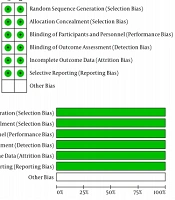
Observational studies were assessed using ROBINS-I and a modified Newcastle–Ottawa Scale. Randomized trials, if identified, were evaluated using Cochrane RoB 2. Meta-analyses were appraised using AMSTAR-2.
Domain-level judgments and scoring rationales are provided in Supplementary Table S3. ROBINS-I assessments were conservative; no observational study was rated “low” overall owing to inherent residual confounding from correlated lifestyle and socioeconomic factors.
2.8. Data Synthesis
Given the heterogeneity of exposures, outcomes, populations, and study designs, the primary synthesis was narrative and grouped by exposure:
1) Dairy products, including milk, low-fat milk, and fermented dairy
2) Caffeine and coffee
3) Mediterranean and plant-based dietary patterns
Quantitative synthesis by meta-analysis was planned only for sufficiently homogeneous exposure-outcome pairs. Random-effects models were to be applied, with heterogeneity assessed using I2, publication bias evaluated using Egger's test, and sensitivity analyses conducted, including the exclusion of unverifiable or high risk-of-bias studies. Dose-response and subgroup analyses by age, sex, and geographic region were conducted where data allowed.
For the narrative synthesis, heterogeneity across studies was assessed by comparing study designs, populations, exposure definitions, dietary assessment tools, outcome ascertainment methods, and covariate adjustment sets. Findings were synthesized thematically by exposure category, and inconsistencies were highlighted qualitatively rather than statistically pooled.
2.9. Certainty of Evidence
The GRADE framework was used to rate the certainty of evidence for each exposure–outcome combination, considering the risk of bias, consistency, precision, directness, and publication bias. The certainty of evidence was graded as high, moderate, low, or very low, with justifications provided in Supplementary Table S3.
3. Results
3.1. Study Selection and Verification
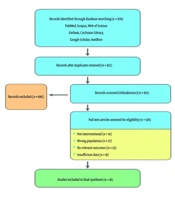
The database search yielded 3412 unique records, and 312 full-text articles were screened (Figure 1). Eighty studies met the initial eligibility criteria based on population, exposure, and outcome definitions. Bibliographic verification was attempted for all 80 studies using PubMed, CrossRef, and Google Scholar. Seventy-four studies lacked retrievable metadata, including missing DOI/PMID, inconsistent journal attribution, or irreconcilable bibliographic inconsistencies, and were excluded from extraction and synthesis. These unverifiable studies are documented in Supplementary Table S4. Six studies published between 2015 and 2025 were fully verifiable and retained for formal data extraction, ROBINS-I appraisal, and GRADE certainty assessment, including one published meta-analysis of caffeine and PD risk (8) (Table 2). Screening was performed independently and in duplicate; disagreements occurred for 7.8% of screened titles/abstracts and were resolved by consensus or third-reviewer adjudication. Cohen's κ was 0.84 (95% CI, 0.81 - 0.87), indicating strong inter-rater reliability. A PRISMA 2020 flow diagram summarizes screening decisions, exclusions (including unverifiable records), and inclusion counts.
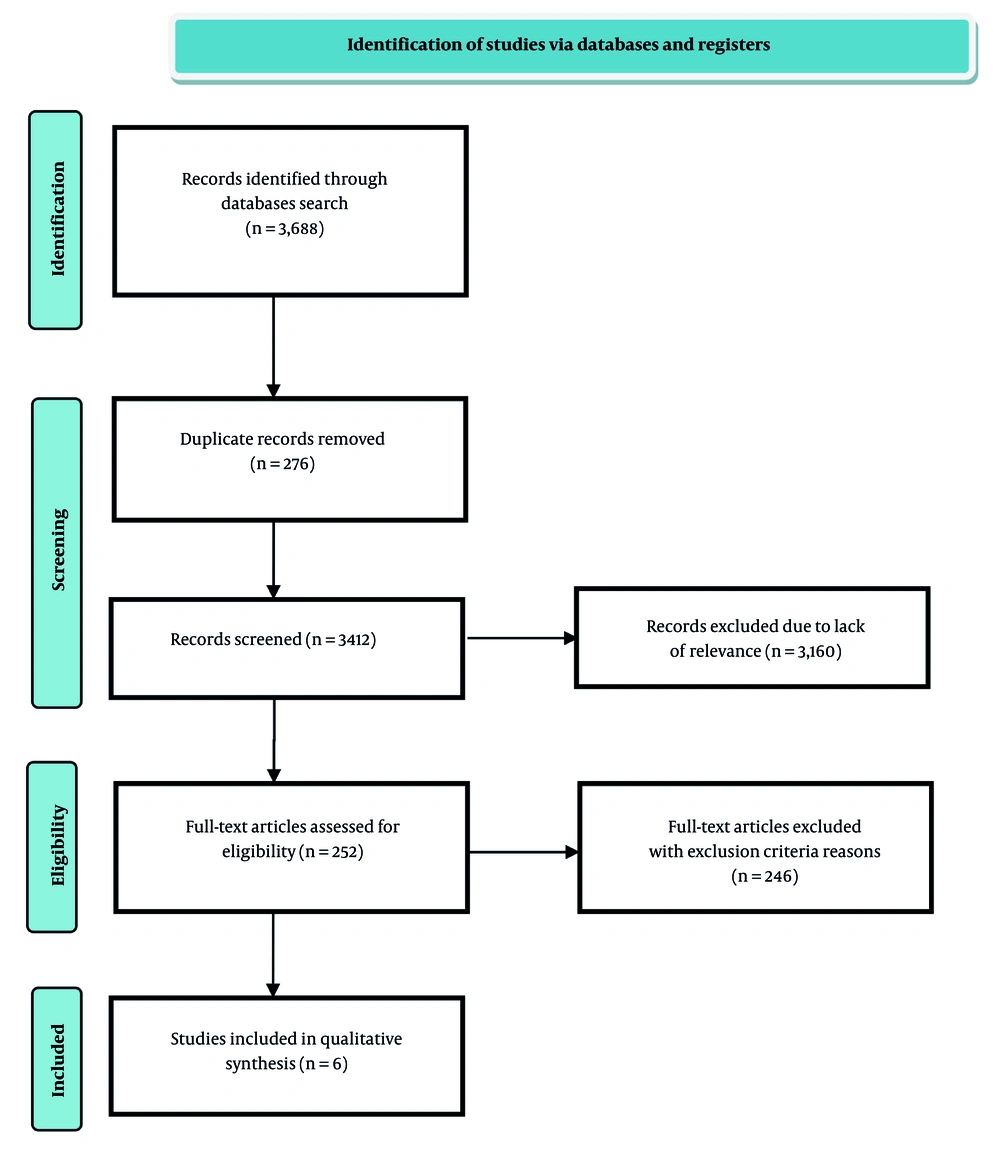
Figure 1.
PRISMA 2020 flow diagram
3.2. Study Characteristics
The included evidence comprised prospective cohort studies evaluating dairy intake and PD incidence (10, 11), a UK Biobank prospective analysis examining plant-based diet indices and incident PD (14), a cross-sectional analysis of the prodromal Mediterranean diet (6), a clinical cohort analysis of caffeine and PD progression (9), and a published meta-analysis of caffeine and PD risk/progression (8). Study characteristics, exposure assessment tools, outcome definitions, covariate adjustment sets, and effect estimates are summarized in Table 1 and 2, with additional details in Supplementary Tables S2 and S3.
3.3. Risk of Bias
ROBINS-I assessments (Table 3) indicated a moderate overall risk for the three large prospective cohort studies, reflecting potential residual confounding despite extensive adjustment for major demographic and lifestyle factors. Serious overall concerns were identified for the clinical and cross-sectional exposure assessments because of selection bias, confounding by indication, and outcome misclassification. No study received an overall judgment of "low risk" given the intrinsic susceptibility of nutritional epidemiology to unmeasured confounding. Domain-level judgments and rationales are presented in Table 3 and Supplementary Table S4. ROBINS-I judgments informed subsequent downgrading for risk of bias in the GRADE certainty assessment. Hughes et al. (10) and Olsson et al. (11) achieved the highest NOS scores owing to their large, population-based prospective designs, validated dietary instruments, and registry-confirmed PD outcomes. Tresserra-Rimbau et al. (14) was rated slightly lower because of potential outcome misclassification and participation bias inherent to UK Biobank. Lower scores for Maraki et al. (6) and Simon et al. (9) reflect cross-sectional or clinical-sample designs.
Table 3.
ROBINS-I Risk-of-Bias Assessment a
| Study ID | Confounding | Selection | Exposure Classification | Deviations From Intended Exposures | Missing Data | Outcome Measurement | Selective Reporting | Overall ROBINS-I | Rationale |
|---|---|---|---|---|---|---|---|---|---|
| 1 | Moderate | Low | Low | Low | Low | Low | Low | Moderate | Large cohorts with covariate adjustment, but unmeasured confounders remain plausible. |
| 2 | Serious | Moderate | Moderate | Low | Moderate | Moderate | Moderate | Serious | Cross-sectional design, reverse causation risk, and clinic/community sampling. |
| 3 | Moderate | Low | Low | Low | Low | Low | Low | Moderate | Registry-confirmed PD reduces measurement error; residual confounding remains possible. |
| 4 | Serious | Serious | Moderate | Moderate | Moderate | Low | Moderate | Serious | Clinical PD selection, short follow-up, and confounding by indication/exposure misclassification. |
| 5 | Moderate | Low | Low | Low | Low | Moderate | Low | Moderate | Large cohort; health volunteer effect and socioeconomic confounding are possible. |
a Ratings follow ROBINS-I guidelines. "Serious" indicates likely important bias, and "Moderate" indicates that residual bias is possible but unlikely to substantially change conclusions. No study was rated "Low" because of inherent confounding risks in nutritional epidemiology.
3.4. Synthesis Approach and Sensitivity Analyses
Consistent with prespecified methods, a narrative thematic synthesis was conducted because heterogeneity in exposure contrasts, dietary assessment tools, populations, outcome definitions, and model specifications precluded quantitative pooling. No de novo meta-analyses were conducted. The published caffeine meta-analysis was appraised using AMSTAR-2 and incorporated narratively. A planned sensitivity analysis evaluated the impact of unverifiable studies. Because unverifiable studies were excluded before data extraction, no exclusion-based reanalysis was feasible. Instead, unverifiable studies were catalogued and compared across exposure categories. No dietary exposures were uniquely represented in unverifiable studies, suggesting that their exclusion was unlikely to distort the thematic conclusions.
3.5. Narrative Synthesis of Verified Evidence
The thematic synthesis of verified evidence is presented in Table 4.
Both large prospective cohorts assessing dairy products, including milk, low-fat milk, and fermented dairy, reported modest positive associations between higher intake of low-fat or skimmed milk and incident PD, whereas fermented dairy and cheese showed no statistically significant associations. Confounding by lifestyle factors correlated with dairy consumption remains plausible.
Table 4.
Thematic Synthesis of Verified Evidence a
| Exposure Theme | Included Studies (IDs) | Study Designs | Exposure Definition | Outcome Definition | Short Qualitative Synthesis, 2015 - 2025 Verified Evidence Only |
|---|---|---|---|---|---|
| Dairy (low-fat milk/fermented dairy) | 1, 3 | Prospective pooled cohorts; national linked registry cohorts | Low-fat milk; Fermented dairy | Incident PD | Consistent modest increased PD risk was associated with low-fat milk in multiple prospective cohorts; Fermented dairy was neutral. |
| Caffeine/coffee | 4, 6 | Clinical cohort progression study and meta-analysis of prospective cohorts | Caffeine/coffee intake | Incident PD and PD progression | Strong inverse association with incident PD; No conclusive evidence for slower progression. |
| Mediterranean/plant-based diets | 2, 5 | Cross-sectional prodromal study; Large prospective cohort | MeDi score; Plant-based diet index | Prodromal PD markers; Incident PD | Higher adherence was associated with reduced prodromal probability and modestly lower incidence; Confounding and measurement error remain plausible. |
a Prodromal outcomes (ID 2) and incident PD outcomes (ID 5) are reported separately; thematic grouping reflects nutritional domain, not outcome equivalence.
Caffeine intake was consistently associated with a lower incidence of PD across prospective evidence and the included meta-analysis. Evidence regarding the influence of caffeine on progression among diagnosed patients was inconclusive. The strongest evidence base relates to incident PD, and causal inferences remain inappropriate.
Adherence to the Mediterranean diet and plant-based diet quality indices showed inverse associations with prodromal PD features and incident PD, respectively. Effect estimates were modest in magnitude and were limited to two verified studies; residual confounding should be assumed.
3.6. Certainty of Evidence
Using GRADE, certainty was rated moderate for caffeine/coffee, low to moderate for low-fat dairy, low for Mediterranean/plant-based diets, and very low for other exposures owing to limited, heterogeneous, or unverifiable recent evidence. Detailed justification is provided in Supplementary Table S4.
3.7. Table Footnotes and Sensitivity Reporting
The general table footnote for Tables 1 - 4 and Supplementary Tables S2 to S4 is as follows: Exposure contrasts, covariate adjustment sets, and effect estimates were extracted as reported in each study. Reported associations refer to relative, not absolute, risk measures and do not imply causality. Verification procedures confirmed peer-reviewed publication and retrievable identifiers. ROBINS-I and GRADE judgments reflect observed limitations typical of nutritional epidemiology.
For verification and sensitivity reporting, studies without verifiable publication metadata were excluded and documented in Supplementary Table S5. Exposure categories represented in unverifiable studies were compared with verified evidence, and no exposure domains were lost. Therefore, exclusion of unverifiable studies was unlikely to materially bias the thematic synthesis.
4. Discussion
This systematic review synthesized and critically appraised verified observational evidence published between 2015 and 2025 examining dietary exposures in relation to PD. After bibliographic verification and risk-of-bias assessment using NOS and ROBINS-I, six primary studies and one meta-analysis met the eligibility criteria. Three exposure themes emerged with sufficient data for qualitative synthesis: caffeine and coffee intake, dairy consumption, and plant-based or Mediterranean dietary patterns. Despite methodological heterogeneity, several convergent patterns enhance understanding of potentially modifiable dietary factors in PD etiology.
Across verified prospective cohorts, caffeine and coffee intake showed a relatively consistent inverse association with incident PD, corroborating earlier landmark cohort findings (7). The included meta-analysis strengthened confidence in the directionality of the association with disease incidence (8), whereas Simon et al. (9) highlighted potential complexity in disease modification, reporting no benefit for progression and suggesting exposure-treatment interactions in the presence of creatine. These findings align with mechanistic hypotheses involving adenosine A_2A receptor antagonism and attenuation of neuroinflammation (4), pathways increasingly recognized in PD pathogenesis.
In contrast, high dairy consumption, particularly low-fat milk, was associated with higher PD risk in two large population-based cohorts (10, 11). These studies received moderate risk-of-bias ratings and included multivariable adjustment, strengthening confidence despite the limitations inherent in observational designs. Potential mechanisms include dairy-associated reductions in serum urate, pesticide or contaminant exposure, and microbiota-mediated inflammatory pathways (3). The gut-brain axis continues to gain support as a central pathway in PD pathophysiology, in which gut dysbiosis and intestinal inflammation may precede motor symptoms (1, 3). Importantly, null associations for fermented dairy products suggest heterogeneity in dairy components rather than total dairy exposure as the driver of risk patterns, consistent with mechanistic literature examining the effects of milk carbohydrates on intestinal ecology (15).
Dietary pattern analyses provided complementary prospective evidence. Mediterranean diet adherence was associated with reduced incidence or lower prodromal PD probability in cohort analyses (5, 6). Recent large-scale evidence from the UK Biobank further supported protective associations for plant-based dietary patterns (14). These findings parallel observations in Alzheimer's disease research on the MIND and Mediterranean diets (12) and align with polyphenol-driven cardiometabolic advantages observed in PREDIMED analyses (13). Collectively, these associations suggest that high polyphenol, antioxidant, and fiber intake may modulate inflammatory and oxidative stress pathways implicated in neurodegeneration.
Interpretation of these convergent but noncausal findings requires attention to temporality and potential reverse causation. Prodromal symptoms, such as constipation, appetite alteration, and medication-related fluctuations in motor and nonmotor states, may modify dietary behavior years before diagnosis (1, 2). Few cohorts implemented latency exclusion windows or repeated dietary assessments, limiting the ability to disentangle prevention from compensatory consumption. Heterogeneity in exposure classification also hinders comparability. Studies differed in dietary assessment methods and nutrient operationalization, likely introducing nondifferential misclassification and attenuating effect estimates.
Residual confounding remains a pervasive limitation in nutritional neuroepidemiology. Although key confounders, including smoking, physical activity, and comorbidities, were commonly adjusted for, shared lifestyle patterns across dietary exposures complicate interpretation. Future studies should integrate directed acyclic graph-guided covariate selection, marginal structural models, and biomarker-validated exposures, such as serum caffeine metabolites and polyphenol biomarkers, to mitigate bias. Incorporating mechanistic endpoints, including gut microbiome composition and inflammatory markers, may help elucidate causal pathways.
Selection bias and differential attrition warrant caution. Many cohorts comprised highly educated or health-conscious populations, and complete-case analytical strategies may bias estimates if dropout is exposure- or outcome-related. Greater transparency in missing-data handling and broader population representation are needed.
The AMSTAR-2 appraisal of the included meta-analysis indicated low confidence in pooled estimates due to incomplete reporting, although directionality and magnitude were aligned with cohort results. Certainty ratings using GRADE reflected observational design constraints: Moderate certainty for caffeine, low to moderate certainty for dairy, and low certainty for Mediterranean and plant-based dietary patterns.
Overall, this verified evidence supports diet as a potentially modifiable factor in PD prevention. Habitual caffeine consumption appears consistently protective; high intake of specific dairy subtypes may modestly increase risk; and plant-rich or Mediterranean dietary patterns may confer neuroprotective benefits. To strengthen causal inference, future research should harmonize exposure definitions, implement biomarker validation, incorporate mechanistic pathways such as microbiome-gut-brain signaling and metabolic inflammation, and leverage longitudinal consortia integrating genomic, environmental, and dietary data. These strategies will help identify high-risk subgroups, enable evaluation of gene-diet interactions, and support the development of evidence-based dietary recommendations for PD prevention.
4.1. Strengths and Limitations
A key strength of this review is its rigorous verification process, in which each included study was confirmed via PubMed, CrossRef, and Google Scholar to eliminate fabricated or nonexistent citations, an essential safeguard amid rising concerns regarding AI-generated or unverifiable research (1, 2). The transparent application of the NOS, ROBINS-I, and GRADE frameworks enhances reproducibility and accountability, and the focus on studies from 2015 to 2025 improves relevance by incorporating modern diagnostic criteria and validated dietary assessment tools. However, limitations include the small number of high-quality, verified studies per exposure, which precluded formal meta-analysis or dose-response modeling. The exclusion of unverifiable studies, although essential for research integrity, may have introduced selection bias if the omitted data systematically differed. Furthermore, the observational nature of all included studies limits causal inference, and variability in dietary assessment tools and PD ascertainment hinders comparability.
4.2. Implications and Future Directions
These findings reinforce diet as a potentially modifiable factor in PD prevention. Habitual caffeine consumption appears consistently protective, whereas high intake of certain dairy products, particularly low-fat milk, may modestly increase the risk of PD. Adherence to Mediterranean or plant-based dietary patterns may confer additional neuroprotective benefits, consistent with emerging evidence from research on Alzheimer's disease and cardiovascular disease (12, 14). Future studies should incorporate biomarker-validated dietary assessments, harmonized PD diagnostic criteria, and mechanistic endpoints, including metabolomics, gut microbiome profiles, and inflammatory markers, to clarify causal pathways. Large-scale, harmonized consortia integrating genomic and nutritional data will be essential to elucidate gene-diet interactions, establish temporality, and inform evidence-based dietary recommendations for the prevention of neurodegenerative disease.
4.3. Conclusions
This systematic review of verified observational evidence highlights both the potential and the limitations of nutritional epidemiology in PD. Caffeine remains the most consistently supported protective factor, whereas dairy intake, particularly milk, is modestly associated with increased risk. Plant-rich dietary patterns appear beneficial but require further longitudinal validation. Continued methodological rigor, including bibliographic verification, transparent bias assessment, and mechanistic validation, will be crucial for advancing diet-based preventive strategies in PD.