1. Background
Polycystic ovary syndrome (PCOS) is considered one of the most common and complex endocrine disorders among women of reproductive age, with an estimated prevalence ranging from 5% to 20% (1, 2). Previous studies have shown that PCOS, a heterogeneous disorder, increases the risk of endometrial cancer, type 2 diabetes, and cardiovascular diseases later in life (3). In addition, studies have indicated that this disorder is accompanied by hormonal imbalance and disrupts reproductive system function, the menstrual cycle, and ovulation. These manifestations may emerge in the early years after menarche and, in some cases, particularly after weight gain, become more pronounced in later years (4). From a diagnostic perspective, this syndrome is typically identified by an increased number of follicles, with at least 12 follicles measuring 2 - 9 mm in diameter, or an ovarian volume exceeding 10 cm3, along with the presence of at least two of three key criteria: menstrual irregularities, elevated androgen levels, or polycystic ovaries on ultrasonography. Evidence also indicates that, in addition to menstrual cycle irregularities, infertility, and the risk of recurrent miscarriage, one of the major challenges for affected women is that approximately 40% are impacted, and PCOS is the most common cause of anovulatory infertility (5, 6). However, the effects of PCOS are not limited to physical dimensions. Its psychological consequences are often deeper and more persistent, as physical changes such as weight gain, hirsutism, and acne may lead to body shame, reduced self-esteem, and disruption of feminine identity (7). Therefore, based on the aforementioned evidence, women with PCOS are at risk of numerous psychological, social, and emotional challenges.
Emotional distress is a condition in which an individual loses the ability to use effective strategies to maintain emotional and psychological balance in response to stressful situations (8). This failure of adaptive mechanisms predisposes individuals to increased stress, rumination, and a range of physiological and psychological responses, which gradually impair social functioning and reduce quality of life (9, 10). Other studies have identified concerns about fertility, future maternal roles, and treatment failures as key factors contributing to emotional distress in women with PCOS; these concerns may also increase tension, reduce self-esteem, and heighten psychological vulnerability (11). Given the clinical and psychological consequences of PCOS and its role in exacerbating emotional distress, implementing effective interventions and strategies to manage emotional distress and reduce its detrimental effects is indispensable and may play an important role in promoting the mental health and psychosocial well-being of these women (12).
Among interventions for women with PCOS, numerous studies have shown that non-pharmacological interventions, such as psychological interventions and lifestyle modification, play a significant role in improving outcomes for women with PCOS (13-14). Given these patients' need for comprehensive psychological interventions that emphasize emotion management in addition to lifestyle modification, such an approach has been proposed as an effective strategy (12, 15).
Cognitive-behavioral therapy (CBT) is an effective psychological intervention that influences an individual's beliefs, cognitions, emotions, and feelings and also affects behavior, as well as cognitive and emotional patterns. During the intervention, the individual's attitude toward emotions arising from various events is adjusted, personal standards are reconsidered, and more effective coping strategies are adopted, leading to emotion regulation and improved mental health (16-18). In general, the goal of CBT is to help individuals identify, adapt to, and tolerate their experiences, enabling them to manage distress more effectively by modifying beliefs related to their thoughts and regulating their behaviors and actions (19-21).
Given the prevalence of PCOS and its impact on the physical, psychological, emotional, and social health of affected individuals, as well as existing research gaps in this field, examining and implementing psychological interventions for women with PCOS is an undeniable research necessity.
2. Objectives
The present study aimed to examine the effect of CBT on emotional distress among women with PCOS in Kermanshah, Iran.
3. Methods
3.1. Study Design
This study was a quasi-experimental investigation with a pretest-posttest design and a control group.
3.2. Study Population and Sample
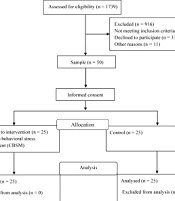
The target population comprised women with PCOS aged 18 to 45 years who visited obstetrics and gynecology clinics and infertility centers in Kermanshah, Iran, in 2025 and received a medical diagnosis of PCOS from a gynecologist based on the Rotterdam criteria (2003). A total of 30 women who met the inclusion criteria were selected through convenience sampling and randomly assigned to the experimental group (n = 15) or the control group (n = 15).
3.3. Inclusion and Exclusion Criteria
The inclusion criteria were a confirmed medical diagnosis of PCOS by a gynecologist or endocrinologist, age 18 to 45 years to avoid the confounding effects of menopause, no history of CBT in the past 6 months, and no use of psychotropic medications. The exclusion criteria were severe psychiatric disorders, severe physical illnesses, unwillingness to continue participation, pregnancy or intention to become pregnant during the study, incomplete questionnaires, and lack of cooperation.
3.4. Data Collection Tools and Methods
The Simmons and Gaher Emotional Distress Questionnaire (2005) is a standardized instrument for assessing individuals' tolerance of emotional distress. This scale was developed based on theories of emotion regulation, emotional resilience, and psychological distress tolerance and plays an important role in evaluating how individuals manage and respond to negative emotional experiences. The questionnaire comprises 15 items and four subscales: distress tolerance, emotional absorption, negative emotion appraisal, and emotion regulation. Several items are reverse scored to control for response bias. Before analysis, these items were recoded so that higher total scores consistently indicated greater emotional tolerance and a better ability to manage emotional distress. Responses are rated on a 5-point Likert scale, with higher scores indicating greater emotional tolerance and a better ability to manage emotional distress and lower scores indicating greater vulnerability to negative emotions and difficulties in emotion regulation. In Mohammadian (2020), the content, face, and criterion validity of the questionnaire were confirmed, and Cronbach's alpha was estimated above 0.7, indicating acceptable reliability for assessing emotional distress. In the present study, Cronbach's alpha for the questionnaire was 0.79, indicating acceptable reliability in the current sample. Furthermore, Simmons and Gaher (2005) reported Cronbach's alpha coefficients of 0.72 for distress tolerance, 0.82 for emotional absorption, 0.78 for negative emotion appraisal, and 0.70 for emotion regulation, with a Cronbach's alpha of 0.82 for the total scale.
3.5. Intervention and Treatment Program
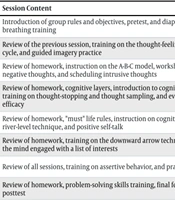
The CBT program was based on Barlow et al. (22). CBT has been developed over recent decades and has been applied to treat and reduce symptoms across a wide range of psychological problems, including anxiety, stress, depression, emotional disorders, and psychosomatic conditions. Numerous studies in Iran and other countries have reported the effectiveness of this intervention in improving anxiety, depression, emotion regulation, quality of life, body image, and adaptation to physical conditions such as PCOS (13-14). The CBT program was delivered in eight weekly sessions, each lasting 45 minutes. Each session included a review of previous assignments and training, instruction in a specific cognitive-behavioral skill or technique, assignment of homework, and feedback. The primary aim of this intervention was to teach cognitive and behavioral skills to help participants identify and modify maladaptive thoughts, manage emotions, improve coping skills, and increase adaptive behaviors. Thus, the intervention represents a structured, evidence-based approach designed to enhance mental health and reduce maladaptive cognitions. Notably, the validity and reliability of this protocol have been confirmed in multiple international studies, and it has been implemented and evaluated by researchers such as Barlow et al. and Sakiris and Berle (22, 23), further supporting the credibility of the program. A summary of the content, objectives, and assignments for each session is presented in Table 1.
Table 1.
Summary of Cognitive-Behavioral Therapy Sessions
| Sessions | Session Title | Session Content | Homework Assignment |
|---|---|---|---|
| 1 | Introduction and Orientation | Introduction of group rules and objectives, pretest, and diaphragmatic breathing training | Daily diaphragmatic breathing practice and recording experiences |
| 2 | Introduction to CBT | Review of the previous session, training on the thought-feeling-behavior-body cycle, and guided imagery practice | Practice the cognitive cycle in daily situations and record it on the worksheet |
| 3 | ABC Model | Review of homework, instruction on the A-B-C model, worksheet for recording negative thoughts, and scheduling intrusive thoughts | Complete at least three negative thought-record worksheets and practice scheduling thoughts |
| 4 | Cognitive Distortions | Review of homework, cognitive layers, introduction to cognitive distortions, training on thought-stopping and thought sampling, and evaluation of thought efficacy | Identify daily cognitive distortions, practice thought-stopping, and complete the thought-evaluation worksheet |
| 5 | Cognitive Restructuring | Review of homework, "must" life rules, instruction on cognitive restructuring, river-level technique, and positive self-talk | Write and rewrite "must" rules according to preference and practice calming statements |
| 6 | Downward Arrow Technique | Review of homework, training on the downward arrow technique, and keeping the mind engaged with a list of interests | Practice the downward arrow technique in two situations and prepare a list of interests |
| 7 | Summary and Assertiveness | Review of all sessions, training on assertive behavior, and practical exercises | Practice assertive behavior in daily situations and record experiences |
| 8 | Problem-Solving and Closing | Review of homework, problem-solving skills training, final feedback, and posttest | Practice problem-solving for a personal issue and complete the posttest questionnaire |
3.6. Data Analysis
Data were analyzed using multivariate analysis of covariance (MANCOVA) in SPSS software, version 26, and the level of statistical significance was set at 0.05. After approval of the research protocol, an official permission letter was obtained from Islamic Azad University, Kermanshah Branch, and the required authorizations were secured in coordination with infertility centers and gynecologists. During the pretest phase, the questionnaires were completed by women diagnosed with PCOS. Subsequently, participants in the experimental group received eight CBT sessions, each lasting 45 minutes and conducted once weekly, based on the protocol developed by Barlow et al. (22). After completion of the eight sessions, the posttest was administered. The control group did not receive any intervention until completion of the posttest assessment, after which the intervention was provided. All ethical considerations, including the confidentiality of participants' information, were fully observed throughout the study.
4. Results
The mean age of the control and experimental groups was 22.25 and 23.24 years, respectively. The independent t-test results indicated no statistically significant difference between the two groups in terms of age, demonstrating baseline homogeneity. In addition, the experimental and control groups were compared in terms of marital status, birth order within the family, family size, type of occupation, duration of illness, and history of pharmacological treatment; the results were obtained at the 95% confidence level as follows: P = 0.521, P = 0.378, P = 0.412, P = 0.252, P = 0.326, and P = 0.325. Independent t tests also indicated no statistically significant differences between the experimental and control groups in the pretest scores of the study variables, indicating baseline homogeneity between the groups. Table 2 presents the descriptive indices of the emotional distress subscales.
Table 2.
Descriptive Indicators of Pretest and Posttest Scores on Emotional Distress a
| Variables | Pre-test | Post-test |
|---|---|---|
| Distress tolerance | ||
| Control | 3.081 ± 11.73 | 3.099 ± 11.87 |
| Experimental | 3.159 ± 11.13 | 3.225 ± 14.60 |
| Emotional absorption | ||
| Control | 3.543 ± 10.47 | 3.291 ± 11.40 |
| Experimental | 2.997 ± 10.47 | 2.939 ± 14.27 |
| Negative emotion appraisal | ||
| Control | 3.291 ± 19.60 | 1.944 ± 19.07 |
| Experimental | 2.052 ± 19.93 | 3.342 ± 25.20 |
| Emotion regulation | ||
| Control | 2.473 ± 10.60 | 2.200 ± 10.13 |
| Experimental | 2.642 ± 10.13 | 2.390 ± 14.0 |
| Overall emotional distress | ||
| Control | 7.235 ± 57.93 | 5.251 ± 59.0 |
| Experimental | 7.308 ± 54.87 | 7.950 ± 65.73 |
a Values are expressed as mean ± SD.
As shown in Table 2, the mean scores of the emotional distress subscales increased from pretest to posttest in the experimental group, whereas changes in the control group were minimal. Notably, the scoring of this scale is reversed, such that higher scores indicate a greater ability to manage and tolerate emotional distress, whereas lower scores reflect increased vulnerability to negative emotions. The normality of the data distribution was examined using the Shapiro-Wilk test; the results showed that for all variables at both pretest and posttest, P > 0.05 was reported. Therefore, the assumption of normality was confirmed. The results of Box's M test showed that the covariance matrices of posttest scores on the emotional distress dimensions were equal between the control and experimental groups (F = 0.611, P > 0.05). Homogeneity of variances was assessed using Levene's test, and the results indicated that for all emotional distress dimensions, P > 0.05 was reported; therefore, the assumption of homogeneity of variances was also confirmed. Accordingly, to examine the effect of the intervention on the various dimensions of emotional distress while controlling for pretest scores, multivariate analysis of covariance was used, as shown in Table 3.
Table 3.
Multivariate Analysis of Covariance for Comparing Posttest Scores on Emotional Distress Dimensions
| Effects | Value | F | df | Error df | P |
|---|---|---|---|---|---|
| Pillai's Trace | 0.918 | 42.279 | 3 | 23 | 0.001 |
| Wilks' Lambda | 0.082 | 42.279 | 3 | 23 | 0.001 |
| Hotelling's Trace | 11.126 | 42.279 | 3 | 23 | 0.001 |
| Roy's Largest Root | 11.126 | 42.279 | 3 | 23 | 0.001 |
As shown in Table 3, multivariate analysis of covariance using Pillai's Trace indicated that the effect of the group on the linear combination of emotional distress dimensions was significant, reflecting a significant effect of the intervention on these dimensions after controlling for pretest scores.
Table 4 presents the results of the tests of between-subjects effects for comparing posttest scores on the emotional distress dimensions between the experimental and control groups. As shown in the table, the F statistics for the group source of variance indicate that for distress tolerance, emotional absorption, negative emotion appraisal, and emotion regulation, F = 11.132, 8.763, 36.767, and 6.697, respectively, indicating that the differences in posttest scores between the experimental and control groups were significant across all emotional distress dimensions. Accordingly, the research hypothesis was supported, and the null hypothesis was rejected, indicating that CBT interventions were effective in reducing emotional distress among women with PCOS in Kermanshah in 2025.
Table 4.
Tests of Between-Subjects Effects for Comparing Posttest Scores on Emotional Distress Dimensions
| Sources | Sum of Squares | df | Mean Square | F | P | Partial η2 | Power |
|---|---|---|---|---|---|---|---|
| Distress tolerance | 118.796 | 1 | 118.796 | 11.132 | 0.001 | 0.326 | 0.92 |
| Emotional absorption | 3.244 | 1 | 3.244 | 8.763 | 0.006 | 0.276 | 0.86 |
| Negative emotion appraisal | 183.428 | 1 | 183.428 | 36.767 | 0.001 | 0.615 | 1.00 |
| Emotion regulation | 69.479 | 1 | 69.479 | 6.697 | 0.016 | 0.226 | 0.69 |
5. Discussion
The present study examined the effectiveness of CBT interventions in reducing emotional distress among women with PCOS. The results indicated that CBT was effective in reducing overall emotional distress and its subscales in this population. These findings are consistent with those reported by Majidzadeh et al. (12), Banach (2024).
The findings of the present study, demonstrating a significant reduction in emotional distress among women with PCOS following CBT, are consistent with the theoretical mechanisms of this approach and with previous research. Women with this syndrome commonly experience high levels of anxiety, depression, and body image dissatisfaction due to physical symptoms such as menstrual irregularities, fertility problems, acne, hirsutism, and difficulties with weight management. CBT can modulate this cognitive-emotional cycle by modifying maladaptive beliefs about the body, personal worth, the future, and emotion regulation, thereby reducing distress. Hormonal fluctuations inherent in PCOS can exacerbate emotional volatility, making effective emotion regulation a critical need. The CBT equips individuals with tools to manage these fluctuations more adaptively, preventing escalation into prolonged periods of distress or dysfunction. The significant reduction in emotional distress among women with PCOS following CBT can be explained by the primary mechanism of this approach, namely cognitive restructuring (24). The CBT facilitates changes in cognitive appraisals by identifying negative automatic thoughts, challenging maladaptive beliefs, and replacing them with more realistic interpretations. These findings further indicate that addressing cognitive components and emotion regulation can directly improve the psychological functioning of women with PCOS (12). By correcting these cognitive distortions, the intensity of emotional reactions is reduced and, consequently, emotional distress markedly decreases.
Another explanation for the effectiveness of CBT in this group is the emphasis on strengthening emotion regulation skills. Women with PCOS typically experience greater difficulties in emotion management due to hormonal fluctuations, psychosocial stressors, and body image-related concerns. Techniques such as problem solving, behavioral activation, relaxation training, and cognitive restructuring within the CBT framework enhance coping capacities and increase a sense of personal efficacy. Another study reported that participation in therapeutic sessions, through exposure to therapeutic factors such as group cohesion, instillation of hope, emotional catharsis, and information exchange, along with the application of techniques including identification of cognitive errors, thought stopping, the river technique, the downward arrow technique, assertiveness training, problem-solving skills training, homework assignments, and role playing, enabled women with PCOS to improve their functioning. Alavi and Jabal-Ameli (25) demonstrated that training in cognitive-behavioral techniques can influence individuals' cognitive systems and information-processing styles, leading to a reduction in intrusive thoughts. Such training helps patients identify intrusive thoughts and redirect their attention to present-moment experiences, such as deep breathing or environmental sounds, ultimately decreasing negative emotional states (25). Because these interventions were also emphasized during the treatment sessions in the present study, the effectiveness of CBT in reducing emotional distress among patients can be explained. Following the intervention, women were better able to identify emotional triggers, respond more adaptively, and prevent the escalation of negative emotions. These findings are consistent with the existing literature indicating that CBT, by strengthening self-regulation skills, facilitates improvements in mental health and emotional functioning among individuals with chronic conditions (13).
5.1. Limitations and Conclusions
Like many studies in the field of psychology, the present research had several limitations. First, the study was constrained by the limited timeframe of a master's program, which necessitated the use of convenience sampling and resulted in a relatively small sample size (n = 30). Although this sample size is adequate for the parametric statistical analyses performed, it restricts the generalizability of the findings to the broader population. Therefore, we acknowledge that the external validity of our results may be limited.
Second, because of time constraints and insufficient cooperation from some participants, follow-up sessions were not conducted. Therefore, it cannot be confidently stated to what extent the changes observed during CBT are maintained in the long term. Accordingly, future studies are recommended to implement follow-up periods at various time points to more accurately examine the sustainability and persistence of treatment effects.
Third, reliance on self-report questionnaires in this study may have increased the likelihood of response bias among participants. Thus, future research should incorporate qualitative instruments to assess emotional distress. In addition, given the significance and effectiveness of CBT, clinical centers are recommended to complement medical and pharmacological interventions with psychological interventions such as CBT. Future work should address these limitations by using a larger and more representative sample, potentially using probability-based sampling methods, and incorporating follow-up assessments to better examine the long-term maintenance of treatment effects.