Fulltext
The body of the article can be found in the PDF file.
Journal of Medical Education for Future Demands
Former Title: Journal of Medical Education | The Official Journal of School of Medical Education and Learning Technologies
Image Credit:J Med Edu
Authors
Background and purpose: Emergency physicians play an important role in the immediate diagnosis of bioterrorism activities. The present study was conducted with the purpose of comparing the effectiveness of e-learning and classroom learning in approach to bioterrorism and chemical terrorism for emergency physicians.Methods: This was a semi-empirical study, which was conducted via testing knowledge before and after the educational intervention in the field of bioterrorism and chemical terrorism on the emergency physicians in Tehran. The external validity of the questionnaire was confirmed by two academic experts in order to determine the ability to detect bioterrorist and chemical terrorist diseases. In this study, education was done in both virtual and classroom forms. The education regarded 6 bioterrorist diseases in group A (anthrax, plague, viral hemorrhagic fever, tularemia, smallpox), and 5 chemical terrorist diseases (nerve gas, mustard, lewisite, phosgene, chlorine).Results: 160 doctors participated in this study. 96 people (60%) were men and 64 people (40%) were women. The average age of the participants was 36.2±5.5 years. In e-learning method, the pre-test scores average was (30.6%), while the post-test scores average was (81.6%) (p=0.001). In classroom learning method, the pre-test scores average was (41.9%), while the post-test scores average was (72.9%), which the pre-test and post-test scores average differences in both cases are significant (p<0.001). In e-learning method, the difference was (51%), and in the classroom method it was (31%), which these two represent a 20% difference between methods. From statistical point of view, this difference indicates that the e-learning method being more effective (p=0.02).Conclusions: Based on the study results, it seems that in comparison to the classroom learning, e-learning method is more effective in helping emergency physicians to diagnose bioterrorism or chemical terrorism factors.
© 2015, Author(s). This open-access article is available under the Creative Commons Attribution 4.0 (CC BY 4.0) International License (https://creativecommons.org/licenses/by/4.0/), which allows for unrestricted use, distribution, and reproduction in any medium, provided that the original work is properly cited.
Niroumand S, Mastour H, Moodi Ghalibaf A, Shamshirian A, Moghadasin M. Medical Students' Attitude Toward E-learning During the COVID-19 Pandemic. Shiraz E-Med J. 2022;23(9):e121340. doi: https://doi.org/10.5812/semj-121340
Soleimanpour M, Rahmani F, Naghizadeh Golzari M, Ala A, Morteza Bagi HR, et al. Comparison of Electronic Learning Versus Lecture-based Learning in Improving Emergency Medicine Residents’ Knowledge About Mild Induced Hypothermia After Cardiac Arrest. Anesth Pain Med. 2017;7(4):e57821. doi: https://doi.org/10.5812/aapm.57821
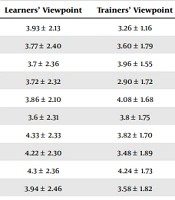
Heidarpoor P, Dejagah F. Assessing the Quality of Online Learning During the COVID-19 Pandemic from the Perspective of Iranian Community Health Workers and Their Instructors. J Med Edu. 2022;21(1):e129749. doi: https://doi.org/10.5812/jme-129749
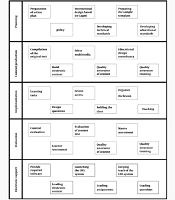
Alizadeh S, Hosseinzadeh M, Arshi S, Ghanbari S. E-Learning Framework Based on Electronic Learning Management System for the staff of Health Office of Shahid Beheshti University of Medical Sciences. J Med Edu. 2020;19(1):e103396. doi: https://doi.org/10.5812/jme.103396
Khoshbaten M, Soleimanpour H, Ala A, Shams Vahdati S, Ebrahimian K, et al. Which Form of Medical Training is the Best in Improving Interns’ knowledge Related to Advanced Cardiac Life Support Drugs Pharmacology? An Educational Analytical Intervention Study Between Electronic Learning and Lecture-Based Education. Anesth Pain Med. 2014;4(1):e93352. doi: https://doi.org/10.5812/aapm.15546
Last Update: 1 week ago
Last Update: 1 week ago
Last Update: 1 week ago
Last Update: 6 days ago
Last Update: 9 hours ago
Last Update: 5 days ago