
1. Background
In 2018, there was a wide range of coronary artery bypass graft (CABG) prevalence rates in various regions, including 26.7%, 72%, 17.94%, and about 14.14% in North America, Asia, Western Europe, and the rest of the world, respectively (1). Although the United States has a declining rate of open-heart surgery (2), it is still rising in some countries, including Iran, in a way that about 60% of 25,000 annual open-heart surgeries in the country are CABG (3). Although this type of treatment is still the first and best treatment for CABG (4), the surgery’s complications include stress, anxiety, and death anxiety (5).
Death anxiety is a multidimensional structure related to fear, the anxiety of waiting, and the awareness of death reality. The five sources of death anxiety include fear of death, concerns about the pain and suffering of death, a sense of closeness to death, fears related to death, and worrying thoughts (6). According to a search in the available databases, no study has been performed on death anxiety in cardiovascular patients; however, numerous studies have been performed to check anxiety levels in cardiovascular patients undergoing CABG treatment.
According to studies, before and after CABG, anxiety rates in patients were reported within the ranges of 49.51% to 84% (7-10) and 34% (6) to 97.3% (8), respectively. A study showed that three-quarters of patients treated with CABG showed symptoms of anxiety or depression (8). Moreover, according to the results of a study, after CABG, 79%, 7.5%, 7.5%, and 5.9% of patients had low, moderate, high, and severe stress, respectively (10). Furthermore, 70.4%, 28.5%, and 1.1% of patients reported low, moderate, and high anxiety, respectively (9). The degree of anxiety symptoms among cardiovascular patients is related to their mortality (11, 12).
Well-being means feeling happy and satisfied with life and the existence of the components of a positive attitude toward the world in which individuals live (13). One study revealed a link between anxiety and well-being in patients who had coronary artery surgeries (14). Researchers have confirmed this association in some cases, such as type 1 diabetes (14), postpartum mood (15), Alzheimer’s disease (16), and cardiovascular disease (14).
Anxiety management methods include pharmacological and non-pharmacological ones. Non-pharmacological methods, including reflexology, muscle relaxation, music therapy, therapeutic touch, heat and cold therapy, and acupuncture, are widely used in medical centers. By acting on the nervous and muscular system, massage relaxes the muscles, increases blood flow and oxygenation, and ultimately improves the expelling of wastes, such as lactic acid, reduces patients’ anxiety, and improves their well-being (16). Reflexology uses special techniques that use finger and hand pressure to press reflexology points. This releases energy blocks in specific parts of the body and stimulates the body’s self-healing powers. It also reduces anxiety leading to physical transformation (17). Nurses can use reflexology (i.e., a non-pharmacological, non-surgical, and cost-effective method) to alleviate anxiety in patients after open-heart surgery (18).
2. Objectives
The anxiety rate of patients undergoing CABG was high, according to several studies that reviewed the above-mentioned articles. However, the databases show that no studies have been published on massage’s effects on the well-being or death anxiety of CABG patients. Therefore, this study was designed and performed for this purpose.
3. Methods
3.1. Type of Study and Sampling Method
This randomized controlled trial (ethics code: IR.MAZUMS.REC.1398.1394) was conducted in the Intensive Care Unit of Fatemeh Zahra Hospital in Sari, Iran, where patients were subject to CABG in 2021. The sample size of this sample was determined based on a previous study (18). The mean values of anxiety changes after the intervention were 6.2 ± 6 and 0.6 ± 8.7 in the intervention and control groups, respectively, which were included in the sample size formula. In addition, α = 0.05, β = 0.2, and m (i.e., number of repetitions before and after), P = 0.2 (i.e., the correlation coefficient of scores before and after), and ef = 0.6 (i.e., effect size) were taken into consideration in the formula for the sample size. The minimum sample size in each group was 28. This is the minimum sample size, and with a sample drop of 20%, 33 subjects were included in each group.
The inclusion criteria were a minimum age of 18 years for candidates of CABG, no pulmonary drain or discharge exceeding 200 cc/hour, no left ventricle ejection fraction below 35%, no medication use within the past 4 hours, and no prior experience with acupuncture or massage. There were no communication difficulties (i.e., hearing or visual impairments, speech impairment, drug use, mental illness under treatment, and use of anti-anxiety medications, depression medications, or antihistamines within 4 hours of the intervention). Moreover, there was no evidence of severe neuropathy, sores, or infection on the soles and the bottom of the feet, no limb amputation, no history of osteoarthritis and rheumatoid arthritis, valve replacement, or treatment, no need for intra-aortic pumps balloon, and no more than 24 hours of intubation (19, 20). In this study, there was no previous experience with massage, acupressure, or acupuncture during the last 3 weeks. Scores of 45 and higher on the Templer Death Anxiety Questionnaire are considered to be a sign of death anxiety (21), and vital signs were stable (blood pressure, body temperature, pulse, respiration rate). The exclusion criteria included patient refusal to participate, critical patient conditions, return to the operating table, need to take antidepressant or anxiety medication, and the need to use antihistamines.
After the surgery, the eligible patients were assigned into two 33-member groups on the second day (i.e., intervention and control groups using random numbers through computer software and permuted-block randomization). There were 66 envelopes made. The computer software embedded letters A (reflexology) and B (control) in each envelope. The envelopes were numbered from 1 to 66.
3.2. Study Tools
In this study, three questionnaires were completed the day before the surgery. A checklist was used to gather the sociodemographic data (e.g., age, height, weight, body mass index, gender, marital status, occupation, and educational level) and medical data extracted from patients’ records, including a history of underlying diseases, history of myocardial infarction, number of heart grafts, location of grafts, and graft incision length.
The Templer DAS was developed by Donald I. The Templer scale measures the extent of death anxiety a person experiences. The Templer DAS consisted of 15 items intended to be rated on a dichotomous scale of true or false by the respondents. The test-retest of DAS with an interval of 3 weeks demonstrated a 0.83 correlation coefficient. A good internal consistency (0.76) was obtained with 31 participants through the Kuder-Richardson Formula (20). The DAS response category was revised by Templer and McMordie, introducing a Likert format for the scale. Therefore, it can be used in both true-false and Likert formats (22). The Likert-type format provides a rating on a continuum of 1 = strongly disagree, 3 = neutral, and 5 = strongly agree. The scores range from 15 to 75, with low (15 - 35), moderate (36 - 55), and high (56 - 75) death anxiety. Consequently, a high score reveals high death anxiety. For the Likert-type format, the test-retest reliability was 0.83; nevertheless, internal consistency was 0.84. McMordie stated that the Likert-scale format amplifies the capacity to differentiate between high and low scores (23). Furthermore, Saleem et al. stated that using a 5-point Likert scale enhances the scale’s sensitivity to differences among participants (21).
In the present study, the respondents could rate themselves based on a 5-point Likert scale (strongly agree, somewhat agree, no opinion, somewhat disagree, and strongly disagree). In a study by Tavakoli and Ahmadzadeh, the scale’s validity was obtained using factor analysis that showed five factors with eigenvalues higher than 1. In addition, item-total correlations were evaluated. The reliability coefficients of the scale using test-retest, split-half, and Cronbach’s alpha were 0.87, 0.59, and 0.75, respectively. Overall, the DAS had appropriate validity and reliability (24). The scale’s internal consistency in the present study was estimated at 0.87 by Cronbach’s alpha.
The Subjective Well-being Scale (SWB) approved by the World Health Organization contains five items (i.e., I am happy and cheerful, I feel calm, I feel active and energetic, I wake up refreshed and relaxed, and my daily life is full of my favorite things). Moreover, the SWB’s response options in the Likert scale were always, most of the time, little more than half of the time, little less than half of the time, sometimes, and never, which were scored from 5 to 0, respectively. The total score of this questionnaire is calculated out of 100, and to achieve this, the scores of each person are multiplied by 4. Therefore, the score range of this questionnaire is from 0 to 100, and a score higher than 50 indicates higher well-being (25). The reliability was evaluated in a pilot study on 2317 patients with hypertension and coronary artery disease, and Cronbach’s alpha for this questionnaire was 0.95 (25). The internal consistency of the scale in Rafie et al.’s study (2020) was estimated at 0.76 by Cronbach’s alpha (23). The present study was performed on 15 patients, and Cronbach’s alpha coefficient for the well-being scale was 0.74.
The Hospital Anxiety and Depression Scale (HADS) consists of 14 items and two subscales, anxiety and depression. Each item is rated on a 4-point scale, with a maximum score of 21 for anxiety and depression. Scores of 11 or more on either subscale are considered to be a significant case of psychological morbidity; however, scores of 8 - 10 and 0 - 7 represent borderline and normal, respectively (22).
The Templer DAS and SWB questionnaires were completed by the intervention and control groups on the day before the surgery, the second day after the surgery, before the start of the study, and the fourth day after the surgery after the massage.
3.3. Intervention Methodology
The research was started the day before the operation after providing the necessary explanations on how the study will be performed, its duration, and the principles of confidentiality of personal information to the patient and a companion and obtaining written and informed consent from them.
Massage course sessions were run by the researcher team under the supervision of an acupuncturist. Massage therapy nurses received training in the massage protocol and practiced the sequence until their performance reached the criteria for standardization and got a certificate. The nurse of the same gender, who was trained by the acupuncturist, provided massage therapy. Reflexology massage of the foot sole was performed in the evening (between 16:00 and 18:00) on the second day after the surgery for 3 consecutive days (i.e., the second to fourth day after the surgery).
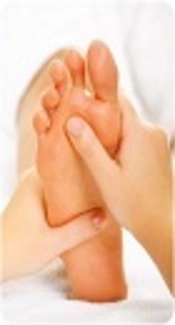
At first, using 5 drops of baby oil, the feet were gently massaged with the palms of the hands until they were completely oily, and all parts of the feet were lubricated with oil. Two techniques were used to perform reflexology massage, including general foot massage and specialized massage, which included massaging the toes. The general and specialized massage lasted about 5 and 10 minutes, respectively. For this purpose, the patient laid on his/her back on the bed, and two pillows were placed under his/her feet; accordingly, the heel area and the Achilles tendon were not in contact with the pillow, and the feet were free in the air. Then, using 5 drops of baby oil, the feet were gently massaged with the palms of the hands until all parts of the feet were completely oily. For general massage, the hands were placed such that the fingers covered the top of the feet and the thumbs covered the soles of the feet. Then, the pressure was gently applied to the feet to relieve the cold feeling of the feet and warm them in unison using the hands and performed on different parts of the feet. For specialized massage, the thumb was put on the big toe, and the hand was moved toward the second phalange, and then we moved in a circular motion with the thumb of the right hand on the thumb of the left foot. This was also repeated for the other toes (26). No massage was given for the control group, and postoperative care training was performed based on the ward’s routine principles.
3.4. Data Analysis
Descriptive statistics (i.e., frequency and percentage for qualitative variables and mean and standard deviation for quantitative variables) were used to describe the variables. This study considered death anxiety and well-being as the primary and secondary outcomes, respectively. The Mann-Whitney U test compared death anxiety and well-being in the intervention and control groups. The generalized estimating equations (GEE) test was used to compare the changes the day before the surgery and the second and fourth days after the surgery. Friedman’s test was used to find differences in the treatment across multiple attempts within each group. In addition, ANOVA, independent t-test, and chi-square test were used for the statistical analysis of sociodemographic and medical data. In this study, data analysis was performed according to per-protocol. The Shapiro-Wilk test was used to evaluate the normality of the distribution of variables. SPSS software (version 20) was employed to analyze the collected data. A P-value of less than 0.05 was considered the level of significance.
4. Results
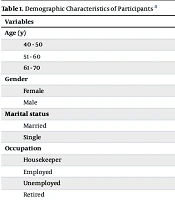
According to Figure 1, 113 patients were examined to participate in the study, among whom 57 subjects were not included for various reasons, and 56 patients were statistically analyzed. In this study, in both groups, most patients were married males, and most patients had underlying diseases. Table 1 shows other sociodemographic and medical data.
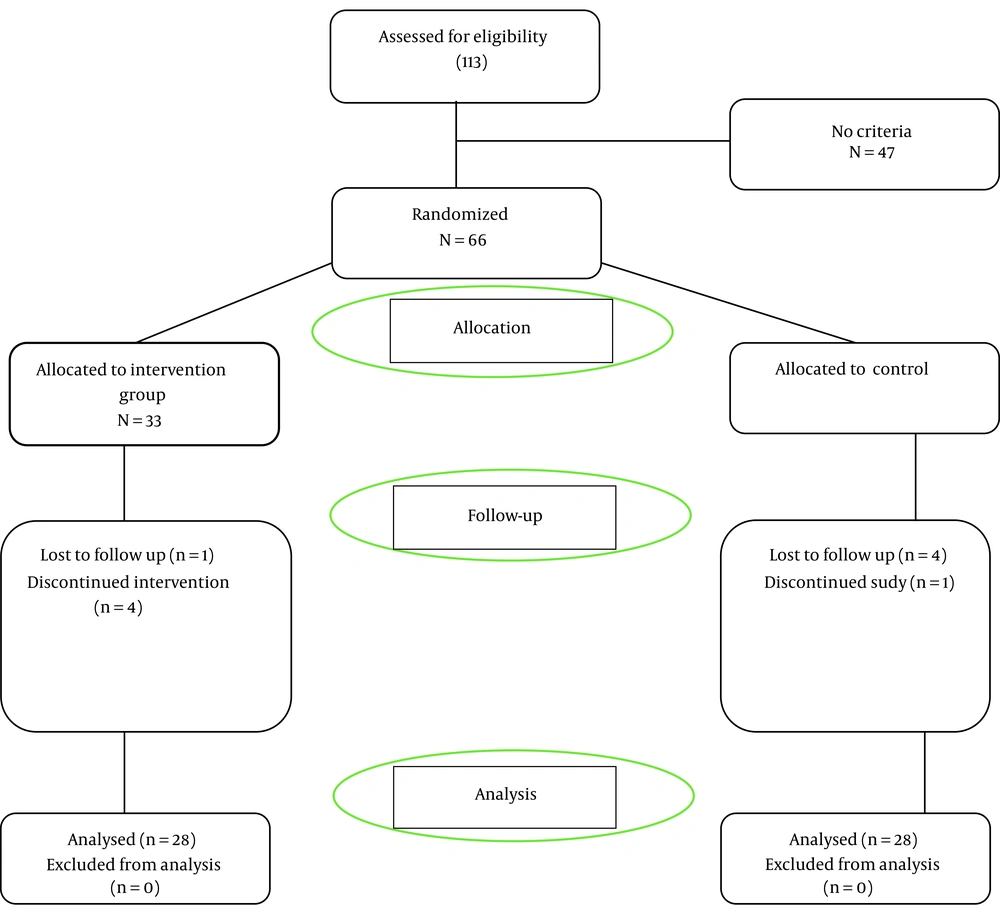
Figure 1.
Enrollment of participants in the study
Table 1.
Comparison of Sociodemographic and Medical Characteristics of Patients in Reflexology and Control Groups a
| Groups | Reflexology | Control | t | χ2 | P-Value |
|---|---|---|---|---|---|
| Age, (y) | 60.39 ± 7.74 | 61.11 ± 9.68 | 1.42 | 0.239 | |
| Anxiety | 9.35 ± 1.87 | 10.25 ± 2.11 | 1.31 | 0.99 | |
| Depression | 10.92 ± 2.37 | 10.67 ± 1.82 | 1.23 | 0.66 | |
| Body mass index (kg/m2) | 27.31 ± 2.35 | 28.02 ± 1.89 | 0.043 | 0.837 | |
| Gender | 1.2 | 0.274 | |||
| Male | 19 (67.9) | 15 (53.6) | |||
| Female | 9 (32.1) | 13 (46.4) | |||
| Maritalstatus | 1.20 | 0.22 | |||
| Married | 2 (92.9) | 23 (82.1) | |||
| Single | 2 (7.1) | 5 (17.9) | |||
| Education | 0.29 | 0.58 | |||
| Illiterate | 17 (60.7) | 15 (53.6) | |||
| Literate | 11 (39.30) | 13 (46.6) | |||
| Job | 1.20 | 0.75 | |||
| Employed | 20 (71.43) | 20 (71.43) | |||
| Unemployed and retired | 8 (28.57) | 8 (28.57) | |||
| Underlying disease | 0.11 | 0.73 | |||
| Has | 22 (78.6) | 23 (82.1) | |||
| Does not have | 6 (21.4) | 5 (17.9) | |||
| Graft location | 0.80 | 0.77 | |||
| Right foot | 19 (67.9) | 18 (64.3) | |||
| Left foot | 9 (32.1) | 10 (35.7) | |||
| History of infarction | 0.42 | 0.51 | |||
| Yes | 7 (25) | 5 (17.9) | |||
| No | 21 (75) | 23 (82.1) |
a Values are expressed as Mean ± SD or No. (%).
The Shapiro-Wilk test was used to examine the normal distributions of death anxiety and showed that the distribution of this variable was not normal. Using the Mann-Whitney U test showed a significant difference in the mean death anxiety scores on the fourth day after the surgery between the groups (P < 0.001). Nevertheless, there was no significant statistical difference between the before and the second day after the surgery. According to the results of Friedman’s test, there was a significant difference between the means of death anxiety scores regarding the three times in both groups. However, the reduction of the mean death anxiety in the intervention group was much higher than in the control group (Table 2).
Table 2.
Comparison of Mean Death Anxiety Before and on Second and Fourth Days Following Coronary Artery Bypass Graft in Foot Reflexology Massage and Control Groups
| Group | Statistics | |||
|---|---|---|---|---|
| Reflexology | Control | Z | P-Value | |
| Death anxiety, Mean ± SD | ||||
| The day before surgery | 52.57 ± 3.97 | 51.25 ± 3.06 | 1.61 | 0.10 a |
| The second day after surgery | 50.07 ± 3.38 | 49.57 ± 3.83 | 0.72 | 0.46 a |
| The fourth day after surgery | 36.61 ± 5.25 | 47.71 ± 3.01 | 5.87 | < 0.001 a |
| χ2 | 45.018 | 11.417 | ||
| P-value | < 0.001 b | 0.003 b | ||
| Comparison of the second day and the day before the surgery | ||||
| Effect size | - 2.5 | - 1.67 | ||
| χ2 | 16.279 | 4.582 | ||
| P-value | < 0.001 c | 0.032 c | ||
| Comparison of the fourth day and the day before the surgery | ||||
| Effect size | -15.96 | -3.53 | ||
| χ2 | 148.34 | 21.44 | ||
| P-value | < 0.001 c | 0.001 c | ||
| Comparison of two groups during the 3 days | ||||
| Effect size | - 4.63 | |||
| χ2 | 48.52 | |||
| P-value | < 0.001 c | |||
a Mann-Whitney U test.
b Friedman’s test.
c generalized estimating equations test.
The Shapiro-Wilk test was used for the well-being variable. There was no normal distribution (P < 0.05). The GEE test showed that the intervention performed on well-being on the second day after the surgery and the day before the surgery was not significantly different; however, it was statistically significant on the fourth day after the surgery, compared to the previous days (Table 3).
Table 3.
Comparison of Mean Well-being Before and on 2nd and 4th Days Following Coronary Artery Bypass Graft in Foot Reflexology Massage and Control Groups
| Group Mean ± SD | Statistics | |||
|---|---|---|---|---|
| Reflexology | Control | Z | P-Value | |
| Well-being | ||||
| The day before surgery | 46 ± 6.57 | 45.71 ± 12.57 | 0.46 | 0.64 |
| The second day after surgery | 48.29 ± 7.99 | 45.57 ± 16.70 | 0.91 | 0.35 |
| The fourth day after surgery | 67.86 ± 11.49 | 45.57 ± 7.24 | 5.59 | < 0.001 |
| Intragroup test (Friedman’s test) | ||||
| χ 2 | 33.5 | 0.66 | ||
| P-value | < 0.001 | 0.71 | ||
| Comparison of the second day and the day before surgery by GEE test | ||||
| Effect size | + 2.28 | - 0.14 | ||
| χ 2 | 3.51 | 0.01 | ||
| P-value | 0.06 | 0.91 | ||
| Comparison of the fourth day and the preoperative day by GEE test | ||||
| Effect size | + 21.58 | - 0.14 | ||
| χ 2 | 81.57 | 0.01 | ||
| P-value | < 0.001 | 0.91 | ||
| Comparison of two groups during the 3 days by GEE test | ||||
| Effect size | 10.98 | |||
| χ 2 | 22.63 | |||
| P-value | 0.001 | |||
Abbreviations: SD, standard deviation; GEE, generalized estimating equations.
5. Discussion
This study revealed that foot reflexology massage could significantly reduce death anxiety in patients following CABG. On the day before the surgery and the second day after the surgery, the death anxiety scores in the two intervention and control groups did not have a statistically significant difference. However, the intervention on the fourth day after the surgery had a positive and significant effect on the patient’s death anxiety. According to the available databases, no study was performed on the impact of foot reflexology massaging on death anxiety in CABG patients. However, the effects of foot reflexology massaging on anxiety were investigated.
In a randomized clinical trial, 20 minutes of reflexology on the left foot for 4 days led to lower anxiety levels in patients undergoing CABG than in a control group. The statistical analysis revealed significant differences between the two groups concerning anxiety levels on the first and third postoperative days (26). However, in the present study, massages were given on both sides for 15 minutes during each of the 3 days. Another study compared the impact of reflexology massage on foot soles and reflexology on ankles, for 10 minutes in the morning for 2 days, on manifest anxiety in patients suffering from CABG. Compared to a control group, the effectiveness of both methods in reducing anxiety during CABG was reported. In the aforementioned study, the patients receiving massage therapy had significantly less anxiety on the second day after the massage than before (27). However, in the present study, the massage duration was 5 minutes and one day more than their intervention, and it was performed in the evening.
Another study was conducted to assess the effects of massage on pain relief, anxiety, and stress after heart surgery in 113 patients in the United States. The findings showed that compared to a control group, anxiety, and stress decreased significantly after 4 days of massage, and the relaxation level increased in patients who received massage therapy. The patients were very satisfied with the intervention, and no obstacles were observed for massage therapy (28). The type of massage and its duration in the present study differed from the above-mentioned study; the massage was given for 20 minutes on the back and legs, arms, shoulders, neck, and head on the second and fourth days after the surgery. The results of the above-mentioned studies showed that massages could reduce the anxiety of CABG patients. In this study, death anxiety decreased in both the intervention and control groups; however, the trend of reduction in the intervention group was significant and lower than the cut-off point of the questionnaire; nevertheless, in the control group, the decrease in anxiety score was not enough to exceed the cut-off point.
In addition, the passing of time can be an effective factor in reducing the anxiety of patients in control groups after the surgery. Therefore, as in the present study, this type of massage can affect patients’ anxiety. When the reflex points are stimulated by reflexology massage, it might stimulate blood flow, nerve impulses, and release of endorphins, release toxins stored in muscles and organs, and harmonize physiological function (29). Research studies have revealed that energy flows into vertical zones throughout the body in reflexology can calm the nerves, coordinate internal organs, and stimulate blood circulation (30). Further studies in this regard are necessary. The present study only reported the short-term effect of reflexology on anxiety levels and did not record the long-term consequences of reflexology on CABG patients that should be considered in future studies.
Well-being scores the day before and the second day after the surgery were not significantly different for both the reflexology massage and control groups. However, the intervention on the fourth day after the operation had a positive and significant effect on well-being. Reflexology massage has been shown to improve the well-being of 49 American adults aged 60 years and older. The participants received two 50-minute massage sessions weekly for 4 consecutive weeks. The massage consisted of a standardized protocol that included 30 minutes of lying on the back and 20 minutes of lying prone. Each integrative massage session consisted of an assessment (1 - 5 minutes), which included comfortable positioning of the patient and massage with the hands (20 minutes) that focused on the areas of primary concern as indicated by the patient (27). One of the possible reasons why the intervention did not affect the anxiety score on the second day and was effective on the fourth day could be the continuation of the massage. The only difference between the above-mentioned and present studies was the frequency of massages and the absence of underlying diseases. The aforementioned results showed that massage had a significant positive effect on the well-being of patients and reduced their perception of stress.
Massage therapy is a technique that promotes the manual mobilization of several structures from both muscle and subcutaneous tissue by applying mechanical force to tissues. This mobilization improves lymph movement and venous return, reduces swelling, and mobilizes muscle fibers, tendons, and skin. Therefore, massage therapy might be used to promote muscle relaxation and reduce pain, stress, and anxiety, which help patients improve their recovery speed. As a result, massage therapy is an effective technique for improving patient recovery from CABG surgery due to fatigue reduction (31).
5.1. Conclusions
Considering the positive effects of foot reflexology massage on reducing death anxiety and increasing patients’ well-being and considering that it is an easy, cost-effective, and low-complication solution to reduce death anxiety and promote well-being, which created a positive experience for the hospital and staff in the patient, it is a good idea for nurses to use this method with patients undergoing cardiac surgery in the intensive care unit. In conclusion, massage therapy is a useful method of reducing anxiety in patients recovering after cardiac surgery. The optimal time to deliver massage therapy is most likely after the second postoperative day. The limitations of the present study included family and economic problems, external stresses, and personality traits that can affect patients’ death anxiety, well-being, and physical condition. The psychological and emotional factors of the subjects under study and their perceptions of the disease were different, and the researchers could not assimilate these cases in the patients.