
1. Background
Pain is an uncomfortable and unpleasant sensation originating from actual or potential tissue damage (1). Pain and anxiety associated with needle-related procedures such as venipuncture are common among children, and many psychological interventions can help reduce these feelings (2). Hospitalization also represents a significant stressor for children, exposing them to negative emotions (3). Pain, a critical defensive mechanism of the body in abnormal conditions, has a long history of human existence and is so important that the American Pain Association refers to it as the fifth vital sign (4, 5). Children often become anxious in new situations, which can lead to resistance and a lack of cooperation (6).
Venipuncture is a common procedure that nearly all children experience during hospitalization. Due to their underdeveloped cognitive function and lower pain threshold, children generally respond more intensely to pain (7). A child's pain perception is influenced by individual differences, previous experiences, and their pain tolerance threshold (8). Children of different ages perceive pain differently, with younger children often reporting more pain under the same conditions (9). Early childhood pain experiences can have long-lasting negative effects, as the early years are a crucial period in a child's development (10).
Pain can be managed through pharmacological and non-pharmacological methods (11). Pharmacological methods require a physician's prescription, while non-pharmacological methods are generally easier, more affordable, and do not require a prescription (12, 13). Pharmacological approaches include the use of narcotic and non-narcotic analgesics and local anesthetics (14). Children often respond less to medication compared to adults (15). Non-pharmacological methods, which can reduce anxiety, enhance patient adaptability, and decrease the need for narcotic analgesics and their side effects, are also beneficial for children. Among the most important non-pharmacological methods are cognitive-behavioral techniques such as distraction. Distraction techniques can be visual (e.g., watching TV), auditory (e.g., listening to music), tactile (e.g., massage), or mental (e.g., crossword puzzles, card games, bubble machines, and storytelling) (4, 5).
The distraction technique is effective when it uses tools that are engaging and interesting to the child, thereby diverting their attention from the pain (6). Watching cartoons is particularly enjoyable for preschool children, captivating their interest and making them less aware of their surroundings (16). Despite this, medical procedures still induce significant pain and anxiety in children, making pain relief a major challenge for healthcare providers. Creating a sense of calm and comfort during venipuncture not only builds trust and improves communication between the child and medical staff but also enhances the child’s acceptance of subsequent procedures. Since analgesics and anxiolytics are not routinely used for procedures like venipuncture in young children, especially preschoolers, it is important to employ simple, inexpensive, and safe distraction methods. Therefore, evidence-based interventions are needed to minimize pain and anxiety during such procedures (17).
Although several studies have explored this topic, none have specifically examined the impact of watching cartoons on pain and anxiety related to venipuncture in preschool children within this particular sample size. Moreover, the use of cartoon-watching as a distraction technique to alleviate pain and anxiety during venipuncture in pediatric hospital settings has not yet been widely adopted. This study was conducted to assess the effectiveness of watching cartoons in reducing pain and anxiety experienced by children aged 3 - 6 undergoing venipuncture.
2. Objectives
This study aimed to determine the effect of watching cartoons on pain and anxiety caused by venipuncture in children aged 3 - 6 years who were admitted to the pediatric ward.
3. Methods
This study was a randomized controlled clinical trial with intervention and control groups, aimed at determining the effect of watching cartoons on pain and anxiety due to venipuncture in children aged 3 - 6 years admitted to the pediatric ward of Bu-Ali Sina Hospital in Sari, Iran, between March 2021 and 2022. Inclusion criteria included the need for an IV-line, age between 37 and 72 months, awareness and ability to communicate, the presence of a parent with the child, informed consent to participate, and the child's interest in watching cartoons. Exclusion criteria included parents being health professionals, the child having speech and hearing impairments, mental retardation, seizures, or other life-threatening conditions, failure of the first venipuncture attempt, venous access obtained in a different area, and use of an angiocatheter other than No. 24.
The sample size was calculated to be 140 cases (70 in the intervention group and 70 in the control group) with a 95% confidence level and 90% power based on the study by Sadeghi and Raeisi (11). Eligible children were randomly assigned to the intervention and control groups using Random Bit Excel software.
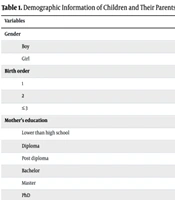
Before venipuncture, the demographic and medical information of the children was recorded, including gender, age, birth order, place of residence, parents' education level and occupation, reason for admission, presence of acute pain due to illness, receipt of analgesics (acetaminophen, ibuprofen, diclofenac) within 4 hours before venipuncture, history of anxiety disorder and use of anti-anxiety medications (fluoxetine and sertraline), presence of anxiety disorder based on the Preschool Anxiety Scale, history of kindergarten attendance, and history of previous venipuncture. This information was collected by the researcher through an interview before the venipuncture procedure (Table 1).
Table 1.
Demographic Information of Children and Their Parents in the Intervention and Control Groups a
| Variables | Intervention | Control | P-Value |
|---|---|---|---|
| Gender | 1 | ||
| Boy | 39 (55.7) | 39 (55.7) | |
| Girl | 31 (44.3) | 31 (44.3) | |
| Birth order | 0.282 | ||
| 1 | 36 (51.4) | 45 (64.3) | |
| 2 | 31 (44.3) | 22 (31.4) | |
| ≤ 3 | 3 (4.3) | 3 (4.3) | |
| Mother’s education | 0.905 | ||
| Lower than high school | 10 (14.3) | 13 (18.6) | |
| Diploma | 28 (40) | 30 (42.9) | |
| Post diploma | 5 (7.1) | 5 (7.1) | |
| Bachelor | 21 (30) | 15 (21.4) | |
| Master | 4 (5.7) | 5 (7.1) | |
| PhD | 2 (2.9) | 2 (2.9) | |
| Father’s education | 0.565 | ||
| Lower than high school | 10 (14.3) | 12 (17.1) | |
| Diploma | 37 (52.9) | 37 (52.9) | |
| Post diploma | 3 (4.3) | 5 (7.1) | |
| Bachelor | 13 (18.6) | 10 (14.3) | |
| Master | 7 (10) | 4 (5.7) | |
| PhD | 0 (0) | 2 (2.9) | |
| Mother’s job | 0.494 | ||
| Non-employee | 2 (2.9) | 3 (4.3) | |
| Employee | 6 (8.6) | 10 (14.3) | |
| Housewife | 62 (88.6) | 57 (81.4) | |
| Father’s job | 0.311 | ||
| Non-employee | 51 (72.9) | 44 (62.9) | |
| Employee | 19 (27.1) | 25 (35.7) | |
| Jobless | 0 (0) | 1 (1.4) | |
| Location | 0.515 | ||
| Urban | 59 (84.3) | 55 (78.6) | |
| Rural | 11 (15.7) | 15 (21.4) | |
| History of kindergarten | 0.097 | ||
| Yes | 2 (2.9) | 8 (11.4) | |
| No | 68 (97.1) | 62 (88.6) | |
| History of venipuncture | 0.306 | ||
| Yes | 34 (48.6) | 27 (38.6) | |
| No | 36 (51.4) | 43 (61.4) | |
| History of pain relief | 0.801 | ||
| Yes | 8 (11.4) | 10 (14.3) | |
| No | 62 (88.6) | 60 (85.7) | |
| Reason for admission | 0.176 | ||
| COVID-19 | 32 (45.7) | 40 (57.1) | |
| Other | 38 (54.3) | 30 (42.9) | |
| Average ranks; (sum of ranks) | |||
| Anxiety disorder score based on PAS scale | 70.34 (4923.50) | 70.66 (4946.50) | 0.955 |
| Duration of venipuncture | 68.73 (4811.0) | 72.27 (5059.0) | 0.605 |
a Values are expressed as No. (%).
The Preschool Anxiety Scale, designed by Spence and colleagues in 2001, was used to assess pre-procedure anxiety. This scale, based on the DSM-IV anxiety disorders list and completed by parents (18), includes 28 questions (excluding those on post-traumatic stress disorder) and covers five areas: Generalized anxiety, social phobia, separation anxiety, fear of physical injury, and obsession (19). Scores range from 0 to 112, with scores between 0 and 37 indicating low anxiety, 37 to 75 indicating moderate anxiety, and above 75 indicating high anxiety (20). Psychometric evaluation of the scale shows moderate to good internal validity (Cronbach's alpha > 0.7). The correlation between information from mothers and fathers was greater than 0.6, and the test-retest correlation (over 12 months) was also higher than 0.6 (21).
The FLACC (face, legs, activity, cry, and consolability) behavioral pain scale was used to measure pain during venipuncture. This scale includes five components: Facial expression, leg movement, activity level, crying, and consolability, each scored as 0, 1, or 2 by the main researcher. The scores from each component are summed to provide a total score. A score of 0 - 3 indicates mild pain, 4 - 6 indicates moderate pain, and 7 - 10 indicates severe pain. A score of 0 represents no pain, while a score of 10 represents the highest level of pain. In the study by Sadeghi et al., the content validity of this scale was confirmed by seven university professors, and its reliability was established by applying the tool to 20 children and using a FACES Scale (r = 0.707) (22).
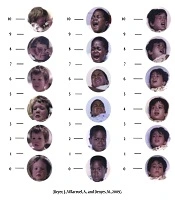
The Facial Image Scale (FIS) was used to assess anxiety caused by venipuncture. This scale features a row of five faces, numbered from 1 to 5, ranging from very happy (score of 1) to very unhappy (score of 5). Children were asked to point to the face that best reflected their feelings at that moment. This tool has been psychometrically tested for children ages 3 to 18 years and has been employed in various studies to measure anxiety in children (23-26). The psychometric validity of this tool has been confirmed in multiple studies (27, 28).
Sampling continued until the desired sample size was reached. After providing complete oral information about the purpose and method of the study, written informed consent was obtained from the child's parent or guardian. Before venipuncture, demographic and medical questionnaires were completed, and the presence of anxiety disorder in the child was assessed using the FIS and recorded by a researcher. If necessary, at the discretion of the treating physician, a visit with a child psychiatrist was conducted in the hospital.
To prevent separation anxiety, children were accompanied by a parent in the venipuncture room. Venipuncture was performed on the back of the hand using a No. 24 angiocatheter by expert nurses with over two years of clinical experience in the pediatric ward. The catheter was inserted at a 25 - 30-degree angle for all venipunctures. For the control group, routine methods such as talking were used. For the intervention group, in addition to the usual methods, a distraction technique (watching cartoons) was employed. The "Pooches Family" cartoon is an informative and engaging animated series designed for children and young audiences. It features a family of seven dogs who have interesting adventures in each episode. The cartoon, suitable for children aged 2 to 10, is known for its cheerful atmosphere and high appeal, making it effective in capturing children's attention and teaching life lessons. This cartoon has been translated into Persian and is broadcast on Iranian television and media. Prior to the procedure, the "Pooches Family" cartoon (duration = 4 minutes and 33 seconds) was shown to the intervention group using a tablet. The cartoon was shown to the control group after the venipuncture.
Anxiety due to venipuncture in both groups was assessed and recorded using the FIS scale immediately before and after venipuncture by a researcher. Additionally, pain due to venipuncture in both groups was measured and recorded using the FLACC Scale immediately before and after the procedure. Finally, the pain and anxiety levels in the two groups were compared.
3.1. Data Analysis
After collecting data and presenting descriptive statistics, data analysis was conducted. To ensure the similarity of the two groups, a t-test was used for quantitative variables, and a chi-square test was used for qualitative variables. Since pain and anxiety scores were not normally distributed based on the Kolmogorov-Smirnov test (P < 0.05), the Mann-Whitney U test was applied to compare the mean pain and anxiety ranks before and after venipuncture between the intervention and control groups. The Wilcoxon signed ranks test was used to compare pain levels before and after venipuncture within each group. Children who completed the study were analyzed according to the protocol. In this research, the significance level was set at less than 0.05, and data analysis was performed using SPSS software version 20.0.
This project was approved by the Ethics Committee of Mazandaran University of Medical Sciences (IR.MAZUMS.REC.1399.735) and registered in the Iranian Registry of Clinical Trials (IRCT20171203037723N5). Informed consent was obtained from parents both verbally and in writing, and they were assured of privacy and confidentiality.
4. Results
In this study, a total of 140 children, including 39 (55.7%) boys and 31 (44.3%) girls, were divided into two groups of 70: Intervention and control. The mean age of children in the intervention group was 52.44 ± 14.37 months, while in the control group it was 50.91 ± 15.66 months, with no significant difference between the two groups (P = 0.548).
In the intervention and control groups, 34 (48.6%) and 27 (38.6%) children, respectively, had a history of venipuncture. None of the patients had acute pain due to illness, a history of anxiety disorder, or were taking anti-anxiety medication. In the intervention group, 8 patients (11.4%) and in the control group, 10 patients (14.3%) had used drugs such as acetaminophen or ibuprofen up to 4 hours before venipuncture due to fever. The mean score of anxiety disorder before venipuncture was 1.21 ± 1.98 in the intervention group and 1.11 ± 1.66 in the control group, with no significant difference between the two groups (P = 0.747). The mean duration of venipuncture was 33.39 ± 11.34 seconds in the intervention group and 33.11 ± 9.39 seconds in the control group, with no significant difference between the two groups (P = 0.878).
In the intervention group, 8 (11.5%) mothers were employed and 62 (88.6%) were housewives, while in the control group, 13 (18.6%) mothers were employed and 57 (81.4%) were housewives. In the intervention group, all fathers were employed, while in the control group, only one father (1.4%) was unemployed. The reason for hospitalization in the intervention and control groups was COVID-19 in 32 (45.7%) and 40 (57.1%) cases, respectively; the remaining children were hospitalized for other reasons. Both groups were similar in terms of these variables (P > 0.05). Demographic and medical information of the patients are shown in Table 1.
The mean pain ranks before and after venipuncture were 4.17 ± 2.36 and 6.0 ± 2.42 in the intervention group, and 4.40 ± 1.96 and 6.93 ± 2.21 in the control group, respectively. The Mann-Whitney U test showed that the difference in average pain rank before venipuncture between the two groups was not significant, but the mean pain ranks were statistically different after venipuncture (P < 0.05). As shown in Table 2, the mean pain ranks after venipuncture were significantly different between the intervention and control groups (P = 0.021). Based on the Wilcoxon Signed Ranks test, the mean pain ranks before and after venipuncture were significantly different in both groups (P < 0.001).
Table 2.
Compare of Pain and Anxiety Between the Intervention and Control Groups in Before and After Intervention
| Intervention Group | Control Group | P-Value | |
|---|---|---|---|
| Pain before intervention | 67.91 (4753.50) | 73.09 (5116.50) | 0.445 |
| Pain after intervention | 62.71 (4389.50) | 78.29 (5480.50) | 0.021 |
| Anxiety before intervention | 67.50 (4725.0) | 73.50 (5145.0) | 0.368 |
| Anxiety after intervention | 62.93 (4405.0) | 78.07 (5465.0) | 0.023 |
5. Discussion
The mean anxiety ranks before and after venipuncture were 2.61 ± 1.32 and 3.26 ± 1.35 in the intervention group, and 2.80 ± 1.016 and 3.80 ± 0.99 in the control group, respectively. As shown in Table 2, the mean anxiety scores after venipuncture were significantly different between the two groups (P = 0.023), and the mean anxiety ranks before and after venipuncture were significantly different in both groups (P < 0.001). The Mann-Whitney U test showed that the difference in average anxiety rank before venipuncture between the two groups was not significant, but the mean anxiety ranks were statistically different after venipuncture (P < 0.05). Based on the Wilcoxon signed ranks test, the mean anxiety ranks before and after venipuncture were significantly different in both groups (P < 0.001) (Table 2).
A study by Kaheni et al. (involving 80 children aged 3-6 years, hospitalized with second-degree burns, showed that using computer games during burn dressing changes affects pain levels (29). Another study by Inan and Inal involving 180 children aged 6 - 10 years, divided into four groups (cartoons, video games, verbal interaction with parents, and control), demonstrated that distraction techniques are effective in reducing anxiety and pain during venipuncture, with video games being the most effective method (30). A study by Mohammadi et al. on 90 children aged 3 - 6 years who were candidates for tonsillectomy in Birjand found that playing and watching cartoons effectively controlled children's anxiety before anesthesia (16). Another study indicated that the drawing method is effective in reducing anxiety in children before surgery (11).
In the evaluated studies, distraction techniques, regardless of the method applied (including music, talking, reading books, and virtual reality), reduce fluctuations in physiological parameters and pain perception by activating endogenous inhibitory systems (31, 32). This subsequently decreases children's anxiety, which aligns with the results of the present study. Choosing an age-appropriate distraction technique can be effective in reducing pain and anxiety. For example, sweet-tasting solutions are highly recommended for infants but are ineffective for primary school children. In addition to the method used, other factors also affect perceived pain and anxiety during invasive therapeutic interventions. Nurses play a crucial role in managing the pain and anxiety associated with patient treatments, including those for hospitalized children. While parents may be able to apply these distraction techniques, their effectiveness can be questionable for parents with high levels of anxiety (2).
Due to the fact that distraction techniques are easy, accessible, and low-cost, their use by healthcare personnel and medical staff to reduce physical and mental complications and improve the quality of life for sick children is recommended. However, using distraction techniques alone may not be effective for children who require more invasive procedures, such as lumbar punctures and bone marrow aspirations, or for those with severe injection phobia. These children may need more specialized psychological interventions, such as a combination of cognitive-behavioral techniques, confrontation, mental imagery, cognitive restructuring, hypnosis, and parent training (33).
Contradictions have been observed in the literature. For instance, one study found that distraction through bubble blowing effectively reduced pain and anxiety caused by venipuncture, whereas distraction using cartoon-patterned clothes was only effective in reducing anxiety (19). Another study indicated that distraction cards and listening to music reduced pain and anxiety from blood sampling, but no statistically significant difference was found (34). Therefore, further studies are recommended to address these inconsistencies.
5.1. Limitations
This study acknowledges that individual temperament characteristics of children may influence how they express pain and anxiety. However, specific temperament traits were not systematically assessed. The study focuses on children aged 3 - 6 years, which may limit the applicability of the results to older or younger age groups. Additionally, the study was conducted in a specific clinical setting, so factors such as cultural differences, healthcare practices, and hospital environments might affect the generalizability of the results. Venipuncture procedures were performed by different nurses. To address this limitation, the study specifically selected nurses with at least two years of experience in the pediatric department and expertise in performing venipunctures on young children. Children’s interest in various cartoons can vary significantly, which might impact their perceived pain and anxiety levels. Unfortunately, due to certain constraints, the study did not allow children to choose their preferred cartoons during the intervention.
5.2. Conclusions
The findings of this study suggest that watching cartoons can effectively reduce pain and anxiety in children aged 3 - 6 years undergoing venipuncture. Providing a familiar and comforting distraction, such as cartoons, during medical procedures can improve the overall experience for young patients and enhance their coping mechanisms. Integrating child-friendly interventions like watching cartoons into clinical practice offers a promising approach to improving the psychological well-being of young patients during medical procedures.