
1. Background
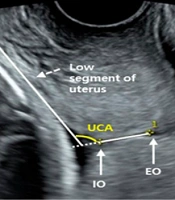
Preterm birth (PTB) is one of the leading causes of perinatal mortality and morbidity, complicating approximately 15 - 18% of pregnancies worldwide (1). Roughly two-thirds of PTBs occur spontaneously, while the remaining cases are medically indicated (2). Early identification of women at high risk of PTB and the implementation of effective preventive strategies are essential for reducing adverse neonatal outcomes (3). Transvaginal cervical length (CL) measurement during the second trimester is a commonly used screening tool to assess PTB risk (4). However, its predictive performance is limited. For instance, a CL of less than 25 mm has demonstrated only 28% sensitivity and 86% specificity for predicting preterm labor (5). Due to this relatively low sensitivity and high false-positive rate, alternative predictive markers have been explored (6). One such marker is the uterocervical angle (UCA) — the angle formed between the anterior uterine wall and the cervical canal. Studies have shown that a more obtuse UCA is associated with a higher risk of PTB (7, 8). In particular, a UCA greater than 105 degrees has demonstrated a sensitivity of approximately 81% for predicting PTB before 34 weeks of gestation (9), suggesting its potential as a valuable screening tool. Beyond risk prediction, researchers have also investigated preventive interventions such as vaginal progesterone supplementation (10-12). Progesterone has been shown to be effective in reducing the risk of PTB, especially in women with a prior history of PTB or a short cervix during pregnancy. However, the efficacy of vaginal progesterone in women with a normal CL but an isolated increase in UCA has not been adequately studied.
2. Objectives
The present study aimed to evaluate the effectiveness of vaginal progesterone in reducing the incidence of PTB among pregnant women with an increased UCA.
3. Methods
3.1. Study Design and Participants
This randomized clinical trial (IRCT20190208042655N3) was conducted at Imam-Khomeini Hospital Complex, Tehran, Iran, between October 2022 and September 2023. The study enrolled primigravid women aged 18 to 45 years with singleton pregnancies between 18 and 20 weeks of gestation who had a UCA greater than 105 degrees (9). Participants were excluded if their initial CL was 30 mm or less, or if they did not complete the intervention.
3.2. Sampling and Randomization
Based on the prevalence of PTB reported in a previous study (1), with a confidence level of 95% and a statistical power of 80%, the required sample size was calculated to be 52 participants (26 per group). The following formula was applied:
Participants were randomly assigned in a 1:1 ratio to either the intervention group or the control group using a simple randomization method. This study employed a single-blind design; the statistical consultant responsible for data analysis was blinded to group assignment.
3.3. Measurements and Intervention
At the beginning of the study (between 18 and 20 weeks of gestation), CL and UCA measurements were performed by an experienced perinatologist using a high-resolution real-time ultrasound scanner (Philips Affinity 70) equipped with a 4 - 9 MHz transvaginal probe. All measurements were obtained with an empty bladder to optimize imaging accuracy. The cervix was assessed along its longitudinal axis, ensuring it occupied approximately 50 - 70% of the ultrasound screen. Care was taken to avoid applying excessive pressure with the transducer, as this could artificially elongate the cervix. To minimize measurement variability, three measurements were obtained for each patient at the same time, and the shortest value was used for analysis (11). The UCA measurement was performed in accordance with the method described by Dziadosz et al. (12). First, a straight line was drawn from the internal os to the external os to define the cervical canal. A second line was then drawn along the lower anterior uterine segment. The angle formed between these two lines represented the UCA. The intervention group received 400 mg of vaginal progesterone suppositories (Aburaihan Pharmaceutical Company, Tehran, Iran) once daily, starting between 18 and 20 weeks of gestation and continuing until 36 weeks. The control group received no medication.
3.4. Data Collection
At the initial visit, demographic and clinical information was collected from each participant, including age, Body Mass Index (BMI), and the presence of any underlying medical conditions. Gestational age was confirmed based on crown-rump length measurements obtained during first trimester ultrasonography. Participants were followed prospectively until delivery. Primary and secondary outcomes included gestational age at delivery, mode of delivery, birth weight, Apgar scores at 1 and 5 minutes, and the need for neonatal intensive care unit (NICU) admission. Preterm birth was defined as delivery before 37 completed weeks of gestation and further categorized as early PTB (< 34 weeks) and late PTB (34 to < 37 weeks) (13). All data were recorded using a standardized, researcher-administered checklist.
3.5. Ethics Approval
This study was approved by the Ethics Committee of Imam Khomeini Hospital Complex affiliated with Tehran University of Medical Sciences (IR.TUMS.IKHC.REC.1402.201). Written informed consent was obtained from all participants prior to enrollment. The pregnant women had the right to leave the study whenever they wanted, and all information was kept confidential.
3.6. Data Analysis
Statistical analysis was performed using SPSS software, version 24 (IBM Corp., Armonk, NY, USA). Continuous variables were expressed as means ± standard deviations (SD), while categorical variables were summarized as frequencies and percentages. The normality of distribution for quantitative variables was assessed using the Kolmogorov-Smirnov test. Depending on the distribution, comparisons between the two groups were conducted using the independent t-test. The chi-square test was used to analyze differences between categorical variables. Logistic regression analysis was performed to assess the association between various factors and the risk of PTB. A P-value of < 0.05 was considered statistically significant.
4. Results
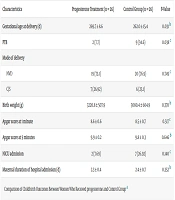
A total of 52 primigravid women with singleton pregnancies were included in the study. There were no statistically significant differences between the intervention and control groups in terms of baseline characteristics, including maternal age, BMI, CL, UCA, presence of diabetes, hypertension, hypothyroidism, use of enoxaparin, or history of cervical cerclage. Baseline characteristics of the study participants are summarized in Table 1. The mean gestational age at delivery was significantly higher in the intervention group compared to the control group (P = 0.031). Additionally, the incidence of PTB was significantly lower in the intervention group (7.7%) than in the control group (34.6%) (P = 0.038). All cases of PTB in both groups were categorized as late PTB (occurring after 34 weeks of gestation) (Table 2). There were no statistically significant differences between the two groups in terms of mode of delivery, Apgar scores at 1 and 5 minutes, or maternal hospital stay. Although the rate of NICU admission was lower in the progesterone group, the difference did not reach statistical significance (P = 0.140). Notably, there were no cases of fetal mortality or intrauterine fetal demise reported in either group. Multiple logistic regression analysis demonstrated that maternal factors such as age, BMI, CL, and UCA were not significantly associated with PTB risk. However, the administration of vaginal progesterone was identified as an independent predictor of reduced PTB risk. Specifically, the odds of PTB were 0.14 times lower in the intervention group compared to the control group, and this association was statistically significant (P = 0.026) (Table 3).
Table 1.
Demographic and Medical Characteristics of Primigravid Women in the Progesterone Treatment and Control Groups a
| Characteristics | Progesterone Treatment Group (n = 26) | Control Group (n = 26) | P-Value |
|---|---|---|---|
| Age (y) | 30.54 ± 6.863 | 30.11 ± 5.48 | 0.807 b |
| BMI (kg/m2) | 25.73 ± 5.00 | 27.07 ± 5.96 | 0.383 b |
| CL (mm) | 35.35 ± 2.43 | 35.92 ± 2.45 | 0.398 b |
| UCA (degrees) | 121.08 ± 7.27 | 120.54 ± 7.94 | 0.800 b |
| Cervical cerclage | 2 (7.69) | 1 (3.85) | 1.000 c |
| Diabetes | 5 (19.2) | 5 (19.2) | 1.000 c |
| Hypertension | 4 (15.3) | 3 (11.5) | 0.685 c |
| Hypothyroidism | 3 (11.5) | 5 (19.2) | 0.442 c |
| Using enoxaparin | 5 (19.2) | 7 (26.9) | 0.510 c |
Abbreviations: BMI, Body Mass Index; CL, cervical length; UCA, uterocervical angle.
a Values are expressed as No. (%) or mean ± SD.
b Independent t-test.
c Chi-square/Fisher’s exact test.
Table 2.
Comparison of Childbirth Outcomes Between Women Who Received progesterone and Control Group a
| Characteristics | Progesterone Treatment (n = 26) | Control Group (n = 26) | P-Value |
|---|---|---|---|
| Gestational age at delivery (d) | 269.7 ± 8.6 | 262.0 ± 15.4 | 0.031 b |
| PTB | 2 (7.7) | 9 (34.6) | 0.038 c |
| Mode of delivery | |||
| NVD | 19 (73.1) | 20 (76.9) | 0.749 c |
| C/S | 7 (26.92) | 6 (23.1) | |
| Birth weight (g) | 3220.8 ± 507.9 | 3080.4 ± 604.9 | 0.370 b |
| Apgar score at 1 minute | 8.6 ± 0.6 | 8.5 ± 0.7 | 0.517 c |
| Apgar score at 5 minutes | 9.9 ± 0.2 | 9.8 ± 0.3 | 0.646 b |
| NICU admission | 2 (7.69) | 7 (26.92) | 0.140 c |
| Maternal duration of hospital admission (d) | 2.3 ± 0.4 | 2.4 ± 0.7 | 0.352 b |
Abbreviations: PTB, preterm birth; NVD, normal vaginal delivery; C/S, caesarean section; NICU, neonatal intensive care unit.
a Values are expressed as No. (%) or mean ± SD.
b Independent t-test.
c Chi-square test.
Table 3.
Logistic Regression Analysis of Preterm Labor and Associated Factors
| Characteristics | OR (95% CI) | P-Value |
|---|---|---|
| Age (y) | 0.97 (0.85 - 1.11) | 0.664 |
| BMI (kg/m2) | 1.05 (0.92 - 1.20) | 0.468 |
| CL (mm) | 0.85 (0.61 - 1.19) | 0.365 |
| UCA (degrees) | 1.03 (0.93 - 1.13) | 0.590 |
| Using progesterone | 0.14 (0.02 - 0.79) | 0.026 |
Abbreviations: OR, odds ratio; CI, confidence interval; BMI, Body Mass Index; CL, cervical length; UCA, uterocervical angle.
5. Discussion
The current study evaluated the effectiveness of vaginal progesterone in reducing PTB among pregnant women with an increased UCA. Preterm birth remains a major challenge in obstetrics due to its significant association with neonatal morbidity and mortality. The most well-established risk factors for PTB include a history of prior preterm delivery, a short CL, and multifetal gestation (14). In addition to CL, recent research has identified the UCA as a potential marker for PTB risk. A 2021 systematic review and meta-analysis found that an increased UCA was significantly associated with higher rates of preterm delivery in both singleton and twin pregnancies (15). Specifically, a UCA > 105° showed 81% sensitivity and 65% specificity for predicting delivery before 34 weeks (12). In contrast, a CL < 25 mm had only 31% sensitivity, although with higher specificity (95%) (8). Given UCA’s higher sensitivity, it may serve as a more effective screening tool for identifying women at risk of PTB. Based on this evidence, our study enrolled women with UCA > 105 degrees and normal CL to evaluate the efficacy of vaginal progesterone in preventing PTB. To the best of our knowledge, this is the first clinical trial to focus specifically on this subgroup. Our findings suggest that vaginal progesterone significantly reduces the risk of PTB in women with an isolated increase in UCA.
In contrast to our findings, a study evaluating the effect of vaginal progesterone in high-risk pregnant women for PTB reported that progesterone (at any daily dose) had no significant effect on gestational age at delivery or other neonatal outcomes (16). Similarly, a randomized trial involving 611 women with a history of PTB found no statistically significant difference in the incidence of deliveries before 37 weeks and 32 weeks between the progesterone group, who received 90 mg daily vaginal progesterone gel, and the placebo group (17). The probable reason for these different findings is the selected study population. They evaluated the effect of vaginal progesterone in twin and short CL pregnancies, while our study was conducted in pregnant women with increased UCA.
In line with our study, several other studies have demonstrated the benefits of vaginal progesterone in reducing the risk of PTB and improving neonatal outcomes. These include randomized clinical trials evaluating women with short CL (< 15 mm), where daily administration of 200 mg vaginal progesterone suppositories was associated with a reduced risk of delivery before 34 weeks (16, 18, 19). Most studies have mainly looked at patients who are at high risk of PTB and received progesterone based on certain factors like CL or prior PTB. These findings have led to the widespread use of these factors as key indicators for progesterone prophylaxis (10, 20).
Among the available routes of progesterone administration, the vaginal route is particularly advantageous. Unlike oral administration, which undergoes hepatic metabolism and results in fluctuating serum levels and increased side effects, vaginal administration ensures rapid absorption, higher bioavailability, and a more direct uterine effect via sustained high serum concentrations (21). This pharmacokinetic profile supports its use in PTB prevention.
There were no statistically significant differences between the two groups in terms of mode of delivery, Apgar scores at 1 and 5 minutes, or maternal hospital stay. Although the rate of NICU admission was lower in the progesterone group, the difference did not reach statistical significance (P = 0.140). Notably, there were no cases of fetal mortality or intrauterine fetal demise reported in either group. As demonstrated in our study, birth outcomes were comparable between the two groups, with the progesterone group even exhibiting a lower rate of NICU admissions. Progesterone treatment not only reduces the risk of PTB but also contributes to decreased neonatal morbidity — including low birth weight (LBW), respiratory distress syndrome (RDS), and NICU admissions — as well as lower neonatal mortality (22, 23).
However, this study has certain limitations. The most significant is the tight inclusion criteria, which may affect the generalizability of our findings, as well as the challenge of a single-blind design. Further studies with larger cohorts are needed to confirm these results and to better define the role of UCA as a risk factor for PTB. Moreover, since this study included only patients with normal CL, it is possible that combining UCA assessment with other cervical markers such as short or borderline CL could enhance the predictive value and treatment response.
5.1. Conclusions
This study showed that vaginal progesterone might serve as an effective prophylactic intervention for reducing the risk of PTB in women with an increased UCA. Given its favorable safety profile, accessibility, and low cost, vaginal progesterone represents a practical and viable option for clinical use in this at-risk population. These results may inform clinical decision-making and support the broader implementation of targeted PTB prevention strategies. For future research, it is suggested to compare different dosages of progesterone and different types of progesterone.