
1. Background
Health is a concept influenced by various factors, including individual circumstances, society, culture, environment, education, and income. It is essential to view health as an issue for which individuals bear personal responsibility (1). Individual health responsibility is a daily, progressive process that encompasses personal engagement in self-care duties (2). Accordingly, it involves individuals’ choices to accept and pursue daily activities that enhance their health status (3). Taking individual health responsibility empowers people to adopt a proactive role in disease prevention, health promotion, and improving their quality of life (4). This sense of responsibility can alleviate the burden on health systems and contribute to a healthier community (5).
In recent years, biological events like the COVID-19 pandemic have directly challenged the health status of individuals, society, and national health systems (3). In developing countries such as Iran, these events have significantly impacted health system management, revealing fundamental challenges like resource shortages, management issues, increased costs due to a high influx of patients, and confusion in responding to the evolving nature of the disease. Consequently, these factors have altered individual health responsibility (6, 7). In a society where individuals not only support others but also strive to create a safe and healthy environment, adherence to health protocols and cooperation with disease prevention programs can reduce costs on health systems and expedite control measures (8-10).
Evidence regarding the concept of individual health responsibility indicates that, while its dimensions are somewhat defined in chronic diseases, they have not been adequately addressed in the context of biological events. There is a notable lack of evidence regarding individual experiences with this concept, especially among students who are in a dynamic and interactive phase of their lives and are more inclined to adopt health-promoting habits (3, 11). Research also shows that health-related behaviors and responsibility among university students vary, depending on context, culture, and educational and demographic factors (12-14). Furthermore, non-medical students generally exhibit less health-promoting behavior and health responsibility compared to their medical counterparts (12, 14). Given that changes in global exchanges and migration predict the risk of recurring biological events similar to the COVID-19 pandemic, further investigation into the factors affecting health responsibility, particularly among students, is essential (14, 15).
2. Objectives
The present study aimed at understanding the factors influencing individual health responsibility among students in the context of biological events through a qualitative study.
3. Methods
3.1. Study Design
To achieve a profound understanding of participants’ experiences in response to the question: “What factors influenced non-medical students’ individual health responsibility when facing the COVID-19 pandemic?”, this study was conducted using a qualitative approach with a content analysis method based on Granheim and Lundman’s proposed methodology (16).
3.2. Study Setting and Participants
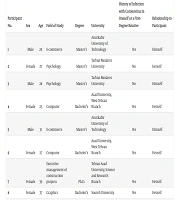
The research population included 18 participants (12 students) from various disciplines, including engineering, psychology, economics, management, arts, and agricultural sciences, from several non-medical or comprehensive universities of Tehran and four family members. Participants were purposefully selected based on criteria such as firsthand experience with COVID-19, willingness to participate, and ability to articulate their experiences (17) (Table 1). If, for any reason, a participant lost their willingness to continue in the study, they could withdraw. Throughout this study, no participants met the criteria for withdrawal.
Table 1.
Demographic Characteristics of Participants
| Participant No. | Sex | Age | Field of Study | Degree | University | History of Infection with Coronavirus in Oneself or a First-Degree Relative | Relationship to Participant |
|---|---|---|---|---|---|---|---|
| 1 | Male | 29 | E-commerce | Master’s | Amirkabir University of Technology | Yes | Himself |
| 2 | Female | 27 | Psychology | Master’s | Tarbiat Modares University | No | Herself |
| 3 | Male | 28 | Psychology | Master’s | Tarbiat Modares University | No | Himself |
| 4 | Female | 25 | Computer | Bachelor’s | Azad University, West Tehran Branch | Yes | Herself |
| 5 | Male | 31 | E-commerce | Master’s | Amirkabir University of Technology | Yes | Himself |
| 6 | Female | 27 | Computer | Bachelor’s | Azad University, West Tehran Branch | Yes | Herself |
| 7 | Female | 39 | Executive management of construction projects | Ph.D. | Tehran Azad University, Science and Research Branch | Yes | Herself |
| 8 | Female | 37 | Graphics | Bachelor’s | Soureh University | Yes | Herself |
| 9 | Female | 37 | Imagery | Master’s | Azad University, Central Tehran Branch | Yes | Herself |
| 10 | Female | 35 | Psychology | Ph.D. | Shahid Beheshti University | Yes | Herself |
| 11 | Male | 32 | Executive management | Master’s | Shahid Beheshti University | No | Himself |
| 12 | Female | 51 | Psychology | Bachelor’s | Tehran Azad University | Yes | Herself |
| 13 | Female | 39 | Executive management of construction projects | Ph.D. | Tehran Azad University, Science and Research Branch | Yes | Herself |
| 14 | Male | 24 | Civil | Bachelor’s | Azad University, West Tehran Branch | Yes | Himself |
| 15 | Male | 40 | Economics | Ph.D. | - | Yes | Spouse of participant # 7 |
| 16 | Female | 47 | Experimental sciences | Diploma | - | Yes | Mother of participant # 4 |
| 17 | Female | 25 | Psychology | Master’s | - | Yes | Daughter of participant # 12 |
| 18 | Female | 51 | Industrial engineering | Bachelor’s | - | Yes | Mother of participant # 3 |
3.3. Data Collection and Measurement
Data were collected through semi-structured in-depth interviews. The research team developed an interview guide and conducted several pilot interviews to evaluate the questions. After obtaining the necessary permissions, arrangements were made with interviewees to conduct interviews at convenient times and locations. Most interviews took place in either cafes, university conference rooms, or other prearranged locations suitable for research purposes, typically lasting 45 - 60 minutes per session. Prior to each interview, the researcher introduced themselves, explained the purpose of the research, and ensured participants understood the confidentiality of their information and their right to withdraw. Informed consent was obtained in written or verbal form, along with permission to record the participant’s voice, which had been recorded via a mobile voice recorder application. The interviews began with open-ended questions from the guide, followed by prompts like, “Please share your experience of health-related challenges posed by COVID-19.” The researcher followed up with probing questions including, “What happened next?”, “What did you mean by that statement?”, or “How did you feel about that experience?” Participants were repeatedly reminded of their informed consent and willingness to continue throughout the research process. Data collection continued until saturation was reached, meaning categories were well-defined and sufficient in depth, and new data did not create new categories (17). Since some students referenced the influential role of family members (e.g., parents or spouses) in their individual health responsibility, the researcher employed theoretical sampling and interviewed selected family members to enrich the data. To ensure the accuracy and rigor of the findings, the criteria proposed by Lincoln and Guba — credibility, dependability, confirmability, and transferability — were applied. The researcher engaged deeply in the field, maintaining continuous observation to enhance understanding. All research stages were thoroughly described, detailing the decision-making process throughout the investigation. Findings were checked by participants and peers, with their feedback incorporated (17).
3.4. Data Analysis
Data analysis using the Graneheim and Lundman approach commenced concurrently with data collection (16). The researcher carefully listened to each interview and transcribed them verbatim onto paper. After transcription, the researcher read one interview thoroughly to understand the study’s context. A line-by-line analysis then began, dividing the text into semantic units relevant to the study’s aim. The researcher summarized these units by removing meaningless or repetitive words while preserving their essential content. Not all texts required summarization, as some were already concise. Following summarization, coding was performed. Codes were organized into subcategories or themes based on their similarities and differences, with descriptive names assigned to each category. Categories were compared, and revisions were made as needed (17, 18).
3.5. Ethical Considerations
This study is part of a larger Ph.D. dissertation investigating the process of individual health responsibility. It has been approved by the Research Ethics Committee of the University of Social Welfare and Rehabilitation Sciences (IR.USWR.REC.1401.012). Additionally, informed consent forms were obtained from each participant prior to interviews. All participants were assured that all interview-related information and documentation (recordings and documents) would be kept confidential and completely deleted upon completion of the research. The authors declare no competing interests.
4. Results
In this study, 18 individuals participated, including 14 students (four undergraduate, six master’s, and four doctoral students) and four immediate family members of the students (mean age = 34.88 years). A total of 18 interviews, lasting approximately 45 - 60 minutes each, were conducted to gain deep insights into their experiences. The characteristics of the participants are presented in Table 1.
The factors influencing individual health responsibility were categorized into four main categories: The debilitating nature of COVID-19, socio-cultural challenges, individual capacity, and community health infrastructure. Additionally, 19 subcategories emerged, including the widespread symptoms and health effects, challenges in diagnosis and treatment, uncontrolled transmission, uncertainty about long-term impacts, pessimism toward treatment efficacy, erosion of public trust, cultural resistance to health protocols, non-compliance with regulations, societal predisposition to crises, ambiguity in collective responsibility, physical susceptibility to illness, personal resilience and adaptability, health knowledge and self-care practices, access to social support, financial constraints affecting health decisions, gaps in public health literacy, inefficient health communication systems, urban preparedness for health emergencies, and accessibility of professional healthcare services (Table 2).
Table 2.
Main Categories and Subcategories Related to Factors Affecting Personal Health Responsibility
| Main Categories | Subcategories |
|---|---|
| The debilitating nature of COVID-19 | Widespread symptoms and health effects; Challenges in diagnosis and treatment; Uncontrolled transmission; Uncertainty about long-term impacts; Pessimism toward treatment efficacy |
| Socio-cultural challenges | Erosion of public trust; Cultural resistance to health protocols; Non-compliance with regulations; Societal predisposition to crises; Ambiguity in collective responsibility |
| Individual capacity | Physical susceptibility to illness; Personal resilience and adaptability; Health knowledge and self-care practices; Access to social support; Financial constraints affecting health decisions |
| Community health infrastructure | Gaps in public health literacy; Inefficient health communication systems; Urban preparedness for health emergencies; Accessibility of professional healthcare services |
4.1. The Debilitating Nature of COVID-19
The study findings indicate that students’ sense of responsibility is significantly influenced by the wide range of COVID-19 symptoms and effects, the hopelessness regarding a definitive treatment, the challenging diagnostic process, the uncontrolled spread of the virus, and confusion in predicting future circumstances. These factors have altered their decision-making concerning individual health responsibility in the face of COVID-19.
4.1.1. Widespread Symptoms and Health Effects
The diverse symptoms affecting multiple body systems (respiratory, musculoskeletal, skin and hair, and even cardiovascular and psychological systems) lead to severe incapacitation in daily activities during the acute phase, as well as enduring complications and prolonged recovery. This complexity has made participants prefer to avoid the disease at all costs. “For two weeks, the illness was so overwhelming that I didn’t even understand how the world was passing by. Then it took several weeks for me to get back on my feet. I couldn’t take a simple walk for two months... Two months is a lot. I had previously undergone major surgery and was up on my feet in a month. This two-month period knocked me down. I fell out of all my work and life.” (Participant 8). The high mortality, unpredictability, and occasionally rapid progression of COVID-19 have instilled a deep fear of losing one’s life or that of loved ones among participants, prompting them to take greater responsibility in confronting the threat. “It was unpredictable. For example, in our relatives, all members of a family got it (COVID-19). From old to young. Surprisingly, the youngest and healthiest member of the family passed away. What does that mean?! Why was the one with high blood pressure spared? Why not the one who smoked? A healthy, athletic young man!?” (Participant 5).
4.1.2. Challenges in Diagnosis and Treatment
Participants expressed a belief that no definitive treatment for COVID-19 existed. They felt physicians were powerless, as no specific drug or treatment method had been identified. Suggested treatments, such as remdesivir, were not easily accessible to Iranians, and even available adjunct treatments could not guarantee recovery or improvement. Therefore, the only way to safeguard oneself was to avoid infection. While this perspective positively impacted participants’ sense of health responsibility, it also imposed considerable psychological pressure. “They kept saying there was no treatment. Now, as a temporary measure, something might work, but they couldn’t do anything about the virus itself. The only way to survive was to try not to get it, creating a kind of life-and-death game.” (Participant 12).
4.1.3. Uncontrolled Transmission
Participants found the diagnostic process for COVID-19 challenging due to ambiguous standards, lack of diagnostic facilities, and inaccessibility of resources, contributing to their helplessness in confronting the disease. “My father was initially told (by doctors) he had COVID and needed hospitalization due to his past history of respiratory condition. We went to a specialist to get a hospitalization letter, and he said it wasn’t COVID. He had also undergone a CT scan. Now, whose advice were we supposed to trust? You didn’t know! At that time, testing kits were hard to come by or very expensive.” (Participant 6).
4.1.4. Uncertainty About Long-Term Impacts
The prolonged COVID-19 pandemic led participants to perceive the disease as out of control, fostering a sense of hopelessness about its resolution. They believed the likelihood of transmission was higher in gatherings, with unprotected contact quickly spreading the virus. One participant likened this to a zombie-like contagion, profoundly impacting their sense of health responsibility. “At that time, there was a video on Instagram that symbolically showed that if an infected person touched something, the place on their hand would turn phosphorescent, meaning they would be infected with the virus there. That video blew my mind and changed my life. I kept thinking that this hand touched there and that one touched here.” (Participant 4). “It’s a strange disease. You feel like everyone around you is a zombie, and if you breathe, you become a zombie. If you’re not careful, you turn into a zombie. So, you better stay vigilant.” (Participant 1).
4.1.5. Pessimism Toward Treatment Efficacy
Participants faced uncertainties regarding the future of COVID-19 due to virus mutations, the constantly evolving nature of its symptoms, and the overall unfamiliarity of the disease. “There wasn’t any wave where the virus didn’t differ from the previous one. Even a new strain had symptoms that were different. How can they develop a drug for you when you’re changing every day? I didn’t know what was going to happen, and more than anything, that ambiguity was distressing. For me, it was a complete confrontation with uncertainty.” (Participant 2).
4.2. Socio-Cultural Challenges
This category reflects that participants in this study face social and cultural turmoil, affecting their individual health responsibility in responding to COVID-19. Their experiences of collective confusion in trusting authorities, media, and each other, alongside government actions; their inability to culturally adapt to COVID-19 preventive and care protocols; the lack of adherence to laws by citizens, legislators, and law enforcers; and living in a crisis-prone society contribute to this turmoil. Additionally, they experience bewilderment in social responsibility.
4.2.1. Erosion of Public Trust
Confusion in trusting scientific authorities arises when evidence from foreign and Iranian sources conflicts, leading to significant distrust towards domestic resources and the government. This confusion extends to conflicting approaches from the World Health Organization (WHO), skepticism towards the media, a lack of trust in fellow citizens, and reliance on word-of-mouth information over scientific sources, resulting in profound distrust. “Well, these (referring to Iranian state media) would say anything, and I had to check it against WHO’s website to see if their claims had scientific backing. There are often contradictions, but at least those contradictions have a scientific basis you can trust. Generally, whatever comes from abroad or in English is more trustworthy. It’s less likely they’ll say something nonsensical or lie, especially in science. But these (Iranian news sources) are completely untrustworthy. You can never trust them.” (Participant 7).
4.2.2. Cultural Resistance to Health Protocols
The clash between Iranian social norms, such as hugging, shaking hands, and close contact, and COVID-19 protocols creates challenges for participants. Deeply rooted cultural practices, including rigid adherence to collective events such as mourning ceremonies, celebrations, and weddings, lead to judgments about those with illnesses and alienation from scientific recommendations. This results in participants’ inability to culturally adapt to COVID-19 protocols, impacting their individual health responsibility. “It was hard. You felt terrible that you could not shake hands at all. As soon as we arrived, our hands would subconsciously reach toward each other. If you didn’t extend your hand, they would bring theirs forward. We hugged. We kissed. It’s still the same now. Shaking hands, hugging, kissing... three times (laughs). It’s always been part of our etiquette. Maybe for Europeans, this wouldn’t be a story. But for us, it is and it was.” (Participant 1).
4.2.3. Non-compliance with Regulations
This subcategory illustrates behaviors such as leniency towards law evasion and prioritizing normative behaviors over legal adherence. Participants often undervalued collective interests compared to individual ones, demonstrating detachment from the consequences of collective benefits. Citizens showed a lack of understanding regarding their social rights and laws, which contributed to inadequate adherence to health laws by both the government and citizens, not only concerning COVID-19 but also in broader contexts. “When existing laws aren’t enforced, and no one takes them seriously, nobody gives new laws any credibility... Besides, why should I, as a young person, or anyone, comply with restricting laws like quarantine or social distancing when they circumvent larger laws whenever they need to?” (Participant 4).
4.2.4. Societal Predisposition to Crises
Due to political and economic turmoil in recent decades, Iranians have developed a tendency to adapt to crises, with little opportunity to adjust to consecutive challenges. While this resilience and adaptability have enhanced their health responsibility, it has also neglected psychological pressures. Frequent experiences of grief, from both COVID-19-related deaths and social crises, have diminished their ability to manage anger, contributing to anxiety disorders and overwhelming feelings of frustration about societal conditions. “We are a resilient nation. We endure a lot and adapt to every calamity that befalls us. When you’re used to crises, your response to them is excellent. Whether it’s COVID or any other misfortune... We’ve done it, and that means our people are great and they take good care (said this with anger and her lips trembling).” (Participant 16).
4.2.5. Ambiguity in Collective Responsibility
Commitment to social health responsibility has a dual effect on individual health responsibility. On one side, behaviors like caring for others or oneself as part of the community promote health responsibility. However, students also exhibited reluctance to engage in social initiatives such as charity work or volunteering, expressing a lack of belonging to their families or communities. This led to indifference about their health destinies and a diminished sense of national pride, impacting students’ social responsibility as both a facilitator and a barrier to their individual health responsibility. “What does it matter to me what happens to everyone? Since it does not benefit me, I don’t care what happens to society. I can understand them... Does this (national) flag take care of me, a young person? So why should I take care of it? Do I have a future with this flag that would make me want to do something for it?” (Participant 8).
4.3. Community Health Infrastructure
This category indicates that the lack of knowledge and health literacy, the chaos in the health system regarding community awareness, and inadequate urban planning to confront health crises — such as poor public transportation infrastructure and inefficient provision of professional health services — have made it difficult for students to take individual health responsibility in the face of COVID-19.
4.3.1. Gaps in Public Health Literacy
Students’ lack of awareness regarding the symptoms, transmission, and prevention of COVID-19, coupled with a scarcity of information published about the virus in Persian, has led to a significant gap in knowledge. The ambiguous and unstable nature of the information disseminated about COVID-19 has exacerbated this gap. “For a long time, they said no to masks, and then they said yes, absolutely yes! Why does this information change every day? Just as you get accustomed to one protocol, it changes. Of course, the scientists were confused too; they didn’t know what was going on. Moreover, most of the information was in English rather than Persian.” (Participant 9). Moreover, general ignorance regarding health practices — such as the importance of health awareness, proper cough and sneeze etiquette, and care for prior viral conditions like the common cold — has also negatively impacted students’ individual health responsibility. “When we were in high school, a health educator came and gave a training on how to sneeze in a safe way. But we didn’t take it seriously. We would cover our mouths with our hands and thought that was the right way!” (Participant 4).
4.3.2. Inefficient Health Communication Systems
Factors such as the delayed commencement of COVID-19 prevention and care education from Iranian radio and television, unresponsive authorities meant to provide information, and inconsistencies in data from different sources have led to confusion among students regarding knowledge about COVID-19. Additionally, the challenging usability of online educational platforms and a lack of prior familiarity with new educational methods — such as virtual classrooms or education through social media networks — have significantly impacted students’ health responsibility in relation to COVID-19. “There was talk about it everywhere, but you didn’t know which one was correct. Because everyone was saying something different, and the only clear thing was that whoever was saying it was doing so to benefit themselves.” (Participant 1).
4.3.3. Urban Preparedness for Health Emergencies
The poor public transportation infrastructure has made commuting burdensome for students and interfered with their ability to adhere to health protocols. Additionally, urban areas that are incompatible with COVID-19 measures — such as the lack of free health stations, improper ventilation, insufficient space in indoor public areas for maintaining social distance, and an overall inadequacy for walking — have created barriers complicating the foundation of community health and students’ individual health responsibility during the COVID-19 pandemic. “Well, there’s a lack of metro, BRT is insufficient, and it’s always crowded. I really couldn’t imagine standing in a crowd for an hour with an autoimmune disease... We don’t have enough proper pedestrian overpasses. Even if there are overpasses, most of them lack escalators... In Tehran, to follow the protocols, you either had to take a very expensive ride-sharing service or a personal car, which I didn’t have.” (Participant 5).
4.3.4. Accessibility of Professional Healthcare Services
The results indicate that students believe the inadequacy and inaccessibility of professional health services — such as shortages of hospital beds, diagnostic laboratories, IV fluids, medications, crowding in treatment centers, healthcare staff burnout, lack of diagnostic kits, and, most importantly, the absence of vaccines — signal a weak foundation of community health that affects their individual health responsibility. “What was an IV infusion serum? Just water, sugar, and salt! It was nonexistent. People were posting on Instagram asking who has two IV serums. Where else in the world does this happen? You (referring to the government) can’t even properly take responsibility for supplying an IV serum, yet you expect total accountability from me?” (Participant 17).
4.4. Individual Capacity
This category reflects that the individual capacity of students — such as their level of physical vulnerability, personal development, the richness of individual health capital characterized by a broad perspective on personal health and body awareness, and the presence or absence of a supportive social network from family and friends — plays a significant role in their ability to take individual health responsibility in the face of COVID-19.
4.4.1. Physical Susceptibility to Illness
Students’ physical vulnerability includes the presence or absence of underlying health conditions that predispose them to COVID-19, as well as healthy or unhealthy habits that influence their personal health responsibility. “When you have a history of cancer and chemotherapy, you can’t take risks. I really don’t understand those who have a history and do not take care of themselves. What’s going through their minds?” (Participant 3).
4.4.2. Personal Resilience and Adaptability
This subcategory describes personality traits among students, such as mental maturity, being structured, accepting the consequences of personal health choices, and being independent in health decision-making, all of which facilitate the assumption of health responsibility in the face of COVID-19. “We didn’t choose to have COVID enter our lives. But everything else is our choice. COVID was a forced situation, but the rest and how it impacted our lives are up to us.” (Participant 4). Rapid adaptation to new learning and communication styles due to COVID-19, as well as the ability to create activities and opportunities during quarantine and social distancing, are components of students’ developed personalities that also enhance their individual health responsibility. “For me, it felt like I learned that it’s not a bad thing, it’s not scary, and I learned to spend time with myself. I learned new skills, listened to podcasts, and improved my mood. I no longer need people around me.” (Participant 6).
4.4.3. Health Knowledge and Self-care Practices
A broad perspective on personal health is generally demonstrated through behaviors such as planning to create healthy habits and a proactive approach to health. This includes body awareness — being attentive to unusual symptoms and valuing one’s body and its changes — which are seen as rich resources affecting students’ individual health responsibility in facing COVID-19. “When you maintain a healthy diet or have a plan to be healthier, it doesn’t matter whether the disease is COVID or something else. It seems like you had a plan beforehand, and now you just need to take more care.” (Participant 6). “When this body is going to remain for me, I need to be aware of its changes. I need to know what’s going on in it. I must take care of it, and that responsibility lies with me, not anyone else.” (Participant 13).
4.4.4. Access to Social Support
This subcategory indicates that the quality and breadth of social interactions, as well as the depth of social support, significantly influence how individuals take health responsibility. Factors such as the number of close friends, connections with peers, emotional support from family, and access to coaches, therapists, and counselors have influenced students’ individual health responsibility in the face of COVID-19. “We had a group on WhatsApp where we were constantly chatting and planning outings... When COVID came, our outings stopped, but our chats increased. We still had each other. That chat really helped us endure not going out and manage through quarantine.” (Participant 8). “We live in another city. When my mom got COVID, my cousin took my mom to the hospital until we got there. It’s good to have people like that around.” (Participant 2).
4.4.5. Financial Constraints Affecting Health Decisions
The results indicate that the ability to cover healthcare costs and daily living expenses, particularly without adequate income, reflects an individual’s financial strength during a biological crisis. This includes having a job, personal income, or financial support from family, all of which indicate students’ financial independence and significantly affect their individual health responsibility in confronting COVID-19. “I was comfortable with my income and expenses. But what about those who had a daily income? I think it became difficult for many, and you can’t judge them for not adhering to protocols.” (Participant 18). “Losing my job was a nightmare for me. A job I had worked hard to get, and now I was about to lose it because of COVID, forcing me to rely on my family again. It was a total nightmare, and I felt trapped. I was stuck between two choices: Either stay healthy and alive or keep my job.” (Participant 5).
5. Discussion
The present study aimed to understand the factors influencing individual health responsibility among students during biological events like COVID-19. The findings indicate that the debilitating nature of COVID-19, socio-cultural challenges, individual capacity, and the community health infrastructure significantly affect students’ individual health responsibility. Most previous studies on health responsibility have mainly focused on measuring it quantitatively through questionnaires, often related to chronic illnesses (2, 3, 19). In contrast, this study highlights new aspects of health responsibility that have been less explored. Participants recognized various factors related to the nature of COVID-19, such as the widespread symptoms and health effects, challenges in diagnosis and treatment, uncontrolled transmission, uncertainty about long-term impacts, and pessimism toward treatment efficacy. Existing evidence also supports a direct link between individual health responsibility and biological events, indicating that actions like vaccination, personal hygiene, and safe practices are crucial during such events. However, this study suggests that the characteristics of a biological event itself can influence individual health responsibility. Therefore, future research should assess how different types of events impact health responsibility (3, 20). The post-COVID-19 period offers an ideal opportunity to explore the relationship between health responsibility and infectious diseases and pandemics, highlighting a potential area for future research (3, 19, 21).
Community-related factors also played a role in individual health responsibility. Issues such as erosion of public trust, cultural resistance to health protocols, non-compliance with regulations, societal predisposition to crises, and ambiguity in collective responsibility all fall under the umbrella of socio-cultural challenges. Studies show that while health responsibility involves individual choices, social, cultural, and economic contexts can either promote or hinder this responsibility. Therefore, it is unreasonable to blame individuals for unhealthy choices without considering these factors (3, 22-24). Additionally, personal beliefs, religious convictions, and political orientation in a community significantly influence individual health responsibility. While past studies have discussed social factors generally, this research provides more specific insights into how they operate (3, 25, 26).
This study identified gaps in public health literacy, inefficient health communication systems, urban preparedness for health emergencies, and accessibility of professional healthcare services as critical factors affecting health responsibility. These issues are related to community characteristics; societies that excel in economic and social fields often foster better individual health responsibility among their members. Insights from developed countries regarding individual health responsibility support this perspective (24, 27, 28).
Among the influential factors, physical susceptibility to illness, personal resilience and adaptability, health knowledge and self-care practices, access to social support, and financial constraints affecting health decisions individual capacity stands out. These aspects all affect decision-making and actions regarding health responsibility. Previous studies have suggested that personal characteristics also play a role, especially across different age groups. For instance, adults and young seniors tend to be more engaged in discussions about health responsibility compared to children and adolescents (29, 30). Moreover, personal perceptions of health status are recognized as factors influencing individual health responsibility in earlier research (23, 31).
Overall, the results of this study, combined with existing research, highlight several factors influencing individual health responsibility. Many factors explored here reflect the unique experiences related to the COVID-19 pandemic. This study sheds light on students’ experiences, clarifying differences and uniqueness in findings compared to previous studies.
5.1. Conclusions
This study’s findings highlighted some factors that influence students’ individual health responsibility in facing biological events. It showed that the debilitating nature of COVID-19, social and cultural turmoil, individual capacity, and the community’s health foundation all play important roles in shaping this responsibility. Previous research indicates that this study reveals new aspects of health responsibility that have not been widely discussed before. The novelty of these findings can be linked to the recent COVID-19 pandemic and the experiences of the study participants.
Overall, the evidence suggests that individual health responsibility is affected by personal, social, economic, cultural, and structural factors. These insights can help policymakers make informed decisions about promoting health responsibility. A comprehensive approach is needed that not only strengthens individual capacity but also improves social conditions and foundational health structures. Understanding personal health responsibility is crucial, as the influencing factors can guide community members in improving their health. Due to limited research on individual health responsibility related to biological events, future studies should investigate the effects of biological events, social and cultural factors, as well as age and life stages on health responsibility. International comparative studies can also enhance our understanding of the cultural and social impacts on this concept. These recommendations may lead to better research and more effective programs for improving community health.