
1. Background
Maternal and neonatal emergencies are conditions that can threaten a person's life; these can occur during pregnancy, childbirth, and even pregnancy (1). There are many diseases and disorders during pregnancy that can endanger the safety of the mother and childbirth (2). This crisis must be handled immediately because, if it is not handled quickly, it will result in the death of mothers and newborns (3). The maternal mortality rate (MMR) and infant mortality rate (IMR) are two key measures of a nation's health success (4). In order to achieve the highest level of health as an investment in the development of socially and economically productive human resources and as one of the components of general welfare as intended by the 1945 Constitution of the Republic of Indonesia, health workers play a crucial role in enhancing the community's access to the highest quality of health services (5). Health professionals must meet particular requirements, offer services in accordance with their areas of experience and capabilities, and have government approval (6). In the SDGs (Sustainable Development Goals), the MMR target is 70 per 100,000 live births by 2030 (7). Achieving this target requires hard work, especially when compared with several ASEAN countries, as the MMR in Indonesia is still relatively high. The MMR in ASEAN countries averages 40–60 per 100,000 live births (8). The maternal mortality rate in Indonesia in 2022 reached 207 per 100,000 KH, exceeding the strategic plan or strategic plan target of 190 per 100,000 KH (9). The maternal mortality rate or MMR in Indonesia is a health problem and is one of the highest in Southeast Asia. Health development is an important consideration in improving the level of public health (10). Higher maternal and infant mortality rates in a country indicate that the country's health status is poor (11). Health development is one element of general welfare that must be realized by the government in accordance with the ideals of the Indonesian nation as intended in the 1945 Constitution, namely to protect the entire Indonesian nation and all of Indonesia's blood and to advance general welfare, make the life of the nation intelligent, and participate in implementing world order based on independence, eternal peace, and social justice (12). Inequities in the risk of maternal mortality cannot be separated from the increasing issues surrounding health policy debates. Even so, legislation is needed for the legal protection of health workers. This regulation is still only a health minister's regulation which does not yet have consistency between the competence and authority of midwives to realize the professionalism of professional midwives based on justice (13). In providing midwifery services, midwives are responsible and accountable professionals who work as women's partners to provide support, care, and advice during pregnancy, childbirth, and the postpartum period. Midwifery services themselves are regulated in Law Number 4 of 2019 concerning Midwifery (14). The definition of midwifery services is based on Article 1 number 2 of the Midwifery Law. Regulation of the Minister of Health of the Republic of Indonesia No. 43 of 2019 concerning Community Health Centers Article 49 paragraph 3 mentions the working relationship between community health centers and other health service facilities and community-based health efforts such as training, coordination, and/or referrals in the health sector (15). Based on data obtained by researchers from Sula Islands Health Indonesia, 2023 showed that the number of maternal and neonatal emergency cases handled included 11 abortions, 4 preeclampsias, 3 hemorrhages, 33 low birth weight (LBW), and 5 asphyxias. However, of the cases handled, 2 maternal deaths occurred due to hemorrhage, 3 neonatal deaths due to LBW, and 3 asphyxias. Based on the problems above, midwives are entitled to legal protection. The importance of legal protection for midwives in case of emergencies, whether by the midwife's main duties or outside the midwife's authority. In the field of health, a profession is one that performs a noble task, which is to strive to make the patient's body healthy or, at the very least, to lessen their suffering (16). Consequently, it makes sense that midwives should have some degree of legal protection for these reasons (17). It is crucial for midwives, patients, and law enforcement to understand the boundaries of what is allowed under the law (18). Similarly, understanding the lines that separate ethics and the law in the health sector is just as crucial as the work that the profession does (19). Midwives will develop a hesitancy to do their nursing obligations, including diagnosing and treating the patient's illness, if they are unaware of the boundaries of what is considered appropriate under the law and ethical standards (20). Doubts about acting like that will not produce a good solution, or at least will not result in discoveries in medicine or health services. There could even be an action that could harm the patient (21). If there is no legal protection, there will be midwives who will receive sanctions considering that there are still midwives who work outside their authority, especially those in remote areas with difficult access and the social and cultural conditions of the community are still high and economic conditions are low, only because they want to save lives (22). Based on the description above, on this occasion, the author is interested in carrying out research on legal protection for midwives in the referral process with the title Legal Protection of Village Midwives for Referrals of Maternal and Neonatal Emergency Cases. This research addresses the gap between the normative legal framework and midwifery practice in Indonesia, particularly in maternal and neonatal referral services provided by village midwives. Although legal regulations exist, in the Indonesian context their implementation, supervision, and technical training remain insufficient to ensure effective legal protection for midwives. This highlights a specific gap in rural and remote areas where midwives often face greater challenges. Therefore, systematic efforts that integrate regulatory frameworks, continuous professional education, and supportive public health policies are required to bridge this gap.
2. Objectives
The purpose of this study is to describe the implementation, legal protection, and inhibiting factors faced by village midwives regarding referrals for maternal and neonatal emergency cases.
3. Methods
The research was approved by the Research Ethics Committee of Universitas Muhammadiyah Semarang, Indonesia with reference number 370/KE/12/2023 on January 2, 2024. This qualitative research with a case study method and a sociological juridical approach was conducted in the Sula Islands, Indonesia in December 2024. This study used technical data collection through interviews with 10 participants. The respondents were 8 village midwives, 1 Indonesian Midwives Association (IBI) administrator, and 1 District Health Office employee. The sample was taken using a non-probability purposive sampling method until data saturation. The inclusion criteria were village midwives actively serving with a minimum of 2 years' work experience and who have carried out maternal and neonatal emergency referrals; Indonesian Midwives Association administrators and District Health Office staff were included if they were directly involved in supervising or managing maternal and neonatal services. Exclusion criteria were midwives without referral experience or health workers not involved in maternal/neonatal emergency referrals. The participant selection method involved initial identification by coordinating with the local community health center to obtain a list of active village midwives. Data included name, length of service, location of assignment, and experience in handling emergency cases. Screening was based on inclusion and exclusion criteria, and purposive sampling was used to determine respondents. Confirmation and approval of participants who agreed to sign an informed consent form prior to the interview were obtained. Interviews were conducted by the research team using a semi-structured guide. Interviews were audio-recorded with the respondents' permission, supplemented with field notes, and a summary of the results was confirmed (member checking). Data collection took place in December 2024, with an average interview duration of 45 minutes (range 30 - 60 minutes). Transcriptions were verbatim, anonymized, and analyzed using thematic analysis (familiarization, coding, theme identification, and conclusion drawing). The analysis method used a descriptive qualitative approach with thematic analysis to describe and interpret the data. Data validity (trustworthiness) consisted of credibility (reliability) with triangulation of sources, methods, time, and sufficient involvement of researchers in the field (prolonged engagement). Transferability was carried out by presenting a description of the context, informants, and research process. Dependability was ensured through comprehensive preparation throughout all stages of the study, from research planning to data analysis, including peer examination to evaluate the consistency of the research process. Confirmability was achieved by audio-recording interviews, maintaining verbatim transcripts and field notes, and applying data triangulation to reduce researcher bias.
4. Results
The number of participants in this research interview was 10 respondents. They were 8 Village Midwives, 1 Indonesian Midwives Association Administrator, and 1 District Health Office Employee. The profile of the participants is shown in Table 1.
Table 1.
Characteristics of Respondents
| No. | Position | Age (y) | Education |
|---|---|---|---|
| 1 | Village midwife PKM Fuanta | 36 | Diploma |
| 2 | Village midwife PKM Kabau | 35 | Diploma |
| 3 | Village midwife PKM Buya | 36 | Diploma |
| 4 | Village midwife PKM Dofa | 34 | Diploma |
| 5 | Village midwife PKM Mangoli | 38 | Diploma |
| 6 | Village midwife PKM Waitina | 43 | Diploma |
| 7 | Village midwife PKM Baleha | 33 | Diploma |
| 8 | Village midwife PKM Pohea | 32 | Diploma |
| 9 | District health office employee | 43 | Bachelor degree |
| 10 | Deputy chairman 1 of IBI administrators | 42 | Diploma |
Abbreviations: IBI, Ikatan Bidan Indonesia: Indonesian midwives association; PKM, Program Kemitraan Masyarakat: Community partnership program.
Table 1 shows the characteristics of respondents. Village Midwives and Indonesian Midwives Association Administrators have diplomas. This is because legislation requires midwives to have at least a diploma III in Midwifery. Midwives have begun upgrading their education to a diploma III in Midwifery. District Health Office employees hold bachelor's degrees and play a role in technical policy, coordinating activities, and mentoring health workers, including midwives.
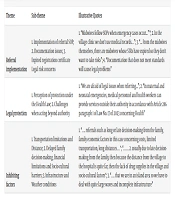
Table 2 shows the coding results from in-depth interviews using thematic analysis. This table shows how informant quotes were grouped into subthemes and then combined into several themes, including referral implementation, legal protection, and inhibiting factors. The following is a complete explanation of the themes, subthemes, and illustrative quotes.
Table 2.
Coding Analysis Results, Sub-themes, and Themes
| Theme | Sub-theme | Illustrative Quotes |
|---|---|---|
| Referral implementation | 1. Implementation of referral SOP; 2. Documentation issues; 3. Expired registration certificate Legal risk concerns | 1. “Midwives follow SOPs when emergency cases occur...” “; 2. In the village clinic we don't use medical records…”; 3. “... From the midwives themselves, there are midwives whose STRs have expired so they don't want to take risks”; 4. “Documentation that does not meet standards will cause legal problems” |
| Legal protection | 1. Perception of protection under the Health Law; 2. Challenges when acting beyond authority | 1. “We are afraid of legal issues when referring...”; 2. “In maternal and neonatal emergencies, medical personnel and health workers can provide services outside their authority in accordance with Article 286 paragraph 1 of Law No. 17 of 2023 concerning Health” |
| Inhibiting factors | 1. Transportation limitations and Distance; 2. Delayed family decision-making, financial limitations and Socio-cultural barriers; 3. Infrastructure and Weather conditions | 1. “…. Referrals such as long or late decision-making from the family, family economic factors in this case concerning costs, limited transportation, long distances… "; “…… 2. Usually due to late decision-making from the family, then because the distance from the village to the hospital is quite far, then the lack of drug supplies in the village and socio-cultural factors"; 3. “…. that we are in an island area so we have to deal with quite large waves and incomplete infrastructure” |
Abbreviation: SOP, standard operating procedures.
4.1. Implementation of Village Midwives Regarding Referrals for Maternal Neonatal Emergency Cases
4.1.1. Implementation of Referral Standard Operating Procedures
The results of in-depth interviews with several midwives as the main informants revealed a picture of the implementation of the midwives' role in referrals. "... It should be in accordance with the standard operating procedure (SOP). But because of field conditions such as poor network conditions, midwives usually do not directly contact the hospital in the referral process. The exact time of referral cannot be used as a benchmark because of the obstacles that may occur both from the patient's family and field conditions" (midwife 5), "There is an SOP in implementing emergency referrals. Immediately contact the health center and then the hospital." (midwife 8). From the statements above, it can be concluded that midwives, in making referrals, have been in accordance with the SOP.
4.1.2. Documentation Issues
Other interview results also found that in terms of documentation, it was known that on average midwives did not carry out documentation in accordance with applicable documentation standards. This is in accordance with the results of interviews with village midwives: "In the village clinic we don't use medical records, we just write them in the midwife's notebook or HVS paper." (midwife 2), "Not yet in accordance with the provisions. So far, recording has only been done in the register, cohort and patient books. In cases of emergency referrals from the village, recording is done in the midwife's notebook on HVS paper" (midwife 1). From the statements above, it can be concluded that in making referrals, midwives do not document them in the medical record. From the results of the interview, it was found that there were midwives who were still afraid to handle maternal neonatal emergency referrals.
4.1.3. Expired Registration Certificate
In addition, based on the results of the researcher's interview with midwives, it is known that there are midwives whose registration certificates are no longer valid, according to the interview conducted: "... From the midwives themselves, there are midwives whose STRs have expired so they don't want to take risks." (midwife 4). From the statement above, it is known that there are midwives whose STRs are no longer valid so that if there is an emergency case, midwives are afraid to take risks related to their profession.
4.1.4. Legal Risk Concerns
The recording conducted by the village midwives in the Sula Islands also did not comply with the implementation of Minister of Health Regulation Number 28 of 2017 concerning Licensing and Implementation of midwifery practice. Article 28 letter (e) states that "In carrying out practice/work, midwives are obliged to systematically record midwifery care and other services" (Puspitasari, 2019). Documentation that does not meet standards will lead to legal issues under Article 182 of Health Law Number 36 of 2009. The midwife may be subject to administrative sanctions ranging from verbal warnings and written warnings to revocation of her midwifery license (SIPB) (Puspitasari, 2019). Meanwhile, in interviews with key informants, researchers obtained information that, "To handle this emergency case, we have never participated in emergency case training, so we are still hesitant in making decisions and documentation that does not meet standards will cause legal problems." (midwife 8) From the results of the interview, it was discovered that there were midwives who were still afraid to handle maternal neonatal emergency referrals.
4.2. Legal Protection for Midwives Regarding Referrals for Maternal Neonatal Emergency Cases
4.2.1. Perception of Protection Under the Health Law
Interview results with midwives as the main respondents, all expressed their opinions and admitted that with the existence of laws regulating midwifery and health, midwives feel protected in the actions they take as long as they are in accordance with the applicable competencies and SOP. ".. yes, with the existence of the Law I feel very protected" (midwife 1), "With the existence of the law, medical personnel have taken action according to procedure, so the law will protect midwives" (midwife 2), "Midwives who have STR and SIPB feel protected by the Law" (midwife 6). However, in making referrals, midwives often take actions beyond their authority, not because they did it intentionally, but because they were too late in recognizing danger signs. This is based on in-depth interview data from researchers with midwives as the main respondents who stated that "Sometimes there are cases in the field according to the actions that should actually be taken, but because they were too late in recognizing danger signs, there was one action that they did not take when assisting with childbirth" (midwife 3), "There are no village midwives trained for emergency cases, only community health center midwives have participated in emergency handling workshops. There are no village midwives trained for emergency cases, only community health center midwives have participated in emergency handling workshops." (midwife 2). From the midwife's statement, it can be concluded that in the referral process, midwives sometimes take actions beyond their authority, not because they did it intentionally, but because they were too late in recognizing danger signs.
4.2.2. Challenges When Acting Beyond Authority
Furthermore, the researcher's interview with supporting informants, namely members of the Indonesian Midwives Association of Sula Islands Regency, stated "The form of guidance and supervision of village midwife practices from the Indonesian Midwives Association professional organization is still in the form of supervision of the availability of STR and SIPB midwives in carrying out practices and providing guidance to midwives who provide midwifery services that are not in accordance with SOP after determining the results of the AMP SR recommendations for maternal and infant mortality cases" (Indonesian Midwives Association Administrators 1). The results of the researcher's interview with supporting informants, Regency Health Office, stated "In my opinion, ma'am, in implementing guidance and supervision there are still obstacles because it has not been planned properly due to budget limitations and has not been implemented in an integrated manner so that it does not yet have indicators of success in coaching performance in measuring the quality of coaching and supervision. This is evidenced by the technical ability of midwives in the village who have not been trained and the limited supply of emergency medicines." (District Health Office Employee 1). From the statement above, it is known that as a midwife association, the Indonesian Midwives Association continues to supervise and provide guidance to the performance of midwives in the Sula Islands Regency. Efforts made by the Indonesian Midwives Association so that midwives do not abuse their authority include providing routine guidance to midwife members in their area. The authority of midwives as stated in Article 285 paragraph (1), paragraph (2), and paragraph (3), Article 286 paragraph (1) of Law of the Republic of Indonesia No. 17 of 2023 concerning Health, which means "Medical Personnel and Health Personnel in carrying out practice must be carried out in accordance with the authority based on the competence they have" and "In certain circumstances medical personnel and health personnel can provide services outside their authority". This is in line with the results of research which states that midwives are also health workers needed by the community who are placed in remote villages with the aim of bringing health services closer to the community appointed by the government, to carry out midwifery services in accordance with their duties and functions.
4.3. Inhibiting Factors Faced by Midwives in Referral of Maternal Neonatal Emergency Cases
4.3.1. Transportation Limitations and Distance
The results of in-depth interviews between researchers and several midwives as key informants were obtained. "There are several factors that hinder midwives in making referrals such as long or late decision-making from the family, family economic factors in this case concerning costs, limited transportation, long distances, in addition to limited drug supplies and poor networks because we are in remote areas." (midwife 1).
4.3.2. Delayed Family Decision-Making, Financial Limitations, and Socio-Cultural Barriers
"Our obstacles here are usually due to late decision-making from the family, then because the distance from the village to the hospital is quite far, then the lack of drug supplies in the village and socio-cultural factors" (midwife 3), "Inhibiting factors such as decision-making, transportation, costs, limited infrastructure (drugs), poor networks" (midwife 4), "Inhibiting factors are late decision-making, this is usually related to costs. From medical personnel due to limited equipment, drug supplies and distant health facilities" (midwife 8). From the statements, it is known that in making referrals, midwives often experience several obstacles due to several factors, both from the patient's side, such as being late in making decisions, socio-cultural factors, cost issues, the distance that is too far to make a referral, and limited availability of medicines in the village, so it can be concluded that most of the obstacles for midwives in making referrals are due to external factors from the midwives themselves.
4.3.3. Infrastructure and Weather Conditions
In addition, in the in-depth interview with the main informant, there were other factors that hindered midwives in making referrals based on interviews conducted with midwives: "The factor that hinders us midwives who want to refer is that we are in an island area so we have to deal with quite large waves and incomplete infrastructure" (midwife 7). From the results of the researcher's interview, it is known that in addition to the obstacles described above, other obstacles faced by midwives in making referrals in the Sula Islands Regency are also related to the weather. Indonesia is an archipelagic country with the majority of its territory being sea. This causes problems in access to health services. Many areas in Indonesia are difficult to reach by adequate health services, especially if referral services are needed. Problems that are often found are difficult access to health services, inadequate human resources or health workers, incomplete infrastructure, and so on (23). In another interview conducted by the researcher with a supporting informant, it was stated that "Until now, the District Health Office has not prepared complete facilities and infrastructure at the health center, health post and health post. This is due to budget limitations, which has an impact on the quality of health services in the community, especially regarding initial stabilization measures for maternal and neonatal emergency patients due to the lack of emergency medicine logistics, resuscitation equipment and oxygen at the health center, health post and health post." (District Health Office Employee 1).
5. Discussion
5.1. Implementation of Village Midwives Regarding Referrals for Maternal Neonatal Emergency Cases
First, the theme "Referral Implementation" highlights the level of midwives' compliance with referral SOPs, documentation, and the validity of their practice permits (STRs). This reflects that midwives' compliance with SOPs remains variable and is heavily influenced by field conditions such as limited communication networks, transportation, and facility support. This fact indicates a gap between normative policies and implementation in the field, as also found in similar studies in rural areas of developing countries. Based on the research results, the implementation of village midwives regarding referrals for maternal neonatal emergency cases is found in the implementation of referral SOP and documentation issues. In making a referral, one must have the competence and authority to refer, know the competence and authority of the target/purpose of the referral, and know the conditions and needs of the referral object. The referral sender must pay attention to the completeness of the trip to the referral location, which includes the means of transportation used and must be equipped with resuscitation equipment, emergency kits, and oxygen. Basically, the equipment used for the maternal referral process should have the following criteria: Accurate, light, small, and easy to carry, good quality and function, rough surface to withstand movement due to acceleration and vibration, reliable in extreme weather conditions without losing its accuracy, and able to withstand changes in pressure when used in airplanes. States that midwife compliance is an attitude of obedience or compliance with agreed regulations. Many factors influence a midwife's compliance, namely knowledge, attitude, age, workload, length of service, level of education, available facilities, and facilities (24). Midwife competence is the knowledge, skills, and behavior that must be possessed by midwives in carrying out safe and responsible midwifery practices in health services (25). Midwives are one of the health workers who act as providers and front-line health services who are required to have professional competence in responding to community demands in midwifery services. Midwives are expected to be able to support efforts to improve public health, namely by improving the quality of midwifery services. Knowledge and improvement of midwife skills, especially village midwives, is still very minimal in Sula Islands. This is in line with efforts made to increase the capacity of midwives in handling emergency cases in 2023. The Sula Islands district health office held training with the aim of increasing the capacity of midwives in handling maternal neonatal emergencies as an effort to prevent complications in maternal neonatal emergency cases to reduce maternal and infant mortality rates (26). Midwife Refresher and Technical Development Activities increase the level of understanding and skills of midwives in early detection and initial management of maternal emergencies (27). Recommendations to partners are that educational activities and skills training for midwives and other medical personnel related to pregnancy and other materials can be held routinely so as to increase the awareness of pregnant women, families, midwives, and other medical personnel who will then participate in reducing the morbidity and mortality rates of pregnant women and those giving birth (28).
5.2. Legal Protection for Midwives Regarding Referrals for Maternal Neonatal Emergency Cases
Second, the theme "Legal Protection" in the table illustrates midwives' perceptions of the existence of midwifery and health laws as a basis for legal protection. However, this protection remains limited when midwives encounter situations beyond their authority. These findings confirm the importance of legal understanding for health workers, as emphasized in WHO (2019) literature regarding the need for legal education in midwifery education. Strengthening regulatory implementation and supervision is needed to ensure effective legal protection in the field. Midwives in carrying out their practice must comply with standards, both service standards, professional standards, and standard operational procedures based on Midwifery Law in Indonesia Number 4 of 2019 concerning Midwifery, Article 48: "Midwives in carrying out midwifery practices must be in accordance with their competence and authority." From this statement, it is also appropriate when viewed from the review of the Republic of Indonesia Law Number 17 of 2023 which regulates the rights and obligations of medical personnel and health workers in Article 273 paragraph (1) point a: "Receive legal protection as long as they carry out their duties in accordance with professional standards, standard operating procedures, and professional ethics and patient health needs," whereas point i clarifies "Rejecting the wishes of patients or other parties that conflict with operational procedures, codes of ethics, or provisions of laws and regulations." Legal protection is also provided to midwives who carry out emergency care outside their authority in accordance with Article 286 paragraph 1 of Health Law in Indonesia Number 17 of 2023 concerning health: "In certain circumstances, medical personnel and health workers can provide services outside their authority." This is clarified in Article 286 paragraph 2-point b "based on the needs of government programs" and point c "handling emergencies." Fulfillment of basic rights in health law: Midwives as health workers, whether providing health services independently or in health service facilities, who commit negligence, must first have it resolved outside the court, namely through mediation in Article 29 of the Health Law, that in the event that health workers are suspected of committing negligence in carrying out their profession, the negligence must first be resolved through mediation. The Health Workers Law also regulates the obligation to resolve disputes outside the court in Article 78, stating that in the event that a Health Worker is suspected of negligence in carrying out his/her profession which causes losses to the recipient of health services, disputes arising from such negligence must first be resolved through dispute resolution outside the court in accordance with the provisions of the Laws and Regulations (29).
5.3. Inhibiting Factors Faced by Midwives in Referral of Maternal Neonatal Emergency Cases
Third, the theme of "Inhibiting Factors" highlights the complexity of external barriers, such as delays in family decision-making, sociocultural factors, distance, weather, and limited medication and transportation. These barriers align with the "Three Delays" concept by Thaddeus and Maine (1994), which explains that delays in decision-making, transportation, and service delivery at health facilities are the main causes of maternal mortality in developing countries. Therefore, systemic support through the provision of transportation, improved communication, and emergency training needs to be prioritized in regional health policies. One of the indirect factors causing high maternal and child mortality is the Three Delays (late to see signs of danger, late to make decisions, and late to get help at the referral site). Late decision-making by patients and families is still a major problem because when making decisions, women do not take the role of decision makers. In Sula Islands, husbands and even relatives also play a role in decision making so that decision making takes a very long time. The referral system is a problem in health services in remote and island areas. This problem can be solved by utilizing integrated health services, namely clarifying the certainty of coordination of all health service activities until relationships are established between individuals in them. Government, technology, and transportation with the main components recruited from several local communities so that they can provide the health services needed by the community can make integration run well (30). In the referral system, it is also necessary to pay attention to the referral system in the competency-based referral system. The referral system needs to be organized, which can start from emergency services, and there needs to be an analysis related to rates and referral systems. States that there must be a system that serves as a reference. On the other hand, the referral system should be handed over to the regions because each region has different conditions. The referral that is considered most important is the emergency referral, considering that this referral has not been running optimally. Emergency referrals, for example for Pelayanan Obstetri Neonatal Emergensi Komprehensif (PONEK), need to be strengthened and certified, therefore various regulations related to referrals need to be synchronized, the role of the Health Office is needed to conduct competency mapping and create standards adjusted to the conditions of the region. This article still has limitations, namely that with a small number of samples, it is possible that this could happen. The Limitations section was expanded to explicitly discuss (1) small sample size and limited generalizability, (2) possible response and recall bias in interviews, (3) limited observation time and resource constraints, and (4) context-specificity of island/remote settings which may limit transferability. In this study, maternal referral barriers in the Sula Islands were predominantly related to transportation delays, geographical isolation, limited health infrastructure, and insufficient legal protection for midwives involved in emergency care. Thaddeus and Maine (1994) identified the “Three Delays,” which remain major barriers to maternal referrals across developing countries (31). Studies in Sub-Saharan Africa also point to transportation and infrastructure limitations as critical factors in successful referrals (32). WHO reports on Southeast Asia highlight similar challenges, particularly in the island regions of the Philippines and Vietnam, including weak legal protection for midwives (33, 34). In India, delays in transportation and coordination between health facilities have been reported to exacerbate maternal mortality (35). Thus, the barriers identified in the Sula Islands have global relevance, particularly in island and rural areas with limited resources. Furthermore, practical policy recommendations that can be implemented immediately are needed, such as regular training on legal rights and emergency management for village midwives, and improvements to the referral documentation system to comply with legal and ethical standards. Systemic support is also needed, including improvements to infrastructure and transportation, and increased legal awareness for both health workers and the community, as protective laws alone are insufficient without concrete implementation on the ground.
5.4. Conclusions
The implementation of referrals carried out by midwives in the Sula Islands District, Indonesia, does not fully meet the Standard Operating Procedures for the Emergency Referral System due to limited facilities, such as incomplete emergency equipment and medicines for providing stabilization measures to maternal and infant emergency patients, and because midwives still record patient summaries on paper. In carrying out referrals for maternal neonatal emergency cases, midwives are protected because they provide services according to their competence and authority as regulated in the Law. Obstacles for midwives in making referrals are due to several factors, both from the patient's side, such as being late in making decisions, socio-cultural factors, cost issues, the distance to the referral site, weather conditions, and limited facilities and infrastructure. This study suggests the need for training in handling maternal and neonatal emergency cases for midwives and the provision of complete facilities and infrastructure to support emergency health services in handling referrals for maternal and neonatal emergency cases. Therefore, in addition to a clear legal framework, systemic support is needed in the form of providing adequate health infrastructure, transportation, and strengthening legal awareness for midwives and the community. Practical policies such as legal training, emergency training, and improving documentation systems should be prioritized to strengthen legal protection and the quality of maternal and infant health services. Overall, the implementation of maternal and neonatal emergency referrals is not merely a technical medical issue, but is also influenced by legal, social, and structural dimensions that need to be comprehensively managed within public health policies.