
1. Background
Cancer is characterized by the uncontrolled proliferation of abnormal cells, forming tumors. It is a major cause of death, especially in older women. The disease is influenced by factors like genetics, hormones, lifestyle, and environment (1, 2). In recent years, breast cancer (BC) has become a major health problem for women worldwide (3). In 2022, approximately 2.3 million women were diagnosed with BC worldwide, making it the most common cancer among women in 157 of 185 countries. The disease was responsible for 670,000 deaths worldwide in the same year (4). Iranian women diagnosed with cancer tend to be younger than women in Western countries (5).
A cancer diagnosis can have a big impact on a patient's mental health. Patients often feel fear and anxiety about their treatment, side effects, and changes to their body image (6). Body image is how someone perceives themselves physically and emotionally. Cancer survivors may experience negative body image, such as feeling unhappy with their appearance, loss of femininity, avoiding looking at themselves, feeling less attractive, and dissatisfaction with surgical scars (7). Women diagnosed with BC may feel uneasy about the physical changes caused by treatments such as mastectomy, chemotherapy, and radiation, as they can affect their body image and sense of femininity. These changes are distressing and can impact a woman's sense of identity (8). Women may avoid social events and intimacy due to embarrassment about their changed appearance, leading to feelings of isolation and loneliness. Fear of judgment can hinder their ability to fully engage in life, affecting personal and professional relationships (9).
Women with BC may face stigma, stereotypes, discrimination, and shame, especially related to changes in their body image after surgeries like mastectomy. This can lower their self-esteem and increase anxiety about how others view them (8, 10). Stigma has been found to be associated with increased rates of anxiety and depression among BC patients. The fear of judgment can prevent individuals from expressing their feelings or seeking help, leading to worsening mental health outcomes (11, 12). People with cancer may withdraw from others because they are afraid of criticism. This can lead to a lack of emotional support, which is important for dealing with the challenges of cancer treatment (13). Stigma can greatly diminish the overall quality of life for cancer patients, impacting their emotional health, social connections, and willingness to participate in follow-up care and screenings (14).
Studies show that social stigma worsens body image issues in BC patients, which leads to different psychological distress outcomes. Internalized stigma and enacted stigma can impact a person's body image, leading to psychological distress. Women, in particular, may develop a distorted view of their bodies, which can contribute to increased anxiety and depression (11, 15).
The extent of various negative and/or positive emotions, thoughts, and actions is influenced by multiple psychological factors, including psychological resilience (16). Cancer patients benefit greatly from resilience, as it provides protection against the negative impact of stress. Resilience plays a key role in handling the challenges of a cancer diagnosis, dealing with difficult situations, and adapting to necessary life changes (17). Resilience plays a key role in how cancer patients cope with changes to their body image and the social stigma that comes with it. Those with low resilience may experience heightened anxiety and negative self-image, leading to avoidance of social situations and isolation. Conversely, individuals with higher resilience are more likely to maintain a positive outlook, seek support, and improve their body image perception, ultimately reducing their fear (11, 18). Patients who are resilient often have a better ability to confront social stereotypes and actively seek out supportive connections, leading to a reduction in feelings of stigma and the cultivation of a more positive self-perception (12, 18). Studies have indicated that stigma has a detrimental impact on the well-being of individuals with BC, while resilience serves as a protective element that supports psychological health in the face of stigma (12).
Patients who are resilient often use more successful ways of dealing with challenges, like reaching out for support from others and taking active steps to maintain good health. These approaches can help reduce the negative impact of worries about body image and the social stigma (11). Having a positive self-esteem and feeling content with our bodies is important for resisting negative body image. Psychological resilience, the ability to cope with tough situations, is key for managing traumatic events and everyday stress (16).
The relationship between resilience, stigma, and body image concern in cancer patients is complicated. Cancer patients may face social stigma, which impacts their body image and causes psychological distress. Understanding the role of resilience can help individuals manage stigma and body image concerns better (19). While resilience has been identified as a protective factor in coping with cancer-related challenges, its specific role in buffering the adverse effects of social stigma on body image remains underexplored. Understanding this mediating role is crucial to developing targeted psychosocial interventions that enhance resilience, reduce stigma-related distress, and improve overall outcomes for BC patients. Therefore, this study aims to fill this critical gap by examining how resilience mediates the impact.
Body image concerns among BC patients are significantly influenced by stigma, with resilience acting as a potential mediator in this relationship. Previous studies have established that BC survivors often experience stigma due to societal perceptions of illness, altered physical appearance (e.g., mastectomy scars, hair loss), and perceived femininity loss (20, 21). This stigma exacerbates body image dissatisfaction, leading to psychological distress and reduced quality of life (22). However, resilience — defined as the ability to adapt positively to adversity — has been shown to mitigate these negative effects. Research indicates that resilient individuals employ coping strategies such as positive reframing, social support seeking, and self-acceptance, which buffer against stigma-induced body image concerns (23, 24). For instance, a study by Hsu et al. (25) found that resilience significantly mediated the relationship between stigma and body image distress in BC patients, suggesting that enhancing resilience could reduce the psychological burden of stigma. These findings align with the broader literature on chronic illness, where resilience serves as a protective factor against stigma-related distress (26). Thus, the proposed mediation model builds on empirical evidence, highlighting resilience as a crucial psychological resource in mitigating the impact of stigma on body image concerns in this population.
2. Methods
This cross-sectional study was conducted as a correlational modeling study using a correlational, descriptive design between May and June 2023 to explore the mediating role of resilience in the relationship between stigma and body image concern among women with BC in Iran.
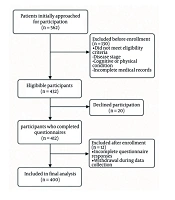
A prior sample size estimation was used to determine the minimum sample size required to avoid type I and type II errors. A minimum sample size of 298 was required based on three latent variables, 59 observed variables, a probability level less than 0.05, a power level of 0.8, and an effect size of 0.22 (27, 28). In total, 298 Iranian women with BC fulfilled the inclusion criteria and completed the questionnaire. n = max(n1, n2), where:
Where j is the number of observed variables, k is the number of latent variables, ρ is the estimated Gini correlation for a bivariate normal random vector, δ is the anticipated effect size, a is the Sidak-corrected type I error rate, β is the type II error rate, and z is a standard normal score.
2.1. Participants
The study population comprised women diagnosed with BC who were consecutively selected from outpatient oncology clinics in Amol, Iran, between February and June 2023. Consecutive sampling ensured that all eligible women who visited these clinics during the study period were invited to participate, minimizing selection bias. However, the final sample was derived through convenience sampling, as participation depended on patients’ willingness and availability.
The study population comprised all women diagnosed with BC, who were consecutively selected from medical facilities in Mazandaran province, Amol, Iran, through the convenience sampling method.
2.2. Inclusion and Exclusion Criteria
Participants included women aged 18 years or older with a histologically confirmed diagnosis of BC (stages I-III) who had undergone surgery (lumpectomy or mastectomy) and were either currently receiving or had completed adjuvant therapy (chemotherapy, radiotherapy, or hormone therapy) within the past six months. All participants were required to be fluent in Persian to ensure comprehension of study materials and provide informed consent. To maintain sample homogeneity regarding surgical impact on body image, patients who underwent bilateral mastectomy were excluded. These criteria aimed to create a well-defined cohort while controlling for potential confounding factors related to disease severity, treatment phase, and psychological adaptation. Exclusion criteria encompassed having undergone bilateral mastectomy as part of the treatment and being pregnant at the time of assessment.
2.3. Data Collection Instruments
The instruments for data collection were as follows. Data collection was carried out through self-report questionnaires.
Demographic information form: This data collection form included items on age, place of residence, occupation, and level of education.
Breast Cancer Stigma Scale: In 2022, Bu et al. developed a 15-item scale designed to measure cancer stigma. Each item on the scale is rated on a 4-point Likert-type scale, with responses ranging from 1 ("strongly disagree") to 4 ("strongly agree"). Scores on the scale can range from 24 to 96, with higher scores indicating a greater level of perceived stigma. The total scale demonstrated strong internal consistency, with a Cronbach's α of 0.86. Additionally, the test-retest reliability of the scale was high, with an intra-class correlation coefficient of 0.947, and the split-half reliability was also strong, with an intra-class correlation coefficient of 0.911 (29).
Connor-Davidson Resilience Scale (CD-RISC): This scale was developed by Connor and Davidson as a scale to measure resilience. This scale consists of 25 items, each rated on a 5-point scale ranging from "not true at all" (0) to "true nearly all of the time" (4). Higher scores on the scale indicate greater resilience. Participants are asked to rate how they have felt over the past month. The total score on the CD-RISC ranges from 0 to 100, with higher scores indicating higher levels of resilience. The Cronbach's alpha for the full scale was calculated to be 0.8, indicating good internal consistency. Additionally, this study has shown that the CD-RISC has good validity and reliability (30). The reliability of the CD-RISC has been confirmed in Iran (31) as well as in other countries (32, 33). This suggests that the scale is a valuable tool for assessing resilience across different populations.
Body Image Concern Inventory (BICI): The Body Image Concern Inventory (BICI), originally developed by Littleton et al. (2005), is a 19-item self-report measure assessing dysmorphic appearance concerns using a 5-point Likert scale (1 = never to 5 = always). While the original scale demonstrated excellent reliability (Cronbach’s α = 0.93), we used the validated Persian version adapted by Sharif-Nia et al. for Iranian populations. Their study with 400 hemodialysis patients confirmed the scale’s robust psychometric properties in our cultural context, including acceptable internal consistency (α > 0.7), good stability (ICC = 0.839), and a clear four-factor structure explaining 44.46% of variance through exploratory and confirmatory factor analyses. This adaptation ensures linguistic and cultural appropriateness for our sample of BC patients in Iran (34). The alpha value of over 0.7 indicates that the instrument has sufficient reliability for measuring BC (35).
2.4. Data Analysis
First, descriptive statistics were used to evaluate the demographic characteristics, and then Pearson correlation coefficients were calculated to assess the relationships between BC stigma, body image concern, and resilience. The significance level was set at P < 0.05.
2.5. Mediation Analysis
A mediation model was tested using the enter method with multiple linear regression analysis while controlling for potential confounding variables such as age, place of residence, occupation, and level of education. The direct effects of BC stigma on body image concern were analyzed, alongside the indirect effects of resilience in this relationship (36).
2.6. Model Fit Assessment
The overall fit of the mediation model was evaluated using appropriate fit indices (e.g., R²) to determine how well the model explains the variance in body image concern (37). The statistical analyses were carried out using SPSS (v. 26.0) and AMOS (v. 27.0). All statistical hypotheses were two-tailed, and a significance level of less than 0.05 was set.
2.7. Ethical Consideration
The Ethics Committee of Islamic Azad University, Tankabon Branch in Iran approved the study (ethical approval code: IR.IAU.TON.REC.1401.070). The study protocol adhered to the principles outlined in the Helsinki Declaration, which provides guidelines for ethical research involving human participants. Participants were informed about the purpose of the study before data collection, and their voluntary participation and data confidentiality were ensured. All subjects and/or their legal guardian(s) provided written informed consent. Permissions to use the data collection tools were obtained from their creators. All procedures followed the relevant guidelines and regulations.
3. Results
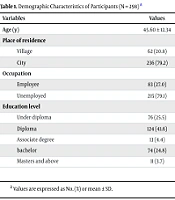
The study included 298 women with BC, with a mean age of 45.60 ± 12.34. Demographic characteristics revealed that most participants resided in urban areas (79.2%), were unemployed (79.1%), and had a diploma-level education (41.6%) (Table 1).
Table 1.
Demographic Characteristics of Participants (N = 298) a
| Variables | Values |
|---|---|
| Age (y) | 45.60 ± 12.34 |
| Place of residence | |
| Village | 62 (20.8) |
| City | 236 (79.2) |
| Occupation | |
| Employee | 83 (27.0) |
| Unemployed | 215 (79.1) |
| Education level | |
| Under diploma | 76 (25.5) |
| Diploma | 124 (41.6) |
| Associate degree | 13 (4.4) |
| bachelor | 74 (24.8) |
| Masters and above | 11 (3.7) |
a Values are expressed as No. (%) or mean ± SD.
Descriptive statistics for the main study variables indicated moderate levels of perceived stigma (52.34 ± 10.21), resilience (68.45 ± 12.76), and body image concern (42.18 ± 9.87). Normality assumptions were met, with skewness and kurtosis values within acceptable ranges (<|2| and <|7|, respectively), and Shapiro-Wilk tests confirming normal distributions (all P > 0.05).
Bivariate correlations demonstrated significant relationships among variables (Table 2). BC stigma showed a strong positive correlation with body image concern (r = 0.405, P < 0.001) and a moderate negative correlation with resilience (r = -0.398, P < 0.001). Resilience was negatively associated with body image concern (r = -0.390, P < 0.001).
Table 2.
Results of the Mediation Analysis Examining Resilience as a Mediator Between Stigma and Body Image Concern
| Path | Coefficient (b) | SE | 95% CI | P-Value | Effect Type |
|---|---|---|---|---|---|
| Direct effects | |||||
| Stigma → body image concern | 0.066 | 0.018 | [0.031, 0.101] | < 0.001 | Direct |
| Stigma → resilience | -0.398 | 0.042 | [-0.480, -0.316] | < 0.001 | Path a |
| Resilience → body image concern | -0.390 | 0.039 | [-0.467, -0.313] | < 0.001 | Path b |
| Indirect effect | |||||
| Stigma → resilience → body image concern | 0.024 | 0.006 | [0.013, 0.038] | < 0.001 | Mediation |
| Total effect | 0.090 | 0.020 | [0.051, 0.129] | < 0.001 | Total |
| Model fit | |||||
| R² (body image concern) | 0.227 | - | - | - | Variance Explained |
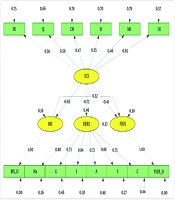
The mediation analysis, controlling for age, residence, occupation, and education, revealed several key findings (Table 2 and Figure 1). Stigma had a significant direct effect on body image concern (b = 0.066, SE = 0.018, 95% CI [0.031, 0.101], P < 0.001) and a negative effect on resilience (b = -0.398, SE = 0.042, 95% CI [-0.480, -0.316], P < 0.001). Resilience, in turn, negatively predicted body image concern (b = -0.390, SE = 0.039, 95% CI [-0.467, -0.313], P < 0.001). The indirect effect of stigma on body image concern through resilience was significant (b = 0.024, SE = 0.006, 95% CI [0.013, 0.038], P < 0.001), indicating partial mediation. The total effect of stigma on body image concern remained significant (b = 0.090, SE = 0.020, 95% CI [0.051, 0.129], P < 0.001).

Figure 1.
The results of the mediation model assessment; P < 0.001
The mediation model explained 22.7% of the variance in body image concern (R² = 0.227). Model fit indices for the structural equation model indicated good fit: χ²/df = 2.18, CFI = 0.95, RMSEA = 0.06. These results support the hypothesized model, demonstrating that resilience partially mediates the relationship between BC stigma and body image concerns among Iranian women with BC.
4. Discussion
This study aims to evaluate the mediating role of resilience in the relationship between cancer stigma and body image concern. Body image issues are a significant psychosocial issue for cancer patients, especially those diagnosed with BC. The physical changes experienced by these patients often lead to increased levels of anxiety, depression, and social withdrawal, as patients struggle with feelings of inadequacy and a change in identity (20).
The findings revealed a significant correlation between cancer stigma and body image concerns, suggesting that higher levels of stigma are linked to greater body image issues. Furthermore, the negative correlation between cancer stigma and resilience suggests that as stigma increases, resilience tends to decrease. Similarly, body image concerns were negatively correlated with resilience, indicating that patients who face challenges with their body image are likely to have lower resilience levels. These results closely align with the findings of studies conducted by Heley et al. and Janitra et al. (17, 38). Another study found that BC stigma negatively affects health-related quality of life, with general resilience resources such as social support and coping skills playing a mediating role. This implies that as stigma increases, both resilience and quality of life decrease, aligning with the findings of this study (12). The act of self-disclosure and receiving social support have been found to have a negative correlation with stigma. This indicates that individuals who openly share their experiences may be able to lessen the detrimental impact of stigma on their body image and overall resilience (39). These findings highlight the importance of addressing stigma in therapeutic settings to enhance resilience and improve health outcomes for BC patients.
While our study supports the protective role of self-disclosure and social support in reducing stigma's impact (39), the literature reveals important nuances that warrant discussion. Some studies have reported inconsistent findings regarding the benefits of disclosure and support. For instance, research in highly stigmatized cultural contexts has shown that self-disclosure may sometimes exacerbate distress, as patients fear rejection or being defined solely by their diagnosis (19). A systematic review further highlighted mixed effects of social support, with some studies demonstrating null or even negative correlations between support-seeking and resilience in populations with internalized stigma (11). These discrepancies appear to stem from several key factors.
Cultural context plays a significant role, as collectivist societies may view cancer disclosure differently than individualistic cultures (14). The type of stigma experienced also matters—internalized stigma (self-blame) often shows a negative relationship with support-seeking, while enacted stigma (external discrimination) may be more amenable to resilience-based coping (12). Additionally, disease stage influences outcomes, with early-stage patients typically benefiting more from disclosure than those with metastatic disease who face compounded stigma (18).
Our findings suggest that culturally adapted interventions, such as clinical-based peer support rather than public disclosure, may be most effective (5). This emphasizes the need to consider contextual factors when developing resilience-building strategies for BC patients facing stigma.
In mediation analysis, the direct effects showed a significant positive relationship between BC stigma and body image concern. More importantly, resilience acted as a mediator in this relationship, with a significant indirect effect. This suggests that resilience can buffer the negative impact of stigma on body image concerns, highlighting its protective role. The study conducted by Tamannaeifar and Soleimanian revealed that resilience plays a significant role in influencing psychological distress. This suggests that resilience can act as a buffer against negative impacts, similar to the findings of this study on stigma and body image concerns (40). This highlights the protective role of resilience in managing emotional challenges related to BC.
While our mediation analysis confirmed resilience's protective role in buffering stigma's impact on body image concerns — aligning with Tamannaeifar and Soleimanian's findings on psychological distress — the broader literature presents both consistent and contradictory evidence (40). Several studies support our model, demonstrating that resilience mediates stigma-distress relationships across cultures. For example, Zamanian et al. found resilience significantly attenuated stigma's effects on quality of life in Iranian BC patients (β = -0.32, P < .01) (12), while Amini-Tehrani et al. reported similar mediation effects for body image distress (15). These consistent findings suggest resilience may function as a universal buffer against stigma-related distress.
However, three key exceptions emerge in the literature. First, cultural variations moderate these effects: Wu et al. observed weaker resilience mediation in East Asian populations where stigma internalization is prevalent (β = -0.12, P = 0.08) (18). Second, disease stage matters — metastatic patients in Melhem et al.'s study showed no significant mediation (95% CI [-0.04, 0.17]), possibly due to overwhelming disease burden (19). Third, measurement differences matter; studies using general resilience scales (e.g., CD-RISC) report stronger effects than those using cancer-specific measures (11). Our use of CD-RISC may thus explain our robust findings compared to null results in studies like Jin et al. (14).
These discrepancies highlight the need for context-specific interventions. While resilience-building programs show promise (41), their design should account for cultural norms, disease severity, and measure selection to optimize efficacy across diverse populations.
The full effect of the relationship between BC stigma and body image concern was also significant, and the mediation model accounted for 22.7% of the total variance in body image concern. These findings underscore the crucial importance of resilience in lessening the harmful impact of stigma on patients' self-perception. While resilience accounts for a substantial portion, other factors likely also influence body image concerns. Both enacted and internalized stigma have been identified as predictors of psychological distress in cancer patients, with body image serving as a key mediator in this dynamic (15). The results of this study further support the significance of resilience in counteracting the detrimental effects of stigma on body image. Moreover, a separate study has also emphasized the role of resilience in mitigating the adverse consequences of stigma and bolstering coping mechanisms among cancer survivors. This suggests that nurturing resilience could potentially enhance self-perception and alleviate concerns related to body image (19). The findings of this study emphasize the important role of resilience in mediating the psychological challenges experienced by cancer patients. This suggests that interventions focused on strengthening resilience could be effective in improving the overall quality of life for these individuals.
It was essential to control for demographic characteristics such as age, place of residence, occupation, and level of education in this mediation analysis for several reasons. These variables have a significant impact on both the experience of cancer stigma and body image concerns. Previous research has shown that demographic factors are linked to different levels of stigma and psychological distress among cancer patients. This suggests that these characteristics play a role in how individuals perceive and respond to stigma (12, 42). By incorporating these controls, the analysis is able to pinpoint the individual impacts of stigma and resilience on body image concerns, leading to a more precise comprehension of the connections at play. Additionally, the inclusion of demographic variables bolsters the credibility of the mediation model by mitigating potential sources of interference. This ensures that any identified correlations between cancer stigma, resilience, and body image concerns are less likely to be influenced by variations in participants' demographic traits. For instance, younger individuals or those with advanced education levels may possess distinct coping strategies or social networks that influence their resilience and perceptions of body image (43).
4.1. Limitations
Reliance on self-reported measures for body image concerns and stigma can introduce bias, as participants may underreport or overreport their feelings due to social desirability. Factors outside the study's control, such as current societal attitudes towards BC or body image, may influence participants' responses and perceptions. These limitations highlight areas where caution should be exercised when interpreting the results and suggest directions for future research to address these gaps. In addition, the cross-sectional design limits causal inferences. While consecutive sampling enhanced accessibility, the use of convenience sampling may limit the generalizability of findings, as participants from a single geographic region (Amol) or specific clinics might not fully represent the diversity of BC patients in other settings (e.g., rural vs. urban, varying socioeconomic statuses). Future studies should employ stratified or randomized sampling to improve representativeness.
4.2. Implications for Clinical Practice
The results underscore the necessity for healthcare providers to address not only the physical aspects of BC treatment but also the psychological dimensions that significantly affect patient outcomes. Interventions such as resilience training, psychoeducation, and support groups aimed at enhancing resilience could be beneficial in helping patients cope with the stigma associated with their condition and improve their body image perception. Healthcare providers can assess resilience or stigma, or incorporate psychosocial assessments into routine care. Moreover, fostering resilience could potentially lead to better overall quality of life for BC patients by equipping them with coping strategies to manage both internal and external challenges related to their diagnosis.
Future research could explore longitudinal designs to examine how resilience and stigma interact over time and influence body image concerns throughout different stages of BC treatment and survivorship. Additionally, intervention-based studies are needed to evaluate the efficacy of specific resilience-building programs, such as cognitive-behavioral therapy, mindfulness, or peer support models, in mitigating stigma and improving body image outcomes. It would also be beneficial to investigate the role of cultural, socioeconomic, and demographic factors in shaping resilience and stigma experiences to tailor psychosocial interventions more effectively.
4.3. Conclusions
The mediation model that incorporates resilience as a mediator accounts for 22.7% of the total variance in body image concern among BC patients. This suggests that resilience plays a critical role in mitigating the detrimental impact of stigma on how patients perceive their body image. In addition, resilience emerges as a key protective factor that helps BC patients navigate the challenges of stigma and maintain a more positive body image. Interventions that foster resilience may be particularly beneficial for improving body image outcomes in this population.