
1. Background
Cesarean section is one of the most common methods of childbirth worldwide, and its rate has increased significantly over the past decades due to lifestyle changes, personal preferences, and concerns related to natural childbirth (1). According to the World Health Organization (WHO), the global cesarean rate rose from 7% in 1991 to approximately 21% in 2021 (2). In Iran, as well as many countries in the Middle East, cesarean delivery has become increasingly prevalent, resulting in medical concerns (3, 4). Several factors contribute to this rise in Iran, including cultural beliefs about natural childbirth and fear of labor pain. Additionally, increased access to surgical services has contributed to this trend (1, 5). As a result, attention to the psychological well-being of pregnant women has become increasingly important.
Preoperative anxiety is a common issue for patients scheduled for surgery. Women preparing for elective cesarean sections may experience heightened anxiety due to concerns about the surgery itself, postoperative pain, anesthesia risks, and the health of their newborn (6). This anxiety often arises from fears related to the newborn’s well-being, potential anesthesia complications, and uncertainty about the surgical experience (1). Moreover, research indicates that preoperative anxiety can negatively affect surgical outcomes. It may lead to increased surgical complications, elevated blood pressure, slower recovery times, and a greater reliance on strong painkillers after surgery (7, 8). For instance, a study conducted in India found that high levels of preoperative anxiety among cesarean-section patients were linked to a higher risk of postoperative complications (9). As a result, managing preoperative anxiety effectively is crucial. There is a growing need for practical, simple, and safe methods to address this concern.
In recent years, non-pharmacological methods for reducing anxiety have gained more attention due to their fewer side effects compared to sedative medications, and they can be used either independently or as a complement to pharmacological treatments (10). One such method is massage therapy. Massage is recognized as an effective non-pharmacological approach due to its ability to reduce stress and anxiety, enhance blood circulation, and improve overall well-being (11). By influencing the parasympathetic nervous system, massage can reduce stress hormone levels such as cortisol, while increasing relaxation-related hormones such as serotonin and dopamine (12). Studies have shown that massage not only reduces anxiety but also leads to a decrease in the use of sedative medications and the side effects associated with them (13).
Previous studies have shown that massage therapy, particularly head massage, effectively reduces anxiety by stimulating scalp and neck receptors near the brain. This may activate parasympathetic pathways more quickly than foot or hand massage, enhancing relaxation and lowering anxiety levels. These neuroendocrine responses contribute to promoting deep relaxation, reducing emotional stress, and improving blood circulation. This type of massage promotes deep relaxation by reducing anxiety and improving blood circulation (14-16). By concentrating on these pressure points and influencing areas related to the central nervous system, including the brain and nerves, head massage can alleviate both acute and chronic stress, relieve muscle tension, enhance sleep quality, and mitigate mental and physical stress (16, 17). Although massage therapy has been widely studied for anxiety reduction, there is still a significant gap in evidence concerning the particular effects of head massage on preoperative anxiety in women undergoing cesarean sections. Given the ongoing increase in cesarean section rates worldwide and the association of preoperative anxiety with negative maternal and neonatal effects such as hemodynamic instability, higher anesthetic needs, and prolonged recovery (7, 9), it is crucial to determine safe, straightforward, and non-pharmacological strategies for alleviating anxiety. Consequently, this research aimed to assess the efficacy of head massage as a targeted approach to enhance psychological well-being in this group.
2. Objectives
This study aims to examine the effectiveness of head massage as a non-pharmacological method for reducing anxiety in pregnant women who are candidates for elective cesarean surgery. This study specifically focuses on minimizing preoperative anxiety in these patients.
3. Methods
3.1. Study Design and Participants
This study was a single-blind clinical trial conducted between August 2023 and September 2024 in Behbahan, a city in southwestern Iran. Even though neither the participants nor the therapist giving the massage could be blinded because of the intervention's characteristics, the blinding of data analysts was diligently upheld to reduce bias. This partial blinding method is a typical and permissible practice for non-pharmacological treatments like massage therapy. The participants in this study were pregnant women who were candidates for elective cesarean surgery and attended hospitals in Behbahan, including Shahid Mostafa Khomeini Hospital. The sample size for the study was calculated based on data from a similar previous study (18). Using the following formula, with Δ = 5 and σ = 10, and considering β = 0.80 and α = 0.05, a total sample size of 56 participants was estimated, accounting for a 10% dropout rate.
A compliant participant flow diagram has been added as Figure 1. Participants were observed for any adverse events, and no adverse events were documented. Incomplete data were handled through complete-case analysis.
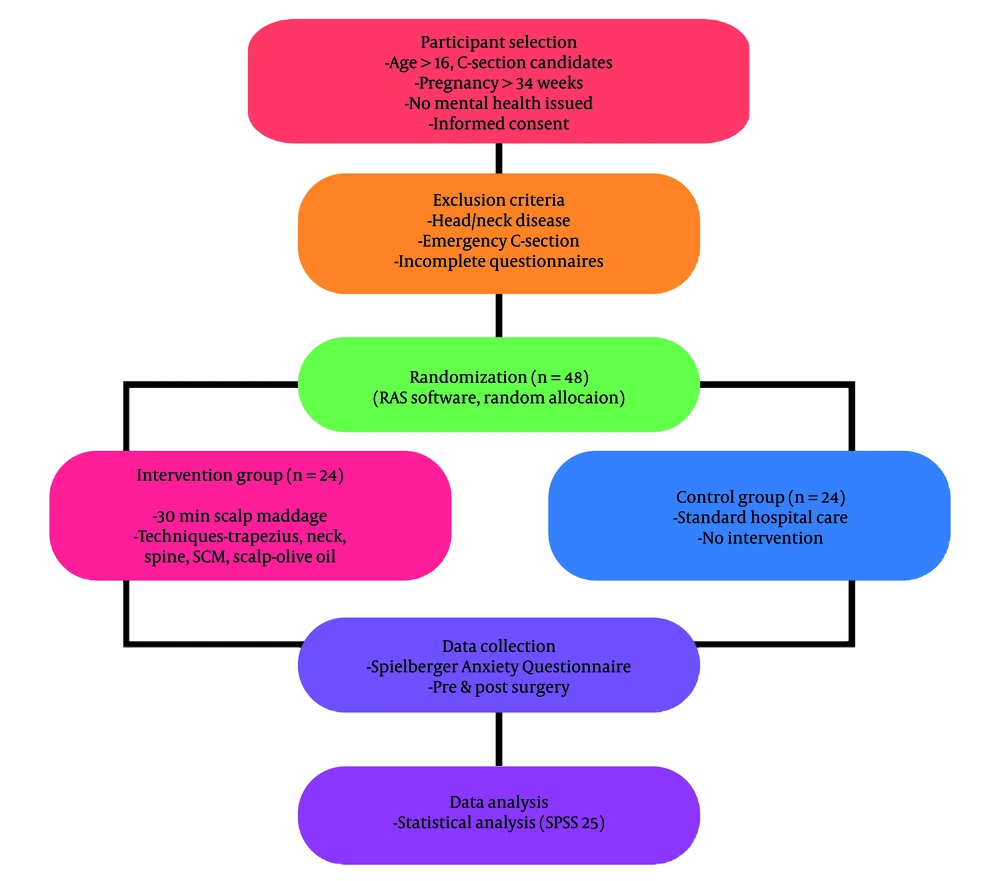
Figure 1.
Steps of the study based on consort diagram
3.2. Randomization and Blinding
The random allocation method was performed using random allocation software (RAS) version 9.4 by an independent statistician who was not involved in participant recruitment, intervention delivery, or outcome assessment, to assign patients randomly into two groups: A control group with 28 participants and an intervention group with 28 participants. The allocation sequence was generated using computer-generated permuted blocks of size 8 to ensure balanced group sizes while maintaining unpredictability. Recruiters were unaware of block sizes, and assignment was implemented through opaque, sealed, sequentially numbered envelopes prepared by an independent statistician. An assistant researcher assigned participants to the intervention group based on the random sequence in the numbered containers.
Inclusion criteria for this study were: Elective cesarean section, participants over 16 years, termination of pregnancy at 34 weeks or later, no prior cesarean history, no self-reported psychiatric disorders, no anti-anxiety or psychotropic medication use, and completion of informed consent. Exclusion criteria included head/neck diseases, conditions causing increased anxiety or emergency cesarean, and incomplete questionnaire responses.
These criteria were designed to ensure participant safety (excluding those with contraindications to massage), minimize confounding variables (excluding those on anxiety medications or with psychiatric disorders), and ensure homogeneity of the sample (first cesarean section patients).
3.2.1. Blinding
This study employed a single-blind design with the following blinding strategy: Data analysts: The statistician who performed all data analyses received a coded dataset without group labels (group A and group B) in order to maintain blinding during the data analysis stage. The code was only revealed after all statistical analyses were completed.
3.3. Data Collection Tools
This study utilized a questionnaire divided into two sections to gather data. The first section collected demographic information about the participants, including age, education level, job status, and number of children. The second section featured the Spielberger Anxiety Questionnaire, a widely recognized tool for measuring anxiety. Developed by Spielberger in 1983, this questionnaire assesses both state and trait anxiety.
The scoring is based on a four-point Likert scale: Very low, low, high, and very high. Each question receives a score between 1 and 4. To calculate the total score, the scores for all 40 items are summed, resulting in a range from 40 to 160. A higher score indicates greater anxiety. The validity and reliability of the original version have been reported with values between 0.65 to 0.75 for validity and 0.86 to 0.95 for reliability (19). This survey has been translated into 30 different languages. Previous studies have confirmed the validity and reliability of this survey (20, 21).
Patients in both groups completed the questionnaire for this study in a controlled and calm environment, characterized by an appropriate temperature and minimal noise disruption. The questionnaire was administered to participants one hour prior to surgery as a pre-test and again 40 minutes later (or 20 minutes before they were transferred to the operating room) as a post-test. The process for conducting the study and selecting participants is illustrated in Figure 1.
3.4. Interventions
Once the research received approval from the Ethics Committee of Shiraz University of Medical Sciences, the researchers personally visited the hospitals to introduce themselves to the hospital authorities. They obtained a list of individuals waiting for elective cesarean surgery to help randomize the patients. After identifying eligible participants, the researchers proceeded with the randomization process.
3.4.1. Intervention Group
Participants in the intervention group received a head massage in addition to standard hospital care. This intervention took place one hour before surgery in the gynecology surgery ward with controlled temperature (22 - 24°C), supervised by the researcher, in a private room designated for each participant. The patient was positioned comfortably in a semi-sitting posture, supported by several pillows to ensure comfort and accessibility to the head, neck, and shoulder regions. Under the guidance of a certified physiotherapist (15 years of experience) who had completed specialized training in therapeutic massage techniques and following a standardized procedure, the head massage was conducted for 30 minutes based on prior clinical protocols reported by Kim and Choi (14), demonstrating that sessions of 25 - 30 minutes produce stronger parasympathetic activation and reductions in stress hormones. Massage was done without gloves, using 5 milliliters of pure olive oil, which was selected for its skin compatibility.
Head massage procedure: (1) Trapezius muscle massage: Begin by massaging the trapezius muscle using the thumbs of both hands. Apply gentle pressure in circular motions, followed by steady pressure using the palms of the hands. Repeat this movement twice to help reduce muscle tension and improve blood circulation in the area (5 minutes). (2) Cervical spine massage: Place the second and third fingers of one hand on the cervical spine and perform small circular motions to massage the area. Then, gently pull these fingers using your thumb and index fingers to relax the muscles surrounding the cervical spine. This technique aims to alleviate muscle stiffness and enhance local blood flow (5 minutes). (3) Cervical spine distraction: Using the four fingers of both hands, gently stretch the base of the skull and neck. Tilt the neck toward the body while applying uniform pressure to the soft tissue of the skin. Hold this position for about one minute. This movement is designed to relieve tension in the neck and promote deep relaxation (5 minutes). (4) Sternocleidomastoid muscle massage: Rotate the head toward the opposite side of the massage area and maintain this position. Then, use your thumb and fingers to gently massage the sternocleidomastoid muscle from top to bottom. This step is intended to alleviate muscle spasms and relieve mechanical pressure in the neck (5 minutes). (5) Scalp massage: Envelop both temporal lobes with your hands, and gently press your thumbs in a circular motion on these areas. Start from the center of the skull and temples, moving toward the crown of the head. Finally, use your fingers to softly caress the scalp and hair. This phase is designed to increase blood circulation to the brain and induce a deep sense of relaxation (5 minutes).
The method for head massage was developed based on the techniques outlined in the study by Kim and Choi (14).
3.4.2. Control Group
Participants in the control group received standard hospital care in a private room within the gynecology surgery ward, with no tactile contact or placebo massage and no changes in their treatment protocol and waiting time compared to the intervention group. They took a pre-test one hour before surgery and a post-test 20 minutes before transferring to the operating room.
3.5. Data Analysis
All data were coded and entered into IBM SPSS 25 following collection. The normality of the data distribution was first assessed using the Kolmogorov-Smirnov and Shapiro-Wilk tests. Descriptive statistics were reported, including mean, standard deviation, and frequency percentage. Within-group differences were analyzed using paired t-tests, and between-group differences using independent t-tests. Cohen’s d effect sizes were calculated for all primary outcomes. Additionally, the Kruskal-Wallis and ANOVA tests were used to examine the relationship between demographic variables and anxiety. Standardized P-value formatting was set for all analyses (P < 0.001).
3.6. Ethical Considerations
This study received approval from Shiraz University of Medical Sciences, bearing the ethics code IR.SUMS.NUMIMG.REC.1402.155, and is registered with the Iranian Clinical Trials Center under the IRCT code IRCT20240311061255N1 before data collection. Before the study began, the research objectives were clearly communicated to the participants, and written informed consent was obtained. Participation in the study was entirely voluntary; if a participant chose not to consent, a replacement participant was enrolled. The writing of this study adheres to the guidelines for reporting intervention studies (CONSORT) (22).
4. Results
The demographic characteristics of the participants in the control and intervention groups are summarized as follows (Table 1). In the control group, the majority of participants were aged 25 - 31 (mean 28.9 ± 4.8 years), comprising 50% of the group. In contrast, the intervention group had the highest proportion of participants in the 31 - 38 age range (mean age 30.2 ± 5.4), accounting for 42.9%. Regarding education level, the control group had the largest percentage of participants with a high school diploma (60.7%), while the intervention group primarily consisted of individuals who held a university degree (50%). The distribution of parity was similar between the two groups. Additionally, when considering job status, most participants in both groups were homemakers, with 75% of the control group and 57.1% of the intervention group identifying as such.
Table 1.
Demographic Characteristics of Research Participants (n = 56) a
| Variables | Intervention Group (n = 28) | Control Group (n = 28) | P-Value |
|---|---|---|---|
| Age (y) | 0.207 | ||
| 17 - 24 | 4 (14.3) | 4 (14.3) | |
| 25 - 31 | 6 (21.4) | 14 (50) | |
| 31 - 38 | 12 (42.9) | 9 (32.1) | |
| 38 ≤ | 6 (21.4) | 1 (3.6) | |
| Education | 0.009 | ||
| Elementary/secondary school | 4 (14.3) | 4 (14.3) | |
| High school diploma | 5 (17.9) | 17 (60.7) | |
| College/university degree | 14 (50) | 6 (22.2) | |
| N/A | 5 (17.8) | 1 (3.5) | |
| Children | 0.954 | ||
| 0 | 7 (25) | 2 (7.1) | |
| 1 | 9 (32.1) | 12 (42.8) | |
| 2 | 9 (32.1) | 10 (35.7) | |
| 3 ≤ | 3 (10.7) | 4 (14.2) | |
| Job | 0.405 | ||
| Full-time | 6 (21.4) | 3 (10.7) | |
| Part-time | 6 (21.4) | 4 (14.2) | |
| Homemaker | 16 (57.1) | 21 (75) |
a Values are expressed as No. (%).
The results of the intra-group comparisons mentioned in Figures 2 - 4 showed a significant change in anxiety levels between the two groups. In the control group, state anxiety increased from 50.6 ± 5.63 to 56.10 ± 5.78, while the intervention group experienced a reduction in state anxiety from 49.4 ± 3.06 to 33.7 ± 2.09. In the control group, trait anxiety increased from 49.50 ± 7.07 in the pre-test to 57.75 ± 11.04 in the post-test. Conversely, the intervention group experienced a decrease from 48.18 ± 6.08 to 32.75 ± 6.80. Additionally, total anxiety in the control group increased from 95.46 ± 15.37 to 111.07 ± 21.22 and decreased from 94.28 ± 11.92 to 64.03 ± 12.71 in the intervention group. All differences observed in these anxiety measurements were statistically significant (P < 0.001).
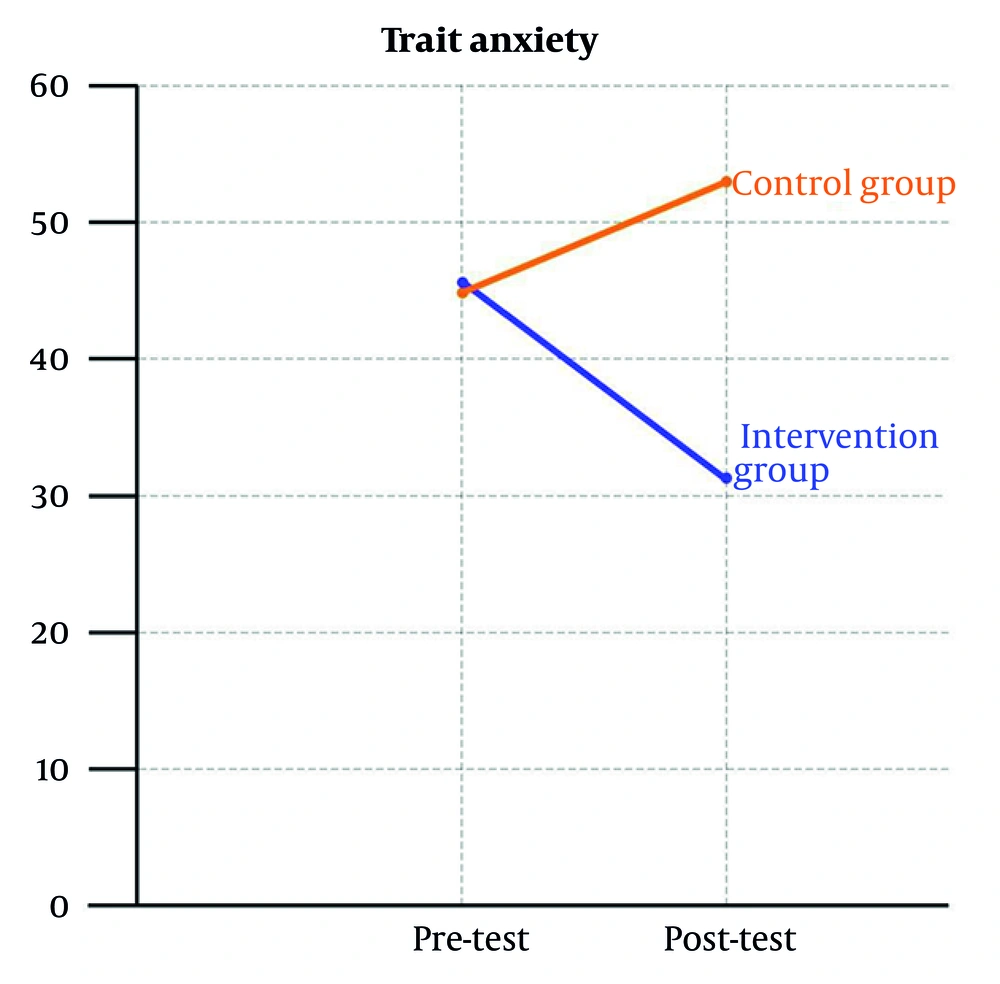
Figure 2.
Within-group changes in trait anxiety
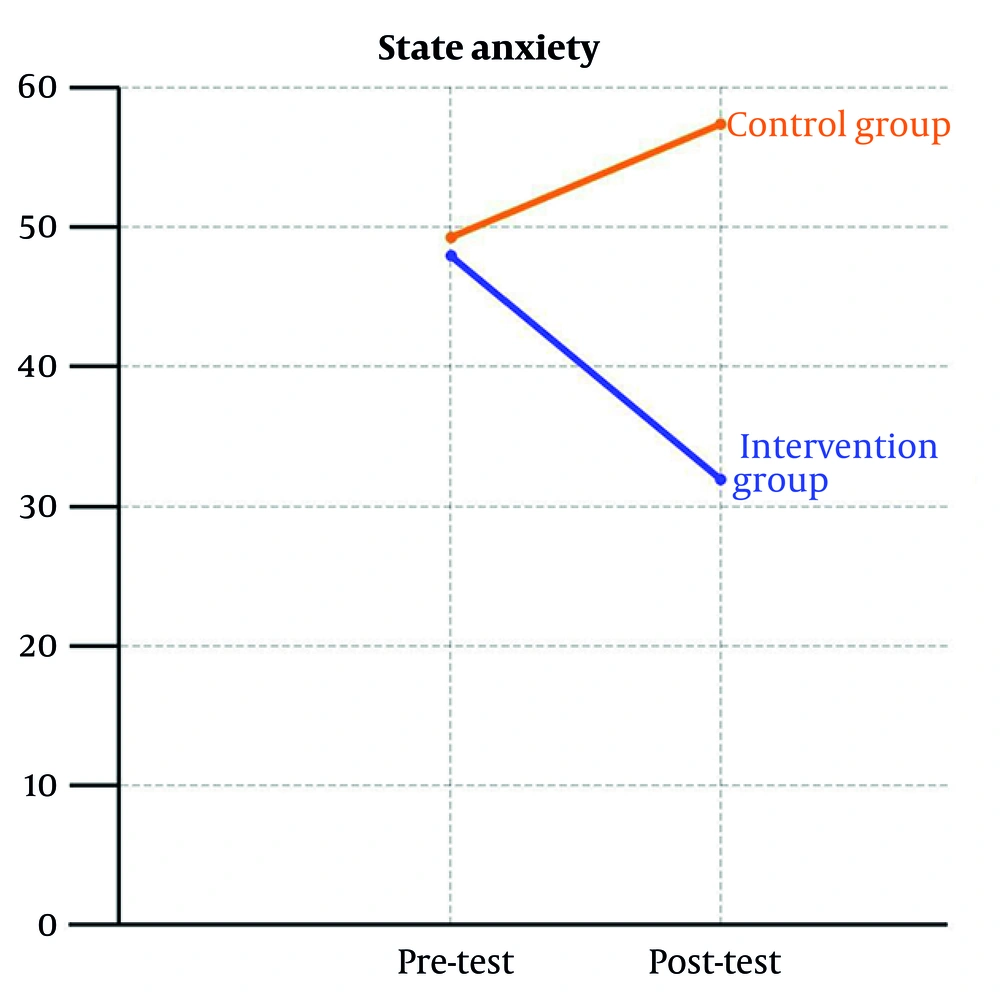
Figure 3.
Within-group changes in state anxiety
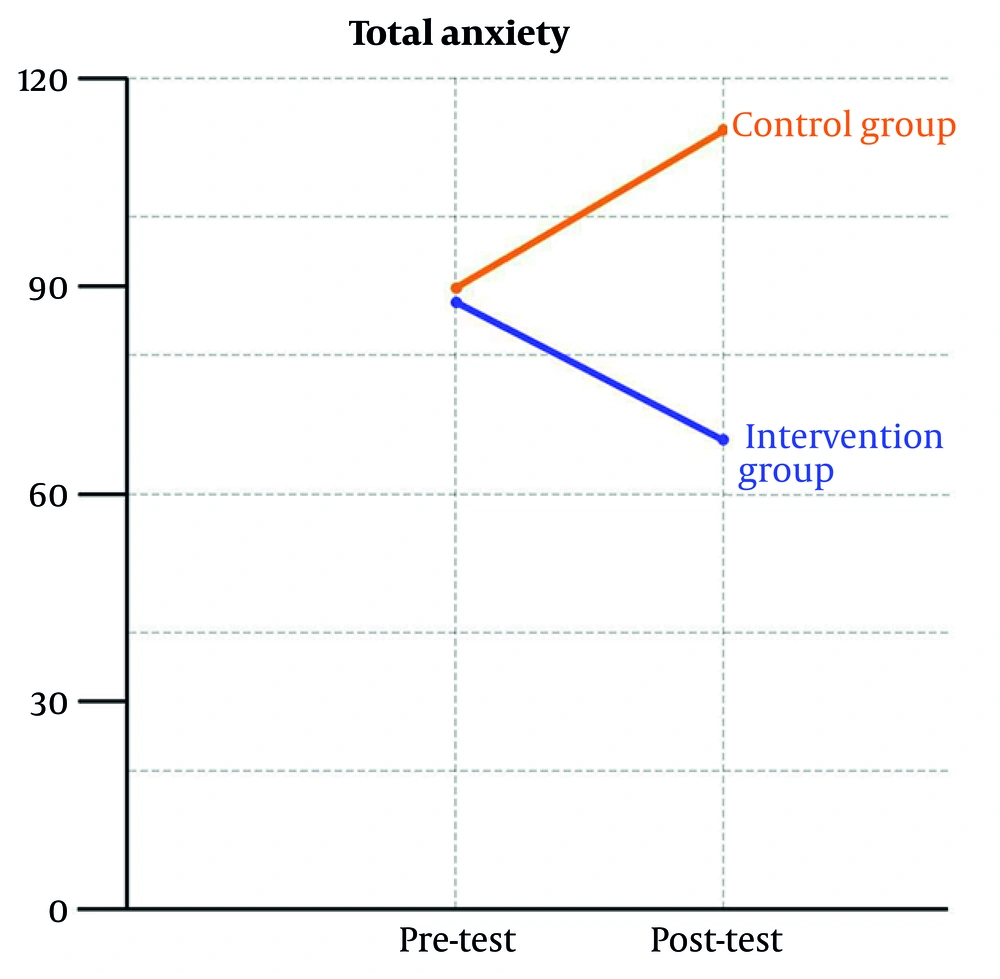
Figure 4.
Within-group changes in total anxiety
Based on the data presented in Table 2, state anxiety in the control group increased by an average of 8.25 ± 10.74 units following the intervention, while in the intervention group, it decreased by 15.39 ± 8.91 units. This difference was statistically significant (P < 0.001, d = -0.748). Additionally, trait anxiety in the control group rose by an average of 7.35 ± 10.40 units, whereas in the intervention group, it decreased by 14.85 ± 8.40 units after the intervention (P < 0.001, d = -2.349). Finally, total anxiety in the control group increased by an average of 15.60 ± 20.34 units, while in the intervention group, it decreased by 30.25 ± 16.50 units. This difference was also statistically significant (P < 0.001, d = -0.763).
Table 2.
Comparison Between Groups of State Anxiety, Trait Anxiety, and Total Anxiety Changes Compared with Pre-test a
| Variables | Changes Compared with Pre-test | |||
|---|---|---|---|---|
| Intervention Group | Control Group | P-Value | Effect Size | |
| State anxiety | - | - | - | - |
| Pre-test | ||||
| Post-test | -15.39±8.91 | +8.25 ± 10.74 | < 0.001 | -0.748 |
| Trait anxiety | - | - | - | - |
| Pre-test | ||||
| Post-test | -14.85 ± 8.40 | +7.35 ± 10.40 | < 0.001 | -2.349 |
| Total anxiety | - | - | - | - |
| Pre-test | ||||
| Post-test | -30.25 ± 16.50 | +15.60 ± 20.34 | < 0.001 | -0.763 |
a Values are expressed as mean ± SD.
Table 3 indicates significant correlations between both trait (P = 0.034) and state (P = 0.047) anxiety at the post-test stage and participants' education levels. Women with higher educational attainment showed reduced anxiety scores post-intervention, indicating that enhanced health literacy may improve managing surgical stress. However, total anxiety scores at both pre-test and post-test stages did not show any significant correlation with demographic variables.
Table 3.
Relationship Between Demographic Variables and All Dimensions of Anxiety
| Variables | Age (y) | Education | Children | Job |
|---|---|---|---|---|
| State anxiety | ||||
| Pre-test a | 0.293 | 0.685 | 0.106 | 0.558 |
| Post-test b | 0.161 | 0.034 | 0.477 | 0.883 |
| Trait anxiety | ||||
| Pre-test a | 0.466 | 0.972 | 0.049 | 0.660 |
| Post-test b | 0.128 | 0.047 | 0.678 | 0.421 |
| Total anxiety | ||||
| Pre-test a | 0.379 | 0.870 | 0.060 | 0.610 |
| Post-test b | 0.129 | 0.097 | 0.711 | 0.674 |
a Oneway ANOVA.
b Kruskal Wallis test.
5. Discussion
This study aimed to evaluate the impact of head massage on preoperative anxiety in women undergoing a cesarean delivery. Findings demonstrated a notable decrease in anxiety for the intervention group when compared to controls, highlighting head massage as a successful non-pharmacological method for preoperative care. This approach not only reduced anxiety but also lessened the typical rise in pre-surgical anxiety. The results of this randomized controlled trial indicate that head massage can significantly reduce both state and trait anxiety among women undergoing cesarean section. Significantly, the impact on state anxiety was greater than that on trait anxiety.
These results align with previous studies demonstrating that massage interventions can effectively reduce perioperative anxiety across different patient groups, such as the one conducted by Nasihin (23) and Saatsaz et al. (24), which demonstrated that hand and foot massages significantly decreased anxiety in patients before and after cesarean surgery. Additionally, a study by Dastan et al. (25) showed that preoperative hand massage for cataract surgery patients markedly reduced anxiety, while also positively impacting their physiological parameters. Head massage, compared to other types such as foot or hand massage, effectively stimulates scalp and neck receptors, facilitates parasympathetic activation, and influences anxiety-related neural circuits, lowers cortisol, and increases oxytocin, which enhances relaxation and improves physiological responses, supported by prior evidence (14, 16).
The current study demonstrates that the anxiety levels in the control group increased significantly. This finding underscores the importance of head massage as a preventive measure in surgical contexts. However, it is worth noting that some studies, such as the one conducted by Mortazavi et al. (26), report differing results. Specifically, they found that having a companion present significantly reduces overall anxiety compared to receiving a massage. These discrepancies may be attributed to various factors including cultural differences, type of surgery (whether elective or emergency), or the psychological state of the patients involved.
The study found that head massage reduces state and trait anxiety in women during cesarean sections, addressing both temporary stress and stable anxiety. This aligns with Goktuna and Arslan (27), which showed foot reflexology massage alleviates trait anxiety in hemodialysis patients. Meha et al. (28) also demonstrated that foot massage with lavender oil improved health variables and reduced anxiety in patients with hypertension. The effectiveness of head massage in reducing state anxiety may be linked to its proximity to the central nervous system. This technique uses rhythmic movements to distract patients from anxiety and ease responses. The rise in oxytocin, known as the calming hormone, further alleviates anxiety, promoting reassurance and tranquility in patients.
Trait anxiety is linked to individual personality traits and past experiences, and it typically requires longer-term interventions for effective management. The findings of our study regarding the reduction of trait anxiety align with previous research, such as that conducted by Yuce et al. (29), which demonstrated that massage and body awareness exercises had a positive impact on reducing hidden anxiety in some pregnant patients. However, this effect was not uniformly observed across all patients. Similarly, a study by Cullen et al. (30) found that while underwater massage helped reduce state anxiety, its effect on trait anxiety was less pronounced. These results suggest that the impact of head massage on trait anxiety is unpredictable. Trait anxiety's deeper connections to an individual's personality and past experiences may necessitate a combination of massage with psychological interventions or body awareness exercises to achieve more consistent and significant results.
The study found a significant correlation between anxiety levels and education in the post-test phase, indicating that higher education may help individuals manage anxiety after surgery, though trait anxiety showed no correlation at any stage (31). Overall anxiety was not significantly correlated with demographic variables, emphasizing the importance of individual psychological traits. The findings of this study indicate that head massage effectively reduces overall, state, and trait anxiety in cesarean patients, supporting similar studies on massage's anxiety-alleviating benefits (13, 32, 33). Specifically, the study highlights head massage as a quick, equipment-free intervention to manage surgical anxiety, but emphasizes the need for further research to optimize conditions and compare its effectiveness with other supportive methods. This will help create a more comprehensive understanding of how massage impacts anxiety in various contexts.
The findings from this study have significant implications for preoperative care. In clinical practice, head massage can be incorporated into routine preoperative care to improve emotional well-being, reduce reliance on anti-anxiety medications, and minimize their potential side effects. Furthermore, head massage is a simple, non-invasive, and low-cost technique, making it easy to implement in healthcare settings with limited resources. While we did not conduct a formal cost-effectiveness analysis comparing head massage to pharmacological anxiolytics or other interventions, the low resource requirements suggest potential cost-effectiveness. This approach may enhance patient satisfaction and improve experiences during the preoperative phase. Additionally, the results of this study underscore the importance of addressing the psychological needs of patients, demonstrating that interventions like massage can effectively alleviate patient concerns in medical environments.
This study has several strengths, including its randomized clinical trial design, standardized intervention protocol, which helps to reduce bias and enhance the validity of the results, and use of a validated anxiety assessment tool. Furthermore, it focuses specifically on head massage in cesarean candidates, addressing a gap in the existing literature. This contributes to the advancement of scientific knowledge in the area of non-pharmacological interventions. This study also had limitations, including being single-blind, lacking long-term follow-up, and the inability to account for pre-existing psychological conditions or previous anxiety experiences. The uniformity of the sample might also restrict generalizability.
5.1. Conclusions
This study demonstrated that head massage significantly reduced both state and trait anxiety among women undergoing elective cesarean section and prevented the rise in anxiety observed in the control group. It serves as an effective non-pharmacological intervention for managing preoperative anxiety. In addition to its high effectiveness in reducing anxiety, this method is simple and does not require any special equipment, making it suitable for various healthcare settings. Integrating head massage into standard preoperative nursing protocols can serve as a valuable, low-risk strategy to reduce reliance on pharmacological anxiolytics and their potential side effects for both mother and newborn. The findings of this research highlight the benefits of this technique, offering a valuable innovation in the field of preoperative care. Future research should compare head massage with alternative non-pharmacological interventions (e.g., music therapy, guided imagery), investigate physiological biomarkers of stress, explore postoperative outcomes, and perform cost-effectiveness analyses.