
1. Background
Nursing education faces ongoing challenges in preparing students for the complexities of clinical practice, in which rapid decision-making, critical thinking, and lifelong learning are essential (1). Traditional lecture-based methods often emphasize passive knowledge acquisition, which may not adequately bridge the theory–practice gap or foster the autonomous skills required in dynamic health care environments (2). Self-directed learning (SDL) is a process by which learners take the initiative to identify their learning needs, formulate goals, seek resources, and evaluate outcomes. It is increasingly recognized as a core competency for nursing professionals. SDL promotes independence, adaptability, and continuous professional development, aligning with the demands of evidence-based practice and patient-centered care (3).
Case-based learning (CBL), also known as the case study or case analysis method, is an active, student-centered pedagogical approach that presents real or simulated clinical scenarios to stimulate discussion, problem-solving, and the application of theoretical knowledge (4). By engaging students in the analysis of authentic patient cases, CBL encourages deeper understanding, clinical reasoning, and reflective practice. CBL has been shown to enhance critical thinking, academic performance, self-confidence, and satisfaction among nursing students compared with conventional teaching methods (5). Moreover, CBL has been linked to improved SDL abilities because it requires students to independently research, collaborate, and reflect on cases, thereby cultivating habits of inquiry and self-regulation (6).
Despite these benefits, evidence regarding the specific impact of CBL on SDL among undergraduate nursing students remains limited, particularly in contexts that emphasize skill integration and clinical preparedness (7, 8). Quasi-experimental designs have shown promising results for related outcomes, such as clinical judgment and competence; however, targeted investigations of SDL are needed to inform curriculum development.
2. Objectives
This quasi-experimental study aimed to evaluate the effectiveness of CBL in promoting SDL among undergraduate nursing students. By comparing intervention and control groups, the study sought to provide empirical evidence on how CBL enhances SDL readiness and ultimately contributes to the development of more competent and autonomous nursing graduates.
3. Methods
3.1. Study Design
The study was conducted from November 16, 2024, to September 30, 2025, among undergraduate nursing students at Abadan University of Medical Sciences, Iran. The study used a quasi-experimental design with two parallel groups (experimental and control) and a pretest/posttest structure.
3.2. Participants
A census sampling approach was used, and all eligible students enrolled in the clinical internship courses for Adult-Elderly Nursing 1, 2, or 3 were invited to participate. The sample size was determined a priori using G*Power software with a medium effect size (d = 0.5), alpha = 0.05, and power = 0.80, resulting in a minimum of 34 participants per group. To account for potential attrition, 43 participants were recruited per group.
After applying the inclusion and exclusion criteria, 80 students were randomly allocated to the experimental group (n = 42) and the control group (n = 43). Participants were assigned to groups using simple randomization to minimize selection bias. Randomization was performed using a computer-generated random number sequence by an independent researcher blinded to participant details.
To minimize contamination between groups, the experimental and control groups were scheduled on separate days of the week (intervention: Sundays and Tuesdays; control: Mondays and Wednesdays) and were assigned to different hospital wards when possible. Students were explicitly instructed not to share case materials or discuss session content with peers in the other group until study completion. The CBL posters were collected at the end of each session to prevent distribution.
3.3. Inclusion and Exclusion Criteria
The inclusion criteria were as follows:
1) Enrollment in one of the Adult-Elderly Nursing clinical internship courses
2) Previous completion of the related theoretical course
3) Previous completion of the Fundamentals of Nursing Skills internship
4) Attendance at all internship sessions
5) No prior clinical work experience
The exclusion criteria were as follows:
1) Incomplete questionnaires
2) Guest-student status from another medical university in the country
3) Failure to comply with examination rules during the pretest or posttest, including not using mobile phones, notes, or books and not consulting or discussing with other students
3.4. Intervention Design
3.4.1. Study Groups
Control group: Participants received standard routine education according to the university curriculum and logbook objectives established by the Nursing Faculty Education Council. The internship comprised 10 sessions, each lasting 5 hours, including 3 hours of clinical practice in hospital wards and 2 hours of theoretical instruction using traditional lecture-based methods. To ensure ethical equivalence, the CBL materials provided to the experimental group were shared with control participants at the end of the study as an educational booklet.
Experimental group: In addition to the same routine clinical practice activities as the control group, the 2-hour theoretical sessions were replaced by a CBL approach implemented daily by a trained clinical instructor.
The 2-hour theoretical session was conducted after the 3-hour clinical practice period in a postconference format, allowing students to reflect on and integrate their bedside experiences with theoretical knowledge. This schedule ensured identical clinical exposure time between groups, with 3 hours of bedside practice per session in both groups. The postclinical timing aligned with the standard curricular structure, in which theoretical debriefing and concept integration follow direct patient care. The educational rationale for delivering CBL after clinical exposure was to facilitate the immediate application of theoretical concepts to recently encountered patient situations, thereby reinforcing clinical reasoning and bridging theory-practice gaps without compromising hands-on learning time.
3.4.2. Case Content and Topics
Theoretical sessions focused on clinical scenarios and case analyses through facilitated group discussions aligned with the Adult-Elderly Nursing curriculum for the respective internship level (1, 2, or 3). Cases were derived from the curricular syllabus and are summarized in Table 1.
Table 1.
Common Cases Related to Adult-Elderly Nursing Internship Topics
| System | Number of Cases | Related Diseases/Conditions |
|---|---|---|
| Respiratory | 8 | Refractory stable asthma, acute asthma, chronic obstructive pulmonary disease (COPD), pulmonary embolism, pneumonia, venous thromboembolism |
| Gastrointestinal and liver | 7 | Upper gastrointestinal bleeding, lower gastrointestinal bleeding, acute cholecystitis, perforated peptic ulcer, acute appendicitis, acute pancreatitis, acute liver failure |
| Renal and urinary tract | 2 | Urinary tract and kidney infection, kidney and urinary tract stones |
| Cardiovascular | 8 | Angina pectoris, myocardial infarction, cardiac arrhythmias, acute heart failure, coagulopathy, hemorrhagic shock |
| Neurological | 5 | Seizures, cerebral hemorrhage, stroke, encephalitis, transient ischemic attack |
Cases were developed as standardized clinical scenarios based on common patient presentations encountered in adult-elderly nursing practice, derived from the curricular syllabus and informed by real clinical cases with appropriate de-identification. Case authenticity, complexity, and level appropriateness were validated by a panel of three nursing education experts and two experienced clinical instructors, who reviewed each case for clinical accuracy, educational relevance, and alignment with internship learning objectives. Although the cases were standardized rather than drawn directly from students' ward experiences, they were designed to mirror typical patient encounters to maximize ecological validity. Accordingly, claims regarding clinical preparedness are tempered to reflect the use of representative scenarios rather than actual patient cases from concurrent clinical placements.
Each case was presented as a separate poster and distributed to students. The session structure included 10 minutes for individual study and analysis to identify probable diagnoses, which were confirmed with the instructor; division into subgroups of 4 students, including one subgroup for diagnostic-therapeutic approaches and one for nursing care; 20 minutes for collaborative data determination; subgroup presentations; and individual completion of a standardized nursing process form.
The clinical instructor delivering the CBL intervention completed an 8-hour training program covering CBL facilitation principles, adherence to the session structure, and standardized facilitation techniques. The training included two supervised practice sessions with feedback. A structured fidelity checklist was used to monitor: (a) dose delivered, including adherence to the 10-session schedule and the 2-hour duration per session; (b) dose received, including student attendance and engagement recorded through session logs; (c) adherence to the facilitation guide, including completion of all session components, such as individual analysis, subgroup work, presentations, and the nursing process form; and (d) quality of facilitation, rated on a 5-point scale for instructor neutrality, question-prompting skills, and management of group dynamics. Session attendance was documented, and any absences were recorded as deviations. In addition, an independent observer not involved in the study attended 20% of randomly selected CBL sessions to assess fidelity using the same checklist, with an interrater agreement of 92%. Minor deviations, including one session shortened by 10 minutes because of a scheduling conflict and two students absent for one session each, were documented and deemed acceptable.
3.5. Measurement Instruments
3.5.1. Demographic Questionnaire
Demographic data, including age, sex, marital status, place of residence, and academic semester, were collected using a demographic questionnaire. Interest in the psychiatric diseases course was assessed as a potential confounding variable because of the integration of mental health components within the adult-elderly nursing curriculum and evidence that baseline interest in clinical topics may influence engagement with CBL and SDL outcomes.
3.5.2. Self-Directed Learning Readiness Scale
The SDLRS developed by Fisher et al. (9) assesses readiness for SDL using 41 items rated on a 5-point Likert scale from 1 (strongly disagree) to 5 (strongly agree), with total scores ranging from 40 to 200. The scale includes three subscales: self-management (16 items), learning motivation (10 items), and self-control (15 items). The content validity of the original scale was established through expert panel review and literature-based item generation (9).
Scores below 82 indicate low readiness, scores of 82 - 123 indicate moderate readiness, and scores above 123 indicate high SDL readiness. Cronbach's alpha for the original version was 0.83 overall. The Persian adaptation reported an alpha coefficient of 0.82 and confirmed construct validity through confirmatory factor analysis, with acceptable fit indices (CFI = 0.91, RMSEA = 0.06) supporting the three-factor structure. In this study, internal consistency was confirmed with α = 0.88. In addition, the content validity of the Persian version was reconfirmed for the present study sample by a panel of five nursing education experts, yielding a Content Validity Index of 0.92 and a Content Validity Ratio ranging from 0.80 to 1.00 across items.
3.6. Data Analysis
Data were analyzed using IBM SPSS Statistics version 28.0. Descriptive statistics were used to summarize demographic characteristics and SDL scores, including frequencies and percentages for categorical variables and means, standard deviations, and 95% confidence intervals for continuous variables. The primary analysis was prespecified as the between-group comparison of postintervention SDL scores using ANCOVA, with preintervention scores as the covariate. Secondary analyses included within-group paired t-tests and between-group comparisons of change scores. To control for multiplicity across secondary analyses, a Bonferroni-adjusted significance threshold of α = 0.0167 (0.05/3) was applied to the three main between-group comparisons: pretest, posttest, and change scores. Given significant variance inequality for change scores (Levene's test: P < 0.001), Welch's t-test was used for the between-group comparison of change scores. Effect sizes are reported as Cohen's d for t-tests and partial eta squared (ηp2) for ANCOVA. Pearson correlation analyses explored associations between demographic variables, including age, grade point average (GPA), interest in nursing, and interest in the psychiatric diseases course, and SDL changes. Subgroup analyses by sex and interest level used split-file t-tests. Missing data (< 2%) were handled using listwise deletion. Statistical significance was set at P < 0.05 (two-tailed). Post hoc power analysis confirmed adequate power (0.95 for medium effects).
3.7. Ethical Considerations
The research protocol was reviewed and approved by the Ethics Committee of Abadan University of Medical Sciences (Ethics Code: IR.ABADANUMS.REC.1403.021). All procedures adhered to the principles outlined in the Declaration of Helsinki for research involving human participants. Written informed consent was obtained from all participants before enrollment, and confidentiality was maintained throughout the study.
4. Results
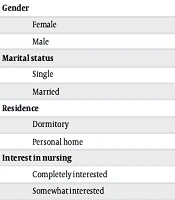
A total of 85 nursing students participated in the study, including 42 in the experimental group, which used the CBL educational method, and 43 in the control group. Demographic characteristics are presented in Table 2. The groups were comparable across all demographic variables, including sex, marital status, residence, interest in nursing, and interest in the psychiatric diseases course. Mean age and GPA were similar between groups, with no significant differences observed. Subgroup checks confirmed no baseline imbalances that could confound the results.
Table 2.
Demographic Characteristics of Undergraduate Nursing Students in the Case-Based Learning and Control Groups a
| Characteristic | Case-based learning (n = 42) | Control (n = 43) | P-Value |
|---|---|---|---|
| Gender | 0.312 | ||
| Female | 19 (45.2) | 24 (55.8) | |
| Male | 23 (54.8) | 19 (44.2) | |
| Marital status | 0.992 | ||
| Single | 40 (95.2) | 41 (95.3) | |
| Married | 2 (4.8) | 2 (4.7) | |
| Residence | 0.572 | ||
| Dormitory | 38 (90.5) | 37 (86.0) | |
| Personal home | 4 (9.5) | 6 (14.0) | |
| Interest in nursing | 0.390 | ||
| Completely interested | 27 (64.3) | 22 (51.2) | |
| Somewhat interested | 4 (9.5) | 11 (25.6) | |
| No opinion | 6 (14.3) | 6 (14.0) | |
| Somewhat not interested | 4 (9.5) | 2 (4.7) | |
| Completely disinterested | 1 (2.4) | 2 (4.7) | |
| Interest in psychiatric diseases course | 0.486 | ||
| Completely interested | 23 (54.8) | 19 (44.2) | |
| Somewhat interested | 8 (19.0) | 13 (30.2) | |
| No opinion | 4 (9.5) | 6 (14.0) | |
| Somewhat not interested | 4 (9.5) | 4 (9.3) | |
| Completely disinterested | 3 (7.1) | 1 (2.3) | |
| Age | 22.80 ± 2.26 | 23.10 ± 3.28 | 0.634 |
| GPA | 17.57 ± 1.25 | 17.53 ± 1.24 | 0.889 |
a Values are expressed as No. (%) or mean ± SD.
Preintervention SDL scores did not differ significantly between the intervention and control groups (P = 0.474) (Table 3).
Table 3.
Self-directed Learning Scores by Group and Time Point a
| Groups | Preintervention | Postintervention | Change (post-Pre) | Within-Group P-Value |
|---|---|---|---|---|
| Case-based learning (n = 42) | 138.70 ± 20.30 (132.45, 144.95) | 153.30 ± 18.75 (147.45, 159.15) | 14.60 ± 7.44 (12.28, 16.92) | P < 0.001 |
| Control (n = 43) | 141.85 ± 18.34 (136.15, 147.55) | 141.95 ± 18.51 (136.25, 147.65) | 0.10 ± 1.52 (-0.45, 0.65) | P = 0.678 |
| Between-group t (P value) | -0.72 (0.474) | 2.78 (0.007) | 11.45 (< 0.001) b | — |
| Effect size (Cohen's d) | 0.16 | 0.61 | 2.73 | — |
a Values are expressed as mean ± SD 95% (CI).
b Welch's t-test was used because of significant variance inequality (Levene's test: F = 38.42, P < 0.001).
Postintervention scores were significantly higher in the experimental group than in the control group (P = 0.007), with a medium effect size. The change in scores (post minus pre) was also significantly greater in the experimental group than in the control group (P < 0.001), with a large effect size (Table 3).
Within-group analyses showed a significant increase in SDL scores from preintervention to postintervention in the experimental group (P < 0.001), with a large effect size. In contrast, no significant change was observed in the control group (P = 0.678), with a negligible effect size (Table 3).
Analysis of covariance, controlling for preintervention scores, confirmed a significant group effect on postintervention scores (P < 0.001), with a large effect size (adjusted means: intervention = 154.25; control = 140.95). The assumption of homogeneity of regression slopes was met (P = 0.147).
Correlation analyses showed a moderate positive association between baseline interest in nursing and the change in SDL scores (P < 0.001) and a weak positive association with interest in the psychiatric diseases course (P = 0.010). No significant correlations were observed with age (P = 0.278), GPA (P = 0.102), or sex (P = 0.412).
Subgroup analyses indicated stronger effects among females than among males in the experimental group, although this difference was not statistically significant (P = 0.145). A significant difference was observed between participants with high interest in nursing and those with low interest in nursing (P = 0.032).
5. Discussion
5.1. Principal Findings
This quasi-experimental study found that CBL was associated with significantly higher SDL scores among undergraduate nursing students in the experimental group than in the control group. Specifically, the experimental group demonstrated a substantial increase in SDL scores from pretest to posttest, with a large within-group effect size, whereas the control group showed negligible change. Between-group comparisons, including ANCOVA adjusted for baseline scores, indicated superior SDL outcomes in the CBL group. Baseline interest in nursing was positively correlated with SDL improvement, suggesting that intrinsic motivation may enhance responsiveness to CBL. These findings provide preliminary support for the potential of CBL as a pedagogical strategy to promote SDL in nursing education, although the quasi-experimental design limits causal inference.
5.2. Comparison With Previous Studies
The observed association between CBL and improved SDL scores is consistent with previous research in nursing education. For instance, a quasi-experimental study of nursing students found that CBL integrated with self-directed methods was associated with significant improvements in SDL scores, with enhancements in motivation and autonomy (10). Similarly, another investigation using CBL in a self-directed environment reported positive learning outcomes, including improved knowledge retention and independent learning skills (11). The medium-to-large effect sizes observed in the present study (d = 0.61 for post-scores; ηp2 = 0.61 for ANCOVA) are comparable to those reported in studies evaluating active learning approaches in health professions education.
Stronger associations have been reported when CBL is combined with other modalities. An evaluation of CBL combined with flipped learning in evidence-based nursing education showed significant improvements in SDL, particularly in critical thinking and self-management (12). Another study on integrated SDL through CBL in medical students reported higher engagement and self-efficacy among participants (13). A systematic review of SDL assessment in health professions education also supports the observation that active methods, such as CBL, are associated with greater SDL improvements than traditional lectures (14, 15).
However, findings across studies are not uniformly consistent. A meta-analysis of the impact of CBL in nursing found benefits primarily for critical thinking dispositions, with variable associations with SDL depending on intervention duration (16). In the present study, the large within-group effect (d = 1.96) suggests that even short-term CBL may be associated with substantial SDL gains, although the sustainability of these improvements remains uncertain without longitudinal follow-up.
Variability in findings across studies may reflect differences in intervention intensity, sample characteristics, or measurement tools. Shorter interventions may yield immediate gains that diminish without reinforcement, whereas combined approaches may produce stronger associations by addressing multiple SDL facets, such as motivation and resource utilization. This may explain the stronger correlations with interest levels observed in the present data.
Contrasting evidence emerges from studies in which SDL improvements were less pronounced or absent. A study on SDL initiatives among nursing students found that traditional curricula often hinder full autonomy, consistent with the negligible change observed in the control group in the present study (17). A scoping review on SDL in clinical science programs highlighted that student experiences vary, with some students reporting limited SDL growth in lecture-heavy settings (18). Another article distinguishing SDL from self-regulated learning in nursing education noted that pure SDL approaches might underperform if not integrated with regulatory strategies (19). In the present study, the absence of meaningful change in the control group supports the interpretation that passive methods are less likely to be associated with SDL development, whereas the structured yet flexible framework of CBL may facilitate such growth.
5.3. Theoretical Implications
Theoretically, these findings can be linked to Malcolm Knowles' theory of andragogy, which posits that adult learners, including nursing students, thrive through self-directed approaches that emphasize experience, readiness to learn, and a problem-centered orientation (20, 21). By using real-life cases, CBL engages learners' orientation toward immediate applicability and may enhance their self-concept as independent learners. The observed correlation between interest in nursing and SDL improvement (r = 0.42) is consistent with the andragogical principle that internal motivation facilitates adult learning. The shift from teacher-directed to learner-centered paradigms represents a plausible mechanism through which CBL may support lifelong learning skills essential for nursing practice, although further research is needed to confirm causal pathways.
5.4. Practical Implications
The findings suggest that integrating CBL into nursing internship curricula is a feasible strategy to promote SDL among undergraduate nursing students. The intervention replaced existing theoretical sessions without reducing clinical exposure time, indicating that CBL can be incorporated within standard curricular structures without compromising hands-on training. The positive correlation between baseline interest and SDL improvement suggests that identifying and nurturing students' intrinsic motivation may enhance the benefits of CBL. In practice, nursing educators may consider adopting CBL as a complement to traditional methods, particularly in post-clinical conference settings where theoretical concepts can be immediately applied to patient care experiences. However, successful implementation would likely depend on adequate instructor training and fidelity monitoring, as demonstrated in this study.
5.5. Limitations and Future Research
Several limitations should be considered when interpreting these results. First, the quasi-experimental design, despite randomization, may introduce selection bias, such that unmeasured confounding variables could partially account for the observed group differences in SDL scores. Second, the relatively short intervention duration of 10 sessions over one academic term limits assessment of whether SDL improvements are sustained over time, and the observed effect sizes may not reflect long-term outcomes. Third, reliance on a self-report measure, the SDLRS, introduces potential social desirability bias, which may inflate the magnitude of reported SDL improvements, particularly because participants were not blinded to group assignment. Fourth, the homogeneity of the sample, which predominantly included single, dormitory-residing students at a single Iranian institution, limits the generalizability of the effect estimates to more diverse populations and settings. Fifth, despite scheduling the groups on separate days and providing explicit instructions against sharing materials, residual contamination between groups cannot be excluded and may have attenuated between-group differences. Sixth, the use of standardized cases rather than real patient scenarios from concurrent clinical placements may limit the ecological validity of CBL and the strength of inferences regarding clinical preparedness.
Future research should include randomized controlled trials with larger and more diverse samples to validate these preliminary findings across different institutional and cultural contexts. Longitudinal studies are warranted to assess the sustainability of SDL gains over time and their relationship with clinical performance after graduation. In addition, exploring hybrid models that combine CBL with digital tools or interprofessional simulations may help identify optimal strategies for enhancing SDL. Studies incorporating objective measures of SDL and clinical competence alongside self-report instruments would strengthen the evidence base and reduce measurement-related bias.
5.6. Conclusions
This study provides preliminary evidence suggesting that the implementation of CBL is associated with higher SDL scores among nursing students. These findings should be interpreted in the context of a single-institution, short-term intervention using a quasi-experimental design and self-report measures. The marked improvement in SDL scores in the experimental group, contrasted with the minimal change in the control group, indicates the potential of active, problem-centered approaches to support autonomy and lifelong learning skills relevant to nursing practice. Although causal conclusions cannot be drawn from this design, the results demonstrate the feasibility of integrating CBL into existing internship structures without compromising clinical training time. By adopting such methods, nursing curricula may better support intrinsic motivation and critical thinking, although the relationship between these educational outcomes and patient care quality requires further investigation. Future research should prioritize randomized controlled trials, longitudinal follow-up, and objective outcome measures to substantiate these preliminary observations and establish the broader applicability of CBL across diverse educational settings. Overall, CBL represents a practically implementable approach that warrants further study for its potential contribution to nursing education and the development of self-directed professionals.