
1. Background
According to the International Diabetes Federation, diabetes is one of the greatest global health emergencies of the 21st century (1). In 2021, the global age-standardized prevalence of diabetes was 6.1%. By 2050, this prevalence is expected to reach approximately 10% in 89 of the 204 countries worldwide (2). Diabetes is associated with a wide range of complications, including cognitive impairment, functional disability, liver disease, and infections. As people with diabetes age and their life expectancy increases, emerging complications, such as dementia and cancer, have substantially increased the disease burden (3). The contribution of high body mass index (BMI) to disability-adjusted life years attributable to type 2 diabetes increased by 24.3% worldwide between 1990 and 2021 (2). Genetic factors and, more importantly, a sedentary lifestyle and poor diet contribute to disease development. The pathophysiology of diabetes includes insulin resistance, increased hepatic glucose synthesis, and reduced glucose uptake in muscle and adipose tissue (4).
The main goals of diabetes management include preventing microvascular and macrovascular complications, reducing mortality, and reducing the economic costs of diabetes. Therefore, glycemic control, patient education, treatment follow-up, and medication use should be considered (5). Although glycemic control is the primary treatment goal and may initially appear straightforward, it is clinically challenging because of the involvement of multiple genetic and environmental factors. Age, sex, educational status, BMI, diabetes duration, medication type, lifestyle, family history, and psychological factors have been associated with poor glycemic control (6). Despite treatment initiation, 50 - 60% of patients in Germany and England had increased glycated hemoglobin levels because of treatment non-adherence.
Treatment non-adherence in people with diabetes refers to the extent to which a person's behavior, including medication use, diet, foot care, blood glucose self-monitoring, and exercise (lifestyle changes), is inconsistent with recommendations agreed upon with health care providers (7). Socioeconomic and behavioral differences, particularly differences related to diet, gender, race, culture, and geographic region, can influence diabetes control. Therefore, a better understanding of the factors influencing treatment adherence is needed, including appropriate diet, timely medication intake, blood glucose monitoring, regular physical activity, and foot care. Each of these dimensions requires examination to identify associated barriers and facilitators, because designing interventions requires determining the most feasible and cost-effective approach.
Although quantitative studies are valuable for explaining the existence and strength of relationships between study variables (8), they cannot explain the reasons underlying patients' behavior or their decision-making processes (9). Findings regarding the roles of different variables in treatment adherence are also inconsistent (10).
2. Objectives
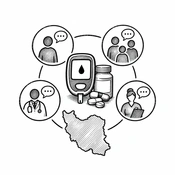
This study aimed to explain the factors contributing to treatment nonadherence among patients with type 2 diabetes from the perspectives of patients, their families, physicians, and health care providers.
3. Methods
3.1. Study Design and Setting
This conventional qualitative content analysis was conducted at Emam Hospital and health centers in Sari, northern Iran, from March to July 2025 to explore treatment non-adherence among patients with type 2 diabetes from the perspectives of patients, their families, physicians, and healthcare providers. Treatment non-adherence refers to the extent to which a person's behavior, including medication use, diet, foot care, blood glucose self-monitoring, and exercise (lifestyle changes), is inconsistent with recommendations agreed upon with healthcare providers (7).
3.2. Participants
The study population comprised patients, their family members, physicians, and healthcare providers. Interviews were conducted with 6 physicians (3 endocrinologists, 1 internist, and 2 family physicians), 8 patients, 2 family members, and 5 healthcare providers (2 midwives and 3 nurses). Participants were selected through purposive sampling to ensure maximum diversity. The inclusion criteria were Iranian nationality; for patients, a diagnosis of type 2 diabetes for at least 5 years; for healthcare providers, at least 3 years of work experience; and consent to participate. Participants who withdrew or had a history of substance abuse were excluded because substance use disorder influences diabetes complications through complex psychosocial, behavioral, and health care–associated pathways rather than through individual non-adherence (11).
3.3. Data Collection
In-depth, semistructured, face-to-face interviews were conducted by a professional qualitative researcher with 8 years of experience. The researcher had no prior acquaintance with any participant. A staff member at the Diabetes Research Center arranged the interviews. The interviewer met with physicians at Emam Hospital and with patients and healthcare providers at the diabetes clinic or health center. After explaining the study objectives and obtaining written informed consent for the interview and audio recording, the interviewer conducted the semistructured interview using the interview guide (Table 1).
Table 1.
Interview Guide Questions for Patients, Their Families, Physicians, and Healthcare Providers
| Opening Questions | Probing Questions |
|---|---|
| Can you describe a typical day in your life with diabetes? Under what circumstances does that daily plan break down? (Patients or family members) | Can you explain step by step? |
| Which individuals or institutions do you feel present the greatest obstacles or shortcomings? (Patients, healthcare providers, or physicians) | When and how did it happen? |
| In your opinion, have general societal conditions affected your ability to control diabetes? (Patients or family members) | Can you give an example? |
Each interview lasted 40 - 60 minutes. Interviews were stopped once data saturation was reached, which was operationally defined as the point at which no new codes or categories emerged from 2 consecutive interviews. Probing questions, such as “What do you mean?”, “How?”, and “Could you explain more, if possible?”, were used to elicit further information and clarify participants’ views. At the end of each interview, participants were informed that further interviews might be needed.
3.4. Data Analysis
Data were analyzed using conventional content analysis following the approach of Graneheim and Lundman (12). Interview recordings were transcribed, and the transcripts were reviewed repeatedly to gain a comprehensive understanding of their content. Analysis involved identifying and condensing meaning units, coding, categorizing, and developing categories. The entire text was considered the unit of analysis. Shorter segments, such as phrases, sentences, or paragraphs containing concepts related to the research question, were regarded as meaning units. Each meaning unit was condensed while preserving its original meaning and then coded. Initial codes were grouped into subcategories according to their similarities. The subcategories were compared repeatedly to identify distinct patterns. As differences between subcategories emerged, abstraction facilitated the formation of categories that reflected the underlying meaning of the data. Finally, the main categories or themes were identified from the underlying meanings of participants’ statements. Two independent coders analyzed 20% of the interviews. Disagreements were resolved through discussion during 2 face-to-face meetings. MAXQDA 10 software was used for data management.
3.5. Rigor and Trustworthiness
The trustworthiness of the qualitative data was established using the framework proposed by Lincoln and Guba, which addresses credibility, dependability, transferability, and confirmability. To support credibility through prolonged engagement, the corresponding author spent 4 weeks at the diabetes clinics and Emam Hospital and 3 weeks at the health center. For member checking, a summary of the preliminary findings was returned to 12 participants, all of whom confirmed the accuracy of the interpretations. One physician suggested minor wording changes to the description of service delivery challenges, which were incorporated into the final analysis.
To support dependability, the audit trail included field notes from each interview, coding records for all transcripts, summary tables, and records of team meetings during which interpretations were discussed. External review was conducted by 2 qualitative methodology experts outside the team: a professor of health education and a senior nursing researcher. Together, they assessed the coding framework and the clarity and coherence of the category structure. Two expert qualitative researchers conducted the analysis, with inter-coder agreement exceeding 80%. All study procedures were recorded and reported in detail to support future research. Thick description strengthened the transferability of the findings. These procedures were used to support confirmability.
3.6. Ethical Considerations
The study was conducted in accordance with the Declaration of Helsinki and was approved by the Ethics Committee of Mazandaran University of Medical Sciences (IR.MAZUMS.IMAMHOSPITAL.REC.1403.095). After the study objectives and confidentiality measures were explained, participants provided verbal and written informed consent for audio recording of the interviews. Interviews were conducted in a private room within the clinic to maintain participant confidentiality. Participants were also informed that they could withdraw at any time without consequences.
4. Results
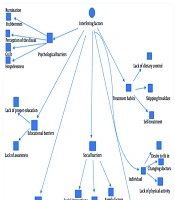
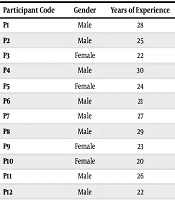
Data saturation was reached after interviews with 21 participants: 6 physicians (endocrinologists, an internist, and family physicians), 8 patients, 2 family members, and 5 healthcare providers. Participants were aged 21 - 74 years, and healthcare professionals reported 5 - 34 years of work experience. The findings were organized into 3 categories (structural-institutional factors, sociocultural factors, and personal factors) and 7 subcategories (Table 2).
Table 2.
Multilevel Analysis of Factors Contributing to Treatment Non-Adherence in Patients with Type 2 Diabetes
| Categories and Subcategories | Codes |
|---|---|
| Structural-institutional factors | |
| Service delivery challenges | Poor doctor-patient relationships; Insufficient health insurance coverage; Limited access to multispecialty clinics; Drug quotas that fail to meet provincial needs |
| Economic challenges | High medication costs; The expense of recommended diets; Prohibitive gym costs; Financial dependence |
| Sociocultural factors | |
| Gender inequalities | Patriarchy; Differences in health expectations between women and men; Inequality in gender-based decision-making power; Gender-based differences in access to sports facilities and public spaces |
| Cultural norms | Norms of hospitality; Cultural patterns of nutrition; Resistance to changing habits; Inappropriate use of traditional medicine |
| Weak support structures | Marital dissatisfaction; Insufficient caregiver support; Insufficient family support; Insufficient policy support |
| Personal factors | |
| Cognitive barriers | Perceived treatment ineffectiveness; Unrealistic outcome expectations; Disbelief in treatment efficacy; Lack of accountability; Irrational fears; Unrecognized threat; Being trapped in a vicious cycle; Lack of awareness |
| Implementation barriers | Workload; Pregnancy; Medication error |
4.1. Structural-Institutional Factors
These factors represent broader frameworks and constraints outside individuals’ direct control that affect the general public. Two subcategories were identified: service delivery challenges and economic challenges. The following quotations illustrate how codes were derived from participants’ statements.
A midwife with 11 years of experience at a health center reported, "Some pharmacies are uncooperative in dispensing the full quantity of medications covered by insurance." She continued, "Market volatility in drug availability causes concern for both doctors and patients, and patients constantly have to switch medications" (p4).
A 56-year-old client expressed frustration: "I have a complaint. Why do we have to keep going to another city every few months just to get medication approval? Don't we pay for insurance? What's the point of this approval anyway?" (p1).
A 45-year-old man described treatment costs: "My neuropathy began when I was a student in Isfahan. There was no family doctor stationed there, and I was afraid of the treatment costs, so I didn't follow up to get my insulin anymore" (p10).
A specialist noted, "The doctor's busy schedule also means they often can't spend enough time with patients, so patients don't fully understand and, as a result, don't take their medication correctly" (p12).
A female family physician with 15 years of experience stated, "Visits for pregnant women take longer due to the sensitivity of the conditions, so these things must be taken into account" (p18).
4.2. Sociocultural Factors
This category comprised 3 subcategories: gender inequalities, cultural norms, and weak support structures. These gaps increase vulnerability to psychological distress and can contribute to barriers to treatment adherence.
A specialist described the role of family support: "Lack of awareness and lack of family support lead to not reporting the side effects and not taking the medication especially by women" (p7).
A nurse who managed the diabetes clinic emphasized the importance of family support: "Men who come with their wives are more proactive in their health behavior" (p13).
A client expressed distress about his relationship with his wife and the fears associated with it: "When my wife, who is educated, knows that diet is important for my health, she should watch her own diet. When she doesn't care about this issue, I shouldn't have to ask her for extra." He continued, "The costs, the lack of medicine, the sleepless nights, the fear of losing a limb, impotence, the fear of my wife's betrayal. nothing is left of our nerves anymore" (p10).
A 51-year-old woman explained, "I don't exercise at all. My doctor told me to, but I just can't. Going out every day in the village is hard—everyone asks me where I'm going" (p9).
A 35-year-old woman stated, "Often when my medicine runs out, or I need to get tests done, I don't tell my husband, because he complains about how much I'm spending. I handle it quietly, feeling ashamed. And he has a point—I only add to his expenses, and we have children to take care of, too" (p6).
The same nurse and clinic manager described gender differences in clients’ requests: "No one has asked about female sexual disorders so far, but a few men have asked." The participant continued, "Women usually talk with their friends and seek help from others, but men often stay silent—especially if they face sexual problems—because they're afraid of being ridiculed, and behind this silence lies both suffering and causing suffering" (p13).
A 56-year-old female farmer stated, "There are certain customs in our culture that are important. For example, when you're guests, you can't refuse the food that's offered—it doesn't reflect well on you" (p17). A 46-year-old male farmer added, "When you have your own rice paddy or orchard, how can you not eat from your own produce?" (p5).
4.3. Personal Factors
These factors relate directly to individuals’ characteristics, beliefs, behaviors, and perceptions and operate at psychological and behavioral levels. Two subcategories were identified: cognitive barriers and implementation barriers. One participant described these experiences as follows: "It's a vicious cycle. Constantly, this doctor and that doctor, so much time and money, all for nothing."
A woman at 34 weeks of gestation described insulin use: "Using insulin was a hard decision during my pregnancy. I was concerned about its effects, but I took it out of fear for my baby." She then discussed nutrition: "I'm pregnant. I want to eat, I get hungry, I eat, but I don't enjoy it because I'm afraid of being a bad mother and harming my baby" (p14).
An endocrinologist with 34 years of experience stated, "Sometimes, to avoid the fear of taking insulin, one makes excuses about the cost, yet in its place takes several pills together, which are more expensive than insulin. So, for some people, the issue isn't really about expense" (p16).
A 71-year-old farmer stated, "Doing the gardening work itself is exercise; it doesn't take extra time and doesn't require a separate workout" (p11).
A male internist with 32 years of experience stated, "Since it's a chronic disease, it gradually creates a kind of depression itself. For patients who say they have 'nerve-related diabetes'—especially men—I often start low-dose antidepressants for them and see how much it affects the course. And now they say it reduces their irritability, increases their energy, and makes them more proactive in managing their condition" (p3).
A 43-year-old teacher stated, "Mr. Doctor, honestly—about the diet, why should I lie? I don't follow it, laughs" (p8).
The 21-year-old daughter of a patient stated, "They don't take illness seriously at all; it's like they have to see the consequences firsthand to believe that danger is right just around the corner" (p2).
5. Discussion
Examining treatment nonadherence in patients with diabetes from stakeholders’ perspectives reveals complex, multilayered causes across 3 main categories: structural-institutional factors, sociocultural factors, and personal factors. The following discussion considers these categories in relation to previous studies and theoretical frameworks to explore the tension between individual agency and constraining structures.
5.1. Structural-Institutional Factors
This category comprised 2 subcategories: service delivery challenges and economic challenges. Mostafavi et al. examined dietary nonadherence among patients with diabetes and identified social priorities and competition as major barriers. The present study describes structural-institutional barriers in greater detail. Economic constraints, including the costs of medication, diet, and gym access, are direct barriers to adherence. Service delivery challenges, including insurance coverage, the quality of doctor-patient relationships, and unequal medication distribution, indicate that the healthcare system itself can hinder adherence. Gender norms and roles are considered separately as sociocultural influences that cut across these barriers. Social competition may be rooted in economic constraints because the costs of a healthy diet or exercise may not be a family’s financial priority. The service delivery challenges identified here also illustrate how macro-level systems can create social barriers (13).
5.2. Sociocultural Factors
This category, which was frequently emphasized in stakeholders’ statements, comprised gender inequalities, cultural norms, and weak support structures. The theme of regret over past unhealthy behaviors in Firoozkuhi’s study is consistent with the established behavioral patterns identified here, such as hospitality and resistance to changing habits (14). This suggests that unhealthy behaviors are not simply individual choices but are deeply rooted in cultural and social contexts, making them difficult to change. Hospitality is a strong social norm in Iran that can disrupt dietary planning for a person with diabetes. In Pierre Bourdieu’s theory, habitus refers to a durable and transposable system of dispositions, perceptions, and practices internalized through socialization that shapes tastes and lifestyles (15).
In Rezaei’s study, interactional and economic challenges, along with the emphasis on interactions required to receive education, indicated a lack of support from the healthcare system and family (16). This finding is consistent with the subcategory of weak support structures in the present study. Mostafavi et al. also emphasized inadequate social support and social barriers. The present study examines these concepts in more concrete detail, from the micro level, such as healthcare providers, to the macro level, such as policymakers. Marital dissatisfaction has also been identified as a factor that reduces emotional support (13). In the study by Al-Salmi et al., social support was considered a facilitator; the present study identifies its absence within the family and healthcare system as a barrier to treatment adherence (17).
Gender emerged as an important influence on norms, experiences, and access to resources. Using a quantitative approach, Oluma et al. identified female gender as a strong predictor of poor glycemic control (18). In contrast, Khachian et al. found no significant relationship between gender and treatment adherence (8), whereas Gebeyaw et al. reported better glycemic control in men (10). The present qualitative study extends these findings by showing that gender is more than a demographic variable. It is a sociocultural construct that helps explain women’s difficulties in achieving glycemic control through gender norms, such as unequal decision-making power; gendered experiences, such as work and caregiving responsibilities; and unequal access to resources, including financial independence and sports facilities.
5.3. Personal Factors
This category comprised cognitive barriers and implementation barriers. These findings are consistent with those of Rezaei’s study. Decisions based on personal experience, such as not observing immediate medication effects, reflect cognitive-perceptual and motivational challenges at the individual level. Patients’ perceptions of their physical condition and the strategies they employ to maintain internal balance also correspond to the behavioral and motivational patterns identified in the present study (16). Patients thus develop personal illness-management strategies based on their own understanding, which may conflict with medical recommendations.
Firouzkouhi’s findings suggest that fear and irreversible complications can lead to hopelessness and a loss of meaning in life, which may facilitate treatment nonadherence and contribute to succumbing to illness (14). Concepts identified in these 2 studies suggest that improving treatment adherence requires more than individual education and motivation. Interventions should also address structural barriers and the central role of gender, while simultaneously strengthening individual facilitators and addressing structural and gender-related barriers (17).
The main distinction of this study is its in-depth examination of gender and its framing of dietary habits as sociocultural determinants rather than solely as individual choices. The findings illustrate how barriers differ between women and men, highlighting the need for gender-sensitive interventions.
5.4. Study Limitations
Although transferability is challenging in qualitative research, particularly given this study’s cultural context, maximum variation, triangulation, and thick description were used to address this limitation.
5.5. Conclusions
This study suggests that treatment nonadherence in diabetes is not simply an individual choice but is shaped by structural constraints and cultural norms. Adherence management programs should therefore extend beyond patient education to address cultural norms, care delivery structures, and gender sensitivity.