


1. Background
2. Methods
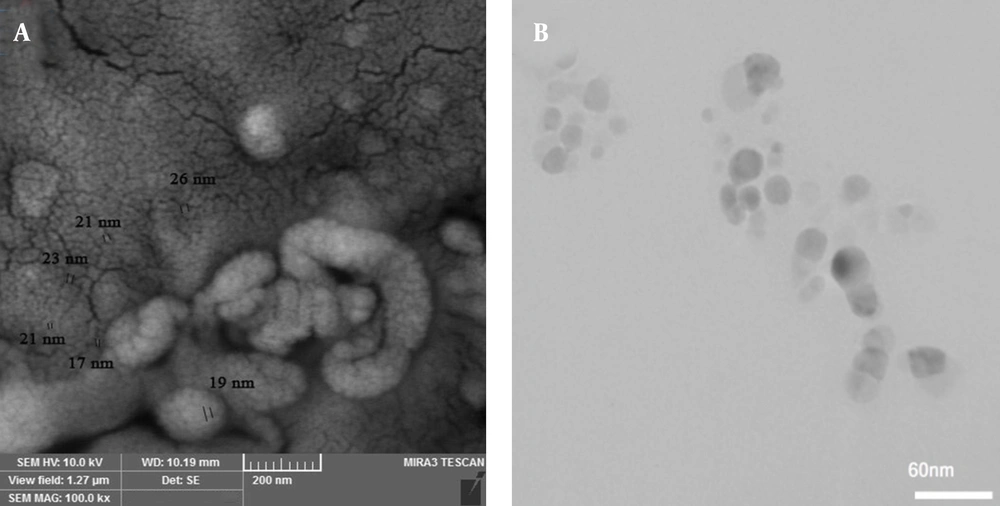
Micrograph of selenium nanoparticles (SeNPs) by SEM (A) and TEM (B).
2.1. Treatment of the SW480 Cell Lines
2.2. Cytotoxicity Assessment
2.3. Measurement of Reactive Oxygen Species
2.4. Evaluation of Antioxidant Enzyme Activities
2.5. Study of Genes Expression by qRT‑PCR
| Genes | Primers |
|---|---|
| ACTB | |
| Forward | 5´-TAA CGC AAC TAA GTC ATA-3´ |
| Reverse | 5´-AAGATC AAG ATC ATT GCT-3´ |
| P53 | |
| Forward | 5´-TGTGACTTGCACGTACTCCC-3´ |
| Reverse | 5´-ACCATCGCTATCTGAGCAGC-3´ |
| Bax | |
| Forward | 5´-GGTTGTCGC CCT TTT CTA CTT-3´ |
| Reverse | 5´-GGA GGAAGT CCA ATG TCC AG-3´ |
| Bcl2 | |
| Forward | 5´-GAGCGTCAACCGGGAGATGT-3´ |
| Reverse | 5´-TACAGTTCCACAAAGGCATCCCAG-3´ |
2.6. Data Analysis
3. Results
3.1. The SW480 Cell Lines Viability
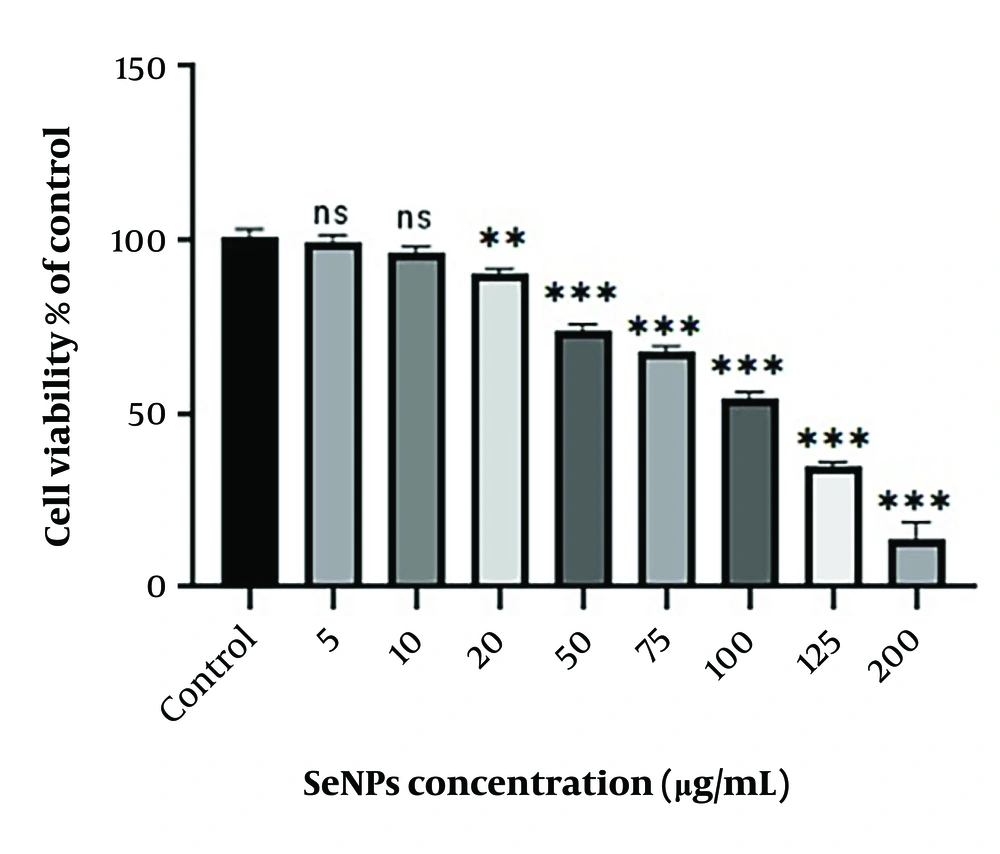
Cell viability of selenium nanoparticles (SeNPs)-treated SW480 cell lines for 24h. Results are shown as ± SD. ns, not significant; ** P < 0.01; and *** P < 0.001 compared with untreated cells, (n = 3).
3.2. Effects of Selenium Nanoparticles on Reactive Oxygen Species Production
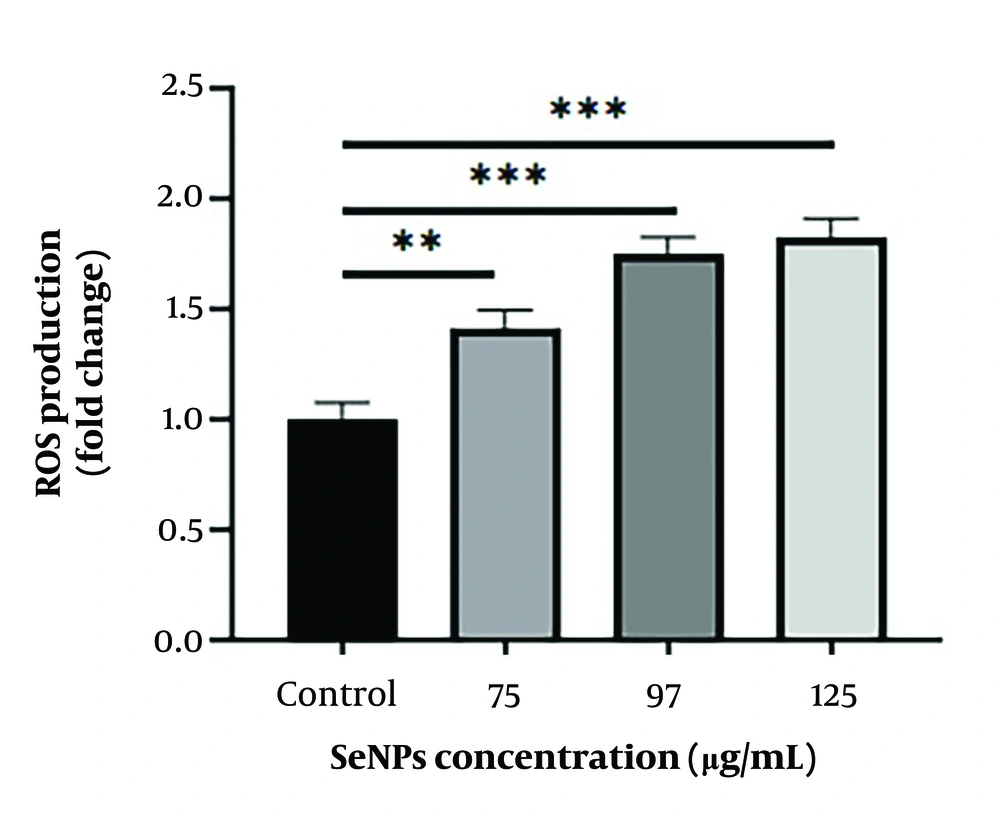
Reactive oxygen species (ROS) levels of selenium nanoparticles (SeNPs)-treated SW480 cell lines for 24h. Results are shown as mean ± SD. ** P < 0.01 and *** P < 0.001 compared with untreated cells, (n = 3).
3.3. Effects of Selenium Nanoparticles on the Activity of Antioxidant Enzymes
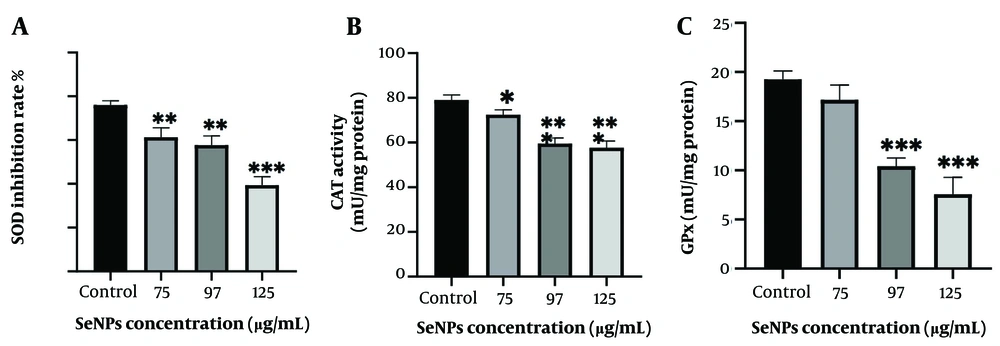
Antioxidant enzymes activity of selenium nanoparticles (SeNPs)-treated SW480 cell lines for 24h, (n = 3). Results are shown as mean ± SD. * P < 0.05 ** P < 0.01, and *** P < 0.001.
3.4. Effects of Selenium Nanoparticles on the Expression of Apoptotic Genes
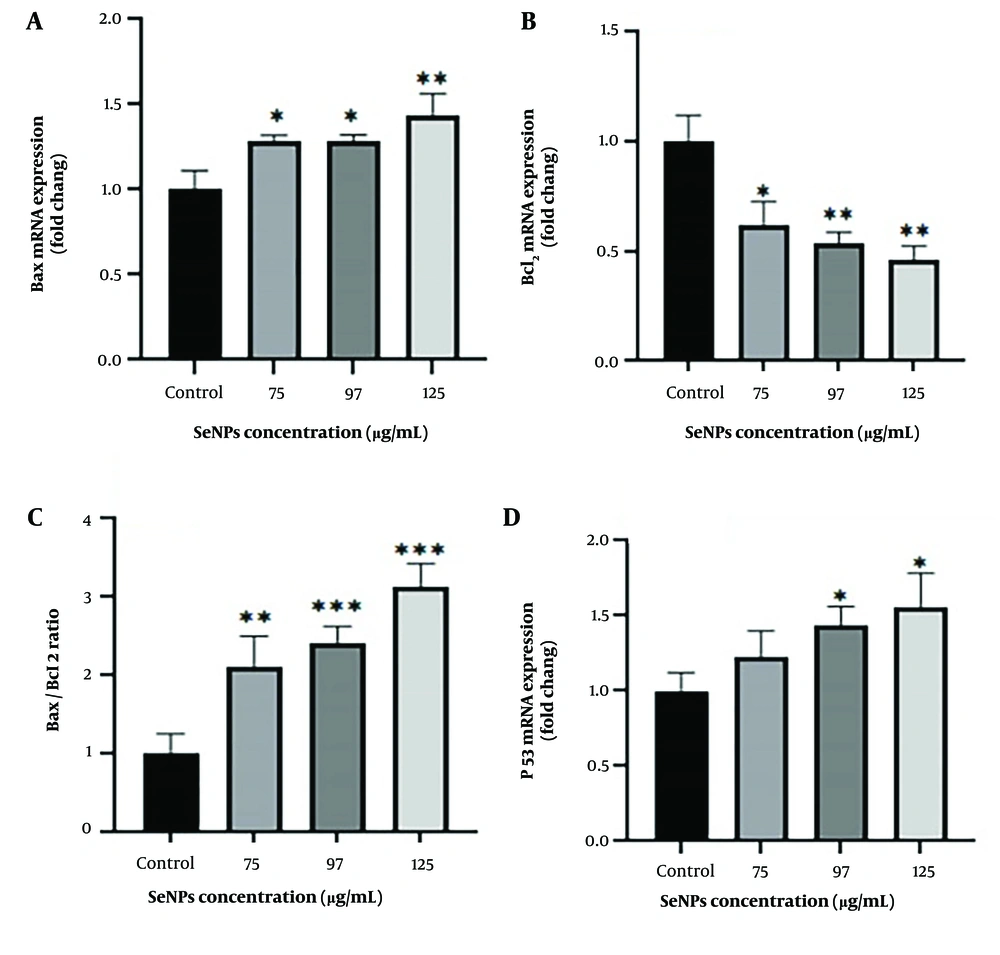
Genes expression of Bax, Bcl-2, Bax/Bcl2 ratio, and P53 in selenium nanoparticles (SeNPs)-treated SW480 cell lines for 24h, (n = 3). Results are shown as mean ± SD. * P < 0.05 ** P < 0.01and *** P < 0.001.

