


1. Background
2. Objectives
3. Methods
3.1. Plant Material
3.2. Chemicals
3.3. Extraction of Pinoresinol from Gnetum montanum Markgr
3.4. The Culture of Macrophages
3.5. Assay of Cell Viability
3.6. Enzyme-Linked Immunosorbent Assay
3.7. Western Blotting
3.8. Assay of Intracellular Reactive Oxygen Species
3.9. Statistical Analyses
4. Results
4.1. The Evaluation of Pinoresinol Purity by Thin-Layer Chromatography and High-Performance Liquid Chromatography
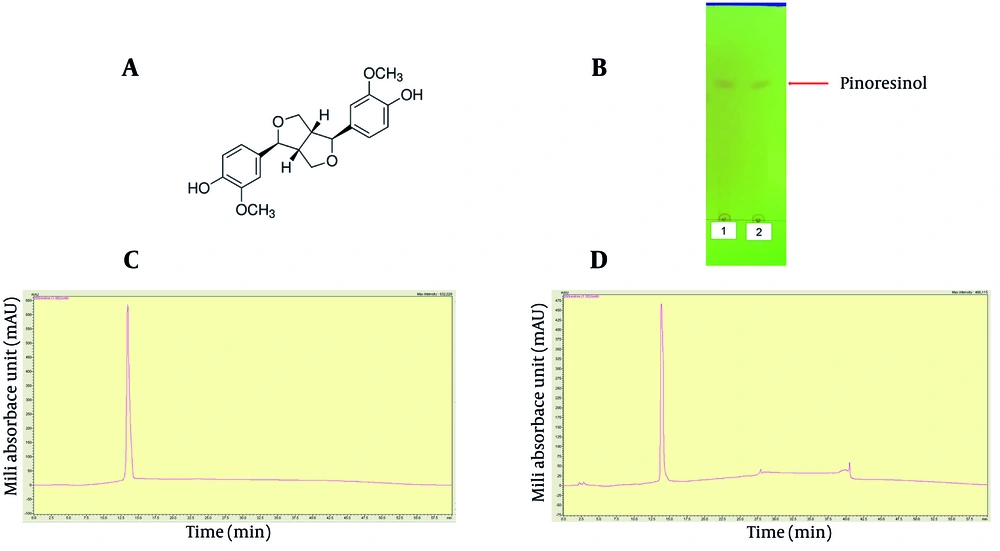
Thin-layer chromatography (TLC) and high-performance liquid chromatography (HPLC) for purified sample and standard pinoresinol; A, chemical structure of pinoresinol; B, 1: TLC for standard pinoresinol; 2: TLC for sample pinoresinol; C, HPLC for standard pinoresinol; D, HPLC for sample pinoresinol.
4.2. The Cytotoxic Effects of Pinoresinol on Cell Viability
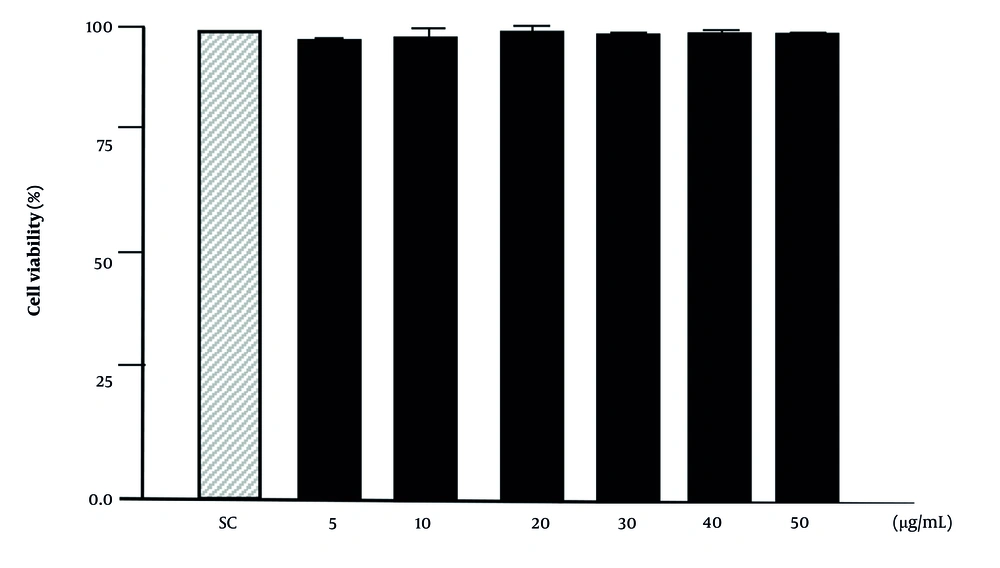
Effect of pinoresinol on the viability of macrophage; the concentrations of pinoresinol were incubated with Raw 264.7 (1 × 10⁶ cells/well). CCK-8 was used to analyze the viability of cells. SC, 0.1% dimethyl sulfoxide (DMSO). Data are presented as mean ± SD of three independent experiments.
4.3. Proinflammatory Cytokine Inhibitory Ability of Pinoresinol
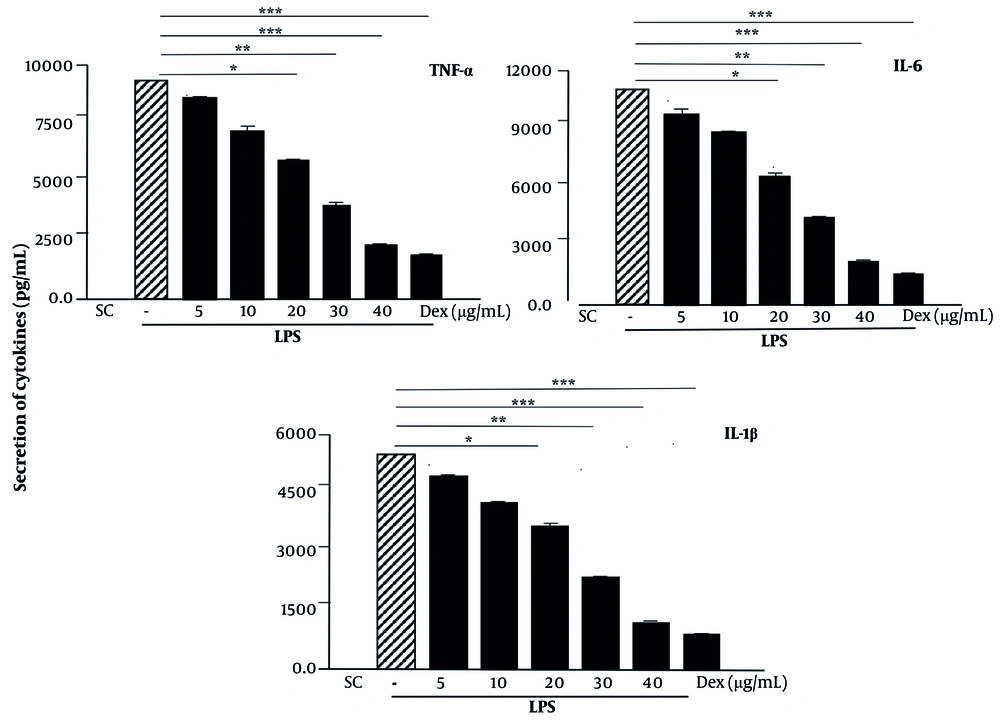
Pinoresinol inhibited the lipopolysaccharide (LPS)-induced proinflammatory cytokines; pinoresinol was treated with Raw 264.7 at different concentrations for 45 min and stimulated with LPS (1 µg/mL) for 18h and supernatants were harvested for enzyme-linked immunosorbent assay (ELISA). Data are presented as mean ± SD of three independent experiments. * P < 0.05, ** P < 0.01, *** P < 0.001 compared to the cell group with dimethyl sulfoxide (DMSO). SC, -, 0.1% DMSO; Dex, dexamethasone.
4.4. Pinoresinol Inhibited LPS-Induced Mitogen-Activated Protein Kinase Phosphorylation in Macrophages
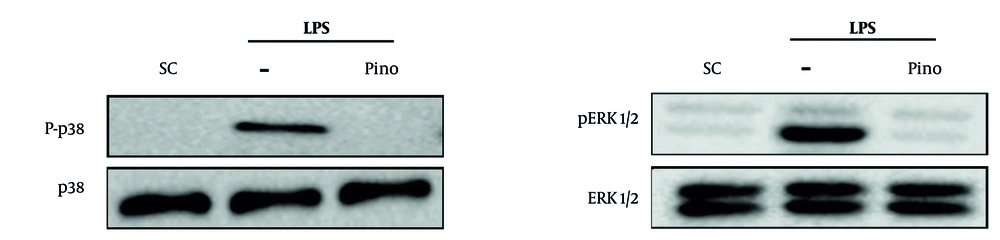
Pinoresinol inhibited the lipopolysaccharide (LPS)-induced mitogen-activated protein kinase (MAPK) activation; Raw 264.7 was incubated with pinoresinol (40 µg/mL) or 0.1% DMSO for 45 min and 30 min of LPS (1 µg/mL) incubation. The MAPK signaling pathways were detected by Western blot. These results are presented from three independent experiments. SC, -, 0.1% dimethyl sulfoxide (DMSO); Pino, pinoresinol.
4.5. Pinoresinol Inhibits LPS-Induced Reactive Oxygen Species Secretion
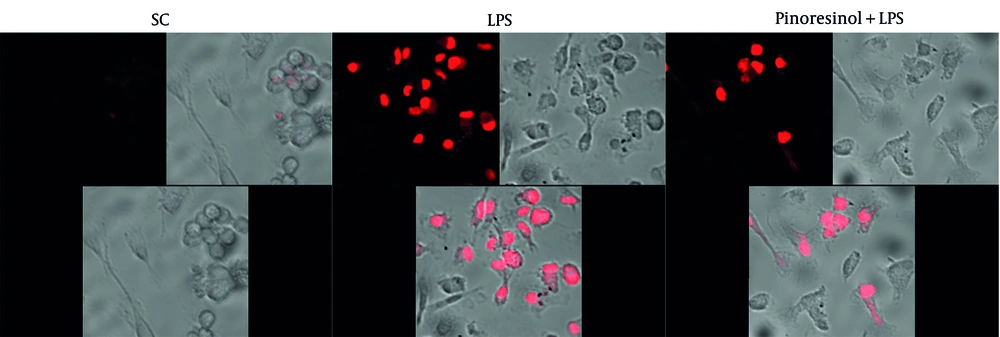
Pinoresinol aborted lipopolysaccharide (LPS)-induced reactive oxygen species (ROS) in Raw 264.7; Raw 264.7 was incubated with pinoresinol (40 µg/mL) or 0.1% dimethyl sulfoxide (DMSO) for 45 min and 30 min of LPS (1 µg/mL) incubation. These results are presented from three independent experiments. SC, 0.1% DMSO.
5. Discussion
5.1. Conclusions
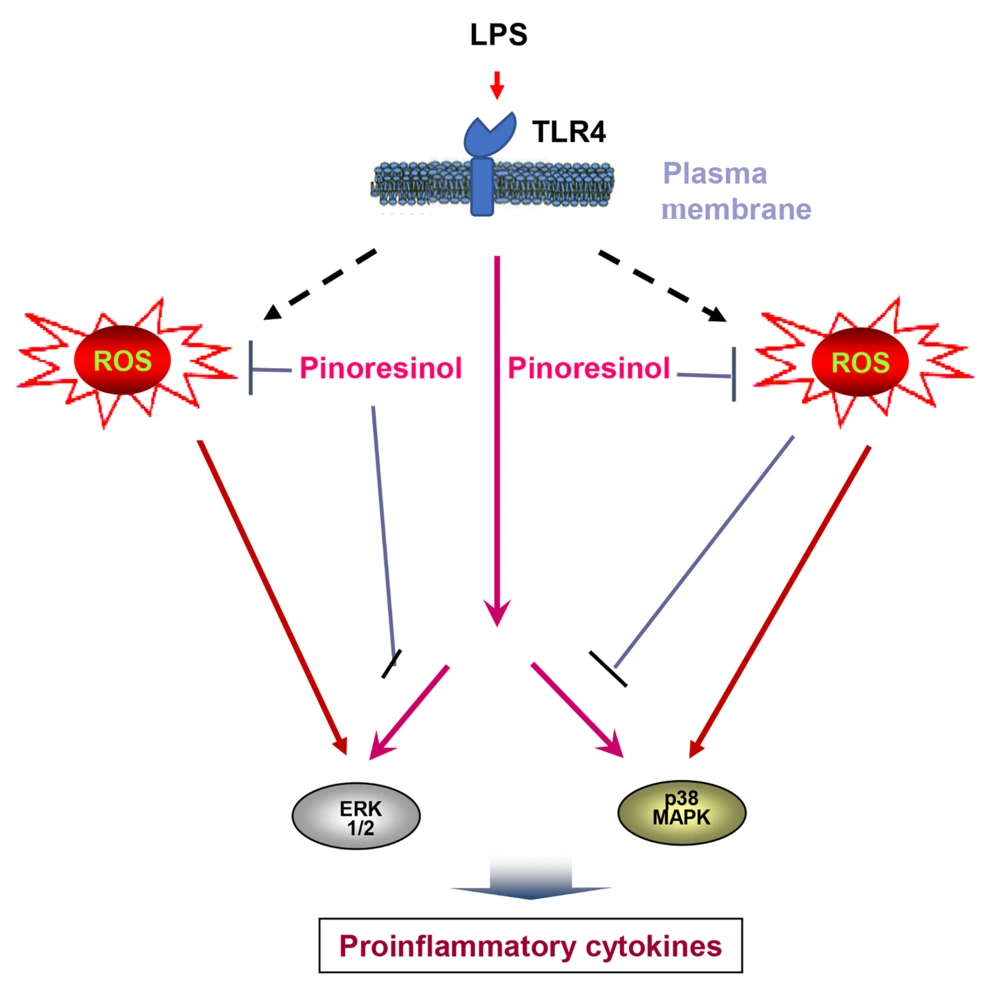
Schematic diagram of the anti-inflammatory and reactive oxygen species (ROS) mechanism of pinoresinol in macrophage cells

