1. Background
Infertility, caused by different etiologies, affects millions of individuals around the world (1). Clinical evidence for intrauterine insemination (IUI) in treating three main categories of infertility, including unexplained infertility, cervical hostility, and male factor infertility, was first applied by Cohlen (2). However, this method is also used for individuals with other etiologies, such as endometriosis, low ovarian reserve, longstanding subfertility, and unilateral tubal blockage (3). The rationale for using IUI was to increase the likelihood of conception by introducing a highly concentrated sample of gametes into the fertilization site during ovulation (4). So far, different predictive factors such as maternal and paternal age, motile and post-wash sperm counts, cause of infertility (less effective for stage III-IV endometriosis and tubal factor infertility but more effective for unexplained infertility and ovulatory dysfunction), and endometrial thickness have been identified for predicting outcomes following IUI (4-6). The success rate of IUI has been reported differently across various studies. Kupka et al. retrospectively investigated a dataset from 33 European countries. They have reported a mean delivery rate per cycle of 8.3% following IUI using the partner/husband’s semen (7). Other studies have reported different pregnancy rates ranging from 5% to 70%; however, a 10 - 20% range is generally accepted for the outcome incidence (6).
IUI can be performed in two forms, including with and without (traditional method) ovarian stimulation (OS) (4). The most commonly used agents for IUI with ovarian stimulation (IUI-OS) are clomiphene citrate, letrozole, and gonadotrophins (8). In most OS methods, human chorionic gonadotropin (hCG) triggering administration is necessary when the largest follicle reaches a diameter of 16 - 18 mm, and following a 32-36-hour interval, IUI will be performed. However, supporting data for this approach is limited (9, 10). For IUI-OS using hCG triggering, one of the most important areas of controversy is the optimal timing of hCG administration and its effect on the pregnancy rates. There are two main methods; one involves simultaneous administration of hCG with insemination, while the other one insists on performing IUI after hCG triggering (11).
2. Objectives
This study aimed to investigate the potential association between the timing of hCG triggering during IUI-OS and laboratory- and clinically-confirmed pregnancy rates in infertile couples.
3. Methods
3.1. Ethics
This study was approved by the Medical Ethics Committee of Hamadan University of Medical Sciences under the IRIB approval code IR.UMSHA.REC.1398.219. All the participants were asked to sign a consent form freely after being informed of the study's aims and methods. For couples who had difficulty understanding certain parts of the consent form (methods), the information was also explained verbally in accordance with their level of comprehension and knowledge of the subject. Additionally, all team members adhered to the ethical principles outlined in the seventh edition of the Declaration of Helsinki for medical research involving human subjects. The study protocol was registered in the Iranian Registry of Clinical Trials on June 29, 2019, with the registration number IRCT20120215009014N286.
3.2. Study Design
This open-label randomized controlled parallel clinical trial was conducted at the Fatemieh Hospital (Hamadan University of Medical Sciences, Hamadan, Iran), between August 2019 and March 2020. The inclusion criteria were defined as a diagnosis of infertility for a duration of less than ten years, age between 18 - 38 years old, less than three cycles of previous IUI attempts, one to five follicles (sized between 16 to 20 mm) assessed by transvaginal ultrasound (TVUS; Philips Affiniti 50 Ultrasound Machine, Philips Inc.), and mild asthenozoospermia in the male partner with non-motile or poorly motile sperm (ranged between 60 - 75%). For the exclusion criteria, couples with severe male-factor infertility, severe fallopian tube pathology, history of abdominopelvic surgery, treatment with cytotoxic or any other hormonal therapies that are not assigned in this study, or any chronic underlying disease affecting pregnancy rate, were excluded from the study. The mentioned co-treatments (hormonal therapies other than those mentioned in the study design) were considered exclusion criteria for both spouses. TVUS for all participants in this study was performed by a well-experienced infertility attending physician (M.F.).
The frequency and number of follow-up visits were based on each patient's clinical condition. For this trial, the sample size was calculated based on the pregnancy rates in intervention and control groups (19% vs. 9.5%, respectively) extracted from a similar study (12). The statistical power (1-β) was set at 80% and the type I error (α) was set at 0.05. Also, due to the nature of the intervention, no crossover was considered for sample size adjustment.
3.3. Study Protocol
Prior to randomization for treatment allocation, all the included individuals underwent routine pre-pregnancy tests. In case of inadequate information regarding the etiology of infertility, additional tests such as ultrasound evaluation and hysterosalpingography were performed. Also, all partners underwent semen analysis. All the para-clinical techniques were performed in the same laboratory and under similar conditions. Using the simple randomization method implemented (by an external epidemiologist) through a lottery system (sealed opaque envelopes, all shuffled), the eligible participants were randomized with a ratio of 1:1 into either the intervention (simultaneous administration of hCG with IUI) or control (IUI-OS performed 36-40 hours after hCG administration) groups. All participants were evaluated by TVUS on day two or three of their menstrual cycle to assess ovarian reserve and determine the appropriate hormonal stimulation dose. Four to five days after receiving gonadotropin, patients were reassessed, and the hormonal stimulation dose was adjusted to achieve at least one but no more than five follicles measured more than 16 mm.
Male partners were asked to provide a semen sample by masturbation after 2 - 3 days of abstinence and deliver it within 2 hours of ejaculation and directly before IUI initiation at the clinic. Semen specimens were left to rest for 30 minutes at room temperature to liquefy before being analyzed for sperm count, motility, and morphology (SCA CASA System sperm class analyzer; Microptic, Spain). Processed samples (0.5 mL) were prepared using the standard Density Gradient Centrifugation method and loaded into an IUI catheter inserted through the cervical canal into the uterine cavity (13). A tenaculum was used to stretch the cervix only in cases where catheter passage was difficult.
Participants in the intervention group received a single intramuscular 1,500 IU dose of hCG (Karma-HCG®, Homa Pharmed, Iran) 3 - 5 minutes following IUI. Additionally, individuals in the control group received the same intramuscular hCG dose 36 - 40 hours prior to the IUI procedure. Following the intervention, all participants were discharged and advised to continue their routine activities. To minimize any systemic errors from the operator or equipment, the same expert operator performed all procedures with the same equipment and under similar conditions.
A laboratory technique (serum beta-hCG evaluation) was used to detect laboratory-confirmed pregnancy in all individuals two weeks after IUI. For cases with laboratory-confirmed pregnancy, TVUS was performed to confirm clinical pregnancy by assessing the presence of an intrauterine gestational sac.
3.4. Statistical Analysis
This study used intention-to-treat (ITT) analysis. Data analysis was performed by R studio 4.4.1 (R Foundation for Statistical Computing). For missing outcome data as well as missing baseline characteristics, multiple imputation using the mice package (14) was used. For continuous variables, normality of the distributions was assessed by the Shapiro-Wilk test along with visual inspection of histograms and Quantile-Quantile (Q-Q) plots. Normally distributed variables and non-normally distributed variables were reported as mean ± standard deviation (SD) and median [interquartile range (IQR)], respectively. The between-group comparisons were performed by independent samples Student's t-test for normally distributed data and the Mann-Whitney U test for non-normally distributed data. The frequencies of categorical variables were compared using the chi-square test or Fisher's exact test. Any P-value < 0.05 was considered statistically significant. Also, multiple logistic regression analysis was performed to evaluate the main outcome to assess the treatment effect.
4. Results
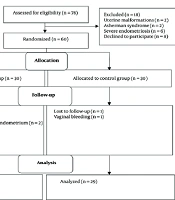
The study flowchart is shown in Figure 1. According to this flowchart, two individuals in each of the groups failed to have their outcomes due to not receiving the allocated treatment or the IUI. The baseline characteristics of the included individuals in both groups are presented in Table 1. According to this table, the mean age of the spouses in the intervention (34.16 ± 4.89 years) and control (32.52 ± 4.55 years) groups was statistically different (P = 0.005). Moreover, in the semen analysis results, all three sperm-related parameters, including sperm count (P < 0.001), morphology (P = 0.008), and motility (P = 0.022), were statistically different between the groups. All other baseline characteristics, such as age, endometrial thickness, cause of infertility, number of previous pregnancies, and endometrial thickness in the individuals who underwent OS-IUI, did not statistically differ between the groups. In both groups, primary infertility was the dominant infertility type. Regarding the cause of infertility, male factor was the most frequent cause in both treatment and control arms.

Figure 1.
Flow diagram of the study
Table 1.
Biodemographic Data of the Studied Groups (n = 124 in Each Group) a
| Variables | Simultaneous OS | Delayed OS | P-Value |
|---|---|---|---|
| Age of treated cases (y) | 28.61 ± 4.75 | 28.14 ± 5.02 | 0.444 b |
| Age of their spouses (y) | 34.16 ± 4.89 | 32.52 ± 4.55 | 0.005 b |
| Type of infertility | 0.263 c | ||
| Primary | 84 (67.74) | 92 (74.19) | |
| Secondary | 40 (32.26) | 32 (25.81) | |
| Duration of infertility (y) | 1 c | ||
| < 6 | 95 (76.61) | 95 (76.61) | |
| 6 - 10 | 29 (23.39) | 29 (23.39) | |
| Cause of infertility | 0.085 d | ||
| Cervical factor | 17 (13.71) | 26 (2.97) | |
| Male factor | 55 (44.35) | 63 (50.81) | |
| Both above | 10 (8.07) | 4 (3.21) | |
| Other causes | 42 (33.87) | 31 (25.00) | |
| Number of previous pregnancies | 0.575 d | ||
| 0 | 83 (66.9) | 92 (74.2) | |
| 1 | 29 (23.4) | 21 (16.9) | |
| 2 | 10 (8.1) | 9 (7.3) | |
| 3 | 2 (1.6) | 2 (1.6) | |
| Ectopic pregnancy history | 1 d | ||
| Yes | 2 (1.61) | 1 (0.81) | |
| No | 122 (98.39) | 123 (99.19) | |
| Regular menstrual cycle | 0.581 c | ||
| Yes | 88 (70.97) | 84 (67.74) | |
| No | 36 (29.02) | 40 (32.26) | |
| Endometrial thickness (mm) | 0.065 c | ||
| < 7 | 21 (16.94) | 33 (26.61) | |
| ≥ 7 | 103 (83.06) | 91 (73.39) | |
| Number of previous IUI (s) | 0.412 c | ||
| 1 | 88 (70.97) | 82 (66.13) | |
| ≥ 2 | 36 (29.03) | 42 (33.87) | |
| Sperm count (106) | 37.50 [32.38 - 50.25] | 32.75 [31.00 - 42.12] | < 0.001 e |
| Class A/B sperms | 77.50 [60.00 - 95.00] | 89.00 [73.75 - 95.00] | 0.008 e |
| Normal sperm morphology | 20.0 [6.00 - 40.00] | 20.00 [18.00 - 46.25] | 0.022 e |
Abbreviations: OS, ovarian stimulation; SD, standard deviation; IQR, interquartile range; mm, millimeter; IUI, intrauterine insemination; HCG, human chorionic gonadotropin.
a Values are expressed as mean ± SD or median [IQR] or No. (%).
b Independent-sample t-test.
c Chi-square test.
d Fisher’s exact test.
e Mann-Whitney U test.
As shown in Table 2, the final number (P = 0.412) and size (P = 0.119) of follicles, as evaluated by TVUS, were also not significantly different between the groups. However, using a tenaculum between the two groups significantly differed in favor of the intervention arm (P = 0.007).
Table 2.
The Results of the Interventions in Each of the Studied Groups (n = 124 in Each Group) a
| Variables | Simultaneous OS | Delayed OS | P-Value |
|---|---|---|---|
| Follicle number | 0.165 b | ||
| 1 - 2 | 92 (74.19) | 82 (66.13) | |
| 3 - 5 | 32 (25.81) | 42 (33.87) | |
| Follicle size (mm) | 0.119 a | ||
| 16 - 18 | 61 (49.20) | 45 (36.29) | |
| 18 - 20 | 51 (41.12) | 65 (52.42) | |
| 6 - 20 | 12 (9.68) | 14 (11.29) | |
| Using a tenaculum during IUI | 0.007 a | ||
| Used | 13 (10.48) | 29 (23.39) | |
| Not used | 111 (89.52) | 95 (76.61) |
Abbreviations: OS, Ovarian stimulation; IUI, Intrauterine insemination.
a Values are expressed as No. (%).
b Chi-square test.
As mentioned, the main outcomes of this study were laboratory-confirmed and clinically confirmed pregnancies. As shown in Table 3, the frequency of laboratory-confirmed pregnancy in the intervention arm (n = 31; 25.00%) was significantly higher than in the controls (n = 18; 14.52%; P = 0.038). Also, clinically-confirmed pregnancy followed similar frequencies compared to laboratory-confirmed pregnancy. Moreover, the control group, with 3 (16.67%) twin pregnancies, had a statistically higher rate of multiple gestation (P = 0.044) compared to the intervention arm (0%).
Table 3.
Pregnancy Outcome Between the Studied Groups a
| Variables | Simultaneous OS | Delayed OS | P-Value |
|---|---|---|---|
| Laboratory-confirmed pregnancy b | 0.038 c | ||
| Yes | 31 (25.00) | 18 (14.52) | |
| No | 93 (75.00) | 106 (86.48) | |
| Clinically-confirmed pregnancy b | 0.038 c | ||
| Yes | 31 (25.00) | 18 (14.52) | |
| No | 93 (75.00) | 106 (86.48) | |
| Pregnancy type | 0.044 d | ||
| Singleton | 31 (100.00) e | 15 (83.33) f | |
| Twin | 0 (0) e | 3 (16.67) f |
Abbreviation: OS, Ovarian stimulation.
a Values are expressed as No. (%).
b N = 124 in each group.
c Chi-square test.
d Fisher’s exact test.
e N = 31.
f N = 18.
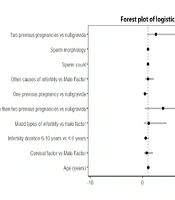
To better understand the role of covariates on the treatment effect, especially those with chance imbalance following the randomization (Table 1), a logistic regression model was conducted. Since the mean age difference between spouses of the studied groups was only two years and considering that it is less likely to affect some sperm-dependent variables, this covariate was excluded from the regression model. For the semen analysis results concerning the sperm-related variables, only sperm count and morphology were included in the regression model (spouse age was included as a sensitivity analysis, and the results were non-significant). The other included covariates were the age of individuals who underwent IUI, previous pregnancy status, infertility cause, and infertility duration. In the first regression model, all the previously mentioned covariates were included; however, none of them showed a statistically significant effect on the outcome. However, after adding the allocated treatment group as a covariate, it was found that this covariate was significantly associated with pregnancy in the logistic regression model (adjusted odds ratio (aOR): 2.0207, 95% confidence interval (95% CI): 1.0146 - 4.1278, P = 0.0483). This was compatible with the univariable logistic model containing only the allocated treatment group as a covariate (aOR: 1.9629, 95% CI: 1.0403 - 3.7971, and P = 0.049). Details of other covariates are provided in Table 4. In this table, it should be noted that although the 95% CI for one pregnancy in the previous pregnancy status does not include 1 (0.1188 - 0.9800), it was considered statistically non-significant since the P-value is greater than 0.05 (P = 0.067).
Table 4.
Results of the Logistic Regression Model for the Covariates
| Variable/Regression | aOR | 95% CI | P-Value |
|---|---|---|---|
| Univariable model with treatment group as a covariate | |||
| Treatment arm (conventional method as reference) | 1.9629 | 1.0403 - 3.7971 | 0.0401 |
| Multivariable model without treatment group as a covariate | |||
| Sperm count | 1.0068 | 0.9850 - 1.0263 | 0.4203 |
| Proportion of normal sperm morphology | 0.9946 | 0.9745 - 1.0140 | 0.5975 |
| Age (individuals who received IUI) | 1.0399 | 0.9710 - 1.1150 | 0.2641 |
| Previous pregnancy (no pregnancy as the reference) | |||
| One pregnancy | 0.4029 | 0.1289 - 1.0420 | 0.0823 |
| Two pregnancies | 2.5299 | 0.8753 - 7.0611 | 0.0778 |
| More than two pregnancies | 3.8974 | 0.4171 - 35.8858 | 0.2017 |
| Infertility cause (male factor as the reference) | |||
| Cervical factor | 0.7669 | 0.2603 - 1.9951 | 0.6042 |
| Cervical and male factors | 1.1755 | 0.2289 - 4.5500 | 0.8270 |
| Other | 0.9978 | 0.4583 - 2.1196 | 0.9956 |
| Infertility duration (< 6 years as the reference) | 0.5594 | 0.2240 - 1.2613 | 0.1828 |
| Multivariable model without treatment group as a covariate | |||
| Sperm count | 1.0021 | 0.9792 - 1.0223 | 0.8443 |
| Proportion of normal sperm morphology | 0.9973 | 0.9773 - 1.0167 | 0.7921 |
| Age (individuals who received IUI) | 1.0384 | 0.9680 - 1.1150 | 0.2931 |
| Previous pregnancy (no pregnancy as the reference) | |||
| One pregnancy | 0.3749 | 0.1188 - 0.9800 | 0.0635 |
| Two pregnancies | 2.5442 | 0.8696 - 7.2209 | 0.0802 |
| More than two pregnancies | 3.8512 | 0.4011 - 36.7278 | 0.2132 |
| Infertility cause (male factor as the reference) | |||
| Cervical factor | 0.8053 | 0.2708 - 2.1238 | 0.6758 |
| Cervical and male factors | 0.9278 | 0.1716 - 3.7649 | 0.9222 |
| Other | 0.9756 | 0.4470 - 2.0810 | 0.9496 |
| Infertility duration (< 6 years as the reference) | 0.5543 | 0.2209 - 1.2571 | 0.1786 |
| Treatment arm (conventional method as reference) | 2.0207 | 1.0146 - 4.1278 | 0.0483 |
Abbreviations: aOR, adjusted odds ratio; CI, confidence interval; IUI, Intrauterine insemination.
5. Discussion
This randomized controlled trial aimed to investigate the role of timing in hCG triggering in the IUI-OS method for individuals undergoing IUI with different causes of infertility. According to the results, the number of laboratory- and clinically- confirmed pregnancies in the intervention group (25.00%) was significantly higher (P = 0.038) than in the control arm (14.52%). Also, the number of twin pregnancies was significantly higher in the control group compared with the intervention arm (16.67% vs. 0%, P = 0.044). The logistic regression model on the studied covariates also supported the treatment effect. It was revealed that the simultaneous hCG administrations could increase the pregnancy rate significantly (aOR: 2.02, 95% CI 1.01 - 4.13), which is not clinically significant, but also is statistically significant. Although it should be noted that the 95% CI is quite wide and very close to the no effect line (Figure 2).

Figure 2.
Forest plot of the regression models
Among different suggested options for final follicular maturation, hCG is widely used in clinical studies and practice, since it binds to the same receptor that luteinizing hormone (LH) attaches to. Beyond this, hCG directly influences the endometrium and increases endometrial receptivity and implantation through different pathways such as angiogenesis and cytokine/chemokine regulation (15-17). Additionally, the selected dosage (1,500 IU) has been used in different studies due to the lower risk of ovarian hyperstimulation syndrome, while the outcomes were comparable with higher doses (16, 18). Therefore, in this study, hCG was chosen as the intervention of interest with the already mentioned dose.
In a multicenter randomized controlled trial conducted by Rijsdijk et al. (9), 166 and 208 couples were randomized to the simultaneous hCG triggering with IUI and the conventional method (IUI performed 32 - 36 hours after hCG triggering). They considered the cumulative ongoing pregnancy rate after a maximum of four cycles as their primary outcome. According to their results, 43 (26.2%) and 70 (33.7%) of the ongoing pregnancies were observed in simultaneous and conventional groups, respectively, with a relative risk (RR) of 0.78 (95% CI: 0.57 - 1.07), indicating no statistically significant difference between the groups. Additionally, they conducted a univariable logistic regression model using only the allocated treatment group and then, after, a multivariable model using the allocated treatment group and studied covariates (such as maternal age, duration of subfertility, subfertility type, severity of male factor, chlamydia antibody titer, and tubal patency). Adding the covariates showed no statistically significant effect for the allocated treatment group, as the treatment effect showed no effect for the studied covariates. However, the more appropriate way to assess the treatment effect was to evaluate all covariates of interest both with and without the allocated treatment of interest. Thus, the univariable model presented in Table 4 was performed only to compare the results of the present study with the method used by Rijsdijk et al. (9).
In another randomized controlled trial by Aydin et al. (19), the effect of simultaneous IUI and hCG triggering (n = 98) compared to the conventional method with a 34-36 hour delay (n = 106) on pregnancy outcome was studied. They considered the main outcome as clinical pregnancy rates, which were assessed by ultrasound after a positive laboratory pregnancy test (serum beta-hCG). According to the results, no chance imbalance was observed between the randomized groups in their baseline characteristics. The clinical pregnancy rate was 10 (9.4%) and 12 (12.2%) in the conventional and simultaneous groups, respectively, showing no statistically significant difference (P-value = 0.523).
Although the recent Cochrane systematic review reported that there is insufficient data to conclude, this study revealed results that differ from the two previously published randomized controlled trials. Several possible explanations could address this discrepancy. First, it could be considered that the nature of this study was more explanatory than pragmatic; therefore, the observed variability (or some parts of it) might be due to the difference in the adapted approaches. Additionally, three baseline characteristics were significantly different between the groups, particularly sperm count, which is a key variable. Although we tried to address this issue using logistic regression, it still might influence the results. However, this inconsistency could just be due to the treatment effect itself.
Similar to other studies, this randomized controlled trial is not without limitations. One of the key issues in this study was the chance imbalance in covariates related to the spouses of individuals who underwent IUI. This imbalance might be due to the randomization method. However, given the variety of covariates and limited sample size, the stratified randomization method was not a feasible choice. Additionally, centralized randomization was not feasible either. To address this issue, a logistic regression model with the observed covariates (including those with chance imbalance) was used to assess the true treatment effect independent of the studied covariates. Another limitation of the current randomized controlled trial was its explanatory nature. The interventions were performed by a highly experienced team, which might not be the case in some of the other studies, especially multicenter ones with varying levels of expertise. Additionally, lack of molecular biomarker assessments (e.g., hormones) could be considered as another potential limitation.
One of the key strengths of this study is that it is a randomized controlled trial, which is an important advantage compared to the other published observational studies dealing with observed and unobserved confounding factors. Additionally, as mentioned, to assess the treatment effect, a multivariable logistic regression model adjusted for different covariates was used. This model was used to ensure that the observed treatment effect was independent of the studied covariates. Moreover, the study had a very low rate of missing data, all of which were handled using multiple imputation. Furthermore, this study used intention-to-treat analysis to preserve the objective of randomization and ensure a more realistic analysis plan.
5.1. Conclusions
This study investigated pregnancy outcomes (laboratory- and clinically- confirmed) in two groups of couples undergoing IUI with different timing of hCG triggering. Intrauterine insemination was performed simultaneously with OS in the intervention group, while in the control group, it was performed 36 - 40 hours after the OS with hCG. According to the results, the simultaneous method appeared to have a significantly higher pregnancy rate and a lower number of twin pregnancies compared to the conventional method. These results come from a single-center explanatory randomized controlled trial, in which chance imbalance was observed in a few variables (sperm count and spouse age); therefore, further multicenter, more pragmatic randomized controlled trials with a larger sample size are required.