1. Background
Approximately 40% of new APIs exhibit poor aqueous solubility and present a major challenge to modern drug delivery systems because of their low bioavailability (1). Self-emulsifying lipid systems are thought to facilitate the formulation design of various lipophilic drugs and thus improve their oral absorption (2-5). These systems are fabricated using mixtures of oils and/or co-surfactant and non-ionic surfactants. After emulsification in water, these systems produce either (o/w) emulsions of droplets < 5µm (6) or clear micro-emulsions of droplets with diameters between 5 and 140nm (7).
After the advent of the immunosuppressive agent cyclosporine A (Neoral®) and the two HIV protease inhibitors ritonavir (Norvir®) and saquinvir (Fortovase®), lipid-based delivery has gained considerable research attention, and hence many pharmaceutical products using the technology were introduced to the market (Table 1).
| Product Names | Drug | Company |
|---|---|---|
| Neoral® | Cyclosporine | Novartis |
| Norvir® | Ritonavir | Abbott |
| Fortovase® | Saquinavir | Roche |
| Agenerase® | Amprenavir | GlaxoSmithKline |
| Lipirex® | Fenofibrate | Sanofi-Aventis |
| Convulex® | Valproic | Pharmacia |
| Rocaltrol® | Calcitriol | Roche |
| Targretin® | Bexarotene | Novartis |
| Vesanoid® | Tretinoine | Roche |
| Accutane® | Isotretionine | Roche |
| Kaletra® | Lopinavir and Ritonavir | Abbott |
| Aptivus® | Tipranavite | Boehringer Ingelheim |
Based on the polarity of the oil vehicle, mean emulsion droplet diameter (MEDD), and the formulation digestibility, lipid systems were categorized as type I, II, III, and IV (11). Various lipid class systems were thoroughly studied in terms of the mechanistics of emulsification (4, 12), type of oil as a source of triglycerides (2), role of medium-chain fatty acids as a co-surfactant (4), type of nonionic surfactant (12, 13), and the fate of the drug after dispersion (3, 12). Type III and IV have relatively the highest degree of hydrophilicity among other types of lipid vehicles. High content of hydrophilic materials is used to fabricate type III and IV, which include hydrophilic surfactant, co-solvent, and mixed glyceride of less than 20% in the case of type III or zero natural lipids for type IV. The aqueous dispersion of these systems (types III and IV) results in a colloidal solution of drug and oil in aqueous micelles, which can induce drug precipitation.
2. Objectives
In the current investigation, robust self-micro-emulsifying lipid systems will be fabricated using various natural components representing various types of lipid class systems. In vitro physicochemical characteristics of the resultant dispersions will be studied with hydrophilic and lipophilic model drugs.
3. Methods
3.1. Drugs and Chemicals
Span 80 (sorbitan monooleate), Tween 20 [Polyoxyethylene (20) sorbitan monolaurate], Tween 80 [Polyoxyethylene (20) sorbitan monooleate], and Cremphor RH40 (PEG 40 Hydrogenated Castor Oil) were all supplied by Croda as gift samples. Soybean and Glycerox 767HC (PEG 6 caprylic/capric glycerides) were all supplied by Croda as gift samples. Diclofenac sodium was purchased from acros chemicals, and Cilostazol was supplied as a gift.
3.2. Experimental Design
3.2.1. Miscibility Profiles for Lipid Mixtures
Miscibility regions of various lipid formulations were determined using ternary phase diagrams. Formulations of 2 g of various oil blends were weighed in 20 mL glass test tubes. Mixtures were kept at 50ºC for 2 minutes before mixing the components thoroughly. Mixtures were then stabilized in an oven set up at 25°C for 24 hours before visual assessment.
3.2.2. Self-emulsification Profiles of Lipid Mixtures
Emulsions were prepared by introducing an amount of 0.5 g of each lipid mixture into 50 mL of distilled water in a 500 mL glass beaker held at 37°C under conditions of gentle agitation to simulate in-vivo conditions.
3.2.3. Drug Solubility Profiles into Lipid Vehicle
Diclofenac sodium or Cilostazol at concentrations of either 25 mg or 50 mg/g lipid was introduced into glass vials containing SMEDDS. Each vial was thoroughly vortexed, and the solubility of each drug in the lipid mix was assessed visually.
3.2.4. Calculating Mean Emulsion Droplet Size
The MEDD was calculated according to a mathematical equation developed by Hasan (2), according to the following equation: ln(MEDD) = 1.3229 × √HLBmix + 7.2716HLBmix = (HLB1 X C1) + (HLB2 X C2) + (HLB3 X C3) + …, where HLB1, HLB2, HLB3, … = HLB values for each constituent in the oil mix; C1, C2, C3, ... = proportion of each component in the oil mix (%w/w).
4. Results
The emulsification profile of the soybean oil/tween 20/cremophor RH40 lipid mixture is presented in Figure 1. The ternary phase diagram depicts an extended area of immiscibility, which reflects the high non-polarity of soybean oil as a source of long fatty acid chain (C16 - C18) triglycerides. After the aqueous dispersion of the oil pre-concentrate, narrow areas of self-micro-emulsifying clear dispersions were obtained at maximum concentrations of soybean of 10 - 15% w/w. As depicted in Figure 1, line ab represents optimum clear micro-emulsions obtained using blends of {soybean oil/cremophor RH40} (1:9) ratios mixed with increasing concentrations of tween 20.
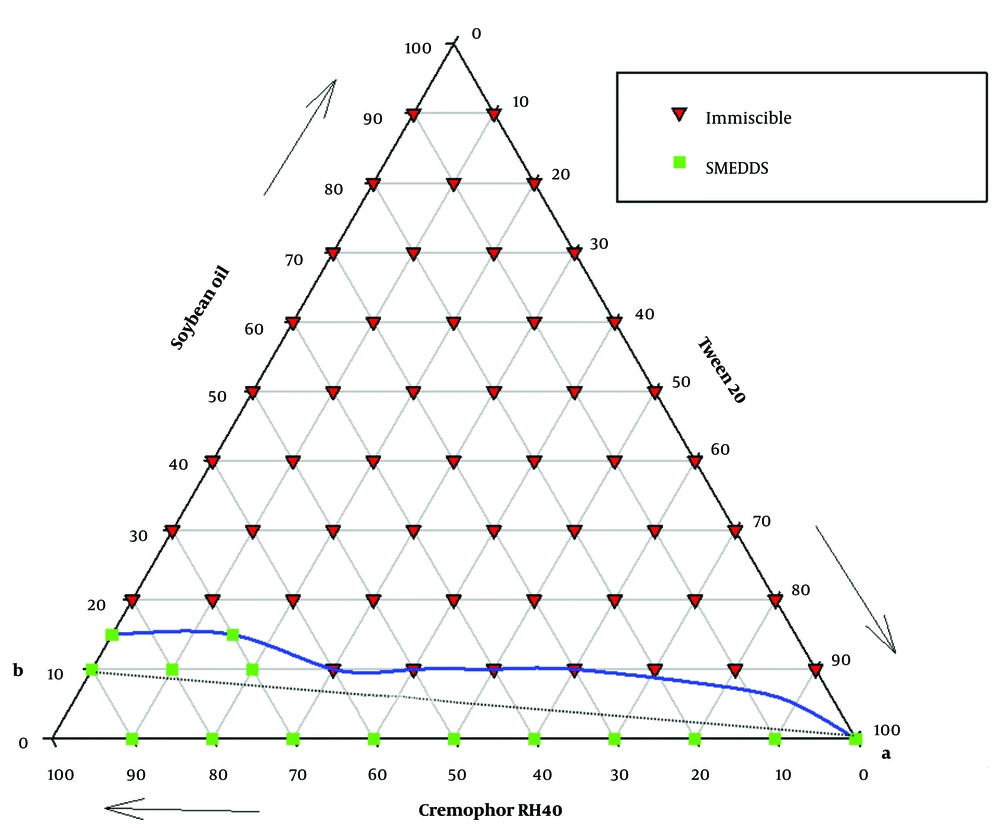
Figure 1.
Emulsification profile of a lipid system composed of soybean oil/tween 20/cremophor RH40. Separated multiphase mixtures are demarked as immiscible phases. An amount of 0.5 g of representative single-phase lipid mixtures was emulsified in 50 mL of water. Lipid systems which produced optically clear dispersions after emulsification in water were identified as SMEDDS.
The emulsification profile of the lipid mixture composed of span 80, tween 20, and tween 80 is depicted in Figure 2. In contrast to the lipid mixture in Figure 1, this system depicted in Figure 2, which contains span 80 as a source of oil, has produced single-phase lipid mixtures at all ratios. The aqueous dispersion of the lipidic mix of span 80, tween 20, and tween 80 has produced an area of SMEDDS that is relatively larger than the soybean oil/tween 20/cremophor RH40 mix (Figures 1 and 2). Maximum amounts of 20 to 25% w/w of span 80 can be included in the lipid mix, and clear microemulsions can still be produced. Lines A, B, C, and D represent binary blends of {span 80/tween 80} at ratios of 5:5, 4:6, 3:7, and 8:2, respectively. Table 2 shows the effect of Wt% of span 80 in the binary blends of {span 80/tween 80} on the minimum amount of tween 20 that is required to obtain micro-emulsion dispersions. As Figure 2 and Table 1 show, moving from lines A to D represents progressive reduction of Wt% of span 80 in the binary blends of {span 80/tween 80}. This reduction in the amount of span 80 incurs less concentration of tween 20 to produce clear micro-emulsions of calculated MEDD of ≈ 10 nm. The MEDD was calculated according to a mathematical equation developed by Hasan (2), in which strong regression correlation (R2) of 0.96 was obtained between the square root of HLB value for oil mix against ln (MEDS) of measured values.
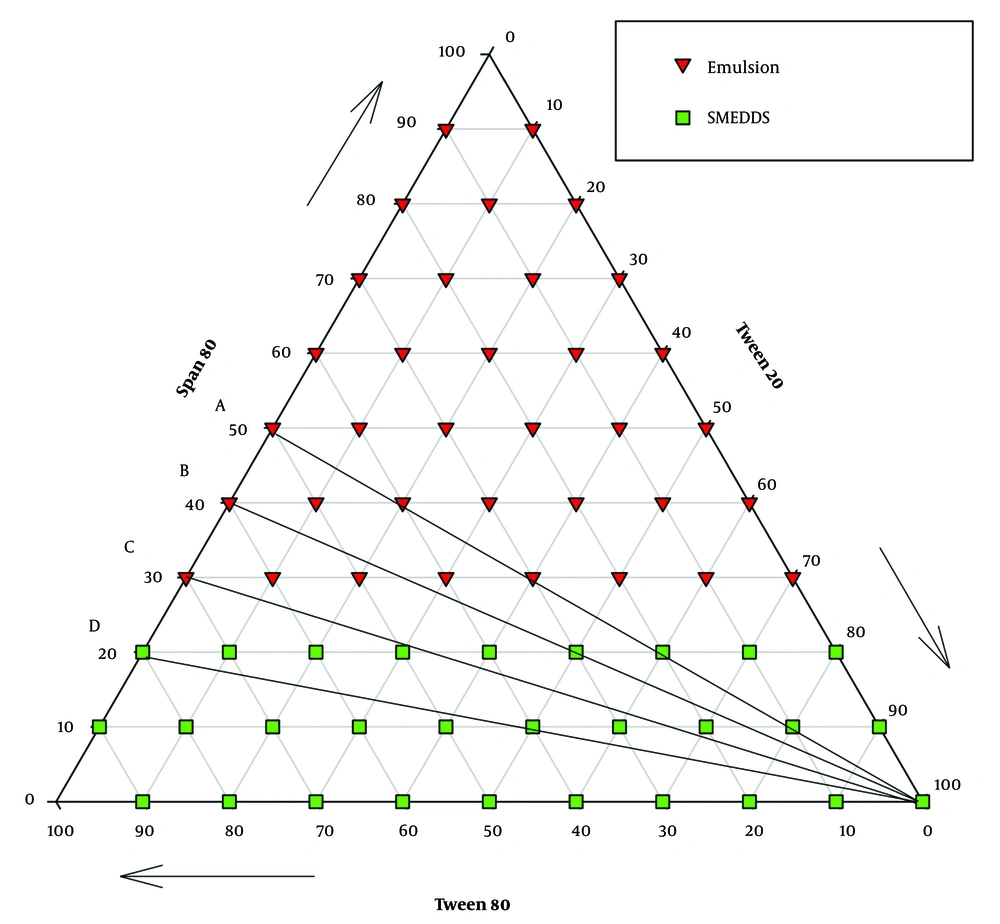
Figure 2.
Emulsification profile of a lipid system composed of span 80/tween 20/tween 80. An amount of 0.5 g of representative single-phase lipid mixtures was emulsified in 50 mL of water. Lipid systems which produced optically clear dispersions after emulsification in water were identified as SMEDDS. Turbid aqueous dispersions were demarked as emulsions.
Table 2.
Effect of Wt% of Span 80 in the Binary Blends of {Span 80/Tween 80} on the Minimum Required Amount of Tween 20 to Obtain SMEDDS
| Wt% [Span 80 / (Tween 80 + Span 80)] | Minimum Wt% Tween 20 Required for SMEDDS | Calculated HLB Oil Mix | Calculated MEDD (nm) |
|---|---|---|---|
| 50 | 60 | 13.88 | 10.41264 |
| 40 | 50 | 13.71 | 10.73271 |
| 30 | 30 | 13.263 | 11.63258 |
Abbreviation: MEDD, mean emulsion droplet diameter.
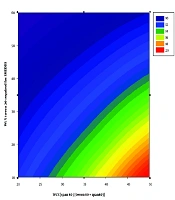
Similar results were obtained in the contour plot depicted in Figure 3, which shows that as Wt% of span 80 increases in the binary blend, a corresponding increase in the calculated oil droplet size is observed. Furthermore, a similar trend was observed in Figure 4, which shows optical density of emulsion dispersions at λ 400 nm as an approach to evaluate turbidity (14). There is a corresponding decrease in the optical density of emulsion dispersions, i.e., more optically clear, as the ratio content of span 80 decreases in the binary mix (Figure 4). Span 80 represents the non-polar constituent in the lipidic mixture, and the further reduction of the Wt% of span 80 produces a correspondingly more hydrophilic oil vehicle, which results in clearer dispersions with minimum surfactant concentrations. This is in congruity with the photograph illustration depicted in Figure 5, which shows the aqueous dispersions of lipidic mixtures containing {span 80/tween 80} (3:7) at increasing concentrations of tween 20. As the surfactant concentration of tween 20 increases in the oil formulation, aqueous dispersions of these systems become more visually clear.
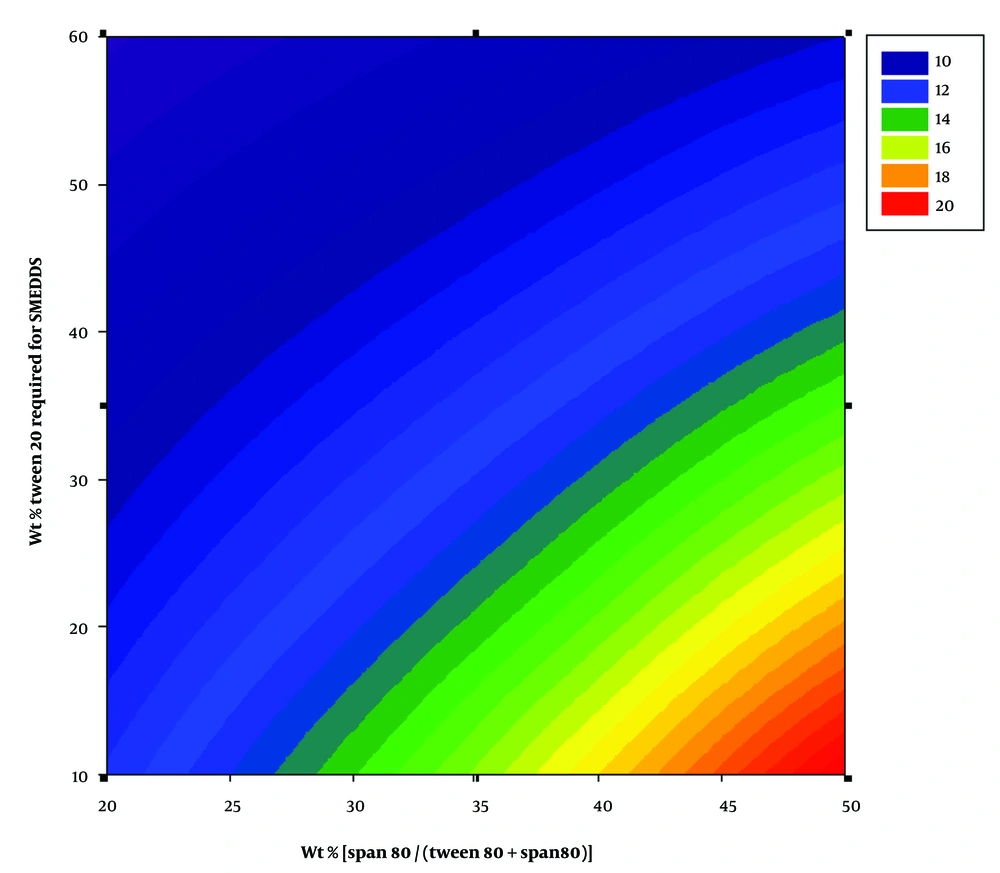
Figure 3.
Contour plot of the effect of PEG included in the SMEDDS preconcentrate and the amount of the loaded drug on the size of oil droplets of resultant dispersions.
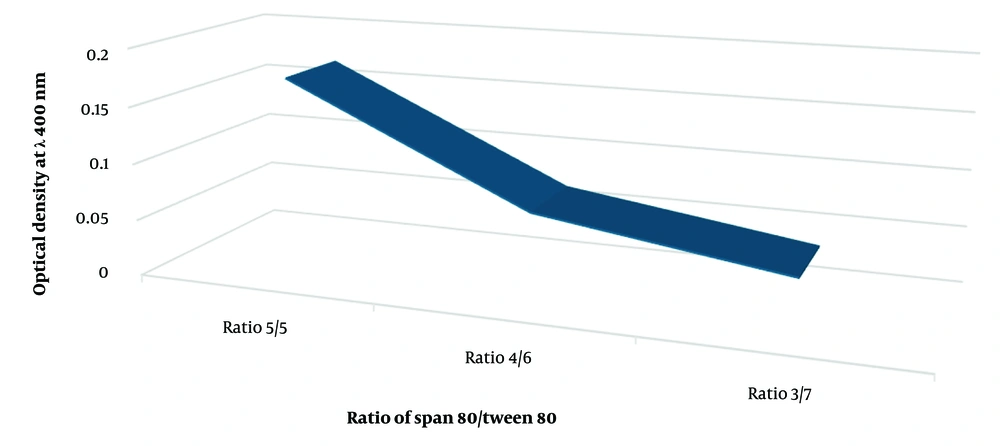
Figure 4.
Optical density of various emulsion dispersions containing varying ratios of span 80/tween 80 at surfactant concentrations of 40% w/w of tween 20. Lipid mixtures were emulsified at 37°C, and optical density of resultant dispersions was measured at λ 400 nm.
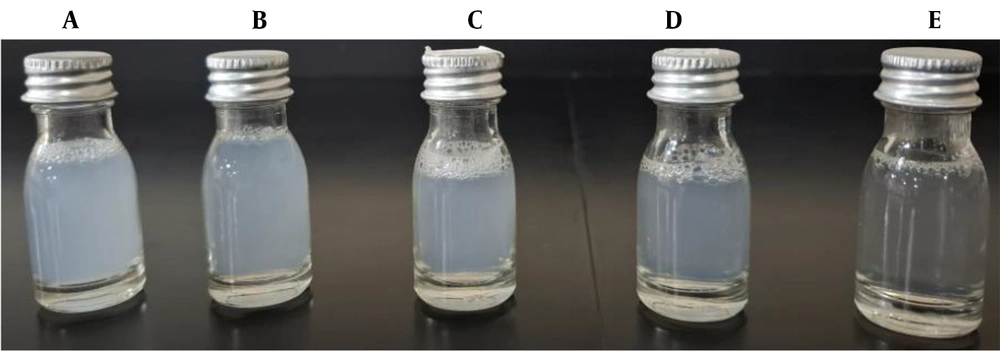
Figure 5.
Photograph illustration of aqueous dispersion; A, B, C, D, and E of lipidic mixtures containing {span 80/tween 80} (3:7) at suractant concentrations of tween 20 of 10, 20, 30, 40, and 50% w/w, respectively.
The emulsification profile of the lipid system which is composed of glycerox/tween 20/cremophor RH40 is shown in Figure 6. The lipid mixture has produced a complete oil pre-concentrate miscible region with optically clear SMEDDS after aqueous dispersion at all ratios. This system is composed of polar oil glycerox HLB of value 13.2 and two hydrophilic non-ionic surfactants, tween 20 (HLB 16.7) and cremophor RH40 (HLB 14 - 16). The solubility of cilostazol and diclofenac sodium were studied in the ternary mix of glycerox/tween 20/cremophor RH40 (Table 3). Solubility of 50 or 25 mg/mL of cilostazol could not be obtained in lipidic mixtures even when including 10 to 20% w/w ethanol. Nonetheless, for diclofenac sodium, a 50 mg dose can be solubilized in the lipidic mix.
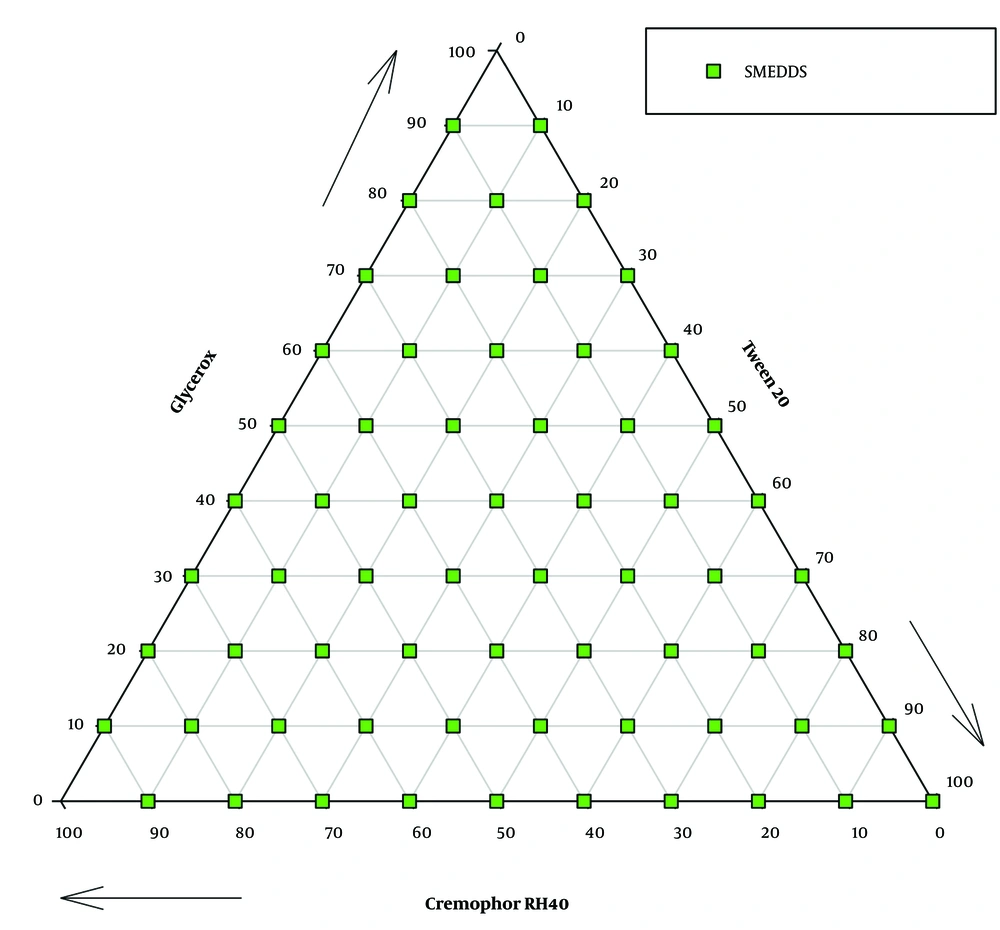
Figure 6.
Emulsification profile of a lipid system composed of glycerox/tween 20/cremophor RH40. An amount of 0.5 g of representative single-phase lipid mixtures was emulsified in 50mL of water. Lipid systems which produced optically clear dispersions after emulsification in water were identified as SMEDDS.
Table 3.
Solubility of Cilostazol and Diclofenac Sodium, Studied in the Ternary Mix of glycerox/Tween 20/Cremophor RH40
| Drugs | Cilostazol (50 mg/g) | Cilostazol (25 mg/g) | Diclofenac Sodium (50 mg/g) |
|---|---|---|---|
| Oil system | {glycerox/cremophor/tween 20} 10 - 20% ethanol | {glycerox/cremophor/tween 20} 10 - 20% ethanol | {glycerox/cremophor/tween 20} |
| Solubility | Not achieved | Not achieved | Achieved |
5. Discussion
Soybean oil is composed chiefly of five fatty acids, which include 50 - 60% linoleic (C18:2), 20 - 30% oleic (C18:1), 8 - 10% palmitic (C16:0), 6 - 8% linolenic (C18:3), and 4 - 5% stearic (C18:0) acids (15). This wide range of fatty acid constituents makes soybean oil less miscible with other lipid components, and hence a very limited area of miscibility is observed. Albeit the high solubilizing capacities of cremophor RH40 and tween 20, these surfactants could only solubilize less than 15% w/w soybean oil, forming single-phase regions, as Figure 1 suggests. Formulations are considered stable and can maintain the drug dissolved in the lipid matrix once they form a clear single phase before aqueous dispersion.
The low tendency of the former system to produce optically clear o/w microemulsions at expanded margins is due to the fact that LCTs have relatively low mobility at the lipid/water interfaces compared to MCTs. Similar observations were shown in the system composed of olive oil, crodamol PC, and etocas 35 HV (11). As Figure 1 suggests, there is a very limited number of robust lipid mixtures for the formulation scientist to select. Nonetheless, LCT-SMEDDS are quintessential in improving the bioavailability of lipophilic drugs, especially of logP > 4.5 (16).
Span 80 is used in the formulation depicted in Figure 6 as a source of oil despite its application as a lipophilic surfactant. Span 80 has an HLB value of 4.3, which is considered a relatively more polar oil than soybean, which is used in Figure 1. This has transformed the map of the ternary blends of span 80, tween 20, and tween 80 into complete single-phase lipid mixtures. Furthermore, the close chemical structure of spans and tweens, as they are considered sorbitan esters, facilitates forming single-phase mixtures.
This system is classified as type IIIB lipid class system, which has less than 20% triglycerides or mixed glyceride. This renders the oil mix relatively more hydrophilic, producing a colloidal solution of drug and oil in aqueous micelles. The importance of this system is due to its high solubilization capacity for active molecules besides the expanded region of SMEDDS for the formulation scientist to select from. Nonetheless, type IIIB presents the highest risk of precipitation after dispersion of the formulation (12). Cilostazol, an antiplatelet agent and vasodilator used for the symptomatic relief of intermittent claudication, has poor water solubility of 3.34 μg/mL (17). Diclofenac sodium is known as a nonsteroidal anti-inflammatory drug (NSAID) used to reduce pain from arthritis and joint stiffness and has water solubility of 14 mg/mL (18).
Formulating diclofenac sodium as a self-emulsifying system avoids slow drug dissolution in comparison to tablet dosage forms. This will improve pharmacokinetic absorption of the drug, which will ensue in a rapid onset of action due to the formation of a large interfacial area across which diffusion can take place. Furthermore, the aqueous dispersion of the lipid mix containing a 50 mg dose of diclofenac sodium has shown no propensity for drug crystallization. This suggests the fact that the formulation has enough amount of natural lipid that can maintain the drug in dissolved form, and thus precipitation of the drug after dispersion is circumvented.
5.1. Conclusions
Robust self-micro-emulsifying lipid systems were fabricated representing various types of lipid class systems. The presence of polar oil as a source of triglycerides in the lipid mix, as in the case of span 80 and glycerox, has remarkably expanded the area of SMEDDS. The microemulsion system composed of glycerox/tween 20/cremophor RH40 was able to solubilize a 50 mg dose of diclofenac sodium while keeping the drug in colloidally soluble form and thus preserving the drug from crashing out.
5.2. Direction of Future Work
Further characterization of these systems will be carried out, including particle size and zeta potential measurements. Furthermore, dispersion profiles of these developed robust oil systems will be compared with marketed SMEDS systems. Also, biological evaluation studies such as MTT assay on Caco-2 intestinal epithelial cells will be carried out on these formulations.