Journal of Semnan University of Medical Sciences
Image Credit:Koomesh
Outline
Improvement of executive function in children with autism through Home Playtime Program
Authors
Abstract
Introduction: Executive dysfunction has shown to be the shared property of many cognitive symptoms seen in autism. The Home Playtime Program (HPP) is a home-based tele-cognitive rehabilitation for targeting executive dysfunction in children with autism. The purpose of this study was to evaluate the acceptability, feasibility and effectively of this intervention. Materials and Methods: This study followed a pre-test, post-test, and follow-up design without group control. Seventeen parents of children with autism aged 24-55 months (Mean=37, SD=9.1) were selected from Tehran Autism Center using available sampling method. Correspondingly, they received the HPP for 10 weeks. Preschool Behavior Rating Inventory of Executive Function-parent form and A-Not-B test were used to measure executive function in the pre-test, post-test, and follow-up. Also, the Therapy Attitude Inventory (TAI) was completed by parents to assess their satisfaction with therapy. Persian version of Stanford-Binet Intelligence Test was applied to the children at the onset of the study. The data were analyzed using repeated measures analyses. Results: The findings indicated that the components of executive functions: inhibition, working memory, planning/organizing, inhibition self-control, flexibility and metacognition were significantly improved at post-test (P
Highlights
References
- 1.American Psychiatric Association. Diagnostic and statistical manual of mental disorders (DSM-5). American Psychiatric Pub; 2013.
- 2.Kanner L. Autistic disturbances of affective contact. Nervous Child 1943; 2: 217-250.
- 3.Charman T, Jones CR, Pickles A, Simonoff E, Baird G, Happ F. Defining the cognitive phenotype of autism. Brain Res 2011; 1380: 10-21.
- 4.Baron-Cohen S, Leslie AM, Frith U. Does the autistic child have a theory of mind? Cognition 1985; 21: 37-46.
- 5.Hughes C, Russell J, Robbins TW. Evidence for executive dysfunction in autism. Neuropsychological 1994; 32: 477-492.
- 6.Frith U, Happ F. Autism: Beyond theory of mind. Cognition 1994 1; 50: 115-132.
- 7.Hill EL. Evaluating the theory of executive dysfunction in autism. Dev Rev 2004; 24: 189-233.
- 8.Damasio AR, Maurer RG. A neurological model for childhood autism. Arch Neurol 1978, 1; 35: 777-786.
- 9.Kenny L, Cribb SJ, Pellicano E. Childhood executive function predicts later autistic features and adaptive behavior in young autistic people: A 12-year prospective study. J Abnorm Child Psychol 2019; 47: 1089-1099.
- 10.Meltzer L, editor. Executive function in education: From theory to practice. Guilford Publications; 2018.##.
- 11.Chien HY, Gau SS, Isaac Tseng WY. Deficient visuospatial working memory functions and neural correlates of the defaultmode network in adolescents with autism spectrum disorder. Autism Res 2016; 9: 1058-1072.
- 12.Shiri V, Hoseyni SA, Pishyareh E, Nejati V, Emami M, Shiri E. Is there any correlation between executive dysfunction and behavioral symptoms in autistic children? A systematic review. Arch Neurosci 2018; 5.
- 13.Johnston K, Madden AK, Bramham J, Russell AJ. Response inhibition in adults with autism spectrum disorder compared to attention deficit/hyperactivity disorder. J Autism Dev Disord 2011; 41: 903-912.##.
- 14.McCloskey G, Perkins LA, Van Divner B. Assessment and intervention for executive function dif culties. New York: Routledge; 2009.
- 15.Antezana L, Mosner MG, Troiani V, Yerys BE. Social-emotional inhibition of return in children with autism spectrum disorder versus typical development. J Autism Dev Disord 2016; 46: 1236-1246.
- 16.Miyake A, Shah P, editors. Models of working memory: Mechanisms of active maintenance and executive control. Cambridge University Press; 1999; 13.
- 17.Schuh JM, Eigsti IM. Working memory, language skills, and autism symptomatology. Behav Sci 2012; 2: 207-218.
- 18.Mosconi MW, Kay M, D'cruz AM, Seidenfeld A, Guter S, Stanford LD, Sweeney JA. Impaired inhibitory control is associated with higher-order repetitive behaviors in autism spectrum disorders. Psychol Med 2009; 39: 1559-1566.
- 19.Geurts HM, Corbett B, Solomon M. The paradox of cognitive exibility in autism. Trends Cogn Sci 2009; 13: 74-82.
- 20.Faja S, Nelson Darling L. Variation in restricted and repetitive behaviors and interests relates to inhibitory control and shifting in children with autism spectrum disorder. Autism 2019; 23: 1262-1272.
- 21.Pellicano E. Links between theory of mind and executive function in young children with autism: Clues to developmental primacy. Dev Psychol 2007; 43: 974-990.
- 22.Pellicano E. Individual differences in executive function and central coherence predict developmental changes in theory of mind in autism. Dev Psychol 2010; 46: 530-544.
- 23.Shiri V, Hosseini AS, Tahmasebi A, Pishyareh E, Shiri E, Emami M. Relationship between sustained, selective and shifting attention and behavioral symptoms in children with high-functioning autism. Arch Neurosci 2015; 2.
- 24.Kenny L, Cribb SJ, Pellicano E. Childhood executive function predicts later autistic features and adaptive behavior in young autistic people: A 12-year prospective study. J Abnorm Child Psychol 2019; 47: 1089-1099.
- 25.Kenworthy L, Anthony LG, Naiman DQ, Cannon L, Wills MC, LuongTran C, et al. Randomized controlled effectiveness trial of executive function intervention for children on the autism spectrum. J Child Psychol Psychiatr 2014; 55: 374-383.
- 26.Finn L, Ramasamy R, Dukes C, Scott J. Using WatchMinder to increase the on-task behavior of students with autism spectrum disorder. J Autism Dev Disord 2015; 45: 1408-1418.
- 27.Baltruschat L, Hasselhorn M, Tarbox J, Dixon DR, Najdowski AC, Mullins RD, Gould ER. Addressing working memory in children with autism through behavioral intervention. Res Autism Spectr Disord 2011; 5: 267-276.
- 28.Crutchfield SA, Mason RA, Chambers A, Wills HP, Mason BA. Use of a self-monitoring application to reduce stereotypic behavior in adolescents with autism: A preliminary investigation of I-Connect. J Autism Dev Disord 2015; 45: 1146-1155.
- 29.Borgi M, Loliva D, Cerino S, Chiarotti F, Venerosi A, Bramini M, et al. Effectiveness of a standardized equine-assisted therapy program for children with autism spectrum disorder. J Autism Dev Disord 2016; 46: 1-9.
- 30.Ahn SN, Hwang S. Cognitive rehabilitation of adaptive behavior in children with neurodevelopmental disorders: a meta-analysis. Occup Ther Int 2018.
- 31.Cella M, Reeder C, Wykes T. Cognitive remediation in schizophrenianow it is really getting personal. Curr Opin Behav Sci 2015; 4: 147-151.
- 32.Mohanty M, Gupta SK. Home based neuropsychological rehabilitation in severe traumatic brain injury: a case report. Ann Neurosci 2013; 20: 31.
- 33.Hegde S, Rao SL, Raguram A, Gangadhar BN. Addition of home-based cognitive retraining to treatment as usual in first episode schizophrenia patients: a randomized controlled study. Indian J Psychiatry 2012; 54: 15.
- 34.Oono IP, Honey EJ, McConachie H. Parentmediated early intervention for young children with autism spectrum disorders (ASD). Cochrane Database Syst Rev 2013; 8: 2380-2479.
- 35.Kleim JA, Jones TA. Principles of experience-dependent neural plasticity: implications for rehabilitation after brain damage. J Speech Lang Hear Res 2008; 51: S225-239.
- 36.Lackinger M, Hglinger GU, Schratt G, Schwarting RK, Whr M. Differential effects of social and physical environmental enrichment on brain plasticity, cognition, and ultrasonic communication in rats. J Comp Neurol 2016; 524: 1586-1607.
- 37.Sale A. Environmental experience and plasticity of the developing brain. John Wiley & Sons; 2016.
- 38.Shiri E, Pouretemad H, Fathabadi J, Narimani M. A pilot study of family-based management of behavioral excesses in young Iranian children with autism spectrum disorder. Asian J Psychiatr 2020; 47: 101845.
- 39.https://www.amazon.com/SPENT-FAMILY-WORTH-EVER, SECOND/dp/B00I19O7A6.
- 40.Roid G. Stanford-binet intelligence scalesfifth edition. itasca, IL: Riverside Publishing; 2003.
- 41.Javidnia S, Kamkari K, Movallali G. The pychometric properties of the new version of Tehranstanfordbinet intelligence scale in children with dyslexia. Middle East J Disabil Studi 2013; 3: 44-51. (Persian).
- 42.Kamkari k, Kiomarsi F, S. Sh. Simultaneous validity of the new Tehran-stanford-binet intelligence scale and the second version of the Wechsler measurement scale in children with learning disabilities. J Except Educ 2014; 7: 120: 50-61. (Persian).
- 43.Piaget J. The construction of reality in the child New York: Basic.
- 44.Diamond A. Development of the ability to use recall to guide action, as indicated by infants' performance on AB. Child Dev 1985; 868-883.
- 45.Faja S, Dawson G, Sullivan K, Meltzoff AN, Estes A, Bernier R. Executive function predicts the development of play skills for verbal preschoolers with autism spectrum disorders. Autism Res 2016; 9: 1274-1284.
- 46.Gioia GA, Andrwes K, Isquith PK. Behavior rating inventory of executive function-preschool version (BRIEF-P). Odessa, FL: Psychological Assessment Resources; 1996.
- 47.Mashhadi AJ, Hassani, Teymouri H, Psychometric properties of preschool behavior rating inventory of executive function: parent form. J Clin Psychol 2017; 1: 75-83 (Persian).
- 48.Brestan EV, Jacobs JR, Rayfield AD, Eyberg SM. A consumer satisfaction measure for parent-child treatments and its relation to measures of child behavior change. Behav Ther 1999; 30: 17-30.
- 49.Best JR, Miller PH. A developmental perspective on executive function. Child Dev 2010; 81: 1641-1660.
- 50.Miyake A, Friedman NP, Emerson MJ, Witzki AH, Howerter A, Wager TD. The unity and diversity of executive functions and their contributions to complex frontal lobe tasks: A latent variable analysis. Cogn Psychol 2000; 41: 49-100.
- 51.Baddeley A. Working memory. Science 1992; 255: 556-559.
- 52.Diamond A. Why improving and assessing executive functions early in life is critical. Executive function in preschool-age children: Integrating measurement, neurodevelopment, and translational research, 2016; p: 11-43.
- 53.Waterhouse L, Fein D, Modahl C. Neurofunctional mechanisms in autism. Psychol Rev 1996; 103: 457.
- 54.Alvarez JA. Emory E. Executive function and the frontal lobes: a meta-analytic review. Neuropsychol Rev 2006; 16: 17-42.
- 55.Chang YK, Liu S, Yu HH, Lee YH. Effect of acute exercise on executive function in children with attention deficit hyperactivity disorder. Neuropsychol Rev 2012; 27: 225-237.
- 56.Rickards AL, Walstab JE, Wright-Rossi RA, Simpson J, Reddihough DS. A randomized, controlled trial of a home-based intervention program for children with autism and developmental delay. Arch Clin Neuropsychol 2007; 28: 308-316.
Copyright
© 2021, Author(s). This open-access article is available under the Creative Commons Attribution 4.0 (CC BY 4.0) International License (https://creativecommons.org/licenses/by/4.0/), which allows for unrestricted use, distribution, and reproduction in any medium, provided that the original work is properly cited.
Similar Articles
The Comparative Study of Pretend Plays Between 5 - 7 Years Old High-functioning Autistic Children and Their Normal Peers with Child-initiated Pretend Play Assessment
Mirzakhany N, Farzinfar M, Dabiri Golchin M. The Comparative Study of Pretend Plays Between 5 - 7 Years Old High-functioning Autistic Children and Their Normal Peers with Child-initiated Pretend Play Assessment. Iran J Psychiatry Behav Sci. 2021;15(2):e108789. doi: https://doi.org/10.5812/ijpbs.108789
Pretend Play Therapy In-person Versus Online for Participation Improvement in Children with Attention Deficit Hyperactivity Disorder: Study Protocol for a Clinical Trial
Dabiri Golchin M, Mirzaie H, Hosseini SA, Pishyareh E, Ellis G, et al. Pretend Play Therapy In-person Versus Online for Participation Improvement in Children with Attention Deficit Hyperactivity Disorder: Study Protocol for a Clinical Trial. Iran J Psychiatry Behav Sci. 2023;17(1):e134152. doi: https://doi.org/10.5812/ijpbs-134152
Effectiveness of DIR/Floor Time Play Therapy in Social Skills and Emotion Regulation of Children with Autism Spectrum Disorder
Barghi F, Safarzadeh S, Marashian FS, Bakhtiarpour S. Effectiveness of DIR/Floor Time Play Therapy in Social Skills and Emotion Regulation of Children with Autism Spectrum Disorder. Middle East J Rehabil Health Stud. 2023;11(2):e138491. doi: https://doi.org/10.5812/mejrh-138491
Effectiveness of Transcranial Direct Current Stimulation in Behavioral and Cognitive Aspects of Executive Function in Children with Autism Spectrum Disorder
Amiri MA, Karamali Esmaili S, Saei S, Alizadeh Zarei M. Effectiveness of Transcranial Direct Current Stimulation in Behavioral and Cognitive Aspects of Executive Function in Children with Autism Spectrum Disorder. Iran J Psychiatry Behav Sci. 2022;16(4):e124236. doi: https://doi.org/10.5812/ijpbs-124236
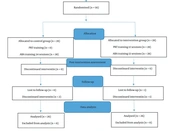
The Effectiveness of Pivotal Response Treatment Training for Mothers on the Communication Skills of Children with Non-verbal Autism Spectrum Disorder: A Randomized Clinical Trial
Abdi F, Rezai H, Tahmasebi N, Dastoorpoor M. The Effectiveness of Pivotal Response Treatment Training for Mothers on the Communication Skills of Children with Non-verbal Autism Spectrum Disorder: A Randomized Clinical Trial. Middle East J Rehabil Health Stud. 2024;11(2):e127597. doi: https://doi.org/10.5812/mejrh-127597
- Scopus by DOI: 0
Last Update: 1 month ago
- Scopus by Title: 1
Last Update: 1 month ago
- Scopus by Title (Ref): 1
Last Update: 1 month ago
- CrossRef: 0
Last Update: 11 hours ago
- OpenAlex: 0
Last Update: 12 hours ago
- OpenCitations: 0
Last Update: 4 days ago
