Journal of Semnan University of Medical Sciences
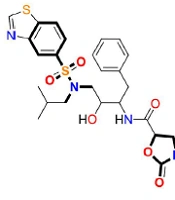
Image Credit:Koomesh
Outline
A Computational Study of Some Benzenesulfonamide Derivatives as HIV- 1 Protease Enzyme Inhibitors: Three-Dimensional Quantitative Structure-Activity Relationship and Molecular Docking
Authors

Abstract
Background: The prevalence of human immunodeficiency virus 1 (HIV-1) infection remains a global concern due to the lack of a definitive treatment. Human immunodeficiency virus 1 protease is a homodimeric aspartic protease enzyme essential in the maturation process of HIV protein and could be a promising target for treating retrovirus infections.
Objectives: This study aims to use three-dimensional quantitative structure-activity relationships (3D-QSAR) and molecular docking methods to design HIV-1 protease inhibitors.
Method: The 3D-QSAR method was studied on a set of HIV-1 protease inhibitors utilizing comparative molecular field analysis (COMFA) and comparative molecular similarity indices analysis (COMSIA) models. The Distill method was employed for molecule alignment, and the 3D-QSAR models were generated, and contour maps were analyzed. Several new molecules were designed using contour maps obtained from the CoMSIA model, and their activities were predicted using the QSAR tool. Additionally, a molecular Docking protocol was used to determine the binding modes and to obtain the best molecule conformations. The pharmacokinetic profile of these compounds was predicted through an in silico absorption, distribution, metabolism, and excretion (ADMET) study.
Results: The statistical parameters of both the CoMFA (q2 = 0.692, r2ncv = 0.910, r2pred = 0.721) and CoMSIA (q2 = 0.715, r2ncv = 0.953, r2pred = 0.789) models exhibit high predictive ability. According to the CoMSIA model findings, a series of novel HIV-1 protease inhibitors was introduced with more potent activity than the most active phenyl sulfonamide compound, and docking results revealed extensive hydrogen and hydrophobic interactions in the binding of the designed molecules to the HIV-1 protease. Moreover, they possess favorable pharmacokinetic properties.
Conclusions: The 3D-QSAR and molecular docking techniques will help rationalize the design of the novel inhibitors targeting the HIV-1 protease.
Highlights
References
- 1.Weber IT, Wang YF, Harrison RW. HIV Protease: Historical Perspective and Current Research. Viruses. 2021;13(5). [PubMed ID:34066370]. [PubMed Central ID:PMC8148205]. https://doi.org/10.3390/v13050839.
- 2.Sankaran SV, Krishnan SR, Sayed Y, Gromiha MM. Mechanism of drug resistance in HIV-1 protease subtype C in the presence of Atazanavir. Curr Res Struct Biol. 2024;7:100132. [PubMed ID:38435053]. [PubMed Central ID:PMC10907180]. https://doi.org/10.1016/j.crstbi.2024.100132.
- 3.Zulfiqar HF, Javed A, Sumbal, Afroze B, Ali Q, Akbar K, et al. HIV Diagnosis and Treatment through Advanced Technologies. Front Public Health. 2017;5:32. [PubMed ID:28326304]. [PubMed Central ID:PMC5339269]. https://doi.org/10.3389/fpubh.2017.00032.
- 4.Chuntakaruk H, Hengphasatporn K, Shigeta Y, Aonbangkhen C, Lee VS, Khotavivattana T, et al. FMO-guided design of darunavir analogs as HIV-1 protease inhibitors. Sci Rep. 2024;14(1):3639. [PubMed ID:38351065]. [PubMed Central ID:PMC10864397]. https://doi.org/10.1038/s41598-024-53940-1.
- 5.Dakshinamoorthy A, Asmita A, Senapati S. Comprehending the Structure, Dynamics, and Mechanism of Action of Drug-Resistant HIV Protease. ACS Omega. 2023;8(11):9748-63. [PubMed ID:36969469]. [PubMed Central ID:PMC10034783]. https://doi.org/10.1021/acsomega.2c08279.
- 6.Tozser J. Stages of HIV replication and targets for therapeutic intervention. Curr Top Med Chem. 2003;3(13):1447-57. [PubMed ID:14529520]. https://doi.org/10.2174/1568026033451781.
- 7.Mahanti M, Bhakat S, Nilsson UJ, Soderhjelm P. Flap Dynamics in Aspartic Proteases: A Computational Perspective. Chem Biol Drug Des. 2016;88(2):159-77. [PubMed ID:26872937]. https://doi.org/10.1111/cbdd.12745.
- 8.Meng S, Gao Y, Qiang G, Hu Z, Shan Q, Wang J, et al. Rational design, synthesis and biological evaluation of novel HIV-1 protease inhibitors containing 2-phenylacetamide derivatives as P2 ligands with potent activity against DRV-Resistant HIV-1 variants. Bioorg Med Chem Lett. 2024;101:129651. [PubMed ID:38342391]. https://doi.org/10.1016/j.bmcl.2024.129651.
- 9.Nascimento A, Fernandes RP, Quijia C, Araujo VHS, Pereira J, Garcia JS, et al. Pharmacokinetic Parameters of HIV-1 Protease Inhibitors. Chem Med Chem. 2020;15(12):1018-29. [PubMed ID:32390304]. https://doi.org/10.1002/cmdc.202000101.
- 10.Zephyr J, Kurt Yilmaz N, Schiffer CA. Viral proteases: Structure, mechanism and inhibition. Enzymes. 2021;50:301-33. [PubMed ID:34861941]. [PubMed Central ID:PMC8595904]. https://doi.org/10.1016/bs.enz.2021.09.004.
- 11.Voshavar C. Protease Inhibitors for the Treatment of HIV/AIDS: Recent Advances and Future Challenges. Curr Top Med Chem. 2019;19(18):1571-98. [PubMed ID:31237209]. https://doi.org/10.2174/1568026619666190619115243.
- 12.Aruksakunwong O, Promsri S, Wittayanarakul K, Nimmanpipug P, Lee V, Wijitkosoom A, et al. Current Development on HIV-1 Protease Inhibitors. Current Computer Aided-Drug Design. 2007;3(3):201-13. https://doi.org/10.2174/157340907781695431.
- 13.Nastri BM, Pagliano P, Zannella C, Folliero V, Masullo A, Rinaldi L, et al. HIV and Drug-Resistant Subtypes. Microorganisms. 2023;11(1). [PubMed ID:36677513]. [PubMed Central ID:PMC9861097]. https://doi.org/10.3390/microorganisms11010221.
- 14.Rajendran M, Ferran MC, Mouli L, Babbitt GA, Lynch ML. Evolution of drug resistance drives destabilization of flap region dynamics in HIV-1 protease. Biophys Rep (N Y). 2023;3(3):100121. [PubMed ID:37662576]. [PubMed Central ID:PMC10469570]. https://doi.org/10.1016/j.bpr.2023.100121.
- 15.Shaker B, Ahmad S, Lee J, Jung C, Na D. In silico methods and tools for drug discovery. Comput Biol Med. 2021;137:104851. [PubMed ID:34520990]. https://doi.org/10.1016/j.compbiomed.2021.104851.
- 16.Verma J, Khedkar VM, Coutinho EC. 3D-QSAR in drug design--a review. Curr Top Med Chem. 2010;10(1):95-115. [PubMed ID:19929826]. https://doi.org/10.2174/156802610790232260.
- 17.Kubinyi H. QSAR and 3D QSAR in drug design Part 1: methodology. Drug Discovery Today. 1997;2(11):457-67. https://doi.org/10.1016/s1359-6446(97)01079-9.
- 18.Kubinyi H. QSAR and 3D QSAR in drug design Part 2: applications and problems. Drug Discovery Today. 1997;2(12):538-46. https://doi.org/10.1016/s1359-6446(97)01084-2.
- 19.Akamatsu M. Current state and perspectives of 3D-QSAR. Curr Top Med Chem. 2002;2(12):1381-94. [PubMed ID:12470286]. https://doi.org/10.2174/1568026023392887.
- 20.Cramer RD, Patterson DE, Bunce JD. Comparative molecular field analysis (CoMFA). 1. Effect of shape on binding of steroids to carrier proteins. J Am Chem Soc. 1988;110(18):5959-67. [PubMed ID:22148765]. https://doi.org/10.1021/ja00226a005.
- 21.Klebe G, Abraham U, Mietzner T. Molecular similarity indices in a comparative analysis (CoMSIA) of drug molecules to correlate and predict their biological activity. J Med Chem. 1994;37(24):4130-46. [PubMed ID:7990113]. https://doi.org/10.1021/jm00050a010.
- 22.Ali A, Reddy GS, Nalam MN, Anjum SG, Cao H, Schiffer CA, et al. Structure-based design, synthesis, and structure-activity relationship studies of HIV-1 protease inhibitors incorporating phenyloxazolidinones. J Med Chem. 2010;53(21):7699-708. [PubMed ID:20958050]. [PubMed Central ID:PMC2996262]. https://doi.org/10.1021/jm1008743.
- 23.Clark M, Cramer RD, Van Opdenbosch N. Validation of the general purpose tripos 5.2 force field. J Comput Chem. 2004;10(8):982-1012. https://doi.org/10.1002/jcc.540100804.
- 24.Kearsley SK, Smith GM. An alternative method for the alignment of molecular structures: Maximizing electrostatic and steric overlap. Tetrahedron Comput Methodol. 1990;3(6):615-33. https://doi.org/10.1016/0898-5529(90)90162-2.
- 25.Cramer RD, Bunce JD, Patterson DE, Frank IE. Crossvalidation, Bootstrapping, and Partial Least Squares Compared with Multiple Regression in Conventional QSAR Studies. Quantitative Structure-Activity Relationships. 2006;7(1):18-25. https://doi.org/10.1002/qsar.19880070105.
- 26.Kellogg GE, Semus SF, Abraham DJ. HINT: a new method of empirical hydrophobic field calculation for CoMFA. J Comput Aided Mol Des. 1991;5(6):545-52. [PubMed ID:1818090]. https://doi.org/10.1007/BF00135313.
- 27.Waller CL. A comparative QSAR study using CoMFA, HQSAR, and FRED/SKEYS paradigms for estrogen receptor binding affinities of structurally diverse compounds. J Chem Inf Comput Sci. 2004;44(2):758-65. [PubMed ID:15032558]. https://doi.org/10.1021/ci0342526.
- 28.Golbraikh A, Tropsha A. Beware of q2! J Mol Graph Model. 2002;20(4):269-76. [PubMed ID:11858635]. https://doi.org/10.1016/s1093-3263(01)00123-1.
- 29.Bungard CJ, Williams PD, Schulz J, Wiscount CM, Holloway MK, Loughran HM, et al. Design and Synthesis of Piperazine Sulfonamide Cores Leading to Highly Potent HIV-1 Protease Inhibitors. ACS Med Chem Lett. 2017;8(12):1292-7. [PubMed ID:29259750]. [PubMed Central ID:PMC5733263]. https://doi.org/10.1021/acsmedchemlett.7b00386.
- 30.Pettersen EF, Goddard TD, Huang CC, Couch GS, Greenblatt DM, Meng EC, et al. UCSF Chimera--a visualization system for exploratory research and analysis. J Comput Chem. 2004;25(13):1605-12. [PubMed ID:15264254]. https://doi.org/10.1002/jcc.20084.
- 31.Dallakyan S, Olson AJ. Small-molecule library screening by docking with PyRx. Methods Mol Biol. 2015;1263:243-50. [PubMed ID:25618350]. https://doi.org/10.1007/978-1-4939-2269-7_19.
- 32.Pires DE, Blundell TL, Ascher DB. pkCSM: Predicting Small-Molecule Pharmacokinetic and Toxicity Properties Using Graph-Based Signatures. J Med Chem. 2015;58(9):4066-72. [PubMed ID:25860834]. [PubMed Central ID:PMC4434528]. https://doi.org/10.1021/acs.jmedchem.5b00104.
- 33.Sander T, Freyss J, von Korff M, Reich JR, Rufener C. OSIRIS, an entirely in-house developed drug discovery informatics system. J Chem Inf Model. 2009;49(2):232-46. [PubMed ID:19434825]. https://doi.org/10.1021/ci800305f.
- 34.Khedkar VM, Ambre PK, Verma J, Shaikh MS, Pissurlenkar RR, Coutinho EC. Molecular docking and 3D-QSAR studies of HIV-1 protease inhibitors. J Mol Model. 2010;16(7):1251-68. [PubMed ID:20069323]. https://doi.org/10.1007/s00894-009-0636-5.
- 35.Tong J, Wu Y, Bai M, Zhan P. 3D-QSAR and molecular docking studies on HIV protease inhibitors. J Mol Structure. 2017;1129:17-22. https://doi.org/10.1016/j.molstruc.2016.09.052.
- 36.Halder AK. Finding the structural requirements of diverse HIV-1 protease inhibitors using multiple QSAR modelling for lead identification. SAR QSAR Environ Res. 2018;29(11):911-33. [PubMed ID:30332922]. https://doi.org/10.1080/1062936X.2018.1529702.
- 37.Tong J-B, Bai M, Zhao X. 3D-QSAR and docking studies of HIV-1 protease inhibitors using R-group search and Surflex-dock. Med Chem Res. 2016;25(11):2619-30. https://doi.org/10.1007/s00044-016-1701-0.
- 38.Fang R-J, Zhang Y-J, Wang W-X, Wu T-L, Zhang S-J, He Y-Y, et al. The 3D-QSAR Study, Molecular Docking, and ADMET Analysis of Darunavir Derivatives of HIV-1 Protease Inhibitors. Letters Drug Design Discovery. 2024;21(13):2590-603. https://doi.org/10.2174/1570180820666230818100059.
- 39.Hamdache B, Tabti K, Er-rajy M, Dib M, ElFarouki K, Ouchetto K, et al. QSAR Modeling and Molecular Docking Studies of New Substituted Pyrazolyl-Pyrimidinones as Potent HIV-1 Inhibitors. Curr Chem Biol. 2024;18(3):157-75. https://doi.org/10.2174/0122127968317638241014090751.
Copyright
© 2025, Author(s). This open-access article is available under the Creative Commons Attribution 4.0 (CC BY 4.0) International License (https://creativecommons.org/licenses/by/4.0/), which allows for unrestricted use, distribution, and reproduction in any medium, provided that the original work is properly cited.
Similar Articles
Molecular Docking and QSAR Study of 2-Benzoxazolinone, Quinazoline and Diazocoumarin Derivatives as Anti-HIV-1 Agents
Faghihi K, Safakish M, Zebardast T, Hajimahdi Z, Zarghi A. Molecular Docking and QSAR Study of 2-Benzoxazolinone, Quinazoline and Diazocoumarin Derivatives as Anti-HIV-1 Agents. Iran J Pharm Res. 2019;18(3):e126172. doi: https://doi.org/10.22037/ijpr.2019.1100746
Synthesis, Biological Evaluation, and Molecular Modeling Studies of New 8-methyl-4-oxo-1,4-dihydroquinoline-3-carbohydrazides as Potential Anti-HIV Agents
Alemi M, Kamali F, Vahabpour Roudsari R, Hajimahdi Z, Zarghi A. Synthesis, Biological Evaluation, and Molecular Modeling Studies of New 8-methyl-4-oxo-1,4-dihydroquinoline-3-carbohydrazides as Potential Anti-HIV Agents. Iran J Pharm Res. 2022;21(1):e123962. doi: https://doi.org/10.5812/ijpr-123962
![QSAR Study on Anti-HIV-1 Activity of 4-Oxo-1,4-dihydroquinoline and 4-Oxo-4H-pyrido[1,2-a]pyrimidine Derivatives Using SW-MLR, Artificial Neural Network and Filtering Methods](https://brieflands.com/journals/ijpr/articles/125249/figures/thumbnail.webp)
QSAR Study on Anti-HIV-1 Activity of 4-Oxo-1,4-dihydroquinoline and 4-Oxo-4H-pyrido[1,2-a]pyrimidine Derivatives Using SW-MLR, Artificial Neural Network and Filtering Methods
Hajimahdi Z, Ranjbar A, Abolfazl Suratgar A, Zarghi A. QSAR Study on Anti-HIV-1 Activity of 4-Oxo-1,4-dihydroquinoline and 4-Oxo-4H-pyrido[1,2-a]pyrimidine Derivatives Using SW-MLR, Artificial Neural Network and Filtering Methods. Iran J Pharm Res. 2015;14(Suppl):e125249. doi: https://doi.org/10.22037/ijpr.2015.1714
Design, Synthesis, Molecular Modeling, In Silico ADME Studies and Anti-HIV-1 Assay of New Diazocoumarin Derivatives
Alimi Livani Z, Safakish M, Hajimahdi Z, Soleymani S, Zabihollahi R, et al. Design, Synthesis, Molecular Modeling, In Silico ADME Studies and Anti-HIV-1 Assay of New Diazocoumarin Derivatives. Iran J Pharm Res. 2018;17(Suppl2):e126096. doi: https://doi.org/10.22037/ijpr.2018.2376
![Design, Synthesis, Molecular Modeling Study and Biological Evaluation of New N'-Arylidene-pyrido [2,3-d]pyrimidine-5-carbohydrazide Derivatives as Anti-HIV-1 Agents](https://brieflands.com/journals/ijpr/articles/124681/figures/thumbnail.webp)
Design, Synthesis, Molecular Modeling Study and Biological Evaluation of New N'-Arylidene-pyrido [2,3-d]pyrimidine-5-carbohydrazide Derivatives as Anti-HIV-1 Agents
Ebrahimzadeh E, Tabatabai SA, Vahabpour R, Hajimahdi Z, Zarghi A. Design, Synthesis, Molecular Modeling Study and Biological Evaluation of New N'-Arylidene-pyrido [2,3-d]pyrimidine-5-carbohydrazide Derivatives as Anti-HIV-1 Agents. Iran J Pharm Res. 2019;18(Suppl1):e124681. doi: https://doi.org/10.22037/ijpr.2019.112198.13597
- Scopus by DOI: 0
Last Update: 1 week ago
- Scopus by Title: 0
Last Update: 1 week ago
- Scopus by Title (Ref): 0
Last Update: 1 week ago
- CrossRef: 0
Last Update: 28 minutes ago
- OpenAlex: 0
Last Update: 12 hours ago
- OpenCitations: 0
Last Update: 4 days ago
