


1. Background
Functional foods, such as probiotics, have beneficial effects on health (1). Probiotics are live microorganisms that help maintain or improve the intestinal microbial balance and can offer health benefits to their host (2). Probiotics, specifically known as Lactobacillus and Bifidobacterium, are used. Acid-producing bacteria, particularly lactobacilli and bifidobacteria, are naturally part of the digestive system's ecosystem and are considered probiotics (3).
Probiotics are non-pathogenic microorganisms; many of these are part of the human gut flora and exist in a symbiotic relationship with the digestive system's flora (4). They are utilized as a treatment method, targeting the prevention and treatment of a wide array of diseases, including digestive diseases, enhancing the immune system, and treating vaginal infections diabetes, and improving oral and dental health (5-7).
Probiotics serve as a treatment and prevention option for constipation (8), reducing the colon's pH and enhancing contractions, thereby increasing intestinal muscle movements. Certain probiotic species can boost mucus secretion and transform free bile salts, drawing significant water into the colon, softening stool, and aiding its elimination (8).
Helicobacter pylori is a significant factor in gastric ulcer disease, gastric adenocarcinoma, and mucosa-associated lymphoid tissue (MALT) lymphoma (9). Treatment regimens for eradicating this bacterium often rely on a combination of dual therapy and proton pump inhibitors. Despite therapeutic advancements, H. pylori eradication treatments in developed countries still face high infection rates (10). Resistance to antibiotics and side effects are among the common reasons for the failure of anti-H. pylori treatments. Some probiotic strains have shown inhibitory activity against H. pylori bacteria (11). Additionally, certain probiotic species can mitigate the side effects caused by antibiotic treatments, thus inhibiting the growth of H. pylori (12).
Diarrhea is a prevalent digestive disorder that leads to the loss of fluids and electrolytes and can be fatal, especially in children. Probiotics have been shown to reduce the incidence of diarrhea and promote regular bowel movements (13).
Irritable bowel syndrome (IBS) is a widely recognized gastrointestinal functional disorder. While not life-threatening, IBS significantly diminishes the quality of life for those affected (14). Probiotics can alleviate abdominal pain by influencing the expression of neurotransmitters and receptors involved in pain management, such as opioid receptors (15). Additionally, probiotics have been found to decrease intestinal cytokine secretion and enhance epithelial barrier function in mouse models of intestinal inflammation (14, 16).
Probiotics, including lactobacilli, inhibit the growth of various pathological cell types. These bacteria enhance the host's immune response and have preventive and inhibitory effects on cancer (17). Stomach cancer (SC) ranks as the fifth most common cancer globally, being the fourth most prevalent in men and the seventh in women, with over 1 million new cases in 2020 (18). Among these, Mongolia has the highest incidence rate of SC, followed by Japan in second place and Iran in ninth worldwide (19).
Doctors often prescribe probiotics for digestive issues such as chronic diarrhea and IBS (20). In the UK, 78% of general practitioners recommend probiotic-rich diets to their patients (21). The efficacy of probiotics varies; while some strains are effective, others are not, yet their consumption remains high among patients (8).
The internet and its data have become recognized as alternative tools for collecting information on disease patterns and population estimates in epidemiology (22, 23). Searches on Google and their trends can provide insights into public interest and opinions on specific issues, as well as the development and spread of diseases (24).
2. Objectives
Given the growing awareness and knowledge about healthy eating and its importance for health, this study aims to explore the general tendency towards probiotic consumption, its trends, and its association with common digestive diseases.
3. Methods
3.1. Study Design
This study is an ecological investigation utilizing Google Trends (GTs) and Global Concern data.
3.2. Data Collection
We initially searched for user-specified search terms related to “probiotic," “Irritable Bowel Syndrome (IBS)," “Peptic," “Constipation," “Diarrhea," and “Stomach Cancer (SC)" across all searches conducted via GTs from January 2014 to July 2023. The volume range is from 1 to 100, where 100 signifies the peak popularity, and a score of 0 indicates that the search interest is below 1% of its peak (25). To gather the most recent data on the incidence and cases of SC globally and in various countries, we utilized statistics from the Global Cancer and the World Cancer Organization for the year 2020.
3.3. Data Analysis
Statistical analyses were performed using SPSS16 and Microsoft Excel 2016, including the Spearman correlation coefficient with SPSS16. We analyzed interest over time and visualized the data using GTs.
3.4. Ethical Consideration
All ethical concerns, including plagiarism, data fabrication, and double publication, were strictly adhered to by the authors. The ethics committee of Shahrekord University of Medical Sciences approved this study as a research project (ID: IR.SKUMS.REC.1401.054).
4. Results
4.1. Propensity to Consume Probiotic Foods in Countries with the Highest Incidence of Gastric Cancer
The inclination to consume probiotic foods in countries with the highest rates of gastric cancer shows that the interest in probiotics is on the rise globally, including in Iran. The peak interest was observed in Mongolia in 2017 and in Iran and Japan in 2021. A strong correlation exists between the consumption of probiotics and the incidence of gastric cancer across all regions examined (Figure 1).
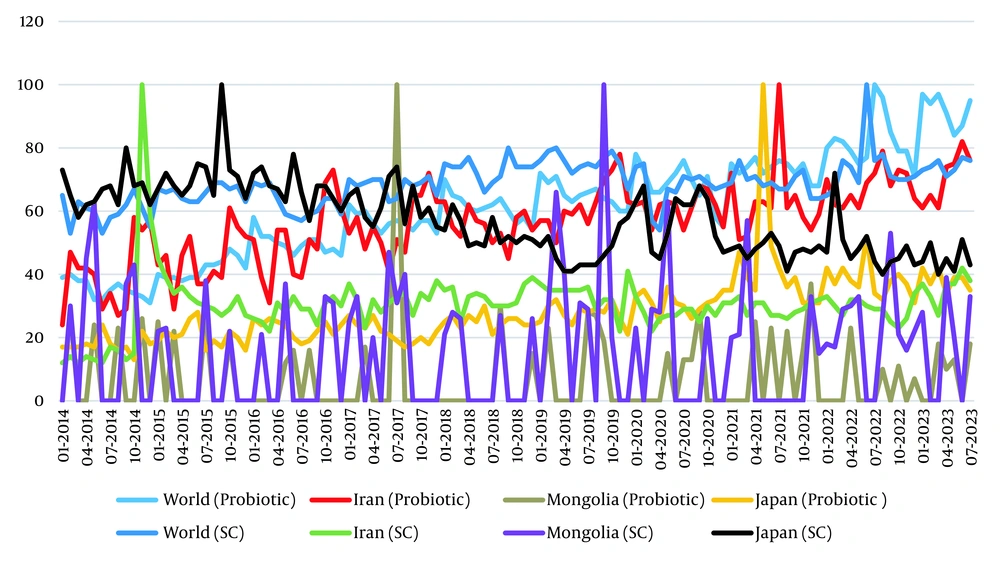
Figure 1.
The frequency of search terms related to “Probiotic" in the world, Iran, Mongolia, and Japan (from January 2014 to July 2023) is analyzed. *Countries with the highest incidence of stomach cancer in the world in 2020
Globally and in Iran, search trends for probiotics and IBS align with each other. In Iran, alongside an increase in cases of diarrhea and constipation, there has been a rise in interest in probiotics, with search trends for probiotics moving in tandem with searches for gastric ulcers (Figure 2).
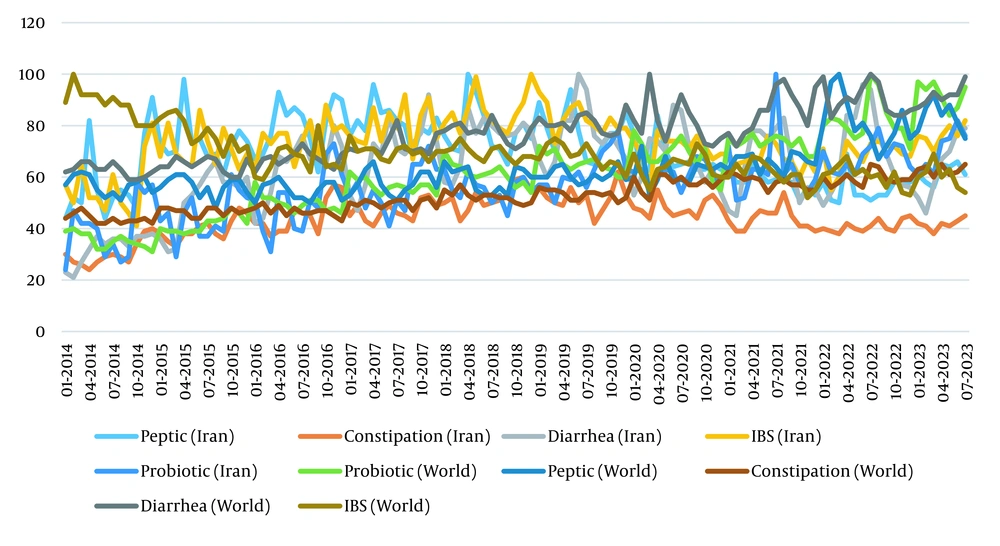
Figure 2.
The frequency of Google Search Trends for “probiotic" and “IBS" in the world and Iran from January 2014 to July 2023
4.2. Correlation Between SC, IBS, and Probiotics
Globally, a direct correlation has been identified between probiotics and IBS (R = +0.69, P = 0.0001), peptic disorders (R = +0.71, P = 0.001), constipation (R = +0.93, P = 0.001), and diarrhea (R = +0.89, P = 0.001). In Iran, a positive and significant correlation was observed between constipation (R = +0.36, P = 0.001) and diarrhea (R = +0.40, P = 0.001) and the interest in probiotics (Table 1).
Table 1.The Correlation Coefficient Between the Number of People with Digestive Disorders Worldwide and in Countries with a High Incidence and Their Inclination Toward Using Probiotics
| Stomach Cancer a | Irritable Bowel Syndrome | Peptic Disorders | Constipation | Diarrhea | |
|---|---|---|---|---|---|
| Worldwide | |||||
| R2 | 0.80 | 0.69 | 0.71 | 0.93 | 0.89 |
| P-value | 0.20 | 0.0001 | 0.001 | 0.001 | 0.001 |
| Iran | |||||
| R2 | - | 0.19 | -0.06 | 0.36 | 0.40 |
| P-value | - | 0.03 | 0.47 | 0.001 | 0.001 |
a Based on 2020 data only
4.3. Comparison of the Willingness to Use Probiotics in the World and Iran Over 10 Years
According to Figures 3 and 4, among the substances containing probiotics, the desire to consume yogurt was the most (Figures 3 and 4).
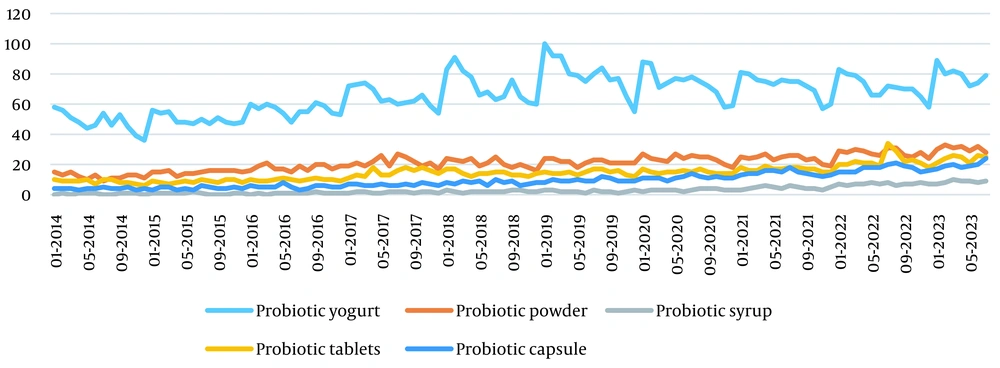
Figure 3.
The search frequency of different types of probiotics in the world during 10 years
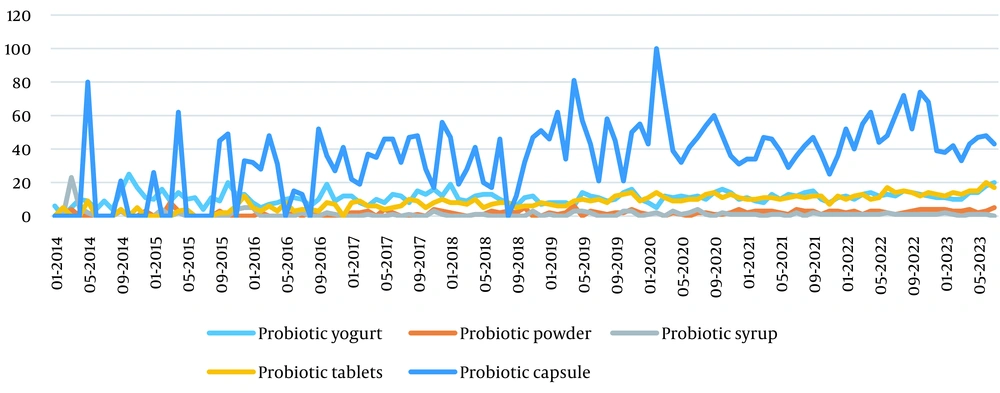
Figure 4.
The search frequency of different types of probiotics in Iran during 10 years
5. Discussion
This research examined the global and Iranian communities' inclination toward probiotic consumption and its association with digestive disorders. Overall, there is a high interest in consuming probiotics both globally and in Iran. This finding aligns with a 2021 study in Poland, which revealed that 65% of participants hold a positive attitude towards and a desire to consume probiotics (26). Furthermore, Mikolaj et al. have demonstrated that Google users' interest in probiotic information has been increasing annually, with peak interest during the colder months. The interest in probiotic information may be linked to antibiotic usage, healthcare expenses, and the developmental status of Google users' countries (27).
The study found a positive and significant link between constipation and probiotics both globally and in Iran. Various studies have reported differing effects of probiotics with different strains on constipation (28, 29). Despite the uncertainty, health professionals often hesitate to recommend probiotics, yet the consumption of probiotics among individuals with constipation remains high (30).
Additionally, a positive and significant correlation was observed between peptic disorders and probiotics. It is known that Helicobacter pylori is a causative agent of peptic disorders. Research indicates that incorporating probiotic supplements during H. pylori treatment can enhance outcomes and reduce complications (31). Despite the proven benefits of probiotics on the efficacy and side effects in individuals undergoing H. pylori treatment, the optimal dosage and treatment duration have yet to be established (12).
Based on the findings, it can be inferred that there is a high inclination among individuals with diarrhea to consume probiotics. The administration of probiotics during diarrhea, leading to a reduction in stool frequency, represents a promising approach for treating acute diarrhea (32).
Furthermore, a positive and significant correlation exists between IBS and probiotics. Numerous studies have validated the beneficial effects of probiotics on IBS, though the most effective strains and their combinations remain uncertain and warrant further research (14, 33, 34).
This research also identified a positive, albeit non-significant, relationship between SC cases and probiotic usage. Probiotics are widely used as dietary supplements in the general population, and their application to alleviate the adverse effects of treatment in cancer patients is progressively increasing (35). Surgical intervention remains the primary treatment for SC, with diarrhea being a prevalent complication among these patients. The use of probiotics has been shown to mitigate diarrhea (36, 37).
The production and consumption of probiotic-enriched foods are on the rise. Dairy products constitute the primary source of probiotics. According to this study, yogurt is the most favored probiotic food consumed both globally and in Iran (38).
5.1. Limitations
The quality of the data sources used in this study has not been adequately addressed. Data quality is a multifaceted concept, emphasizing the capacity of data to be efficiently and effectively utilized for informing and assessing decisions. Issues with data quality, such as significant measurement errors, can influence the estimation of model parameters and lead to inefficiencies.
It is crucial to acknowledge that GT alone does not sufficiently capture the nuances of screening behavior on a global scale. To achieve a more comprehensive understanding, it should be juxtaposed with additional sources of information, such as the volume of referrals for services, to yield more accurate results (39, 40).
5.2. Conclusions
The interest in consuming probiotics is notably high both globally and in Iran. There was a positive correlation between searches for keywords associated with digestive diseases and probiotics. However, it cannot be conclusively stated that probiotics have a beneficial impact on these conditions. Consequently, there is a pressing need for strategies that effectively communicate to the public where robust evidence supports the benefits of probiotics and where such evidence is lacking or absent.
