


1. Introduction
One of the problems faced by women during menopause is abnormal vaginal bleeding, which can range from spotting to severe bleeding. Besides causing anemia, vaginal bleeding can indicate menopausal disorders, including malignancy (1). Postmenopausal bleeding accounts for about 5% of visits to gynecologists (2). Causes of postmenopausal bleeding include atrophic endometrium, cervical polyps, exogenous estrogens, atrophic vaginitis, uterine sarcoma, urethral caruncles, trauma (2), and genital cancer (3). One of the rare causes of abnormal vaginal bleeding in menopausal women is the attachment of leeches to the vulvar and vaginal mucosa (4). A leech is a member of the Annelida phylum, Hirudinea subclass, and Rhynchobdellida order, considered a blood-sucking aquatic ectoparasite in mammals, including humans. Its size varies from about 5 mm to nearly 45 cm (5). Leeches are found in lakes, slow streams, ponds, marshes, and on vegetation in humid environments such as forests (2). Although about 650 species of leeches are known, only a few pose a threat to human health (6). Humans and animals walking near swampy areas or slow streams are frequent victims of leech infestation. Additionally, tropical and subtropical regions, due to their climatic conditions, have been repeatedly reported as leech-infested areas (6). Leeches usually enter the human body through the conjunctiva, cornea, vagina, vulva, urethra, mouth, and nose when using untreated or contaminated water for bathing, drinking, or swimming (3). Leeches tend to stick to mucosal surfaces (6) and remain there for several days and weeks (7, 8). Adhesion of leeches to mucosa is usually asymptomatic and painless, and their saliva contains hirudin, a potent anticoagulant that causes persistent bleeding from the wound site (9). The most common symptom of leech infection is continuous bleeding from the attachment sites, which may lead to serious complications such as fatal shortness of breath, hemoptysis, epistaxis, hematoma, anemia, or even death (10). After the leech is removed, the wound can continue to bleed for hours (11). Leech bites in various parts of the human body, such as the nose, throat, larynx, esophagus, external auditory canal, rectum, and bladder, have been reported sporadically in previous studies (10, 12-18). Vaginal leech bites are an uncommon issue and a very rare cause of vaginal bleeding (19). However, healthcare providers should be aware of the possibility of vaginal leech infection in women living in rural areas and people who use river water for drinking and bathing and complain about vaginal bleeding (14, 20). It is essential to take a detailed history, perform physical examinations, and manage patients based on diagnostic findings.
Some rare cases of vaginal bleeding due to leech infection have been reported in Iran (3, 7). This study investigated a case of postmenopausal bleeding caused by leeches in one of the villages in Birjand, South Khorasan province (Iran). Birjand, located in eastern Iran, has a semi-desert climate with cold winters and dry, hot summers. Presenting a case of a leech bite and its complications can lead to early referral and timely treatment. Based on a review of the literature, there has been no previous report of leeches in the vagina in Birjand, but there has been a report of a patient suffering from eye bleeding due to leech contamination (21). Given that villagers around Birjand use spring and aqueduct water, reporting such cases can be helpful for prevention.
2. Case Presentation
The patient was a 68-year-old postmenopausal woman from one of the Nahbandan districts in Birjand. She was admitted to the clinic of Vali Asr Hospital in August 2023 due to sudden vaginal bleeding. The patient stated that 12 days before the visit, she had noticed sudden continuous vaginal bleeding with clot discharge. She did not report any history of trauma, coagulation disorder, or systemic disease. She had gone through menopause 13 years prior and had used unsanitary water to wash the perineum in the past few days. She had not visited any medical center during the genital bleeding.
Upon examination by a gynecologist, she appeared mildly pale. A complete blood cell count (CBC) test showed hemoglobin=10 mg/dL, hematocrit = 32%, platelet count = 145,000, prothrombin time = 13 seconds, partial thromboplastin time = 35 seconds, and INR = 1.1. Her vital signs during admission were: Temperature = 37.5°C, pulse rate = 100/min, blood pressure = 120/60 mmHg, and respiratory rate = 30 breaths per minute.
During the clinical examination, a black mass with wavy movements was observed on the inner surface of the labia minora in the vulva (Figure 1). After washing the area with normal saline, the leech was removed using forceps and pincers. The leech was about 3 cm in size. The vagina and cervix were then fully examined, and no visible lesions were found. A transvaginal ultrasound was performed with normal findings. The endometrium thickness was reported to be three millimeters, and the ovaries were reported to be normal and without lesions.
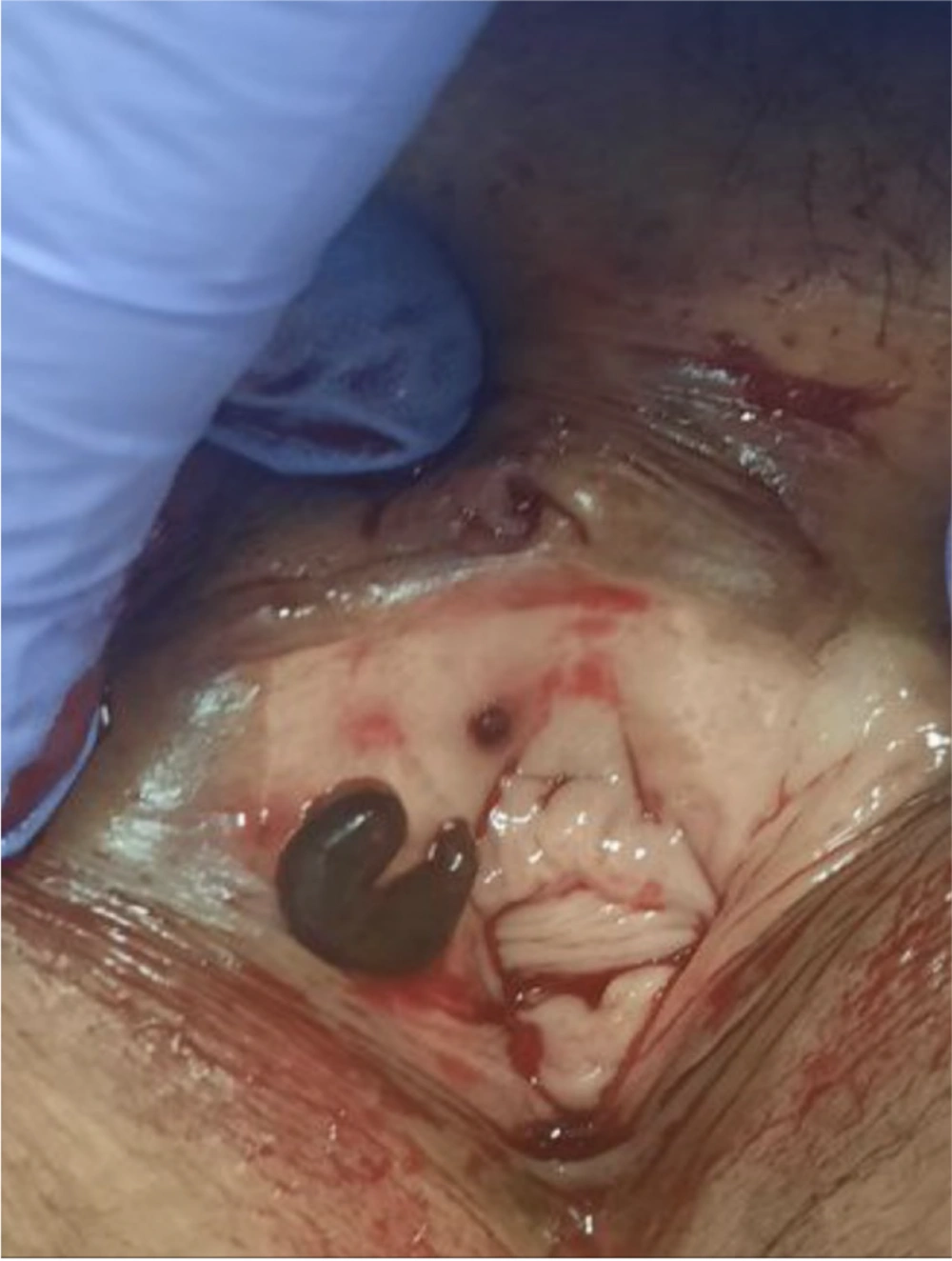
Figure 1.
Leech observation in the labia minora in the vulva
The patient was hospitalized for 4 hours to control the bleeding and then discharged. Due to a hemoglobin level of 10 g/dL, she was prescribed iron tablets and folic acid for one month. She was followed up by phone by the clinic nurse two weeks after discharge and reported no particular problems. Informed consent was obtained from the patient to publish the article without reporting her name and other personal information, in compliance with ethical protocols.
3. Discussion
In this study, the cause of vaginal bleeding was the attachment of a leech to the vaginal mucosa. Leeches have a strong tendency to enter body orifices, leading to adverse consequences. Vaginal bleeding caused by leech bites is rare but can result in various complications, ranging from minor bleeding to severe conditions such as significant anemia and profound hypovolemic shock (2). Complications from leech bites primarily stem from mechanical obstruction of vital organs and bleeding (7). Studies on vaginal leech infestation are limited and mainly consist of case reports (2, 7). Most reported cases of vaginal leech bites originate from tropical and subtropical regions and occur after swimming or bathing in freshwater (11).
An accurate and detailed medical history can be crucial for suspecting leech bites in patients from tropical areas presenting with vaginal bleeding. A thorough history and clinical examination are essential for diagnosing bleeding caused by leech bites, especially in postmenopausal women (19).
Postmenopausal vaginal bleeding requires prompt diagnostic and therapeutic procedures (22). To diagnose the cause of bleeding, physical examinations, particularly vaginal examinations, ultrasound, and detailed history-taking are of great significance (1). In this study, the cause of postmenopausal bleeding was a leech attached to the vulvar mucosa. Tillahom reported a case of a leech bite in a 70-year-old postmenopausal woman in Western Ethiopia, which led to hypovolemic shock and severe anemia (2). Rahmani-Bilandi et al. also reported abnormal bleeding caused by leech infection in a 69-year-old postmenopausal woman in Iran (23). In a study by Sebazungu et al., abnormal vaginal bleeding due to leeches was reported in a six-year-old child (20).
Leeches have a strong tendency to enter body orifices, leading to unfavorable consequences (7). Other studies have reported bleeding from the nose, rectum (3), gastrointestinal tract, and vagina (3, 10). Kadasah et al. reported a rare case of neonatal otalgia and autorrhagia caused by a live leech bite in a three-month-old infant (17). Dolek et al. also reported a case of upper gastrointestinal bleeding caused by a leech bite in a 43-year-old man in Kazakhstan (24).
Treatment for vaginal leech bites can be supportive. If the patient’s coagulation profile is normal, a blood transfusion may be necessary to replace the lost blood. Patients who develop complications will require additional medical care (25). A crucial component of treatment management is the proper removal of the leech. The leech should not be forcibly removed, as its jaws may remain in the wound, causing ongoing bleeding and infection. Instead, removal can be facilitated by using salt, alcohol, or vinegar (2, 25). After removal, the wound should be bandaged (25). Leech bite bleeding typically stops on its own. Persistent bleeding may occur due to hirudin secretion from the leech's saliva, leech migration into deeper tissue structures, or disseminated intravascular coagulation as a secondary complication from significant blood loss (26).
In this study, the patient's bleeding stopped without using a pressure dressing. A similar case study reported persistent vaginal bleeding in a postmenopausal woman due to a leech bite in the vagina, which led to hypovolemic shock and severe, life-threatening anemia (2).
In the present case, the leech was removed after washing the area with normal saline, using pincers and surgical forceps, and without anesthesia. In several other reported cases, the leech was removed from the mucosa during general anesthesia (7).
Although a leech is a rare cause of severe postmenopausal vaginal bleeding, careful examination of the external genitalia and vagina, along with a detailed history of swimming or bathing in contaminated spring water, aqueducts, rivers, and pools, is essential. These steps should be taken before performing any diagnostic procedure to help diagnose and manage the cause of bleeding more quickly and accurately and to prevent unnecessary diagnostic tests.
Therefore, special attention should be given to vaginal contamination with leeches as a differential diagnosis of vaginal bleeding. It is recommended that the general public, especially villagers who use spring and aqueduct water, be educated about leech bites and their complications, and that the use of polluted and untreated water be prohibited.
