
1. Context
The Arbaeen pilgrimage, recognized as one of the largest annual religious gatherings, attracts millions of participants who journey to Karbala, Iraq, for spiritual reflection and commemoration (1, 2). While this pilgrimage is a profound testament to faith and devotion, it presents unique challenges due to harsh environmental conditions, overcrowding, and prolonged physical exertion (3). Among the most pressing health concerns, heat exhaustion remains a critical issue, exacerbated by extreme temperatures, inadequate hydration, and restricted airflow in densely populated areas (4). Without proper intervention, heat exhaustion can escalate to life-threatening conditions such as heatstroke, making proactive health management essential (5).
Traditional health interventions, while helpful, are often insufficient in managing the scale and severity of heat-related illnesses in such mass gatherings (2). Therefore, technological innovations have emerged as essential tools in mitigating heat stress, offering solutions such as wearable monitoring devices, portable cooling units, smart hydration systems, mobile health applications, and AI-driven crowd management tools (6). These technologies can transform how heat exhaustion is prevented and managed, ensuring greater safety and well-being for pilgrims (7).
This narrative review explores the environmental and social factors contributing to heat exhaustion during the Arbaeen pilgrimage and examines how innovative technologies can address these challenges. By analyzing existing research and implementation strategies, this review aims to provide actionable insights for policymakers, healthcare professionals, and event organizers, paving the way for smarter and more efficient heat stress management during large-scale religious gatherings.
2. Evidence Acquisition
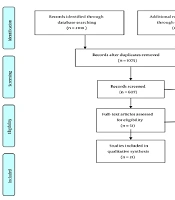
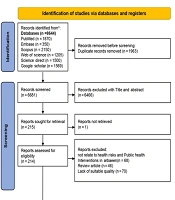
Regarding this review, credible databases, including PubMed, Scopus, Embase, Science Direct, Google Scholar, Magiran, and the Scientific Information Database (SID), were searched using keywords such as "Heat exhaustion in mass gatherings", "Pilgrimage health risks and interventions", "Wearable devices for heat stress management", "Smart hydration technologies", and "AI-driven crowd monitoring" from the published literature in both English and Persian languages. A variety of studies, including prospective cohort, retrospective, case-control, clinical guidelines, cross-sectional, and review articles up to 2025, were examined (1).
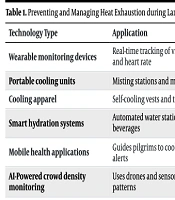
It is recommended to provide a table summarizing innovative technologies under the title "Innovative Technologies in Preventing and Managing Heat Exhaustion during Large Religious Gatherings." This table should include details such as the type of technology, its application, benefits, and any implementation challenges identified in the literature. This structured summary will offer a clear overview of the technological solutions available for managing heat stress in large gatherings (Table 1).
Table 1.
Preventing and Managing Heat Exhaustion during Large Religious Gatherings
| Technology Type | Application | Benefits |
|---|---|---|
| Wearable monitoring devices | Real-time tracking of vital signs such as body temperature and heart rate | Early warning system to prevent heat exhaustion |
| Portable cooling units | Misting stations and mobile cooling fans | Reduces ambient temperature in crowded and poorly ventilated areas |
| Cooling apparel | Self-cooling vests and thermal blankets | Helps regulate body temperature and reduce heat stress |
| Smart hydration systems | Automated water stations providing electrolyte-rich beverages | Continuous access to clean water and reminders for hydration |
| Mobile health applications | Guides pilgrims to cooling zones and sends personalized alerts | Improves rest and hydration management based on environmental and individual factors |
| AI-Powered crowd density monitoring | Uses drones and sensors to analyze crowd movement patterns | Reduces overcrowding and directs pilgrims to less congested areas |
3. Results
The findings of this narrative review reveal a multifaceted approach to addressing heat exhaustion during large religious gatherings such as the Arbaeen pilgrimage. The insights underscore both the challenges posed by environmental and social factors and the solutions offered through innovative technologies. The results are categorized into three main areas: Challenges of heat exhaustion, technological solutions for heat stress management, and implementation challenges and considerations. These findings provide a foundation for understanding how effective interventions can significantly enhance the safety and well-being of pilgrims.
3.1. Heat Stress Challenges
The environmental and social conditions faced by pilgrims during large gatherings are substantial contributors to heat exhaustion (8). Key challenges identified include.
3.1.1. High Ambient Temperatures
3.1.2. Crowding and Restricted Airflow
3.1.3. Hydration and Nutrition Challenges
3.1.4. Cultural and Traditional Attire
Many pilgrims wear traditional clothing that, while culturally significant, limits airflow and increases body heat retention (1). This adds to the physiological burden in environments of high heat and humidity (5, 14).
The cumulative effect of these factors creates a high-risk environment, particularly for vulnerable groups such as the elderly, children, and those with pre-existing health conditions (15).
3.2. Technological Solutions for Heat Stress Management
Emerging technologies offer promising solutions to combat the challenges of heat exhaustion (4, 16). The review highlights several innovative approaches.
3.2.1. Wearable Monitoring Devices
Wearable devices equipped with sensors provide real-time monitoring of vital signs, including core body temperature, heart rate, and hydration levels. These devices alert users and healthcare personnel to early signs of heat stress, enabling timely intervention (17). Vulnerable groups, such as individuals with chronic illnesses or advanced age, can benefit significantly from these devices, reducing the risk of severe complications (18).
3.2.2. Portable Cooling Units
Misting fans and mobile cooling stations are practical interventions for reducing ambient temperatures in high-density areas (19). These units operate efficiently even in environments with limited infrastructure (20). Wearable cooling gear, such as self-cooling vests or thermal blankets, offers personalized cooling solutions, particularly for those undertaking long walking distances in intense heat (11, 16).
3.2.3. Smart Hydration Systems
Automated hydration stations and smart water dispensers provide easy access to clean drinking water and encourage regular fluid consumption (5). These systems can also dispense electrolyte-enriched beverages to help maintain optimal hydration and electrolyte balance (2). Integration of consumption-tracking sensors ensures individuals are reminded to hydrate, mitigating the risks associated with dehydration (10).
3.2.4. Mobile Health Applications
These applications offer real-time guidance, directing pilgrims to the nearest cooling zones, medical facilities, or hydration points (21). They also provide educational content on recognizing symptoms of heat exhaustion and offer tailored alerts reminding participants to rest or hydrate based on environmental and individual data inputs (3, 7).
3.2.5. Crowd Density Monitoring and Management
AI-driven surveillance systems and drones analyze crowd movement patterns, identifying areas of high density where heat stress is likely to be aggravated (6, 11). Real-time data from these technologies allows event organizers to optimize crowd flow, redistribute pilgrims to less congested areas, and strategically deploy resources such as hydration stations or medical units (5, 7, 19). Each of these technological solutions addresses a specific aspect of heat exhaustion, working together to create a safer environment for pilgrims (2).
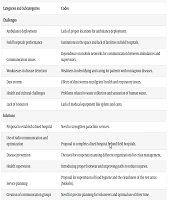
3.3. Implementation Challenges and Considerations
Although the reviewed technologies show significant potential, their widespread adoption and effective implementation face several challenges.
3.3.1. Accessibility and Affordability
3.3.2. Cultural Sensitivity
3.3.3. Infrastructure and Logistics
3.3.4. Awareness and Education
4. Conclusions
The findings of this review not only highlight the critical need for innovative solutions to address heat exhaustion but also emphasize the importance of strategic planning and collaboration in their implementation. Together, these results provide a roadmap for enhancing the safety and comfort of pilgrims during large religious gatherings.
The prevention and management of heat exhaustion during such events demand proactive and innovative approaches. By leveraging wearable devices, portable cooling units, smart hydration systems, mobile health apps, and crowd monitoring technologies, stakeholders can significantly enhance the safety and comfort of pilgrims. These measures not only reduce the incidence of heat-related illnesses but also ensure that the pilgrimage remains a positive and fulfilling experience for all participants.