
1. Introduction
The management of mass gatherings is a complex public health and organizational undertaking, particularly when large numbers of participants place substantial demands on the healthcare, logistical, and emergency response capacities of host communities. Religious and cultural gatherings may pose health risks associated with population density, environmental exposure, communicable diseases, heat-related illness, physical exhaustion, and medical emergencies. Effective management therefore requires coordinated planning, adequate human resources, accessible healthcare services, and community engagement before, during, and after the event (1-3).
Despite growing recognition of the importance of social and organizational factors in mass gathering management, the gender dimension of service planning and delivery remains comparatively underexplored. Women may have specific health and support needs during large gatherings, including reproductive and maternal healthcare, menstrual hygiene, privacy, safe accommodation, and childcare. Research on women's experiences during the Arbaeen pilgrimage has documented reproductive health concerns, environmental and infrastructural barriers, and difficulties in accessing appropriate healthcare services, underscoring the importance of gender-responsive planning (4, 5).
However, conceptualizing women exclusively as a population with specific vulnerabilities offers an incomplete understanding of their roles in large-scale public events. Research in disaster risk reduction and community-based emergency management has increasingly emphasized women's knowledge, organizational capacities, leadership, and contributions to preparedness and response. The Sendai Framework for Disaster Risk Reduction recognizes women's participation as an important component of inclusive disaster risk governance and emphasizes the need to strengthen their capacities and involvement in decision-making and implementation (6-9). Evidence from community-based disaster management further shows that women can contribute to local decision-making, resource mobilization, communication, and the organization of community support activities (10, 11).
These considerations are also relevant to religious mass gatherings, in which formal institutions operate alongside community-based and volunteer-led service structures. Such arrangements may provide opportunities for women to participate in healthcare delivery, accommodation management, family support, and the coordination of voluntary services. Nevertheless, the available literature has focused more extensively on epidemiological risks and healthcare provision than on the organizational contributions of women in these settings (1, 3, 12).
The shared social identity approach offers an additional perspective for understanding collective participation in mass gatherings. According to this approach, a perceived sense of shared group membership can shape social expectations, cooperation, and supportive behavior among crowd members. However, these processes are context-dependent and should not be inferred solely from physical co-presence or visible social diversity (13-15).
The funeral ceremony of Iran's late Supreme Leader in July 2026 provided an opportunity to document women's participation in a large-scale religious-national gathering involving multiple service and organizational structures. Despite the importance of gender-responsive planning in such events, descriptive accounts of women's roles in service delivery and community-based organizational arrangements remain limited.
2. Objectives
Accordingly, this field report aimed to describe the roles of women in health promotion, healthcare-related services, accommodation, volunteer participation, and family-oriented support during the event.
3. Methods
This study was conducted as a descriptive field report documenting women's roles in health promotion and service organization during the funeral ceremony of Iran's late Supreme Leader in July 2026.
Data were obtained from two complementary sources. First, direct field observations were conducted by three researchers with expertise in disaster health and mass gathering management. Throughout all days of the event, the researchers visited accommodation facilities, Mawakib, emergency response posts, and other service locations across the different areas associated with the ceremony. In this report, Mawakib (singular: mawkib) refers to volunteer-run service stations established to provide free services to participants during the gathering. Depending on their organizational focus, these stations may provide food, water, accommodation, hygiene supplies, maternal and child support, or other welfare services. Mawakib were distinguished from formal healthcare facilities unless they were specifically organized to provide healthcare services.
Observations focused on activities relevant to the study objectives, including women's health services, accommodation arrangements, women's participation in service management and volunteer activities, support for children and families, and community-based initiatives. The researchers documented observations directly according to these predefined domains. No structured observation instrument, participant interviews, or individual-level assessments were used.
Second, documentary information was obtained by reviewing official operational reports, administrative statistics, and relevant publications from domestic news agencies. The review focused particularly on reports issued by the Women and Family Command Center of Tehran Municipality and the Women and Family Affairs offices of Semnan and North Khorasan provinces, as well as relevant reports from organizations involved in accommodation and support services in Mashhad. These sources provided supplementary information on the reported number of service facilities, accommodation arrangements, volunteer networks, and organizational activities. Documents published during and immediately after the event were considered.
Where possible, the researchers cross-checked documentary information against their field observations while retaining the original geographic scope, organizational context, and reporting status of each indicator. Figures describing planned arrangements, announced capacities, registered volunteers, and reported operational activities were distinguished to avoid treating these measures as equivalent. Differences in reporting periods and geographic coverage were considered when interpreting numerical indicators.
The findings are presented as a descriptive synthesis of direct observations and documentary information. No statistical analyses, formal qualitative coding procedures, or assessments of service effectiveness were undertaken.
4. Results
The collected information was descriptively organized into five domains: 1) women's health services; 2) accommodation and support infrastructure; 3) women's managerial and volunteer participation; 4) support for children and families; and 5) women's social participation.
4.1. Women's Health Services
In Tehran, 101 mother-and-child Mawakib were reported in the Mosalla area, along the procession routes, and at city entry points. Of these, 20 were located in the Mosalla area and 81 along the procession routes. More than 2,000 service personnel were reportedly involved in these Mawakib (16). Approximately 500 physicians, nurses, nursing assistants, and other volunteer healthcare personnel were included in the planned arrangements to provide specialized healthcare services at accommodation centers and Mawakib (17) (Table 1).
Table 1.
Women-Specific Health Services and Mother-and-Child Support Facilities
| Indicator | Reported Number/Status | Geographic Scope/Responsible Organization |
|---|---|---|
| Mother-and-child Mawakib | 101 | Tehran; Women and Family Command Center |
| Mawakib in the Mosalla area | 20 | Tehran |
| Mawakib along procession routes | 81 | Tehran |
| Service personnel in mother-and-child Mawakib | More than 2,000 | Tehran |
| Healthcare personnel and volunteers | Approximately 500 (planned) | Tehran; Women and Family Command Center and participating health-service providers |
4.2. Dedicated Accommodation and Support Infrastructure for Women
According to reports from the Women and Family Command Center of Tehran Municipality, 25 accommodation centers were allocated to women and girls, with a reported capacity of 19,750 persons (18). In addition, accommodation capacity for more than 200,000 women was reported across women-specific facilities and infrastructure in Tehran (19). In Mashhad, the Center for Women and Family Affairs of Astan Quds Razavi identified and registered approximately 300 private residential homes through its Razavi Homes initiative to accommodate pilgrims. Most of the homeowners participating in this initiative were women (20). Furthermore, more than 170 hectares of women-specific municipal infrastructure were reported in Tehran, including women-only parks, Shahrbanu complexes, Shahrdokht centers, and Kowsar facilities (21) (Table 2).
Table 2.
Women-Specific Accommodation and Dedicated Infrastructure
| Indicator | Reported Number/Capacity | Geographic Scope/Responsible Organization |
|---|---|---|
| Dedicated accommodation centers for women and girls | 25 centers | Tehran Municipality |
| Accommodation capacity in dedicated centers | 19,750 persons | Tehran Municipality |
| Planned accommodation capacity for women across women-specific facilities | More than 200,000 persons | Tehran Municipality |
| Private residential homes identified and registered for accommodation | Approximately 300 homes | Mashhad; Astan Quds Razavi, Center for Women and Family Affairs |
| Women-specific municipal infrastructure | More than 170 hectares | Tehran Municipality; Women and Family Center |
4.3. Women's Managerial and Volunteer Participation
In Semnan Province, 100 women-managed Mawakib and 100 child-focused service stations were reported in connection with the ceremony (22). In North Khorasan Province, 63 Mawakib with women's participation were reported, of which 31 were managed exclusively by women and 32 were jointly managed by women and men. In addition, at the time of reporting, 700 women had registered to participate in volunteer service activities in the province (23) (Table 3).
Table 3.
Women's Participation in Volunteer Networks and Mawakib
| Indicator | Reported Number/Status | Geographic Scope/Responsible Organization |
|---|---|---|
| Women-managed Mawakib | 100 | Semnan; Provincial Women and Family Affairs Office |
| Child-focused service stations | 100 | Semnan |
| Mawakib involving women's participation | 63 planned | North Khorasan; Provincial Women and Family Affairs Office |
| Exclusively women-managed Mawakib | 31 | North Khorasan |
| Jointly managed Mawakib | 32 | North Khorasan |
| Registered female volunteers | 700 registered | North Khorasan |
4.4. Support for Children and Families Along Routes and at Accommodation Facilities
Child-focused facilities and temporary childcare arrangements were planned at accommodation sites and at locations near the procession routes in Qom. These included child-focused Husseiniyehs and designated spaces where trained educators could provide childcare and cultural activities for children accompanying their families (24). Dedicated arrangements for mothers and children along the routes were also reported (25). Identification cards for children and mothers were designed to facilitate identification and contact with families if children became separated from their caregivers. Additional measures included recording parents' emergency contact numbers on children's hands and establishing missing-person support arrangements (26, 27). A group of adolescent girls, particularly in Qom, were included in planned volunteer activities after preparatory training and a drill; they were expected to serve as assistants at accommodation facilities and along the walking route (28). However, the coverage and implementation of these arrangements, as well as their effectiveness in preventing child separation or other safety incidents, were not systematically assessed.
4.5. Women's Social Participation
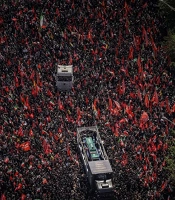
Field observations documented the presence of women and girls with visibly varied clothing and styles of social presentation in shared ceremonial spaces. Media photographs also showed women with different styles of dress attending the ceremony (29) (Figure 1). Together, these observations and media reports provided a descriptive account of women's presence and visible diversity during the event.
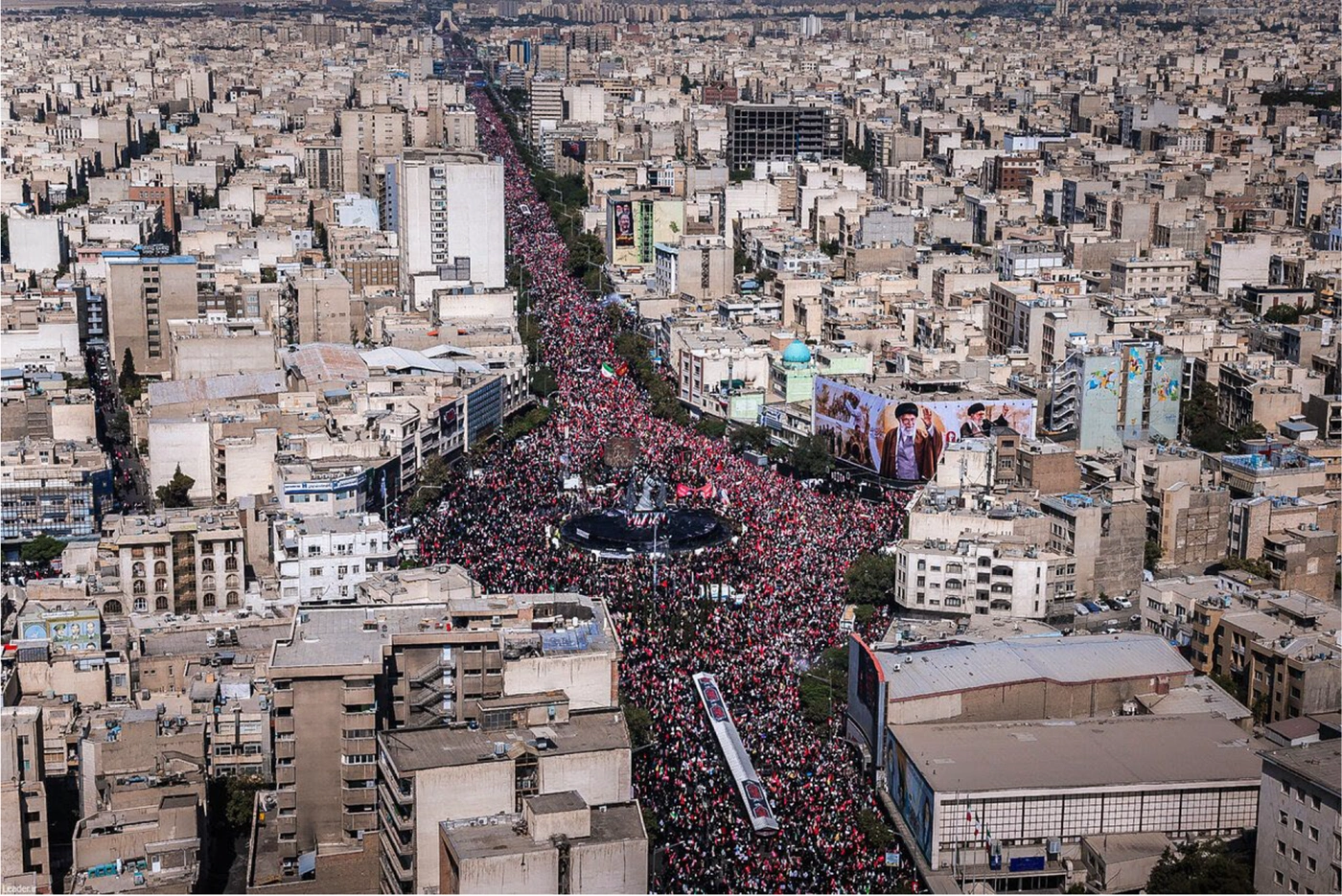
Figure 1.
Participants attending the funeral ceremony of Iran's late Supreme Leader in Tehran (30)
5. Discussion
This field report describes women's participation in health-related services, accommodation arrangements, volunteer networks, and family-oriented support during a large-scale religious-national gathering. The findings illustrate two complementary dimensions of women's involvement: women were among the recipients of gender-responsive services, and they also contributed as healthcare personnel, volunteers, and participants in the management of community-based service arrangements. These findings provide a descriptive account of women's roles during the event but do not establish the effectiveness or health impact of the reported activities.
Women's participation in the management of Mawakib and volunteer networks was documented in Semnan and North Khorasan provinces. A systematic review of women's roles in disaster emergencies identified their contributions to evacuation, rescue, preparedness, and support for affected communities, while highlighting the limited research attention given to women as active responders rather than solely as vulnerable populations (31). Similarly, research on community-based disaster risk management in Taiwan emphasized the importance of recognizing women's contributions to local preparedness and response structures (32). Studies of disaster risk governance have also highlighted women's participation, while noting that their involvement in organizational decision-making may remain limited (11). Research from Oman further emphasized the importance of women's participation in gender-responsive disaster risk reduction and resilience initiatives (10). Zaidi and Fordham argued that women's meaningful involvement remains insufficiently integrated into the implementation of global disaster risk reduction policies (9), whereas the Sendai Framework identifies women's participation and leadership as important components of inclusive disaster risk reduction (8). Although mass gatherings differ from disaster settings, these perspectives are relevant to mass gathering management because both settings require coordination, community engagement, and the mobilization of local resources. Nevertheless, the present report documents women's participation and the reported management arrangements rather than women's actual decision-making authority, institutional influence, or leadership effectiveness.
The reported mother-and-child Mawakib and the planned involvement of female healthcare personnel indicate that specific arrangements were made to address the needs of women and families attending the ceremony. A qualitative study of women pilgrims during the Arbaeen pilgrimage identified reproductive health concerns, inadequate menstrual hygiene, limited privacy, environmental and infrastructural barriers, and difficulties in accessing appropriate healthcare services (4). Another qualitative study documented the medical challenges experienced by women pilgrims and discussed context-specific strategies for addressing them (5). A scoping review of health challenges and facilitators during the Arbaeen pilgrimage also highlighted the importance of accessible services, health education, and coordination among the organizations involved in pilgrimage management (12). Collectively, these studies underscore the relevance of gender-responsive healthcare planning for large religious gatherings. However, the present report did not assess actual service utilization, participants' experiences, or clinical outcomes; therefore, it cannot establish whether the reported arrangements improved healthcare access or reduced health risks.
Community-based service facilities, commonly referred to as Mawakib, constituted another component of the service infrastructure documented in this report. A cross-sectional assessment of temporary community-based healthcare facilities during the Arbaeen gathering in Karbala found that these facilities provided services such as medication dispensing, blood pressure and blood glucose measurement, and wound care (33). A qualitative study of health and treatment measures during the 2022 Arbaeen procession also highlighted the importance of planning and coordination in facilitating timely access to healthcare services during the gathering (34). This evidence illustrates the potential contribution of community-based facilities to service provision during large religious gatherings. In the present event, women were reported to participate in the management of some Mawakib and related volunteer activities. However, community-based welfare facilities should not automatically be regarded as equivalent to formal healthcare facilities. Where Mawakib provide healthcare-related services, clearly defined responsibilities, appropriate training, and referral pathways are important considerations. The World Health Organization emphasizes coordinated public health planning and service provision at mass gatherings (3). The present report did not evaluate service quality, referral systems, or the extent to which these facilities complemented formal healthcare services.
The accommodation arrangements reported in Tehran and Mashhad illustrate different organizational approaches to providing accommodation and support for female participants. Research on women pilgrims during the Arbaeen pilgrimage has identified overcrowding, inadequate privacy, and infrastructural barriers as factors that may affect women's health and experiences (4). These findings highlight the importance of considering privacy and appropriate facilities when planning accommodation for women attending large religious gatherings. Research on women's medical challenges during pilgrimage has also emphasized the need for organizational and service arrangements that respond to women's specific needs (5). In this context, dedicated accommodation centers, private residential homes, and women-specific municipal facilities represent distinct forms of reported support infrastructure. However, the reported numbers of facilities and their stated capacities do not establish actual occupancy, accessibility, sanitation conditions, or participant satisfaction. Moreover, the figures for dedicated accommodation centers and for broader women-specific accommodation capacity refer to different categories of provision and should not be interpreted as equivalent or combined without further clarification. Future evaluations should examine actual use, service accessibility, and the extent to which these arrangements meet the needs of women traveling alone or with family members.
Support for children and families was another component of the reported arrangements. Documented initiatives included child-focused facilities, temporary childcare arrangements, identification cards, and the planned participation of trained adolescent volunteers. A systematic review of children's healthcare in mass-casualty incidents highlighted the need to address children's specific medical and care requirements in emergency planning (35). Research on child-friendly spaces in humanitarian settings has also examined their potential contribution to children's protection and psychosocial well-being, although reported effects have varied across settings and age groups (36). These findings support the relevance of age-appropriate, adequately supervised child-focused arrangements, while cautioning against the assumption that establishing such facilities alone guarantees protective or developmental benefits. Family identification and reunification are also important components of child protection during emergencies. A nationwide survey of US hospitals identified gaps in preparedness for managing unidentified individuals and reuniting unaccompanied minors with family members, underscoring the importance of formal reunification planning (37). This evidence provides a relevant basis for considering the purpose of the identification and missing-person arrangements reported during the present event. However, their actual effectiveness was not assessed in this field report. Future planning should specify supervision arrangements, safeguarding procedures, volunteer responsibilities, and referral mechanisms for children requiring additional support. The involvement of adolescent volunteers should also be accompanied by appropriate supervision and clearly defined responsibilities.
The presence of women and girls with visibly varied styles of dress in shared ceremonial spaces provides a descriptive indication of the social diversity observed during the event. The shared social identity approach offers one theoretical perspective for examining collective behavior at mass gatherings. Research has suggested that shared social identity and perceived social norms may influence risk-related behavior in crowds, including decisions about resource sharing (13). A broader review of crowd psychology has discussed the role of shared group membership in shaping collective experiences, social influence, and behavior in crowd settings (14). Hopkins and colleagues also reported an association between shared social identity and positive experiences in crowds (15). However, visible diversity and physical co-presence do not, in themselves, demonstrate shared psychological identification, social cohesion, interpersonal trust, or collective helping behavior. These processes were not directly assessed in the present report and would require dedicated qualitative or quantitative investigation.
Taken together, these findings highlight the importance of considering both women's service needs and their participation in the organization of mass gatherings. Research on gender-responsive disaster risk reduction has emphasized that women's contributions should be recognized beyond their roles as recipients of assistance. Studies of disaster risk governance have also highlighted the need to address institutional and sociocultural barriers that may limit women's participation in decision-making. In the context of mass gatherings, these considerations may inform planning for women's representation in decision-making, appropriate training and supervision of volunteers, accessible healthcare and referral pathways, and coordination between formal institutions and community-based service providers. Further empirical research is needed to assess the accessibility and quality of gender-responsive services, the operational performance of women-managed service structures, and the experiences of women volunteers and service users.
5.1. Limitations
This report has some limitations. Its descriptive design focuses on documenting services and activities rather than evaluating their effectiveness or health outcomes. Some numerical indicators were obtained from administrative reports and media sources, reflecting the documentation available. In addition, observations were recorded by three researchers without a standardized instrument or a systematic assessment of service utilization and participant experiences. Finally, the findings reflect the specific organizational, social, and cultural context of a large-scale religious-national event in Iran and should be interpreted accordingly.
5.2. Conclusions
This field report highlights the complementary roles of women as both recipients of gender-responsive services and contributors to health-related, welfare, and organizational activities during a large-scale religious mass gathering in Iran. Their involvement spanned healthcare-related support, accommodation arrangements, community-based service management, volunteer networks, and family-oriented initiatives. These findings underscore the importance of addressing women's needs and strengthening their meaningful participation in mass gathering preparedness and management. Future planning should support women's involvement in decision-making, enhance the training and coordination of volunteer networks, and ensure accessible maternal, child, and family support services. Further research could build on these findings by examining the quality, accessibility, and effectiveness of such arrangements.