1. Background
Cancer is a complex disease characterized by the proliferation of a normal cell and its transformation into cancerous cells that can change the physiology of the affected tissue and organ (1). Breast cancer is the malignant proliferation of the breast lining cells that cover the ducts or lobules (2).
New estimates from the International Agency for Research on Cancer (IARC) show that breast cancer has become the most common type of cancer in the world in terms of incidence, with 2.3 million newly diagnosed cases in 2020 (3). In Iran, 12.9% of cancer diagnoses in 2020 were found in breast cancer patients, the highest percentage of all types of cancer in Iran (4).
The main treatments for breast cancer include surgery, chemotherapy, and radiotherapy. Surgery is the basic treatment for breast cancer. Surgery causes changes in the body structure, which in addition to physical problems such as lymphedema, can adversely affect women’s perception of themselves (5). In most cases, chemotherapy and radiotherapy are performed after surgery (6). Chemotherapy kills 90% of malignant cells. Thus, it is widely used to increase survival in cancer patients (4). With chemotherapy, it takes months to treat the patient, and its side effects can be nausea, hair loss, fatigue, muscle pain, skin burns, and especially changes in weight and loss of appetite (5). Despite all these problems, due to the chronic nature of cancer, the patient has to accept and undergo long-term treatment with chemotherapy drugs, and long-term treatment adherence and follow-up are necessary to maintain the patient’s survival (3). The World Health Organization (WHO) defines treatment adherence as “the degree to which the person’s behavior corresponds with the agreed recommendations from a health care provider” (7). The correct use of medication and cooperation with the treatment team is as important as a cancer diagnosis and correct medication administration (8). Accordingly, numerous studies have shown that the patient’s follow-up of the recommended treatment is of particular importance in the survival of patients (9-12). Poor adherence to treatment is a constant obstacle to optimal healthcare outcomes (13). Thus, paying attention to and supporting cancer patients is of particular importance. Moreover, social support for affected women, especially their husband’s support during different stages of treatment, can encourage them to continue the treatment process (14, 15). Zare Shahabadi et al. showed that the more support a patient receives from their spouse and family members, the more they adhere to the treatment and control of the disease (16).
Studies have also demonstrated that psychological factors related to family members, especially the spouse, have a significant relationship with the follow-up of the treatment and disease control by the patient (17-19).
Chien et al. showed that patients who received post-hospital care training with their families, especially their spouses, had a higher level of knowledge and awareness than patients trained alone (20). A review study by Shields et al. showed that interventions conducted in the presence of the patient's family members and spouse are more efficient at managing diseases, especially chronic diseases such as cancer (21). Patients with chronic diseases need to receive medical services for a long time. Thus, some measures should be taken to encourage them to follow the treatment process. Studies have also indicated that time can reduce patient motivation to continue treatment (22-24).
As stated earlier, the main requirement for breast cancer patients' survival is acceptance of the disease and adherence to the recommended treatment. Social support, especially from their spouses, encourages patients to continue treatment. In other words, the spouse's presence increases the patient's motivation to adhere to long-term treatment plans. Given the role of the husband in the care of breast cancer patients, implementing a couple-training intervention with the spouse's active participation can increase the couple's awareness and contribute to controlling the complications of the disease. Couple training can also create empathy and intimacy in the couple and improve treatment adherence.
2. Objectives
The present study sought to examine the effect of couple training on treatment adherence in breast cancer patients undergoing chemotherapy.
3. Methods
This quasi-experimental study was conducted on 80 breast cancer patients undergoing chemotherapy in Khatam Al-Anbia and Ali-Ibne Abi Talib hospitals affiliated with Zahedan University of Medical Sciences and their husbands in 2022. The eligible patients and spouses were initially enrolled in the study through convenience sampling and then assigned to intervention and control groups through randomization with color cards.
The inclusion criteria were breast cancer diagnosis in grades 2 and 3, age between 25 and 65 years, having minimum literacy for patients, non-participation in other training interventions and programs for couples, and monogamy for men. Cases such as couples' lack of consent to continue the study, being absent from a training session, and patient metastasis during the study were some exclusion criteria.
The sample size was estimated as 4 persons in each group based on the mean treatment adherence score in a similar study (25) and with a 95% confidence interval and 95% test power using the following formula (26). However, to ensure sample adequacy and account for any probable dropout, the sample size was 40 persons in each group (80 persons total).
The data in this study were collected using a demographic information form and the Medication Adherence in Chronic Diseases Scale. The demographic information form was used to record the patient's age, spouse's age, patient's education, spouse's education, patient's occupation, spouse's occupation, length of the marriage, place of residence, number of children, and the patient's main caregiver.
The Medication Adherence in Chronic Diseases Scale was developed and psychometrically evaluated by Seyed Fatemi et al. (27). This scale contains 40 items and 7 subscales: Interest in treatment (9 items), the willingness to engage in treatment (7 items), the ability to match treatment with life (7 items), the integration of treatment with life (5 items), the insistence on treatment (4 items), the commitment to treatment (5 items), and treatment implementation strategies (3 items). The items are scored on a six-point Likert scale ranging from never (0) to always (5). Some items are scored reversely (never = 5 to always = 0). Seyed Fatemi et al. assessed the quantitative content validity of the scale using the content validity ratio (CVR) and content validity index (CVI). The average CVI was 0.914. Moreover, the scale's internal consistency was confirmed by calculating Cronbach's alpha (α = 0.921). Besides, the scale's reliability was confirmed through the test-retest method with a two-week interval (ICC = 0.92) (27). This tool's reliability was confirmed in the present study with Cronbach's alpha of 0.85.
After obtaining the required permits from the University's Vice-Chancellor for Research and Technology, the researcher went to the hospitals affiliated with Zahedan University of Medical Sciences and arranged with hospital officials to collect data. The participants in the study were selected using convenience sampling from breast cancer patients and their husbands who met the inclusion criteria. The selected participants were randomly assigned using colored cards in the intervention (blue card) and control (red card) groups. After providing some instructions about the study's objectives and the research, written consent was obtained from the patient and her husband to attend the study. First, the patients and their husbands completed the demographic information form in the hospital in both the intervention and control groups. Furthermore, treatment adherence was evaluated for the patients in both groups.
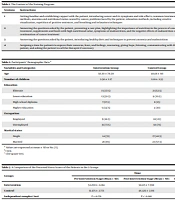
The intervention group participants attended three training sessions on cancer and the prescribed treatments before the start of the chemotherapy program. The content of the training sessions (Table 1) focused on an overview of breast cancer, the importance of treatment adherence and how to improve it, managing disease complications, emphasizing adaptation to the disease, and increasing mutual support and couple intimacy. The training content was provided to patients and their husbands in the third session as an educational booklet. According to the treatment plan and the availability of patients, the training program was followed up for 6 weeks in person. During the follow-up phase, the researcher answered the patients' questions. Afterward, the post-test was administered 6 weeks after the last training session for the intervention and control group patients. To comply with ethical protocols, training content was provided to the participants in the control group in the form of pamphlets at the end of the study.
Table 1.
The Content of the Couple Training Program
| Sessions | Content | Duration (min) |
|---|---|---|
| 1 | Getting familiar and establishing rapport with the patient, explaining the nature of the diseases and the importance of treatment adherence, the treatment process, and three treatment phases (chemotherapy, radiotherapy, and surgery) | 40 - 60 |
| 2 | Controlling the disease complication, treating the disease, and managing cancer-induced anxiety and crisis | 40 - 60 |
| 3 | Promoting the couple’s relationship to improve the treatment and follow-up procedure and answering the questions asked by the patient | 40 - 60 |
After collecting and coding, the data were analyzed with SPSS-27 software. The Shapiro-Wilk test showed that the collected data had a normal distribution. Thus, parametric tests were used to analyze the data. Then, the data were summarized using descriptive statistics: Frequency, percentage, mean, standard deviation, minimum, and maximum. The mean treatment adherence scores in each group before and after the intervention were compared using the paired samples t-test. Moreover, an independent samples t-test was run to compare the mean treatment adherence scores between the two groups before and after the intervention. The qualitative variables were compared between the two groups using the chi-square test. The analysis of covariance (ANCOVA) was also run to determine the effect of the intervention while controlling some confounding factors. This study's significance level was less than 0.05 (P < 0.05).
4. Results
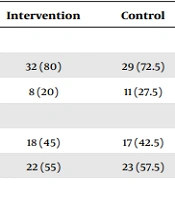
Table 2 compares the demographic characteristics of the patients and their husbands in the two groups. As can be seen, the independent samples t-test and chi-square test did not show significant differences between the two groups in terms of the demographic variables:
Table 2.
A Comparison of the Participant's Demographic Characteristics in the Two Groups a
| Categories | Intervention | Control | P-Value |
|---|---|---|---|
| Patient job | 0.62 b | ||
| Housewife | 32 (80) | 29 (72.5) | |
| Employee | 8 (20) | 11 (27.5) | |
| Husband job | 0.32 | ||
| Employee | 18 (45) | 17 (42.5) | |
| Self-employed | 22 (55) | 23 (57.5) | |
| Patient education | 0.96 | ||
| Primary school | 13 (32.5) | 12 (30) | |
| Diploma | 13 (32.5) | 13 (32.5) | |
| Higher education | 14 (35) | 15 (37.5) | |
| Husband education | 0.20 | ||
| Primary school | 9 (22.5) | 4 (10) | |
| Diploma | 12 (30) | 18 (45) | |
| Higher education | 19 (47.5) | 18 (45) | |
| Main caregiver | 0.84 | ||
| Husband | 26 (65) | 24 (60) | |
| Children | 7 (17.5) | 7 (17.5) | |
| Relatives | 7 (17.5) | 9 (22.5) | |
| Place of residence | 0.28 | ||
| City | 29 (82.5) | 33 (72.5) | |
| Village | 11 (17.5) | 7 (27.5) | |
| Patient age | 38.85 ± 10.56 | 39.27 ± 10.18 | 0.85 c |
| Husband age | 41.97 ± 10.34 | 43.02 ± 10.13 | 0.64 |
| Length of marriage | 18.85 ± 11.17 | 19.65 ± 10.92 | 0.74 |
| Number of children | 3.12 ± 1.89 | 3.63 ± 1.87 | 0.59 |
a Values are expressed as mean ± SD or No. (%).
b Chi-square.
c Independent samples t-test.
The data in this study indicated the mean treatment adherence score of the patients in the intervention group increased from 162.60 ± 22.79 to 175.15 ± 10.64, showing a significant difference as indicated by the paired samples t-test (P < 0.001) and confirming the effectiveness of couple training in improving treatment adherence. In addition, the mean treatment adherence score of the patients in the control group increased from 164.97 ± 12.95 to 166.95 ± 9.67, but this difference was not significant (P = 0.13). The independent samples t-test showed that the mean treatment adherence score of the patients in the two intervention and control groups before couple training had no significant difference (P = 0.56). However, after the couple training intervention, the mean treatment adherence scores of the patients in the two groups showed significant differences (P = 0.001) (Table 3).
Table 3.
The Descriptive Statistics for the Treatment Adherence Scores in the Two Groups Before and After the Interventions a
| Groups | Pre-intervention | Post-intervention | Paired t-Test |
|---|---|---|---|
| Intervention | 162.60 ± 22.79 | 175.15 ± 10.64 | P < 0.001 |
| Control | 164.97 ± 12.95 | 166.95 ± 9.67 | P = 0.13 |
| Independent t-test | P = 0.56 | P = 0.001 |
a Values are expressed as mean ± SD.
Levene's test confirmed the assumptions of approximate normality and variance homogeneity and the homogeneity assumption of the regression based on the non-significance of the interaction between the independent and dependent variables. Thus, the requirements for running the ANCOVA were established (P = 0.20). The result of the ANCOVA to adjust the significant effect of pretest scores showed the effectiveness of the couple training intervention in promoting the treatment adherence of breast cancer patients (Table 4).
Table 4.
The Analysis of Covariance Results for the Treatment Adherence Scores
| Source of Changes | Sum of Squares | df | Mean Squares | F | Sig. | Effect Size | Test Power |
|---|---|---|---|---|---|---|---|
| Pretest | 5047.15 | 1 | 5047.15 | 142.14 | < 0.001 | 0.67 | 1 |
| Group | 1654.2 | 1 | 1654.2 | 46.85 | < 0.001 | 0.39 | 1 |
| Error | 2556.46 | 72 | 35.5 | ||||
| Total | 2350068 | 80 |
5. Discussion
The present study showed that couple training with the participation of patients' husbands effectively enhanced treatment adherence of breast cancer patients undergoing chemotherapy. The results also indicated a significant difference in treatment adherence scores between the two intervention and control groups on the post-test. In other words, the treatment adherence rate of patients who received training on adherence to the recommended treatments improved significantly, confirming the effectiveness of training patients with their spouses' participation.
Since treatment adherence is a complex health-oriented behavior and is considered one of the key factors in managing chronic diseases, non-adherence to treatment adversely affects the quality of treatment and, consequently, the patient's health (28). Treatment follow-up is an important issue in the recovery of cancer patients, and patient education through couple training programs is the most effective intervention to promote adherence.
In line with the findings of the present study, several studies demonstrated an increase in patient treatment adherence as a result of implementing training programs for patients with the participation of the patient's family members (especially their spouses as the main caregiver). Previous studies have also confirmed the mediating role of social support in treatment adherence in women with breast cancer and the implementation of a support program for compliance with the treatment regimen in colon cancer survivors (29, 30). Hemmati Maslakpak et al. showed that family-based care can increase treatment adherence and reduce fasting blood sugar and glycosylated hemoglobin in diabetic patients (31).
Furthermore, Rafeie et al. showed that couple training, in addition to reducing the anxiety level of the spouses of patients with acute coronary syndrome, increases treatment adherence in patients (25). Although the research samples and procedures in their study differed from the present study, the patients needed long-term adherence to the treatment regimen due to the chronic nature of both diseases, and the intervention improved their adherence.
Several studies have revealed that training and empowering caregivers of chronic patients, including cancer patients, increases family engagement in patient care and ultimately improves treatment adherence of patients (32-34) and can enhance the feeling of self-efficacy and reduce the stress of caregivers (26, 35). In addition, Farshidfar et al. confirmed the effectiveness of group behavioral activation therapy on treatment adherence of women with breast cancer (36). Sarizadeh et al. also showed that acceptance and commitment to group therapy can increase treatment adherence in breast cancer patients and survivors (37).
Furthermore, Luyster et al. showed that spousal support has positive effects on patients' treatment adherence (38), confirming the tremendous effect of the engagement of patients' spouses in patient education, which can improve treatment adherence (38). Hoellen et al. showed that the participation of spouses of breast cancer patients in training sessions reduces the psychological distress of these spouses, improving the support and competency in the care on the part of the spouse and adherence to the treatment regimen in the patient (39). Zare Shahabadi et al. have also shown that the more support a patient has from his wife and family, the more he adheres to the treatment and control of his disease (16).
In the present study, the patient's husband promoted the patient's and husband's motivation to accept the treatment process. The application of family-oriented interventions is important because the presence of important people, especially the spouse, in the patient's life can help patients to face the consequences of the disease and crisis management and, ultimately, treatment adherence. In contrast to the present study results, a review study by Taheri et al. (40) on empowerment-based interventions in patients with diabetes showed that although all interventions were carried out by experienced staff and nurses, the results in all cases were not satisfactory. The researchers reported several reasons that could influence the results of the study. According to them, some studies did not use a specific theoretical framework for conducting empowerment interventions, or the intervention was not well defined. Besides, the intervention was conducted only to increase self-efficacy, and the needs of the patients were not correctly diagnosed (41). Finally, the researchers concluded that the intervention strategies should be well defined because, without a clear definition, their application and the effectiveness of these interventions in the clinical setting will be rejected. In the present study, the follow-up period was relatively long, while the patients were available during the study due to receiving medical services, and the follow-up after the interventions were performed in person. Thus, it is expected that better results will be achieved by continuous monitoring of the performance of the patient and spouse. In other words, the ineffectiveness of the interventions in some studies can be attributed to inefficient implementation and follow-up procedures and time constraints (42, 43). In this regard, the present study differs from other studies in this field.
The findings from the present study implied that a training intervention with the participation of couples improved the treatment adherence of breast cancer patients undergoing chemotherapy. Thus, spouses play an important role in the adherence of breast cancer patients to follow-up and treatment phases. As one of the limitations of the present study, the patients in both groups had access to other sources of information. This was beyond the researcher's control and could affect the study's results.
5.1. Conclusions
Following the findings of the present study, it can be concluded that by strengthening the role of the family, especially the spouses, a higher level of treatment adherence can be achieved in cancer patients, which can lead to an increase in treatment efficiency, patient survival, and improvement in living conditions. Thus, the patient's spouse plays a vital role after the diagnosis, onset of the treatment, and post-treatment and follow-up phases. Accordingly, the engagement of couples in treatment programs is of special importance.