


1. Background
World Health Organization (WHO) defines risk communication as the timely exchange of knowledge, insights, and judgment between individuals and organizations managers. It is also one of the key elements of disaster management, which occurs during the stages of mitigation, preparedness, response, and recovery for encouraging informed decision-making, constructive behavior modification, and trust building (1). Additionally, it employs a variety of communication and interaction strategies and tactics, such as media communication, social media, awareness campaigns, health promotion, stakeholder participation, social mobilization, community engagement, and promotes a behavior or action that allows for rapid and efficient improvement (2).
One of the solutions for aligning the provision of services in the field of health is to compile and publish documents, instructions, and protocols as an upstream guide (3). To achieve their goals following comprehensive disaster management, the health system and organizations in charge of disaster management have compiled and disseminated several documents and instructions to the relevant authorities in Iran (4, 5). In addition, as a result of the current pandemic (COVID-19) circumstances in the globe, the approvals of the meetings have been sent to the beneficiaries and service providers as a high-level document for the alignment of measures and interventions (6). The analysis, development of knowledge, and application of lessons learned from the analysis of health system policies can create significant improvements and provide vital solutions to its challenges (7), which can lead to better evidence-based policy-making and contribute to the development of sustainable health in the country (8).
In the study issued by the European Commission in Inform in 2022, Iran received a score of 6.7 out of 10 for its ability to withstand natural disasters (9). Statistics listed in international databases show that the variety of disasters and the effects of some of them are high in Iran, indicating the need to pay serious attention to the concept of scientific disaster management (10-12). Comprehensive disaster management comprises the four phases of mitigation, preparedness, response, and recovery, as outlined by the disaster management cycle (13). Each phase of the disaster management cycle comprises planning and policy formulation, implementation, assessment, and feedback (14). To assess activities at various field, municipal, and organizational levels, the indicators and duties outlined in upstream documents are the subjects of scrutiny and demand (15).
In risk communication, the appropriate response, based on need, without wasting resources and parallel work, leads to the improvement of rehabilitation processes and most importantly, the resilience of the health system in all phases of disaster risk management (16). The health management system in emergencies and disasters has not performed well in the field of risk communication and has been linked to a passive approach, late and insufficient response, and inappropriate attention to needs (17). Also, the risk communication map has not been designed in Iran at the moment, which can be effective in creating chaos, managing disasters, and health promotion, according to the WHO (18). One of the other problems and challenges of establishing the risk communication process is the lack of upstream documents and different instructions issued by different organizations (19).
So far, many documents have been issued in the field of crisis management in Iran to improve the quality of services and care in all phases of preparation, risk reduction, response, rehabilitation, and reconstruction, and some of their provisions and notes deal with risk communication. The results of the studies show that there is no specific document about risk communication, and no analysis has been done to identify the gaps and challenges in this case, so this research has been done to analyze the documents in the field of disaster management with a focus on risk communication. In addition to explaining the strengths of these documents, points that can be improved, implementation challenges, and legal issues in this field are identified.
2. Methods
2.1. Research Design
This research is a qualitative study that analyzes nationally approved documents and protocols in the field of incidents and disasters with a focus on risk communication. At first, by determining the type of documents, all approved content was searched in document format. To extract information in line with the purpose of the research, a framework was designed that included seven columns, including the name of the document, the date of notification, the place of publication, the target group, the type of document, the material related to the communication of the risk of accidents and disasters, and related extraction components. All the approvals, laws, upstream documents, policies, national programs, protocols, and standards were gathered, evaluated, and analyzed based on thematic content analysis in the designed blueprint.
2.2. Data Collection
All published documents due to “emergencies and disasters”, “crisis management”, and “passive defense” without time limitation were extracted. Official documents of ten main organizations intervening in the field of disaster management involving “Ministry of Health and Medical Education” and “Subordinate Deputies”, “National System of Information Release and Free Access”, “Ministry of Culture and Islamic Guidance”, “Ministry of Interior”, “Passive Defense Organization”, “Iranian Red Crescent Society”, “Emergency Organization”, “Rescue Organization”, “Crisis Management Organization” and “National Information Base of Laws and Regulations” were searched and analyzed. All documents were collected and analyzed from December to March 2022.
2.2.1. Inclusion Criteria
- Published documents in the field of disaster management
- Documents with risk communication approvals
2.2.2. Exclusion Criteria
- Confidential documents
- Lack of access to the full text of documents
2.3. Data Extraction
This stage included document review and noting. All approvals were evaluated and analyzed, and components like information, communication, and participation were taken out and inserted as code in the intended blueprint. The data were analyzed by using the thematic content analysis (TCA) approach. At first, all the approvals were reviewed several times by the research team, and based on the research question, the desired sentences and expressions were determined as semantic units. In the next step, open coding was used inductively. For this purpose, meaning units and then condensed meaning units, and finally, codes were extracted.
2.4. Trustworthiness
Lincoln and Goba (1985) criteria comprising credibility, dependability, confirmability, and transferability were utilized to evaluate the trustworthiness of the data and research results in this study. The research team spent a lot of time looking at the dimensions of documents as well as gathering and evaluating qualitative data. Contrarily, triangulation included combining various data from several organizations to establish credibility. On the other hand, the researchers in this study attempted to increase the research’s credibility by integrating data sources (approvals, recommendations, news, websites, texts, and a variety of other information sources). The researcher detailed every element and the whole study procedure to attain transferability. Additionally, efforts have been made to provide a thorough description of the research methodology so that other researchers will grasp the broad phases of the study.
3. Results
In this study, 58 documents about disaster management were analyzed. Following the first evaluation, 36 papers and instructions, comprising 266 risk communication-related approvals extracted and included in the research analysis are summarized in Table 1. The distribution of the different types of research documents is shown in Figure 1. The largest number of documents was related to the years 2017 to 2022, which is shown in Figure 2 of the analysis of the year of publication. Figure 3 also shows the source of the documents.
Table 1.Dimensions of Disaster Risk Communication Based on Documents
| Categories and Subcategory | Selected Codes |
|---|---|
| Mitigation | |
| Informing | Identifying a single and reliable media for information; creating a media base; establishment of an information council at the province level |
| Public education | Public education on how to take health measures; digital training for community; doing community-oriented measures for employees, their families and vulnerable groups |
| Development and maintenance t of infrastructure | Developing multi-layered and secure communication infrastructures; obtaining the necessary infrastructure for free access to information; making a dedicated communication network for emergencies |
| Community engagement | Holding training and information sessions in all target and support groups; identifying health liaisons and ambassadors; development of public participation in decision-making |
| Design and maintenance of information systems | Obtaining and exchange of digital database; investigating and developing communication platforms and information infrastructures; determining the databases of the custodian organizations in the field of risk management and providing the necessary information in this field |
| Preparedness | |
| Monitoring | Continuous monitoring of risk indicators; setting up and strengthening the warning system and forewarning; designing a monitoring and evaluation system |
| Creating and maintaining a database | Ensuring the stability of data centers of all devices by complying with security regulations; presence of data and information management centers; maintenance of information networks |
| Creating and maintaining communication infrastructure and equipment | Making the required infrastructure to obtain communications; designing, equipping, and providing mobile communication vehicles to support and provide the communication infrastructure; creating and developing the necessary infrastructure to provide effective communications (such as satellite, wireless, mobile, wireless, and optical fiber equipment) |
| Coordination | Promoting inter-organizational cooperation and coordination ; coordination of public and specialized education; design and development of various emergency response control and coordination centers |
| Organizational training | Obtaining and compiling different and possible scenarios for implementation in simulated; training the communication process to employees; training and informing the technical standards and written communication instructions |
| Planning | Designing guidelines for various types of emergency response units; obtaining technical criteria, standards, and guidelines for communication and risk notification; planning to upgrade the communication and information network |
| Determining levels of access to information | Making appropriate access to the comprehensive information management system; obtaining the possibility of access to the databases of the custodian organizations; obtaining the required infrastructure for information exchange |
| Communication | Continuous exchange of information between certain provinces; setting up a suitable information network to establish inter-organizational communication; identifying how to establish communication and ensure that the custodian organizations are aware of their roles and responsibilities |
| Monitoring and evaluation | Controlling and monitoring the progress of organizations' information and communication equipment; evaluating the state of communication and information exchange between the organizations; monitoring and providing feedback regarding the quality and condition of the communication network at the time of incidents and accidents |
| Response | |
| Data management | Obtaining and publishing reports of accidents and incidents; management of the information network to perform the relevant organizational tasks |
| Informing | General education and awareness; management of public opinion; double and frequent relaxation to avoid creating fear in the public mind |
| Communication management | Developing standard guidelines for intra-organizational and public communication; obtaining a multi-layer communication plan between units; having a communication system and communication infrastructure |
| Media management | Coordination of media policies with crisis management information approaches; media management, including raising awareness and preparation, training and maneuvers, advertising, and informing various stakeholders; upgrading and setting up media information systems |
| Trust building | Avoiding exaggeration and causing concern in people; honest expression of information; strengthening public trust in relief organizations by creating transparency in the step-by-step reporting of services and actions |
| Organization and coordination | Issuing safety recommendations and corrective suggestions to responsible and related institutions; communicating with ministries, organizations and departments related to crisis management; making coordination between regional crisis management headquarters and evaluating and monitoring their activities under the supervision of the headquarters |
| Speak person | Identifying and activating speakers; identifying the speaker's duties |
| Monitoring and control | Supervision of education and public information; assessing the state of communication at the time of the accident; assessing the communication plan after the response operation and its improvement |
| Use and manage social network | Applying the capacity of social networks; supervision and control of cyberspace by judicial authorities; obtaining virtual brochures to inform and publish in appropriate spaces |
| Content production | Obtaining appropriate educational content from the Ministry of Health; obtaining required educational materials for all target groups; preparation of a table for actions and contents of communication and information |
| Supply of equipment and infrastructure | Reviewing and revising the system of collecting and reporting infectious diseases; making resilient and practical communication layers and methods specific to emergencies |
| Recovery | |
| Documentation | Obtaining periodic and supplementary reports and send to higher levels; documenting all the actions of the organization to record the lessons learned; documenting and finding causes and effects of events |
| Informing | Preparing guidelines for informing people in the reconstruction and rehabilitation phase; determining the exact mechanism for transparent and timely information; applying the capacity of the plan “Each house is a health base” to inform people as much as possible |
| Training | Increasing the awareness of the stakeholders about the possible risks; training, and organizing local forces in reconstruction and rehabilitation programs with an emphasis on neighborhood-oriented programs |
| Community engagement | Attracting people’s participation in content production; increasing the level of cooperation between the people and the local level; attracting people’s participation in preparing a special plan, informing and updating information about the decisions taken |
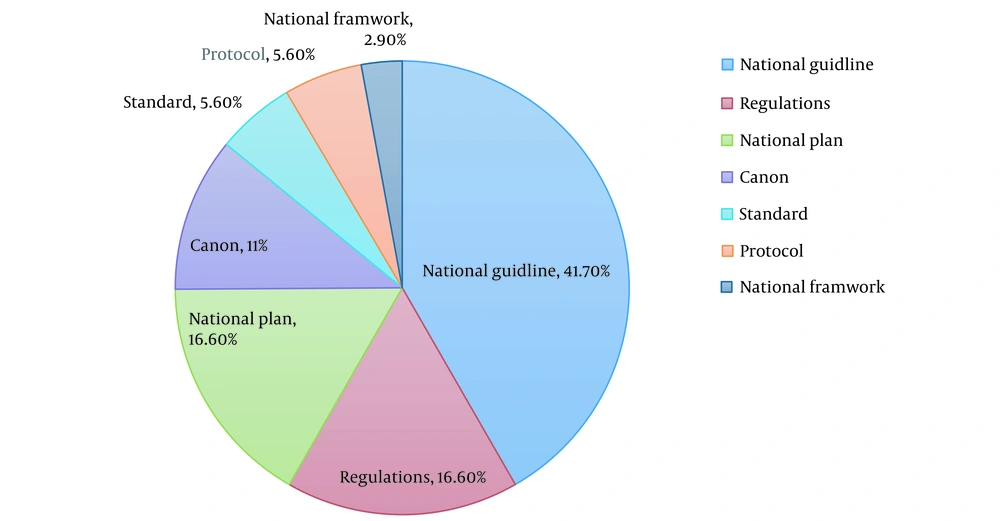
Figure 1.
Distribution of documents based on the source of compilation and publication of disaster management.
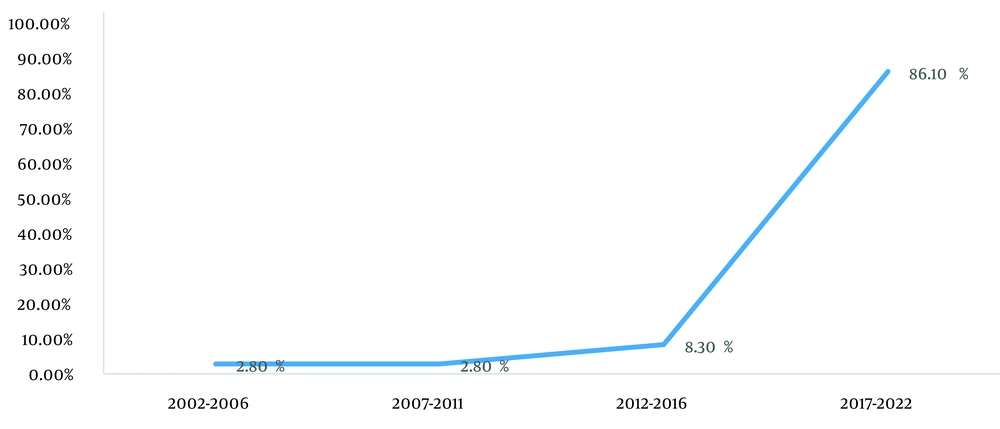
Figure 2.
Status of disaster management documents included in the study according to the year of publication.
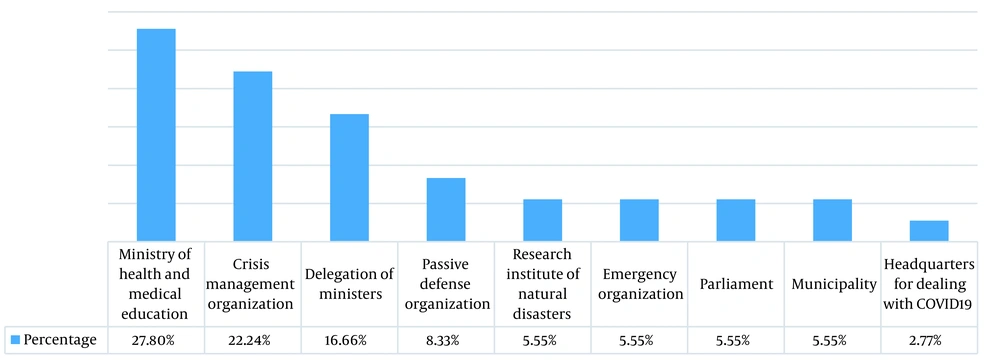
Figure 3.
Distribution of documents based on the source of compilation and publication of disaster management documents.
Most of the documents related to national guidelines were compiled and communicated by various centers and organizations involved in disaster management.
Most of the documents related to disaster management, containing approvals and notes on risk communication, were compiled and communicated between 2017 and 2022.
In initial thematic analysis, 47 approvals due to the mitigation phase (five subcategories of information, education and public awareness, infrastructure development, community engagement, and preparation and maintenance of information systems), 61 approvals due to the preparedness phase (nine subcategories of monitoring, information and maintenance of database, creation and maintenance of network and communication infrastructure, coordination, organizational training, planning, determining level of access to information, communication, monitoring and evaluation), 133 approvals due to the response phase (11 subcategories of information management, informing, communication management, media management, trust building, organization and coordination, appointing a spokesperson, monitoring and control, use and management of social media, content production, and supply and maintenance of equipment and infrastructure), 25 approvals due to the phase of rehabilitation and reconstruction (four subcategories of documentation, information, training, and community engagement) (Table 1).
The review of the approvals showed that 50% of the approvals related to risk communication were related to the response phase, 22.93% were related to the preparation phase, and 17.67% were related to the risk reduction phase. In the response phase, the notification axis had the most approvals. In other words, 11% of the approvals were related to the disaster risk communication in the upstream documents (Figure 4). The analysis of the frequency of all approvals showed that 34.21% of the cases were related to the notification dimension and it was the most approved area that was addressed in the above documents. Monitoring and evaluation (12.03%) and general-organizational training (9.4%) were in second and third places, respectively. On the other hand, the axes of communication management (2.26%), documentation (1.13%) and determination of information access levels (0.75%) had the lowest number of disaster risk communication approvals in upstream documents (Figure 5).
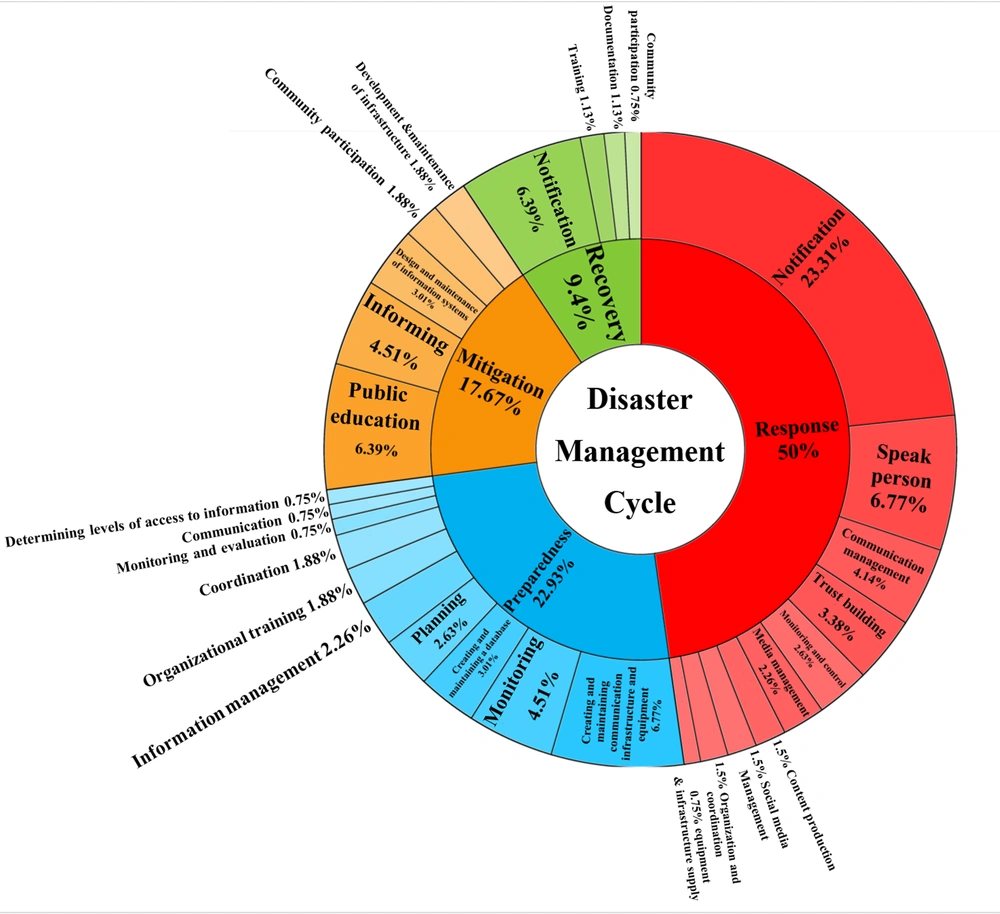
Figure 4.
Analysis of documents with a perspective of contribution in each phase of the disaster management cycle.
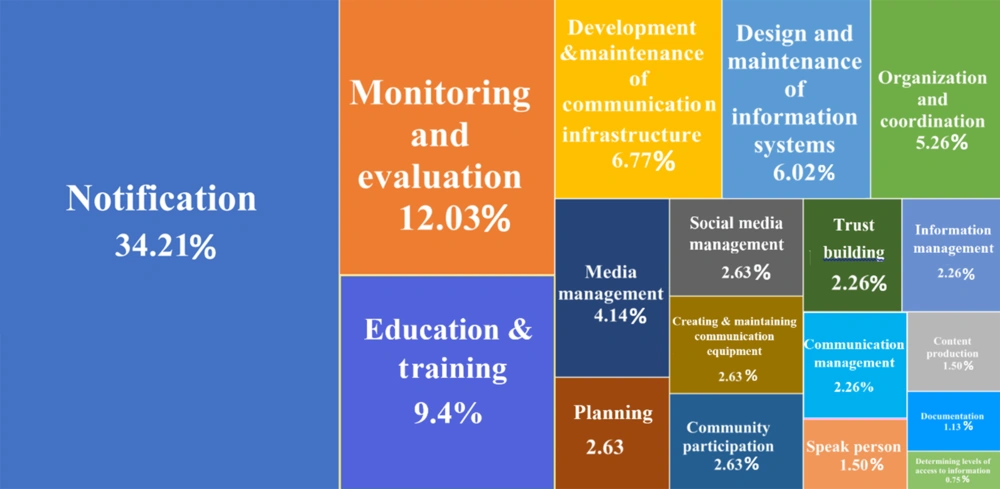
Figure 5.
Analysis of disaster management documents from the perspective of risk communication components.
The policymakers and implementers of risk communication approvals in the upstream documents involve a wide range of organizations and bodies, including the Ministry of Health, the passive Defense Organization, the Crisis Management Organization, the Islamic Council, the Government Board, the Ministry of Culture and Guidance, and the Broadcasting Organization and Universities of Medical Sciences, local authorities, academic experts and public relations organizations, etc.
4. Discussion
To analyze the papers about risk communication in Iran, the national disaster management documents were analyzed for the first time. Investigations show that no specific document has been compiled in the field of disaster risk communication in Iran. Although risk communication is a process that can be adjusted in all phases of the disaster management cycle, there are some approved documents in this field, so out of 58 documents, 36 dealt with risk communication. According to the literature, most of the issues were related to the dimension of information and training, which shows that this dimension has received more attention from policymakers in disaster management.
According to Rowan's study entitled “goals, obstacles, and strategies in risk communication: A problem-solving approach to improving communication about risks”, behavior change is one of the most crucial indicators for gauging the success of communication strategies when creating risk communication documents. After empowering and educating the public and organizations more than other aspects of this effective process, policymakers’ attention focused on changing behavior as a result of society’s reliance on disasters (20). In this study, considering disaster management documents and risk communication, information and public and organizational education are more important than other aspects of this effective process, which aim at changing the behavior of society.
On the other hand, some aspects of risk communication have been greatly magnified, such as information, but ethics in risk communication, organizational structure, and provision of financial and human resources have been neglected, which has led to the incomplete establishment of this process in disaster management, as we witness the problems caused by this defect in all disasters. Also, some actions were not planned at the right time; for example, content production and the determination and training of the speaking person should be done in the preparedness phase, but in the analysis of policies, it is one of the actions of the response phase, and this delay in doing these things leads to the emergence of rumors. The anxiety of the public mind will be passive due to the spread of various messages from truth to falsehood at this time.
Considering the scope of the functions and intervention organizations in disasters, it is very important to compile documents that have a systemic approach and can be carried forward in all related organizations. This study shows that in regulation action plans and policies, it is very important to pay attention to the capacity of executive organizations, including the Red Crescent Society of the Islamic Republic of Iran, the Ministry of Communications, the Ministry of Health, and their ability to implement the plans, and the resource allocation. In the book of Covello entitled risk and crisis communication, in the chapter strategies for overcoming challenges to effective risk communication, the idealistic compilation of risk communication documents and strategies, the main reason for the lack of establishment and lack of trust of executive organizations in policy-making organizations was presented (21). On the other hand, it emphasizes the importance that due to the complexity of the issue and the necessity of inter-sectoral cooperation, it is necessary to form official and multi-disciplinary working groups to formulate policies, and according to the resources and executive power of the organizations should be developed with the aim of implementation.
The heterogeneity of policies and diversity of organizational strategies is another finding of the study. Considering that policymakers and implementers of risk communication approvals in upstream documents are a wide range of organizations and bodies, attention has to be paid to the mission of the involved organizations, feasibility, and executive coordination in the regulatory policies and strategies to avoid parallel work and interference of functions. Many organizations in Iran are involved in the management of disasters, some of which include the Ministry of Health and Medical Education, the National Defense Organization, the National Crisis Management Organization, the Islamic Council, the Government Board, the Ministry of Culture and Guidance, the universities of medical sciences of the country, local authorities, academic experts and public relations organizations, etc. If there is no integrity and comprehensiveness in the documents, it can lead to overlapping, operational gaps, and numerous implementation challenges, the impact of which can lead to the establishment of an incomplete process and even contradictions in trust building and informing. This issue is also important in internal organizational documents since the conflict can be seen in the contents of the documents.
In the study by Raoofi et al., entitled “COVID-19 pandemic and comparative health policy learning in Iran”, it was pointed out that the existence of a wide range of organizations involved in the health system, from policymakers to senior and middle managers and experts, as well as various organizations such as universities, vice-chancellors, and hospitals, can lead to a conflict of interests and even parallelism. The feasibility of some policies is doubtful; for example, the use of a dedicated communication network in emergencies and the possibility of using satellite services due to organizational restrictions and sanctions, etc. The political support for the guidelines and the way of implementation is very diverse and, in some cases, due to the lack of priority of risk communication policies, this important issue has been neglected or not implemented (6).
Monitoring and evaluation, as one of the main elements of management, is also of great importance in the process of risk communication, and according to the findings of this study, it is less addressed in the upstream documents of Iran’s disaster management. Only in the national crisis management strategy document of 2019, in strategy 5-2 “committee for media education and management”: (It is a committee for planning, coordinating, and monitoring the actions of the institutions referred to in article 2 of the law in the field of media education and management, including raising awareness and preparation, exercise and maneuver, advertising and informing different stakeholders) has addressed the point that focused on the field of monitoring media measures and again, it does not include all aspects of the disaster risk communication.
Hung et al.’s study entitled "risk communication and local perceptions of petrochemical pollution risk: A comparison of the petrochemical industry complexes at different development stages” also showed the findings of the current research that evaluation, control, and monitoring should be one of the provisions of the documents, rules, and protocols because in some cases, it is not possible to implement it and it must be removed or adjusted, or it is a note or executive law, but it is not implemented by the beneficiary organization and leads to disruptions in the process. It may even cause anxiety in the public mind, the spread of rumors, a decrease in society’s trust in the government, or even changes in the performance of cooperating organizations due to the provision of false information and reports (22).
In compiling national documents that represent general policies and strategies and are considered macro guidelines, due to changes in various dimensions of a society, it is necessary to determine and approve the appropriate time for updating. According to the investigations of the research team, this issue is not written in the documents, and then risk communication is also included in this situation. Following the incidents, notes have been approved, and about 14% of the notes belong to the years 2002 to 2016, and the other 86% belong to the years 2017 to 2022. At the same time, due to the change in communication and information strategies at the global level, documents and protocols should also be updated and adapted to the changes.
In the study of Cole and Murphy entitled rural hazard risk communication and public education: Strategic and tactical best practices, it is emphasized that updating documents, strategies, and protocols should be done periodically. Also, according to the type of incident, evaluation of the affected population in terms of rural, urban, literacy, culture, social, and economic status, changes should be made in the documents and protocols, and comparative instructions should be written and communicated (23).
The implementation of policies, as the most important step, is a complex and interactive process that is often affected by many factors such as executive guarantee, human resources, financial resources and equipment, the intellectual and educational preparation of managers and experts, etc. The implementation of some approved documents requires cultural and social background as well as training, which should be considered and modified as a basis for establishment and implementation before informing. To ensure the implementation of policies, the promotion and change of policies based on periodic evaluation, the promotion of public trust towards policymakers and executives in this field, and on the other hand, the continuous change of risk communication environment, monitoring and evaluation within the organization and accreditation should be done, that there is no attachment for this matter in the related documents.
4.1. Conclusions
Considering the revision and updating of documents in disaster management in recent years, and since the discussion of risk communication has been considered at the international and national levels, it is necessary to pay attention to it in national and regional documents. However, this study shows that the axis of risk communication in national disaster management documents is addressed only as information. Other axes of disaster risk communication and its signs are evident in public trust, public opinion management, and the incidence of neglected disasters. Many of the main components of risk communication have been ignored in the upstream documents that have caused different behaviors without scientific and legal basis at the national, local, and regional levels.
This study also shows that the review of these documents and the development of a specific risk communication document about all axes and components should be considered by experts in disaster management. Considering the multi-leveled disaster risk communication, it seems necessary to form a working group consisting of knowledgeable scholars in the field of disaster management, public relations, communication, psychology, sociology, management, education and health promotion, and health policy-making. With the mission of developing policies based on inter-sectoral cooperation, this working group can play a key role in developing the specialized document on risk communication and reviewing the notes and protocols of this field in other disaster management documents. International documents as a guide and general directions can be beneficial in formulating national programs. The priorities raised in the Sendai Framework and the goals of sustainable development in the field of disasters can be useful as general guides in compiling national documents. Analyzing national documents and matching them with international guidelines helps recognize gaps or exaggerations.

