
1. Background
End-stage renal disease (ESRD) is considered irreversible kidney functional impairment characterized by a progressive decrease in glomerular filtration, causing the patient to become dependent on permanent alternative treatments (1). Currently, hemodialysis, peritoneal dialysis, and kidney transplantation are regarded as the most effective treatments for this disease (2). Patients who have chronic kidney diseases (CKD) with a glomerular filtration rate (GFR) lower than 30 mL/min/1.73 m2 are expected to reach end-stage kidney disease (ESKD) and should be informed and educated about kidney transplantation (3). In addition to cost-effectiveness, kidney transplantation is more effective than other therapeutic approaches, giving recipients a better quality of life and more prolonged survival (4). Despite the benefits of receiving a kidney transplant for CKD patients, sometimes this approach can be unsuccessful (i.e., the loss or rejection of the graft in less than 31 days after transplantation, a condition known as early graft loss (EGL). Today, the prevalence of EGL has decreased to less than 5% thanks to progress in using immunosuppressive drugs, better supportive measures, and human leukocyte antigen (HLA) matching before transplantation (5). However, EGL heralds adverse physical and emotional consequences for both the tissue recipient and the transplant team. As a result of EGL, recipients will be exposed to postoperative medical and surgical complications and increased HLA sensitivity, narrowing the probability of successful replantation (6, 7).
Additionally, kidney grafts recovered after EGL show a reduction in 1-year survival by 11% compared to kidneys that have never experienced these attacks (8). Therefore, the factors causing EGL should be identified and appropriately managed. This is important considering that the costs of a kidney transplantation surgery claim a significant part of the financial resources allocated to health and treatment. For example, over $11 billion was spent on treating more than 400,000 Americans needing a kidney transplant in 1999 (9). Furthermore, the number of patients who undergo hemodialysis and need a kidney transplant is increasing due to the rising prevalence of hypertension, type 2 diabetes, and aging. Over 600,000 ESRD patients in the United States are undergoing hemodialysis and waiting for a kidney transplant (10). Some factors contributing to EGL include the recipient’s age, immune-sensitized recipients, delayed graft function, and cytomegalovirus (CMV) infection (7, 11). Furthermore, harvesting kidneys from suboptimal donors can increase the probability of EGL (12). It has been confirmed that the most common non-immunological reason for EGL is vascular thrombosis, which is encountered in more than one-third of cases (13).
2. Objectives
The present study investigated the possible reasons for post-kidney transplant EGL (e.g., recipients’ age, sex, past medical history, tissue rejection factors) in the patients undergoing treatment in the Kidney Transplantation Clinic of Imam Reza Hospital, Tabriz, Iran, in the past ten years.
3. Methods
3.1. Research Population
The present research was a descriptive-analytical study in which all patients who underwent kidney transplantation in the Imam Reza Hospital of Tabriz from 2011 until 2021 were included. In this study, death was regarded as transplant failure.
3.2. Inclusion and Exclusion Criteria
Inclusion criteria were having a history of kidney transplantation during the last ten years, having complete information in the recipient’s data profile, the occurrence of graft rejection within 30 days of kidney transplantation, evident complications of kidney graft rejection, and abnormal clinical examination and deranged renal functional tests’ results. Exclusion criteria were the inaccessibility of the patient and the occurrence of graft rejection beyond 30 days after transplantation.
3.3. Data Collection
All kidney transplant recipients undergoing transplantation in our center over the last ten years were included in the present study. Following the transplantation, the patients were hospitalized for about two weeks and monitored daily. Then they visited once a week for a month for examinations and performing the necessary blood tests, including complete blood count (CBC), C-reactive protein (CRP), erythrocyte sedimentation rate (ESR), blood urea nitrogen (BUN), creatinine, blood electrolytes (sodium, calcium, potassium, chloride, phosphate, magnesium), urine analysis (U/A), urine culture (U/C), GFR, venous blood gas (VBG), and electrocardiogram (ECG). The data in the files of transplant recipients and kidney donors, as well as the results of follow-ups and laboratory tests, were gathered in a form, including age, sex, blood group, rhesus (Rh) status, donor-recipient kinship, underlying cause of ESRD, the presence of other comorbidities, dialysis duration, graft survival rate, the recipient’s post-transplantation survival, and transplantation-related complications. The diagnosis of EGL was based on renal allograft biopsy examination to confirm characteristic histological and immunological changes, including tubulitis, interstitial inflammation, glomerulitis, peritubular capillaritis, and arteritis (14), and as a rapid increase in serum creatinine (> 2 mg/dL) in the absence of other causative factors resulting in elevated serum creatinine.
3.4. Data and Statistical Analysis
The data were analyzed using SPSS version 18. Demographic variables were presented by descriptive statistical parameters (mean± standard deviation, frequency, and percentage). The independent t-test was used to compare quantitative variables, while the chi-square test and Fisher’s exact test (if necessary) were used to compare qualitative variables. A P-value of less than 0.05 designated a statistically significant relationship.
3.5. Ethics Approval and Consent to Participate
This project was approved by the Ethics Committee of Tabriz University of Medical Sciences (ethical code: IR.TBZMED.REC.1399.724). Patients’ data were kept confidential, and all Helsinki criteria were met. The patients did not need to provide informed consent due to the study’s retrospective nature and the fact that we used archived information anonymously.
4. Results
4.1. Patients’ Data
In this 10-year study, 605 patients (53.1% male and 46.9% female) undergoing kidney transplantation in the Imam Reza Hospital of Tabriz from 2011 to 2021 were examined. There was no kinship between kidney donors and recipients. Regarding the patients’ blood groups, 31.25% were A+; 3.125% were A-; 15.625% were typed B+; 3.125% were B-; 3.125% were AB+; 3.125% were AB-; 34. 375% were O+, and, finally, 6.25% were identified as O-. Considering the age of the patients, the average ages of recipients and donors were 42.12 ± 1.2 and 32.4 ± 1.6 years, respectively. Data analysis revealed that a higher age of the donor (P-value = 0.02) or the recipient (P-value = 0.01) significantly contributed to EGL.
4.2. EGL Incidence and Graft Type
Among 605 patients undergoing kidney transplantation, 472 (78.2%) grafts were from donations after circulatory death (DCD), and 133 (21.8%) grafts were obtained after brain death (DBD). Among these, 32 patients (5.28%) who experienced EGL and underwent nephrectomy were further analyzed (Figure 1). Among those experiencing EGL, DCD, and DBD grafts constituted 78.12 % and 21.88 %, respectively, showing that the incidence of EGL was lower among DBD recipients than in DCD recipients (P-value = 0.03).
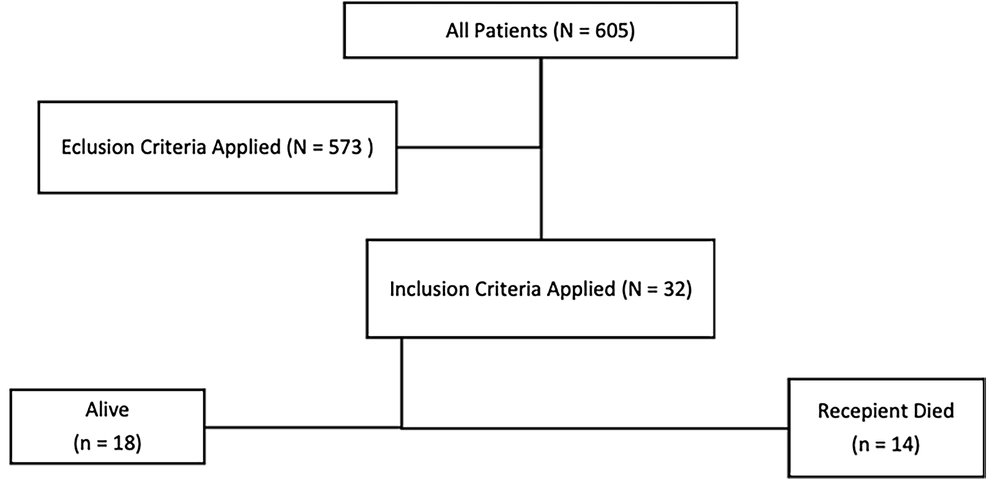
Figure 1.
CONSORT flow chart
4.3. Reasons for ESRD
Hypertension (44%) was the most frequently reported reason for ESRD, followed by glomerulonephritis (28%), diabetes mellitus (13%), autosomal dominant polycystic kidney disease (ADPKD) (6%), Alport syndrome (3%), and other cases (6%) (Figure 2).
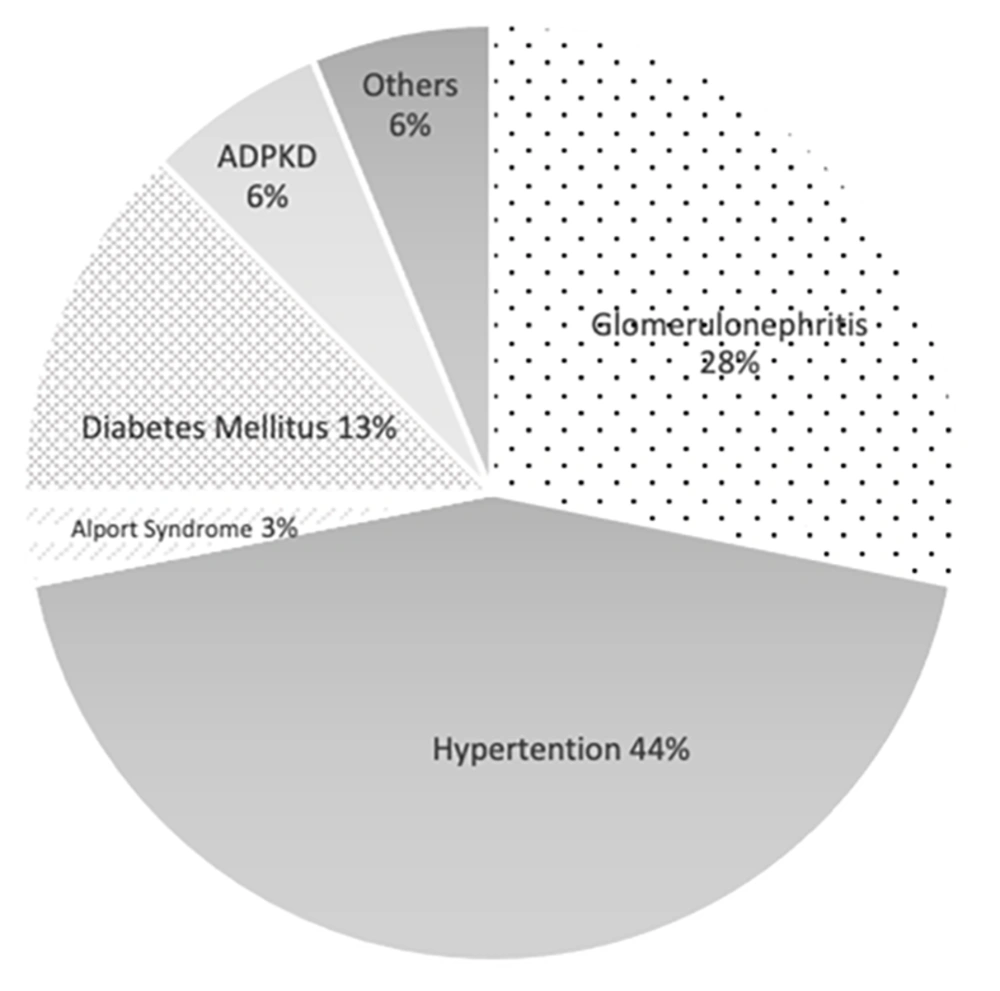
Figure 2.
Reasons for end-stage renal disease (ESRD) in our patients
4.4. Patients’ Past Medical History
The examination of the past medical history of kidney transplant recipients showed that hypertension was the most common underlying disease, which was observed in 32% of the patients, followed by lipid disorders (21%), glomerulonephritis (15%), diabetes mellitus (10%), heart disease (6%), ADPKD (3%), Alport syndrome (2%), and other diseases (11%) (Figure 3).
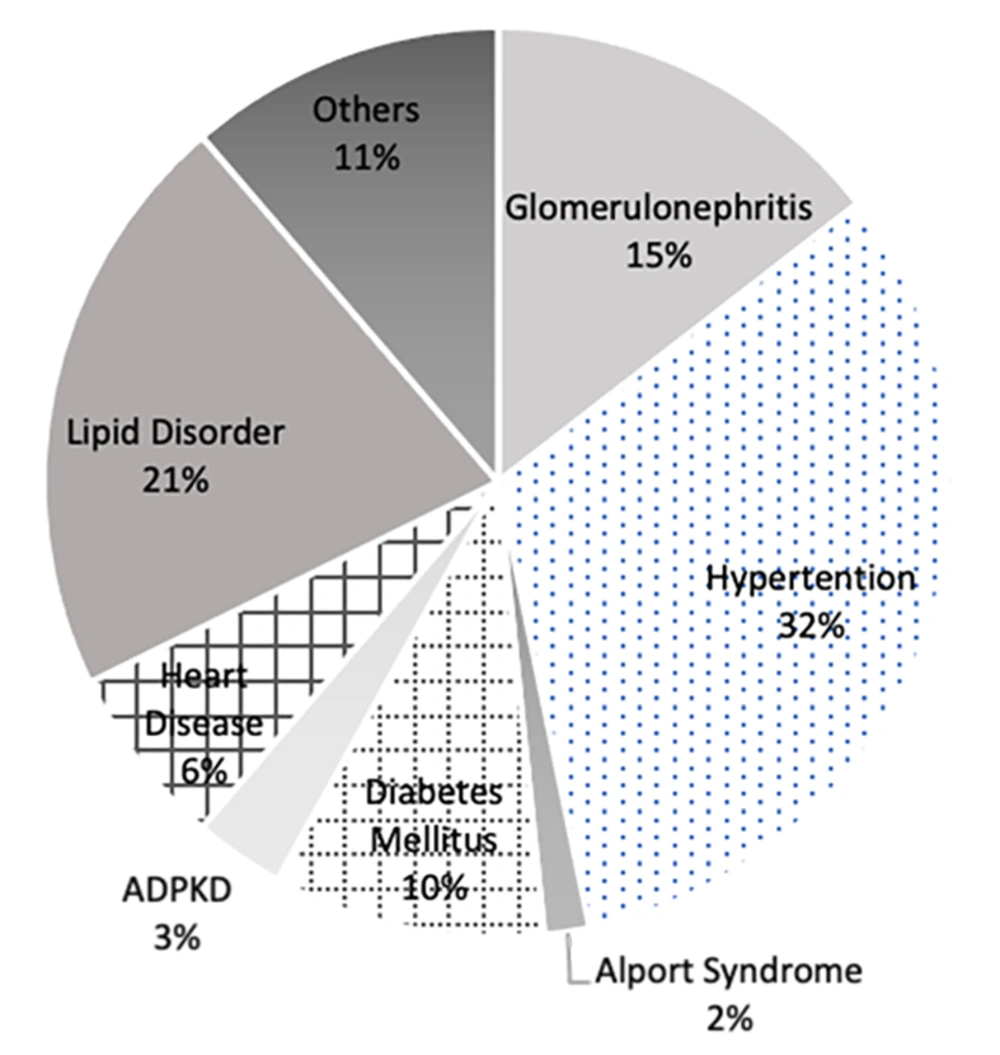
Figure 3.
Past medical history of our patients
4.5. History of Hemodialysis and Peritoneal Dialysis
Among the patients analyzed, 84.4% and 15.6% had a history of hemodialysis and peritoneal dialysis, respectively. The mean duration of dialysis before transplantation was 2.37 years.
4.6. Average Duration of Graft Functioning After Transplantation
The average duration of kidney functioning after transplantation until EGL was 5.56 ± 0.13 days. The graft showed efficient function for less than a day in 28.2% of the patients, between 24 and 72 hours in 15.7%, between 72 hours and one week in 34.4%, and for over one week in 21.7% (Table 1).
Table 1.
The Duration of Transplanted Kidney Functioning from the Time of Transplantation Until Graft Rejection
| Duration of Kidney Functioning | Less Than 24 Hours | Between 24 and 72 Hours | Between 72 Hours and One Week | More Than One Week |
|---|---|---|---|---|
| Frequency | 28.2% | 15.7% | 34.4% | 21.7% |
4.7. Nephrectomy After EGL
Based on clinical investigations in this study, nephrectomy was carried out in 21.88% of the patients during transplantation, while delayed nephrectomy was performed in 18.75% of them. Nephrectomy was not performed in 59.38% of the patients.
4.8. Types of Vascular Anastomosis
The renal artery of the graft was anastomosed to the internal iliac artery of the recipient in 59.4% of the cases. In comparison, the graft’s renal vein was anastomosed to the recipient’s external vein in 96.9% of the patients (Table 2).
Table 2.
Frequency of the Different Types of Vascular Anastomosis of the Allograft in Recipients
| Donor’s Renal Artery | Donor’s Renal Vein | |
|---|---|---|
| Internal vessels | 59.4% | 0% |
| External vessels | 34.4% | 96.9% |
| Common vessels | 6.2% | 3.1% |
4.9. Causes of EGL
The most frequently observed reasons for EGL were tissue rejection (31.25%), vascular thrombosis (21.88%), hyperacute rejection (21.88%), perioperative bleeding (6.25%), vascular embolism (3.25%), myocardial infarction (12.5%), and compartment syndrome (3.25%) (Figure 4).
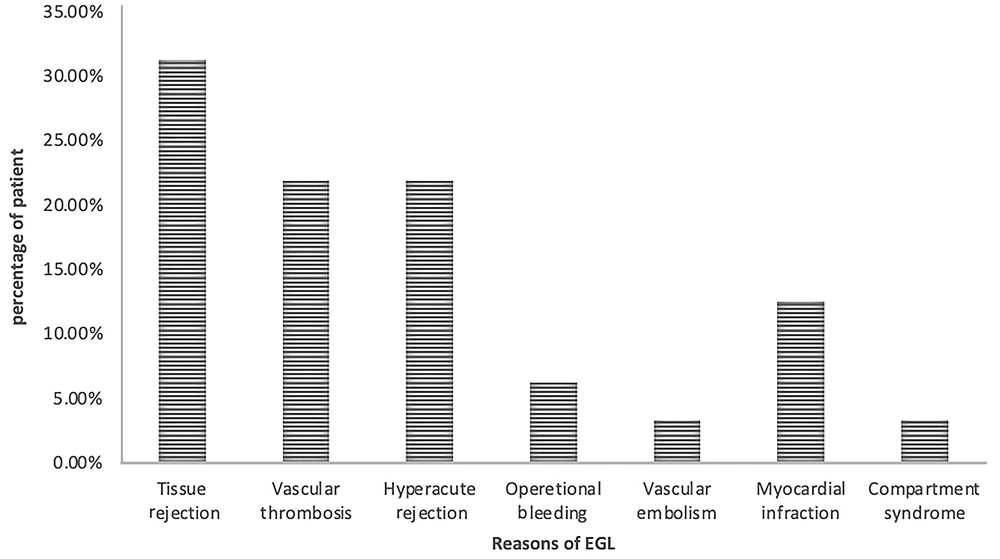
Figure 4.
Reasons for early graft loss in patients undergoing kidney transplantation
4.10. Causes of Death Among Kidney Transplant Recipients
The results showed that 43.75% of the patients developing EGL died within one month of hospitalization. The most common causes of death in these patients were heart attacks (23.07%), cardiac arrest (23.07%), pneumonia (7.70%), embolism (7.70%), and disseminated intravascular coagulation (7.70%) (Figure 5).
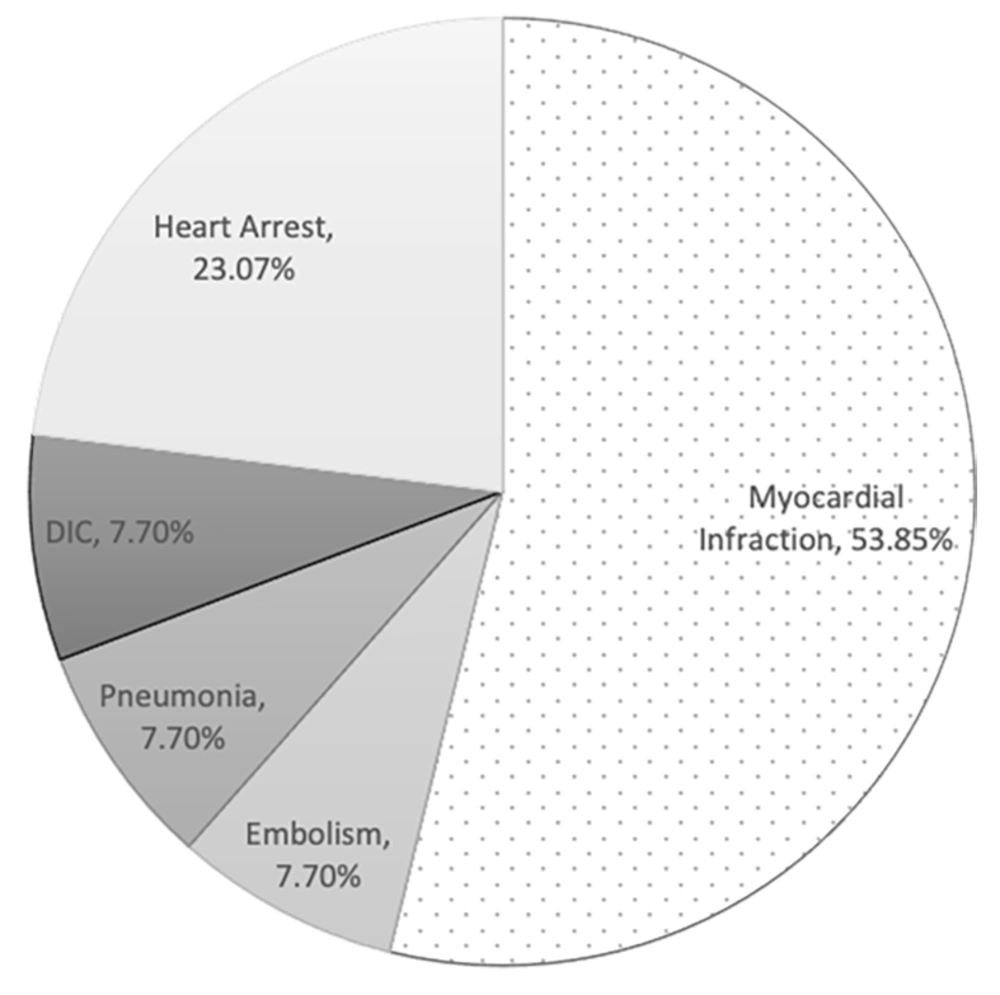
Figure 5.
Causes of mortality after early graft loss in patients undergoing kidney transplantation
5. Discussion
5.1. Probability of EGL in Kidney Recipients
Out of 605 kidney transplants performed in the Transplantation Clinic of the Imam Reza Hospital of Tabriz during the last ten years, 5.28% experienced EGL, which agrees with the results reported in other studies, reporting a probability of 1.2% to 11.8% for this phenomenon. The prevalence of EGL was 3.82%, 1.2%, 11.8%, 6.3%, and 4% in studies conducted by Ghorbani et al. (15), Rahimi et al. (16), Hernández-Méndez et al. (17), Garcia et al. (18), and Guillaume et al. (19), respectively, which is in line with our results, confirming the low probability of EGL in kidney transplanted individuals. The incidence of EGL was lower among DBD recipients compared to DCD recipients. Likewise, Hamed et al. reported a higher overall incidence of EGL among DCD recipients (P < 0.0001) (20). Tsai and Tsai showed that individuals receiving a kidney transplant from brain-dead donors were more likely to experience graft rejection than others (21). Similarly, Thongprayoon et al. (22) stated that brain death was one of the most significant factors affecting renal allograft loss. According to Hashemian et al. (23), careful selection of the donor and the source of the graft can increase the survival rate of transplanted kidneys.
5.2. The Average Ages of Kidney Donors and Recipients
The average age of kidney recipients suffering from EGL was 42.12 ± 1.2 years (P-value = 0.01), while it was 41.53, 33, 51.6, and 34.2 years in studies by Thongprayoon et al. (22), Xin et al. (24), Guillaume et al. (19) and Zukowski et al. (25), respectively. Roshanaei et al. (26), Xin et al. (24), Ghorbani et al. (15), and de Kok et al. (27) identified the recipient’s age as one of the most critical variables affecting the occurrence of kidney graft rejection and indicated that advanced age could increase the incidence of EGL, highlighting a probable relationship between the recipient’s age and the probability of EGL. In the present study, the average age of kidney transplant donors was 32.4 ± 1.6 years (P-value = 0.02) compared to 49.8 years in the study of de Kok et al. (27). Thongprayoon et al. (22) and Xin et al. (24) considered the donor’s age as one of the most critical factors affecting kidney transplant rejection. According to Hashemian et al. (23), individuals aged 20 - 40 years were the most suitable kidney transplant donors whose grafts had a higher cumulative probability of survival.
5.3. Gender of Patients
In the present study, over half of the patients undergoing EGL were men. In studies conducted by Thongprayoon et al. (22), Xin et al. (24), and de Kok et al. (27), 67%, 73.4%, and 58.5% of the patients encountering EGL were men, respectively. As reported by Xin et al. (24) and Zukowski et al. (25), the masculinity of transplant recipients increased the risk of transplant rejection, and EGL was reported to be more likely to occur in men than in women. Yet, the effect of gender mismatch between the recipient and donor on EGL remains unclear (26). However, Hashemian et al. (23) found that the gender of the donor and recipient did not affect the survival rate of kidney transplants.
5.4. Underlying Causes of Renal Failure
Hypertension, glomerulonephritis, diabetes mellitus, ADPKD, and Alport syndrome were the reasons for renal failure in our patients. In their study, de Kok et al. (27) reported diabetes, hypertension, glomerulonephritis, polycystic kidney disease, and pyelonephritis as reasons for renal failure. Hypertension and diabetes mellitus contribute significantly to the incidence of renal failure.
Studying underlying diseases in kidney transplant recipients showed that hypertension, with a prevalence of 32%, was the most common disease in patients, followed by lipid disorders, glomerulonephritis, diabetes mellitus, heart disease, ADPKD, and Alport syndrome. Ghorbani et al. (15) reported diabetes as one of the influential factors in the survival of a transplanted kidney. Likewise, Pillot et al. (28) referred to diabetes and old age of recipients as the risk factors for the occurrence of EGL. Thongprayoon et al. (22) mentioned hypertension, diabetes, cigarette smoking, dyslipidemia, and obesity as the cardiovascular risk factors affecting the incidence of EGL. In a study conducted by Guillaume et al. (19), the risk factors of EGL were noted as diabetes, thrombophilia, hemodynamic instability, perioperative surgical difficulties, right kidney allografts, and older donors.
5.5. Duration and Type of Dialysis
In the current study, most patients had a history of hemodialysis, with a mean dialysis duration of 2.37 years before transplantation. Thongprayoon et al. (22) found that prolonged dialysis before transplantation was among the key factors affecting the incidence of kidney transplant rejection.
5.6. Post-transplantation Nephrectomy
In our study, nephrectomy was performed in 21.88% of the recipients during kidney transplantation, while delayed nephrectomy was carried out in 18.75% of the patients. Nephrectomy was not performed in 59.38% of the patients. Consistent with the results of the present study, Tsai and Tsai (21) reported that 28% of their patients underwent nephrectomy in the first month after transplantation.
5.7. Duration of Kidney Function After Transplantation
In the present study, the average duration of kidney function after transplantation until EGL was 5.56 ± 0.13 days. In 34.4% of the patients, the transplanted kidney had proper and efficient function between 72 hours and one week after transplantation. In other studies, the transplanted kidney survived between 1 and 3 weeks. Pallardo Mateu et al. (29) found that, on average, patients experienced EGL in the second and third weeks after transplantation. As shown by Tsai and Tsai (21), 40% of their patients experienced EGL during the first week after transplantation. Also, in a study conducted by Thongprayoon et al. (22), 45% and 29% of the patients faced kidney transplant rejection in the first and second weeks, respectively.
5.8. EGL Causes
In this study, tissue rejection was the most common reason for EGL, accounting for 31.3% of the cases. Other reasons for EGL included vascular thrombosis, hyperacute rejection, peri-operation bleeding, vascular embolism, myocardial infarction, and compartment syndrome. Nephrological problems were introduced as the most frequent reasons for kidney transplant rejection in a study by Pallardo Mateu et al. (29). Thongprayoon et al. (22) reported that surgical complications and graft rejection were the most common reasons for kidney transplant rejection and were observed in 48% and 39% of the cases, respectively. Besides, Samhan et al. (30), Englesbe et al. (31), and Tsai and Tsai (21) declared arterial and venous thrombosis as the most frequent reasons for EGL. In their study, Guillaume et al. (19) introduced postoperative vascular complications as an independent reason for EGL.
5.9. Death Rate
In the present study, unfortunately, 14 patients died after developing EGL following one month of hospitalization. Heart attack, cardiac arrest, pneumonia, embolism, and disseminated intravascular coagulation were the causes of patient death. According to the results reported by Tsai and Tsai (21), Thongprayoon et al. (22), and de Kok et al. (27), 31%, 12%, and 11.7% of the patients died during hospitalization, respectively, highlighting the necessity to limit the high incidence rate of EGL. In their study, de Kok et al. (27) highlighted infections, hemorrhage, and cardiovascular disease as the main causes of death. In another study by Hamed et al. (20), 16 patients died due to causes such as pneumonia, transplant-related hemorrhage, cardiac arrest secondary to hyperkalemia, perforated bowel, non-lymphoid malignant disease, uremia, subdural hemorrhage, and ESRD (20). These findings confirm that EGL negatively affects transplanted patients’ long-term survival, so minimizing the risk factors of EGL is a necessary step to reduce mortality in these patients.
5.10. Limitations
The findings of this study have to be considered in the light of some limitations. The small sample size, being a single-center study, and the lack of biopsy findings and HLA typing are the limitations of this study, which may affect the accuracy of the results. Biopsy examination and HLA typing are not regular evaluations in our hospital to confirm the diagnosis of graft loss. Thus, studies in other medical centers are recommended to include larger sample sizes and include histopathological examinations to increase the precision of results.
5.11. Conclusions
In our study, EGL occurred in 5.28% of the patients. The results showed that the most common reason for EGL was histological incompatibility between the donor and the recipient. Besides, surgical complications, such as thrombosis and bleeding, were common reasons for EGL in our study. Overall, the data analysis revealed that donors’ and recipients’ older ages, kidney transplant rejection, the recipient’s history of hypertension, and receiving DCD grafts were the main risk factors for EGL. The death rate due to EGL in our kidney transplanted patients was relatively high, and it is necessary to control and pay attention to the risk factors of the incidence of EGL.