


1. Context
Primary health care (PHC) plays a vital role in achieving universal health coverage (UHC). Traditional medicine (TM) is an integral part of PHC and is widely used, particularly in African, Asian, and Pacific nations, where it has the potential to enhance both PHC and UHC. In low- and middle-income developing countries, TM is often considered more affordable, accessible, and culturally acceptable than modern medicine, making it a crucial resource for population health. In some regions, TM is the only available healthcare option (1-4).
The World Health Organization (WHO) has advocated for the integration of TM and modern medicine since the 1978 Declaration of Alma Ata, aiming to achieve acceptable levels of health for all. The 2018 Declaration of Astana on primary health care further emphasizes the importance of TM in creating a well-functioning, people-centered health system that prioritizes preventive care and aligns with natural environments. This integration can support countries in their pursuit of UHC (5, 6).
Persian medicine (PM) is an ancient form of TM with a rich history spanning thousands of years (7). Persian medicine has made significant contributions to the development of natural and holistic health sciences (8). During the medieval period, PM integrated concepts from Greco-Arabic and Unani traditional medicine, as well as ancient Indian Ayurveda and Chinese traditional medicine (9).
Persian medicine scholars have developed a set of instructions known as "Hifz-o-Siha," or the "Six Essential Principles," aimed at maintaining and promoting individual and societal health. These principles cover various aspects, including air (breathing and climatic changes), physical activity and rest, sleep patterns, nutrition (eating and drinking), emotions, and cleansing (elimination of unnecessary substances) while ensuring the retention of essential substances. These principles align closely with contemporary concepts of holistic healthcare and preventive medicine (10).
In PM, proper management of these lifestyle principles, particularly regarding diet and eating habits, is emphasized to sustain continuous health. Renowned Persian medical scholars, such as Rhazes, Haly Abbas, and Avicenna, extensively addressed these aspects during the Middle Ages (11, 12). Lifestyle modifications, particularly through education, have been shown to improve quality of life and alleviate symptoms of various diseases, making it a successful and cost-effective approach (13, 14).
While lifestyle modification approaches in PM and modern medicine share similarities, PM offers strategies tailored to an individual’s temporal and personal characteristics. This individualized approach provides a comprehensive framework, making PM a valuable resource for enhancing public health. Educating individuals about lifestyle modification based on PM principles can be viewed as a fundamental strategy for improving PHC.
2. Objectives
The purpose of this review was to examine whether lifestyle modification based on PM can effectively promote health within the PHC framework.
3. Methods
3.1. Study Design
This review adopted an evidence-based approach to explore the contributions of PM lifestyle principles in PHC. A comprehensive literature search was conducted to identify relevant studies and publications. Multiple electronic databases, including PubMed, Scopus, NIKI, Web of Science, Cochrane Library, DOAJ, EBSCOhost, Index Copernicus, Islamic World Science Citation Center (ISC), Scientific Information Database (SID), and Google Scholar, were searched using appropriate keywords and MeSH terms. The search covered publications in English or Persian from the earliest available date to the present.
Studies were selected based on predefined inclusion and exclusion criteria. The inclusion criteria encompassed studies that focused on the contributions of PM lifestyle principles in PHC, provided evidence-based information and empirical data, and were published in peer-reviewed journals. Exclusion criteria ruled out studies that did not specifically address PM lifestyle principles in PHC or provided anecdotal or speculative data.
Using key concepts such as traditional Persian medicine and primary health care, we generated relevant keywords and synonyms for each concept. For example, we used terms such as Persian medicine, Iranian traditional medicine, traditional medicine, and Unani medicine for "traditional Persian medicine." The keywords were then combined using Boolean operators: ("Traditional Persian Medicine" OR "Persian medicine" OR "Iranian traditional medicine" OR "Unani medicine") AND ("lifestyle principles" OR lifestyle OR "health behaviors" OR "health practices") AND ("primary health care" OR "primary care" OR "health care system" OR "preventive care") AND ("evidence-based review" OR "systematic review" OR "literature review").
We performed searches in each of the aforementioned databases using the combined search string while adhering to the defined inclusion and exclusion criteria. After conducting the searches, the results were compiled, and relevant abstracts and full-text articles were reviewed to assess their relevance and quality.
Relevant data from selected studies were extracted using a standardized data extraction form. The extracted information included study characteristics, participant demographics, PM lifestyle principles discussed in the studies, and key findings related to their contributions in PHC. The extracted data were thematically synthesized to identify key patterns and themes concerning the role of PM lifestyle principles in PHC.
The findings from the selected studies were analyzed and summarized narratively. Quality assessment was conducted independently by two authors, and any disagreements were resolved through discussion and consensus. The synthesized findings were interpreted within the context of existing literature and relevant theoretical frameworks. The implications and potential applications of PM lifestyle principles in PHC were discussed.
Since no human subjects were involved in this review, ethical approval was not required.
4. Results
Among the more than 3,000 records identified during the database search, 10 publications met the inclusion criteria and were selected for final analysis. The search process and results are depicted using the PRISMA flow diagram (Figure 1).
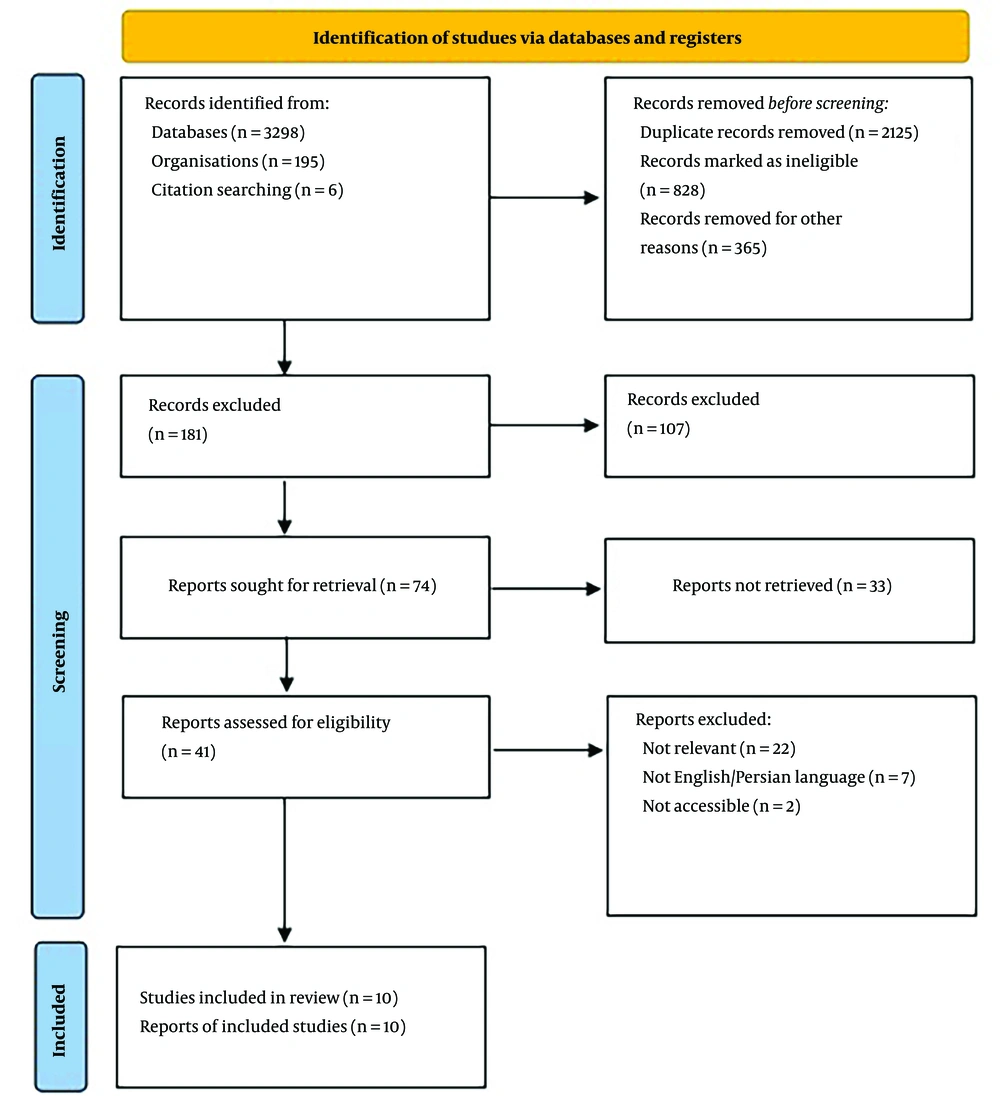
Figure 1.
PRISMA flow diagram
4.1. Persian Medicine Lifestyle Principles; “Hifz-o-Siha”and “Sitte-ye-Zarouriyeh”
Persian Medicine, also known as Unani Medicine, is a holistic medical system based on humoral medicine and the theory of Mizaj (temperament). It emphasizes maintaining a balance among the four humors—bile, blood, phlegm, and black bile—while addressing both the spiritual and physical aspects of human health.
Within the PM framework, the focus is on health preservation, promotion, and disease prevention, giving these priorities greater importance than treatment. To achieve this, early Persian scholars developed a comprehensive set of guidelines known as “Hifz-o-Siha,” which consist of lifestyle principles collectively referred to as the "Six Essential Principles" or “Sitte-ye-Zarourieh” in Persian. These principles include tailored recommendations for healthy living that medical practitioners should adapt to an individual's Mizaj (temperament) (Table 1) (7).
Table 1.Six Essential Lifestyle Principles in Persian Medicine
| Essential Principle | Title of Recommendation |
|---|---|
| Air | Lifestyle guidelines (dietary, physical activity, etc) during air pollution; hot, cold, humid and dry climates guidelines according to each temperament; seasonal guidelines according to each temperament |
| Physical activity and rest | Rules of healthy exercise according to each temperament; pre and post exercise recommendations according to each temperament |
| Sleeping and waking up | Recommendations amount of sleep according to each age and temperament; the best times to sleep; pre and during sleep instructions; instructions related to the place of sleep |
| Eating and drinking | Classification of foods based on PM; general instructions for eating and drinking habit; appropriated foods for each temperament; meal timing; avoidance of harmful foods and beverages; instructions for food containers |
| Emotional status | A variety of emotional status of each temperament and personalized instructions |
| Cleansing retention of necessary substances | A variety of natural body cleansing; instructions for body cleansing according to each temperament; instructions for preservation of the body essential and necessary substances according to each temperament |
4.2. Persian Medicine Lifestyle Principles Education
From 2017 to 2019, researchers in the field of PM conducted three studies (15-17) to evaluate the impact of educating individuals on PM lifestyle principles on their quality of life and healthcare utilization.
Hadavand et al. conducted a randomized controlled trial in Tehran, Iran, in 2017 to examine the effects of teaching PM health protection measures outlined in “Hifz-o-Siha” on participants' quality of life. The study involved 101 participants (50 males and 51 females) who were randomly divided into experimental and control groups. The results demonstrated significant reductions in healthcare costs and notable improvements in physical and mental health parameters for the intervention group compared to the control group (15).
Abedi et al. carried out a study in Tehran, Iran, in 2017 to assess the impact of a tailored education intervention based on PM on the quality of life and healthcare visits of insured individuals. This study included 101 participants from the Iranian Health Insurance Organization, randomly assigned to intervention and control groups. The findings revealed significant decreases in healthcare visits and improvements in quality of life in the intervention group following the education intervention (16).
Rohani et al. conducted a semi-experimental study in Kashan, Iran, in 2017, focusing on training health workers in PM health maintenance principles. The study involved 54 health workers, with assessments conducted before and after the intervention. The results showed statistically significant improvements in various aspects of quality of life and health behaviors, such as physical function, bodily pain, vitality, and adherence to healthy practices recommended in PM. This study underscored the positive effects of teaching PM health maintenance principles on quality of life and the behaviors of health workers (17). A summary of these findings is presented in Table 2.
Table 2.Clinical Trials Subjected the Role of Persian Medicine Life Style Education Principles
| Participant Characteristics | Duration of Education | Outcome | Ref. |
|---|---|---|---|
| Healthy individuals covered by the Iranian Health Insurance Organization (n = 101) | 2nd sessions took totally four hours | Significant improvement was observed in physical functioning, physical problems, bodily pain, general health, vitality, social functioning emotional problems and mental health in the experimental group compared with the control group | (15) |
| Insured people covered by the Iranian Health Insurance Organization (n = 101) | Two sessions each lasted 2-hours. | Reducing the number of visits to the health centers | (16) |
| Health workers in the Kashan University of Medical Sciences (n = 54) | - | Enhanced all aspects of health workers’ quality of life. significant effect in physical function, physical pain and exhilaration | (17) |
4.3. Persian Medicine Diet Intervention
Several studies have explored PM dietary recommendations for various conditions and purposes (Table 3).
Table 3.Clinical Trials Subjected Persian Medicine Diet Intervention for Disease Treatment
| Participant Characteristics | Intervention Detail | Outcome | Ref. |
|---|---|---|---|
| Overweight women (n = 69) | Herbal formulation and diet based on Persian medicine | Persian Medicine diet is more effective in weight loss and reduction of fat mass%, lipid profile and fasting blood glucose than Classical Medicine | (18) |
| Pregnant women with Fetal growth restriction diagnose (n = 64) | Persian traditional diet with same energy to modern diet | Weight gain in the traditional diet group significantly was better (F = 38.61; df = 1; P ≤ 0.001) than modern diet group. | (19) |
| Infertile women that candidate for in vitro fertilization | Persian medicine-oriented diet and lifestyle | Number of ova, mature ovum number, embryo number, embryo quality, and fertilization rate were significantly higher in the intervention group than in the control group (for all items; P < 0.05) | (20) |
| Outpatient children with nephrotic syndrome (n = 20) | Dietary recommendations of the Persian medicine | Significant reduction proteinuria in the Persian medicine group compared to the control group | (21) |
| Breast cancer patients with cancer-related fatigue symptoms (n = 40) | Chickpea-based diet (Nokhodāb) based on PM recommendations | Symptom assessment with cancer fatigue scale questionnaire showed significant reduction, compared to the beginning of the intervention. | (22) |
| Non-alcoholic fatty liver patient (n = 40) | PM-based diet | Significant decrease in both mean body mass index and mean fatty liver grade between the intervention group compared to the control group | (23) |
| Patients with functional dyspepsia (n = 56). | PM-based diet | Epigastric fullness, epigastric discomfort, and bloating were significantly improved in the intervention group | (24) |
Hamidnia et al. conducted a randomized clinical trial to evaluate the effectiveness of an herbal formulation combined with a PM-based diet compared to conventional medicine in treating overweight women. The findings revealed that the PM-based diet was more effective in promoting weight loss, reducing fat mass percentage, improving lipid profiles, and lowering fasting blood glucose levels compared to classical medicine (18).
Rumi et al. investigated the effects of a PM diet on pregnant women with fetal growth restriction, comparing it to a modern diet with similar nutritional content. The results showed significantly better weight gain in the PM diet group and a lower incidence of low birth weight compared to the control group (19).
Alibeigi et al. studied the effects of a PM-oriented diet and lifestyle modifications on infertile women undergoing in vitro fertilization (IVF). The study reported significant improvements in various fertility parameters in the PM group compared to the control group (20).
Rahmani et al. evaluated PM dietary recommendations for children with nephrotic syndrome. The study demonstrated a significant reduction in proteinuria in the PM group compared to the control group, highlighting the potential benefits of PM dietary interventions (21).
Heydarirad et al. examined the impact of a chickpea-based PM diet on cancer-related fatigue in breast cancer patients. Their findings indicated a significant reduction in fatigue levels among participants in the PM diet group (22).
Mosavat et al. compared the effects of a PM-based diet to a low-fat, low-calorie diet in patients with non-alcoholic fatty liver disease (NAFLD). The results showed significant improvements in Body Mass Index (BMI) and fatty liver grade in the PM diet group (23).
Nouri et al. investigated the efficacy of a PM metabolic diet in alleviating symptoms of functional dyspepsia. The study revealed significant improvements in symptoms such as epigastric fullness, discomfort, and bloating in the PM diet group compared to the control group (24).
5. Discussion
Persian medicine is a comprehensive healthcare system with ancient roots in Iran, representing one of the oldest continuously practiced medical systems globally, with a history spanning over 2,500 years (25). According to PM principles, prioritizing health maintenance over disease treatment is fundamental. Avicenna, in The Canon of Medicine, defined medicine as the preservation of health when well and its restoration when ill (7, 25).
While many PM lifestyle principles align with modern medicine, its holistic, humoral, and cultural perspectives offer a distinctive and effective approach, particularly in the Persian region. Clinical trials focusing on holistic health maintenance through lifestyle education based on PM principles have highlighted their potential in improving lifestyle and reducing disease incidence. With increasing global interest in PM and its growing international recognition, leveraging PM's capacities can significantly contribute to public health promotion. This underscores the need for further research and robust evidence to validate PM theories (12).
Studies on Persian dietary interventions consistently highlight the benefits of PM recommendations in managing various diseases compared to modern medicine. While there is a scarcity of clinical trials encompassing all PM health principles in primary care, numerous studies investigate PM's perspective on disease prevention and healthy lifestyle promotion. Examples include lifestyle determinants for preventing dry eye and cataracts, strategies for constipation prevention in children, the role of essential Persian foods in health enhancement, guidelines for healthy aging, and the preventive effects of the Persian diet on conditions such as cardiovascular disease, cancer, urinary stones, iron deficiency anemia, and even recommendations for mitigating respiratory-related pandemics like COVID-19 (26-34).
Each of these studies provides a foundation for well-designed clinical trials to further validate and enhance the credibility of PM practices. However, it is important to acknowledge the limitations of these studies, such as language bias, publication bias, and the variable quality of available evidence.
5.1. Conclusions
In summary, implementing lifestyle changes based on PM recommendations can positively impact PHC and health promotion. However, the full potential of PM within national health systems remains underutilized. Given the context in Iran, it is crucial to explore strategies for integrating traditional PM into national healthcare systems, particularly within the frameworks of PHC and UHC.



