
1. Background
Early childhood caries (ECC) is a significant concern for children’s oral health. It is the most common childhood disease and often causes serious harm to children, their families, society, and the healthcare system (1).
Early childhood caries is defined as one or more decayed tooth surfaces, missing teeth due to caries, or restorations in any deciduous teeth of children aged 71 months or younger (2). Dental caries affects the quality of life of children and can cause various complications such as pain, abscesses, and poor feeding (3). Therefore, early diagnosis of ECC and screening of high-risk groups are crucial (4). The importance of saliva in preventing caries has been well established.
Saliva is one of the body’s complex fluids and plays an essential role in homeostatic regulation of pH, digestion, formation of pellicle on the teeth, and antimicrobial functions (5). Lactoferrin, peroxidase, lysozyme, phospholipase, and calprotectin are among the antimicrobial peptides in saliva that mediate the innate immune response (6). Evidence indicates that these antimicrobial peptides play a substantial role as components of the innate immune response. Moreover, they can influence susceptibility to caries and their progression (7, 8). A group of antimicrobial small cationic peptides, known as defensins, has been identified in saliva. These peptides can destroy a wide range of gram-positive and gram-negative bacteria, fungi, and some viruses (9). Human neutrophil peptides (HNPs) 1 - 4, also known as α-defensins 1 - 4, play a critical role in the defense mechanisms of saliva and microbial homeostasis. They act by opsonizing bacteria, leading to their non-oxidative death and enhancing phagocytosis (10).
The α-defensins have been detected in both saliva and gingival crevicular fluid (GCF) (10, 11). Defensins are part of a family of small peptides rich in arginine amino acids. It appears that the free form of arginine, along with its combination with other peptides, may have a protective effect against dental caries (12).
Cathepsin G is another serine endopeptidase associated with the early immune response, as well as antiviral, antifungal, and antibacterial activities. It is stored in the azurophilic granules of polymorphonuclear (PMN) leukocytes (13). Cathepsin G plays an important role in several physiological processes, such as the degradation of connective tissue proteins (including elastin, collagen, and proteoglycans), platelet activation, and chemotaxis of neutrophils and monocytes. The antibacterial function of this enzyme significantly contributes to the non-oxidative antibacterial capacity of neutrophils (5, 13). Dental caries is an infectious disease, and the number of neutrophils increases in conditions such as inflammation and infection (13).
Very few studies have been conducted to examine the correlation between the cathepsin G enzyme and dental caries. Furthermore, the studies investigating the relationship between the concentration of α-defensins and susceptibility to ECC have reported contradictory results. Some studies have indicated a positive relationship, while others have reported a negative one. Therefore, investigating this relationship through well-designed clinical studies could help resolve these inconsistencies and aid in evaluating children’s susceptibility to dental caries (9, 10, 14-19).
2. Objectives
The present study aimed to compare the concentrations of α-defensin 3 and cathepsin G in the saliva of caries-free (CF) children with those who have ECC.
3. Methods
3.1. Participants
This case-control study was conducted on 80 children aged 3 to 6 years who were referred to the pediatric dentistry department of Shahid Beheshti University of Medical Sciences, Tehran, Iran, between April 2018 and December 2018. The study’s statistical population included two groups of children: Those who were CF and those diagnosed with ECC. Samples were selected based on predetermined criteria from among the available individuals. According to the definition of ECC provided by the American Academy of Pediatric Dentistry (AAPD), the age group of 3 to 6 years was considered.
The maximum sample size for both variables (α-defensin 3 and cathepsin G) was calculated using Equation 1:
Assuming type I error α = 0.05, (
3.2. Clinical Examinations
A final-year dental student, calibrated with an expert (Cohen’s kappa coefficient = 0.8), performed the intraoral examinations. Following the examination, the children were divided into two groups: The first group included children without any caries (CF), and the second group included those affected with ECC. The diagnosis of dental caries was carried out using a WHO dental explorer, without the use of radiographic images, based on the presence of one or more carious surfaces in any deciduous teeth or missing teeth due to caries in children under 71 months of age. To ensure the absence of interproximal caries, only children with open tooth contacts were included in the study.
Microbial plaque is one of the main etiological factors in the development of ECC, gingivitis, and periodontal diseases, and its potential effect on the results as an underlying variable needed to be considered. Therefore, the Plaque Index (PI) of each patient was measured using Greene and Vermillion’s Simplified Oral Hygiene Index (OHI-S). A modified version of this index, tailored for primary dentition, was employed to evaluate the buccal surfaces of the second primary molars and central incisors in the upper right and lower left quadrants. In this method, two indices — Debris Index Simplified (DIS) and Calculus Index Simplified (CIS) — were assessed at four levels and coded based on the amount present (Code 0 - 3). For each individual, the level codes were summed and divided by the number of levels, and the final index was obtained by adding DIS and CIS scores (21). Selective probing of the second primary molars and incisors was conducted using a periodontal probe. Children who exhibited bleeding upon probing and those with sulcular depths greater than 3 mm were excluded from the study.
3.3. Saliva Sampling
To collect the saliva samples from both CF and ECC groups, 2 mL of unstimulated saliva was obtained from the buccal vestibule of the children's mouths using a disposable needleless syringe (BD Micro-Fine Plus, USA). The sampling was conducted between 9 a.m. and 11 a.m. to minimize the effect of circadian rhythm on the composition of saliva. Children were instructed to refrain from drinking, eating, using dental floss, or brushing their teeth for at least 1 hour prior to sampling.
3.4. Investigating the Salivary Concentrations of α-Defensin 3 and Cathepsin G
The experiments were performed in the immunology laboratory of Shahid Beheshti University of Medical Sciences. The enzyme-linked immunosorbent assay (ELISA) procedures were carried out following the instructions provided with the α-defensin 3 ELISA Kit (San Diego, CA, item code: MBS771189) and the cathepsin G ELISA Kit (San Diego, CA, item code: MBS770795). Samples were stored at -70°C until further analysis. After preparation, the plates containing the samples were processed using an ELISA reader device (Anthos 2020, Germany). The optical density of each well was read and recorded at a wavelength of 450 nm. Subsequently, the optical density values were converted into concentrations using the standard curve provided with the respective kit. The concentrations of α-defensin 3 and cathepsin G in the saliva samples were recorded in pg/mL in the raw statistical tables.
3.5. Statistical Analysis
Data were analyzed using SPSS-21 software (SPSS Inc., Chicago, IL, USA). The normality of the data distribution was assessed using the Kolmogorov–Smirnov test. An independent t-test was used to compare quantitative variables between the two groups, while qualitative variables were compared using the chi-square test. Additionally, a multiple logistic regression model was employed to adjust for the effects of underlying variables and to compare the two groups more accurately. The enter method was used for selecting important predictors in the model. A type I error rate of 0.05 was considered, and P-values less than 0.05 were regarded as statistically significant.
4. Results
Of the 80 children included in this study, 40 were in the ECC group and the remaining 40 were in the CF group (Table 1). The chi-square test did not show a statistically significant difference between the two groups regarding gender (P = 0.485). Similarly, the independent samples t-test did not indicate a statistically significant difference in age between the two groups (P = 0.422). However, a significant difference was found between the two groups in terms of PI (P < 0.001). The children were categorized into four groups based on their nighttime feeding habits: No nighttime feeding, breastfeeding, bottle-feeding, and both breast and bottle-feeding (Table 1). Nighttime feeding was reported in 85% of children in the ECC group, compared to 60% in the CF group. The chi-square test revealed a statistically significant difference between the two groups in terms of nighttime feeding (P = 0.01).
Table 1.
Demographic Information of the Patients a
| Variables | ECC | CF | P-Value |
|---|---|---|---|
| Father education | 0.001 | ||
| Diploma | 19 (47.5) | 4 (10) | |
| Associate and bachelor | 13 (32.5) | 18 (45) | |
| Master and higher | 8 (20) | 18 (45) | |
| Mother education | < 0.001 | ||
| Diploma | 23 (57.5) | 6 (15) | |
| Associate and bachelor | 12 (30) | 22 (55) | |
| Master and higher | 5 (12.5) | 12 (30) | |
| Age (mo) | 0.422 | ||
| 3 - 6 | 53.13 ± 6.86 | 51.55 ± 10.25 | |
| Gender | 0.485 | ||
| Male | 24 (60) | 27 (67.5) | |
| Female | 16 (40) | 13 (32.5) | |
| Night-time feeding type | 0.010 | ||
| Breast and bottle-feeding | 3 (7.5) | 7 (17.5) | |
| Bottle-feeding | 2 (5.0) | 0 (0.0) | |
| Breastfeeding | 29 (72.5) | 17 (42.5) | |
| No night-time feeding | 6 (15.0) | 16 (40) | |
| PI | 1.44 ± 0.46 | 0.93 ± 0.34 | < 0.001 |
Abbreviations: ECC, early childhood caries; CF, caries-free; PI, Plaque Index.
a Values are expressed as No. (%) or mean ± SD.
The results also showed a significant difference in parents’ education levels between the two groups. According to the chi-square test, parents of children in the CF group had a higher educational level compared to those in the ECC group. The normal distribution of cathepsin G and α-defensin 3 concentrations in both groups was assessed using the Kolmogorov-Smirnov test. The results confirmed a normal distribution for both variables in the ECC and CF groups. The P-values for cathepsin G and α-defensin 3 in the ECC group were 0.336 and 0.084, respectively, while in the CF group, they were 0.097 and 0.053, respectively.
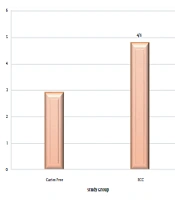
Using the independent samples t-test, a statistically significant difference was observed between the ECC and CF groups, with the ECC group exhibiting higher concentrations of both enzymes (Table 2).
Table 2.
Concentration of α-Defensin 3 and Cathepsin G in the Two Groups
| Markers | Mean ± SD | P-Value |
|---|---|---|
| α-Defensin 3 | < 0.001 | |
| ECC | 92.88 ± 37.12 | |
| CF | 64.68 ± 29.51 | |
| Cathepsin G | < 0.001 | |
| ECC | 139.40 ± 86.59 | |
| CF | 65.30 ± 26.30 |
Abbreviations: ECC, early childhood caries; CF, caries-free.
A multiple logistic regression model was utilized to determine the effect of underlying variables on the development of ECC and CF status. The analysis revealed that PI (P = 0.018) and fathers’ education level (P = 0.033) had a statistically significant influence on the development of ECC (Table 3).
Table 3.
Effect of Variables Early Childhood Caries or Caries-Free Status of Children
| Variables | Coefficient | Standard Error | Wald Chi-square | Adjusted OR (%95 CI) | P-Value |
|---|---|---|---|---|---|
| Father education | |||||
| Diploma | -0.303 | 0.1419 | 4.567 | 0.738 (0.559 - 0.975) | 0.033 a |
| Associate and bachelor | -0.036 | 0.1128 | 0.102 | 0.965 (0.773 - 1.203) | 0.749 |
| Master and higher | 0 b | - | - | 1 | - |
| Mother education | |||||
| Diploma | -0.148 | 0.1515 | 0.948 | 0.863 (0.641 - 1.161) | 0.330 |
| Associate and bachelor | 0.013 | 0.1265 | 0.010 | 1.013 (0.790 - 1.298) | 0.920 |
| Master and higher | 0 b | - | - | 1 | - |
| Gender | |||||
| Male | -0.012 | 0.0893 | 0.018 | 0.988 (0.829 - 1.177) | 0.893 |
| Female | 0 b | - | - | 1 | - |
| Nighttime feeding type | |||||
| No nighttime feeding | 0.016 | 0.1424 | 0.013 | 1.016 (0.769 - 1.343) | 0.911 |
| Breast feeding | -0.230 | 0.1303 | 3.123 | 0.794 (0.615 - 1.025) | 0.077 |
| Bottle-feeding | -0.220 | 0.3004 | 0.535 | 0.803 (0.445 - 1.446) | 0.464 |
| Breast and bottle-feeding | 0 b | - | - | 1 | - |
| Age | 0.000 | 0.0050 | 0.003 | 1.000 (0.990 - 1.009) | 0.953 |
| PI | -3.488 | 1.473 | 5.611 | 0.031 (0.002 - 0.548) | 0.018 a |
| α-Defensin 3 | -0.003 | .0015 | 3.586 | 0.997 (0.994 - 1.00) | 0.058 |
| Cathepsin G | -0.002 | 0.0007 | 5.238 | 0.998 (0.997 - 1.00) | 0.022 a |
Abbreviations: OR, odds ratio; PI, Plaque Index.
a Statistically significant.
b Reference.
As shown in Table 3, the odds ratio (OR) for being CF compared to having ECC in children whose fathers had a diploma — compared to those whose fathers had a master’s degree or higher — was 0.7. This indicates that children with fathers who hold a master’s degree or higher have a 40% greater likelihood of being CF compared to those whose fathers have only a diploma (95% CI: 0.55 to 0.97). Regarding cathepsin G, the negative and statistically significant coefficient in the multiple logistic regression model indicates that higher cathepsin G concentrations are associated with a reduced likelihood of being CF. In other words, increasing cathepsin G levels raises the likelihood of ECC. The 95% confidence interval for cathepsin G was between 0.99 and 1.00.
Additionally, each one-unit increase in the PI score was associated with a 32-fold increase in the odds of developing ECC (OR = 0.031; 95% CI: 0.002 to 0.548), highlighting the strong predictive role of dental plaque in caries development.
According to the results of the multiple logistic regression model, after adjusting for the effects of underlying variables, only cathepsin G remained statistically correlated with the presence of dental caries in the study groups (P = 0.022).
5. Discussion
Saliva plays a crucial role in maintaining oral health and preventing caries, primarily through its physicochemical properties (22). Salivary biomarkers are valuable tools for diagnosing and monitoring oral health status. The use of saliva offers a non-invasive method for measuring biomarkers during the onset and progression of diseases (23). In this study, we aimed to compare the salivary levels of two biomarkers — α-defensin 3 and cathepsin G — in CF and ECC children.
Among the 80 children studied (40 ECC and 40 CF), the concentrations of α-defensin 3 and cathepsin G were found to be higher in the ECC group. Initial unadjusted analysis showed that both biomarkers differed significantly between the two groups. Given the potential influence of confounding variables (such as parents’ education, gender, age, PI, and nighttime feeding habits), their effects were further examined using a multiple logistic regression model. This analysis revealed that PI and fathers’ education levels significantly influenced the development of ECC. The observed relationship between ECC and parental education appears reasonable, as children in the age group susceptible to ECC largely depend on their parents for oral hygiene. Therefore, parental education may be a critical factor in achieving better dental health outcomes for children. Some studies have similarly found that parents with higher educational levels exhibit more positive attitudes and stronger intentions toward controlling sugar consumption in their children compared to less-educated parents (24). Education level is considered a key socioeconomic indicator that influences health behaviors. Although some studies have not found a direct association between parental education and caries, it is important to note that ECC is not confined to any single socioeconomic group but affects all segments of the population (25). In contrast to our findings, some studies have reported a significant association between maternal educational level and ECC, with no such significance observed among fathers (7, 8). Further detailed studies are needed to explore this discrepancy and better understand the role of each parent's educational background in the development of ECC. The higher PI scores observed in the ECC group may be responsible for increased inflammation and enhanced recruitment of immune cells such as neutrophils, monocytes, and mast cells, leading to elevated levels of cathepsin G. This enzyme is stored in the azurophilic granules of human neutrophilic leukocytes and plays a key role in immune responses and tissue remodeling (13).
However, after adjusting for potential confounding variables, the concentration of salivary cathepsin G remained the sole statistically significant factor in our study. Although α-defensin 3 levels were significantly higher in the unadjusted analysis, this association did not remain statistically significant after adjustment. Our findings align with previous studies reporting increased α-defensin 3 levels in children with ECC. Furthermore, Abiko and Saitoh observed even higher concentrations of α-defensins in the gingival sulcus compared to saliva (26). This observation is plausible, as caries and microbial plaque lead to the recruitment and accumulation of neutrophils in the gingival sulcus. These biomarkers primarily originate from the GCF, with additional contributions from B cells and natural killer cells, both of which HNP 1 - 3 (9).
In the study conducted by Ribeiro et al. involving two groups of children aged 10 to 71 months with and without caries, α-defensin 3 and β-defensin 3 were found to significantly reduce the likelihood of developing ECC (17). Unlike our study, Ribeiro et al. used both stimulated and unstimulated saliva, which may have influenced their results — stimulated saliva can dislodge plaque from the tooth surface and affect peptide concentrations. Moreover, they utilized liquid chromatography-mass spectrometry for peptide analysis, a technique different from the ELISA method employed in our study. Their wider participant age range may also have contributed to the differing outcomes.
In another study by Jha et al., 100 participants aged 5 to 15 years were divided into two groups of 50 based on their caries activity score (CAS), classified as low and high risk. They found that the concentration of HNP 1 - 3 differed significantly between these groups, with a negative correlation between CAS and HNP 1 - 3 levels (15). These findings differ from ours, possibly due to variations in participant age ranges, standardization of study design, and the use of CAS for grouping. Furthermore, their study did not control for factors such as food or drink consumption and oral hygiene practices prior to sampling. Genetic differences across populations may also account for discrepancies in results. Indeed, some studies have suggested that wide variations in salivary α-defensin concentrations may be attributable to polymorphisms in the genes encoding human neutrophil defensins (27).
Ramezani et al. investigated the correlation between antimicrobial peptide levels and CASs in 41 children aged 3 - 12 years (16). Their study found no statistically significant correlation between CAS and HNP 1 - 3. These findings differ from ours, possibly due to the differences in age range and the smaller sample size of their study. Additionally, the broad age range in their study may have contributed to variability in results. As shown by Malcolm et al., the concentrations of α-defensins 1 - 3 and Streptococcus mutans increase in children aged 12 to 24 months over time (28). Furthermore, as children grow older, dietary control becomes more challenging, potentially affecting the incidence of caries and the composition of salivary biomarkers.
Jayakaran et al. (14) also reported significantly lower salivary levels of HNP 1 - 3 in the ECC group. Similarly, Rm et al. (18) found a significant negative correlation between caries activity and HNP 1 - 3 concentrations. The discrepancies between these findings and the results of the present study may be attributed to differences in age groups, methods of caries classification, and genetic variations among study populations. In a clinical trial by Wattanarat et al. (19), participants were divided into two groups, one of which received probiotic supplementation with Lactobacillus paracasei. The α-defensin levels were then measured at three- and six-months post-intervention. The results showed that α-defensin levels were higher in the intervention group compared to the control group. These findings support our study results, suggesting that individuals with higher bacterial loads, such as those with ECC, tend to have elevated α-defensin levels. Toomarian et al. (10) examined neutrophil apoptosis as well as salivary α-defensin and calprotectin levels in Iranian children aged 3 to 5 years with and without severe ECC. Although their study did not find a statistically significant difference in α-defensin concentrations among the three groups (severe ECC, moderate caries, and CF), the α-defensin levels in the CF group were lower than those in the other two groups, consistent with our findings.
Cathepsin G has been implicated in various diseases, including Kindler, Chediak-Higashi, and Papillon-Lefevre syndromes (29). This protein plays a direct role in neutrophil responses to microbial pathogens through intra-lysosomal degradation of the involved microorganisms. It may also exert an indirect role by activating leukocytes at inflammatory sites, such as the internal and periodontal tissues of the tooth (30). As demonstrated by Kavanaugh et al., cathepsin G has the ability to prevent biofilm formation, indicating that matrix proteins essential for maintaining Staphylococcus aureus biofilm integrity are particularly susceptible to cleavage by cathepsin G (30, 31). Moreover, the microbicidal activity of cathepsin G has been confirmed in the study conducted by Miyasaki and Bodeau (31).
Although several studies have explored the role of cathepsin G in periodontal disease, no study prior to the present investigation was found that specifically examined its role in children’s dental caries. For instance, Belda-Ferre et al. conducted a metaproteomic study on 17 individuals, identifying 7,771 bacterial proteins and 853 human proteins in saliva. Cathepsin G was among the identified human proteins, with its levels being higher in individuals with greater dental plaque accumulation (32). These findings support the plausibility of our study’s observations and highlight the potential for further research in this area.
The use of salivary biomarkers, such as cathepsin G, could offer a valuable non-invasive diagnostic tool for ECC. This approach can be especially useful when children are uncooperative during conventional clinical examinations or radiographic assessments. However, to enhance the generalizability and clinical applicability of these findings, future studies should be conducted with larger sample sizes, across diverse communities, varying ethnic backgrounds, and broader age groups.
5.1. Conclusions
According to the obtained results, although the salivary levels of both cathepsin G and α-defensin 3 were elevated in 3-to-6-year-old children with ECC, only cathepsin G remained statistically significant after adjusting for confounding variables.
5.2. Limitations
The present study has several limitations:
(1) Small sample size and non-random sampling: The use of a small sample and non-random sampling based on predetermined criteria from available individuals increases the potential for selection bias.
(2) Lack of longitudinal assessment: Changes in the levels of cathepsin G and α-defensin 3 over time during ECC development were not examined. As a cross-sectional study, this research cannot establish causality or determine whether these biomarkers are causes or consequences of caries.
(3) Microbial analysis was not performed: The relationship between salivary bacterial composition — particularly S. mutans — and ECC was not evaluated.
(4) Unmeasured confounding variables: Some potential confounding variables, such as dietary habits, fluoride exposure, and oral hygiene practices, were not considered in the analysis.
(5) Exclusion of children with prior dental treatment: Children with a history of dental treatment were excluded to eliminate the influence of previous interventions. However, this may affect the generalizability of the results and represents a limitation of the study.