


1. Background
Public health is of great importance, therefore, the progress and development of society largely depends on the community health development (1). Human ectoparasites, despite health promotion and advancement in medical science, are regarded as a problem in the health field and as an important public health threat. Human lice, as wingless insects, are considered as ectoparasites arthropod that infest on the head and body hair of humans (2). Public health of the community is important so that the progress of community depends on the health level. Ectoparasites such as human lice are considered as important public health affair and affect community health promotion (3). Doroodgar et al. (4), and Saghafipour et al. (5), reported the relationship between the prevalence of pediculosis and different factors such as individual behavior, socio-cultural, geographical, and availability to health services among the primary schools of North Khorasan province and Savojbolagh county, Alborz province, Iran. Head lice are blood feeding arthropods that attach on head hair and feed on human blood. Their eggs are white, oval-shaped, 1 - 1.5 cm size, attaches on the scalp, stick to the hair shaft, and then hatch in 8 - 10 days’ post laying eggs (6). The first sign of head lice infestation is intense itching caused by the feeding of the lice on the host scalp and neck area, which can eventually cause secondary bacterial infection (7). Lice on children’s body and hair are more common than adults and more common in females than males (2, 8). Direct head to head contact is the main method for transmission of the parasites. Transmission occurs through the use of sharing objects such as hats, combs, brushes, scarves, or home and public telephone (1, 5). Lice infestation may cause depression, mental stimulation, academic failure, insomnia, and loss of social status (4, 9). AlBashtawy and Hasna (10) reported a significant difference in the prevalence between girls (34.7%) and boys (19.6%), rural (31.2%) and urban (23.5%) residents, and history of infestation in the previous years (57.4%) versus no history (11.5%) among the Jordan primary schools. Saghafipour et al. (5), reported a high prevalence of lice infestation among school students related to some demographic and socioeconomic factors and no adequate attention to the use of personal sharing articles. According to the World Health Organization’s reports, despite massive money spending, head lice infestation is not controlled at an acceptable level in different countries (9). Exposure to human head lice and their treatment are major health problems in the world (11). Pediculosis is one of the major health problems in urban and rural communities in various countries with less health standards (9). This problem is observed in developing countries, including the United States, every year. In the United States, about six to 12 million people are infested yearly, and about $100 million is spent for their treatment; some reports indicate the increasing of prevalence of human lice (12). Some studies have been carried out to estimate the prevalence of head lice infestation among Iranian school children. There are remarkable variations in the results of these studies limiting their application for decision making and policy making. However, there are few studies regarding the prevalence of human lice infestation among Iranian tribes. Therefore, to provide reliable evidence, 4ining the findings of different studies using systematic review and interviewing methods is an appropriate solution. This study aims to estimate the prevalence of human pediculosis among Kormanj tribes in North Khorasan province, northeastern Iran, by structured questionnaire and direct visual scalp examination techniques.
2. Methods
2.1. Study Area
North Khorasan is located in northeastern Iran and has an area of 28434 km2. The total population of the North Khorasan province was about 976634 in 2015. North Khorasan is situated at 36° 42’ to 38° 14’ N and 56° 3’ to 58° 3’ E. There are eight districts in North Khorasan including: Bojnurd, Esfarayen, Shirvan, Faruj, Garmeh, Jajarm, Mane and Samlaghan, and Raz and Jargalan. Bojnurd is the capital city in North Khorasan province.
2.2. Study Design
A descriptive and analytical study was conducted among the tribal individuals of North Khorasan in 2016. The list and map of the tribes were prepared base on the percentage of population in each area, the subjects were determined randomly. The sample size was calculated by assuming an expected prevalence (P) of 5% with a 95% confidence and using the formula:
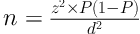
In which z = 1.96 and d = 0.04, which was evaluated in 867 (365 males and 472 females) people.
2.3. Data Collection
Demographic data such as age, sex, education, as well as information on the factors affecting the rate of transmission of pediculosis such as sharing of personal articles, showering frequency, and hair posture were sorted using the interviewer structured questionnaire. Other parameters and equipment used in this study included a visual scalp examination, sampling of hair using alcohol 70%, surgical gloves, disposable gloves, fine-toothed brush in sampling, hand lens, white paper, glass and cover slides, as well as a mouth mask. At the beginning of this study, hair of the respondents was classified based on the conventional method of classification. The length of hair was classified into three classes; short hair to the ears, medium to the shoulders, and long hair lower than shoulders. Those suffering from dandruff on the scalp were confirmed by the observation of scales around the shoulder or among the hairs. Hair types were also classified as straight, not straight, and wavy. In this regard, a questionnaire was prepared containing 15 questions based on the specification and design of individuals and family behaviors. The subjects for interview were conveniently selected to be 10%, due to the fact that there was no similar type of study in the study area for referencing (4).
Detection of active infestation was done based on standard procedures available; eggs were found in some of the respondents 1.4 inch from the scalp. Previous infestation was considered as the lack of eggs and lice on hairs of respondents and the presence of nits with a distance greater than 1.4 inches from the scalp even after combing. Detection of lice infestation was indicated based on observation of developmental stages of lice from nits, nymphs, and adult’s phases (13).
Splitting of hairs under light illumination was found to be sufficient and accurate for 3 - 5 minutes. Respondents with lice infestation were asked to brush behind their ears and the top of their necks on a white paper for 5 - 7 minutes. The lice that dropped on the white paper were mounted on the microscope glass by adhesive tape. An intervention in terms of treatment of those infested with the parasite was made using 1% permethrin lotion.
2.4. Statistical Analysis
Data was statistically analyzed using Excel, SPSS software; t-test and Chi-square test were used to check for any statistical significant association between the variables
2.5. Include and Exclude Criteria
The inclusion criteria included: Minimum outcomes, human pediculosis infestation, appropriate measures of variables (age, sex, education, sharing of personal articles, showering frequency, and hair posture), cohort case, and systematic review or meta-analysis of these study types.
The exclusion criteria included: No data, population, or sub-population with known pediculosis infestation or vagabond disease equivalent, does not include minimum outcomes, does not measure variables appropriately, wrong study design/article format.
3. Results
The study was conducted between April to June of 2016. A total of 867 subjects from the tribes (365 males and 472 females) were recruited and examined in this study. The prevalence of head lice infestation was 3.2%. Females had a significantly higher infestation (4.4%) in comparison to males 1.8% (P < 0.05) (Table 1).
Table 1.The Relationship Between Lice Infection with Gender, History of Previous Infection, and Skin Diseases Among the Tribal Individuals in North Khorasan Province, Northeastern Iran During 2016a
| Characteristics | Examination | Infestation | P Value | Pearson Chi-Square | P Valueb |
|---|---|---|---|---|---|
| Sex | 0.033 | 4.931 | |||
| Male | 388 (98.2) | 7 (1.8) | - | ||
| Female | 451 (95.6) | 21 (4.4) | 0.036 | ||
| History of infestation | 0.010 | 65.6 | |||
| Yes | 29 (74.4) | 10 (25.6) | - | ||
| No | 810 (97.8) | 18 (2.2) | |||
| Education | 0.373 | 1.974 | |||
| Illiterate | 394 (97.3) | 11 (2.7) | 0.235 | ||
| Primary-secondary | 414 (96.1) | 17 (3.9) | |||
| Diploma and more academic degree | 59 (100) | 0 (0) | |||
| Hair length | 0.554 | 1.182 | |||
| Short | 334 (96) | 14 (4) | |||
| Medium | 277 (97.2) | 8 (2.8) | |||
| Large | 227 (97.4) | 7 (2.6) | |||
| Type of hair | 0.175 | 3.485 | |||
| Straight | 374 (97.9) | 8 (2.1) | |||
| No straight | 288 (95.4) | 14 (4.6) | |||
| Wavy | 176 (96.7) | 7 (3.3) | |||
| Sharing of articles towel | 0.368 | 0.942 | |||
| Yes | 740 (97) | 23 (3) | |||
| No | 99 (95.2) | 5 (4.8) | |||
| Comb | 0.239 | 1.186 | |||
| Yes | 745 (97) | 23 (30) | |||
| No | 94 (94.9) | 5 (5.1) | |||
| Blanket | 0.368 | 0.942 | |||
| Yes | 740 (97) | 23 (3) | |||
| No | 99 (95.2) | 5 (4.8) | |||
| Scarf | 0.468 | 0.185 | |||
| Yes | 457 (95.4) | 22 (4.6) | |||
| No | 374 (96.4) | 14 (3.6) | |||
| Dermal infection history | 0.678 | 0.083 | |||
| Yes | 49 (96.1) | 2 (3.9) | |||
| No | 790 (96.8) | 26 (3.2) |
a Values are expressed as No. (%).
bt-test.
There were significant differences between infestation to head lice and sex (P < 0.033), and history of lice infection (P < 0.010). Ten subjects (25.6%) out of the 3.2% prevalence had a history of infestation with head lice in the past, while the remaining 18 subjects (2.2%) had no history of lice infestation in the past.
More lice infestation was observed in the daily showering frequency group age, twice or more brushing, no permanent scarf using, 8 - 12 family size, and 1 - 9 year age groups (Table 2).
Table 2.The Relationship Between Head Lice Infestation, Showering and Brushing Frequency, Age, and Family Size of Kormanj Tribe’s Individuals in North Khorasan Province, Northeastern Iran, During 2016a
| Characteristics | Examination | Infestation | P Value | Pearson Chi-Square |
|---|---|---|---|---|
| Showering frequency | 0.405 | 1.806 | ||
| Daily | 221 (94.3) | 9 (5.7) | ||
| Weekly | 568 (96.6) | 20 (3.4) | ||
| Biweekly | 50 (97.8) | 3 (2.2) | ||
| Brushing | 0.577 | 1.10 | ||
| Never | 340 (96.6) | 12 (3.4) | ||
| Daily | 342 (97.4) | 9 (2.6) | ||
| Twice or more | 157 (95.5) | 7 (4.4) | ||
| Permanent scarf using | 0.574 | 0.590 | ||
| Yes | 265 (80.9) | 147 (19.1) | ||
| No | 86 (80.7) | 5 (19.2) | ||
| Age group | ||||
| 1 - 9 | 130 (50.5) | 127 (49.4) | 0.130 | 17.48 |
| 10 - 19 | 91 (49.4) | 93 (50.6) | 0.121 | 16.41 |
| 20 - 29 | 79 (50.3) | 78 (49.6) | 0.145 | 17.23 |
| 30 - 39 | 51 (50.4) | 50 (49.5) | 0.123 | 16.61 |
| 40 > | 85 (50.6) | 83 (49.4) | 0.145 | 16.92 |
| Family size | ||||
| 1 - 3 | 127 (50.2) | 126 (48.7) | 0.257 | 1.82 |
| 4 - 7 | 254 (49.6) | 258 (50.4) | 0.246 | 1.68 |
| 8 - 12 | 46 (49.5) | 56 (50.5) | 0.298 | 1.98 |
a Values are expressed as No. (%).
4. Discussion
The prevalence of pediculosis capitis was evaluated as 3.2%. In other studies, this rate is very high, for instance head lice infestation among primary school students in Hulu Langat (Selangor), Sharkia Governorate (Egypt), was 15.3% and 33.0%, respectively (14, 15). This present study revealed that females had a significantly higher infestation in comparison to the males. In previous studies done in other study areas in Iran more head lice infection was reported in females than males (16-18). In another study by Zabihi et al., the prevalence of lice infestation in women was reported as more than men, which is consistent with this present study (19). According to significant statistical association, we found that there was a significant difference between head lice infestation and history of head lice infestation. AlBashtawy and Hasna (10), reported a significant difference in the prevalence of head lice infestation regarding residence with history of infestation in the previous year (57.4%) versus those with no history of previous infestation (11.5%). Furthermore, Saghafipour et al. (17), and Sanei-Dehkordi et al. (20), showed that having a previous history of P. capitis infestation is an important risk factor in current head lice infestation. According to the results, there was no significant difference between lice infestation and the level of education of the subjects, family size, sharing of personal belongings, length of hair, the hair posture, showering frequency, the frequency of brushing hair, and permanent scarf coverings at home. In accordance with our study results, Vahabi et al. (21), in northwestern Iran reported no significant relationship between level of education and length of hair to lice infestation. In contrast, Norouzi et al. (22) in Qom province, center of Iran, reported a significant relationship between the infestation of lice and daily frequency of brushing and weekly frequency of showering (22). There are different cultures among the residence in north east borderlines and central Iran, which may affect health behavior of the community. In contrast, Zareban et al. (23), reported a significant relationship between lice infestation of school girls and family size, sharing personal health stuff, and weekly showering frequency. These differences are probably due to different target individuals. In addition, the findings of previous studies, such as the Moemenbellah-Fard study showed no significant correlation found between head lice infestation level and hair length (24). Public health of the community and educational intervention on explaining preventive pediculosis infestation behavior are of great importance so that the progress and development largely depend on the health development (25). External parasites, such as human body lice, are considered as a threat to public health, despite the fact that health promotion and advancement of medical science are still regarded to be a problem in the health field. It was concluded that due to the tribal life style and less access to health facilities, the respondents to high lice infestation prevalence predisposed; however, the current study showed a low prevalence of lice contamination between tribes’ residences in north east of Iran. A similar study is recommended on other tribes’ residences in borderlines of Iran. Precise policy making and health education could help to prevent pediculosis infestation.
4.1. Conclusions
According to the results of this study, significant statistical association was observed between the sex and history of head lice infestation (P < 0.05). It seems that improvement of personal health conditions in females and also appropriate treatment in previous infestations for nomadic tribes could significantly reduce the prevalence of human head lice infestation. The same study is recommended in other provinces of Iran.

