


1. Context
Multiple sclerosis (MS) is a chronic inflammatory disorder associated with demyelination and atrophy in the central nervous system, which affects young adults between 20 and 40 years old. This age is an important time of life for sexual activity (1). This disease is one of the most common causes of disability in adults, and has complex symptoms, which have a great impact on physical and mental health (2).
MS is the second cause of neurological disability after trauma in western societies, including the United States, which starts in early middle age. The prevalence of this disease was reported to be 149 per 100,000 of the population in the United States in 2016 (3, 4). In a study in Iran in 2014, according to data derived from the report of the Iranian Ministry of Health and Medical Education, the prevalence of this disease was reported to be 54.51 per 100,000 of the population (5). This disease can be seen in both genders, but its prevalence is higher in women, especially women of reproductive age (25 to 40 years of age) (6).
The complications of this disease vary depending on the location of damaged nerve fibers in different patients, and include: numbness or weakness in organs; loss of vision; tingling or pain in body parts; imbalances or irregular walking; fatigue; muscle stiffness or spasticity; speech problems; and pelvic floor dysfunction including bladder, bowel and sexual dysfunction (7, 8).
One of the most important complications of this disease is sexual dysfunction in women and men, which affect their quality of life (8, 9). Despite the fact that multiple studies have reported a higher prevalence of sexual dysfunction in women compared to men in this disease, less attention is usually paid to this disorder in affected women (10, 11). In a qualitative study in 2017, Dehghan-Nayeri et al. stated that women affected by MS were complaining about the treatment team’s insufficient attention to sexual issues occurring after the disease, as well as lack of receiving adequate training and consultation (12).
Sexual dysfunction due to MS is classified into primary, secondary, and tertiary levels. The primary sexual dysfunction occurs due to neurological damage, which directly affects sexual function. The symptoms of this dimension include decreased libido, arousal, and orgasm, lubrication, and vaginal sensation. The secondary sexual dysfunction occurs due to physical changes, which indirectly affect sexual function. The symptoms of this dimension include fatigue, muscle weakness, spasticity, bladder and bowel dysfunction, numbness or sensory changes in non-genital areas, and imbalances. The tertiary sexual dysfunction occurs due to mental, social, and cultural damage related to the disease, such as: negative attitudes towards self, decreased self-confidence, and depression, which can disrupt sexual function (13, 14). The etiology of sexual dysfunction in patients suffering from this disease is still under discussion (11).
In general, the prevalence of sexual dysfunction in these patients is much higher than in the general population, and varies from 40% to 74% in women suffering from this disease (6). In a study by Celick et al. the prevalence of sexual dysfunction has been reported to be ranging from 50% to 90% in these patients (11). In this study, 33% of the patients reported lack of orgasms, 27% lack of libido, and 12% increased spasticity during their sexual activities (8). Another study reported that 40% of women affected by this disease stated that their sexual life had worsened after the diagnosis of their disease (15).
There are a limited number of studies conducted on the prevalence of sexual dysfunction in Iranian women affected by MS. These studies have various results and there is no overall estimate of the prevalence of sexual dysfunction in these patients. Given the high prevalence of this disease in Iran, its higher prevalence in women than in men, as well as the impact of sexual dysfunction due to this disease on women’s quality of life (16), being aware of the exact level of the prevalence of sexual dysfunction in these patients can help physicians and health planners for design appropriate interventions and treatments.
One of the goals of meta-analysis is to provide precise and valid results considering the high sample size due to the integration of studies (17). Therefore, the present study was conducted through the meta-analysis method in order to precisely measure the prevalence of sexual dysfunction in Iranian women with MS.
2. Evidence Acquisition
This systematic review and meta-analysis was conducted with the aim of studying the prevalence of sexual dysfunction in Iranian women with MS. The method of presentation, including analysis and interpretation, determination of the studied problem, and collection of findings, was based on preferred reporting items for systematic reviews and meta-analyses (PRISMA).
2.1. Search Strategy
In this systematic review and meta-analysis, in order to study the prevalence of sexual dysfunction in Iranian women with MS and to find related studies, a comprehensive search was done in databases including: PubMed, Cochran library, Scopus, Web of Sciences, SID, Magiran, and the Google Scholar search engine from 2000 to June 2018. All Iranian articles published in Persian and English in the following databases were collected and reviewed. Two of the authors independently searched for information in these electronic sources by using the following keywords: “prevalence”, “incidence”, “epidemiology”, “cross sectional”, “multiple sclerosis”, “sexual disorder”, “sexual problem”, “sexual dysfunction” and “Iran”. It should be noted that the keywords were also searched for combined together using the Boolean operators AND/OR in order to maximize the comprehensiveness of the searches. The references of the published studies were also investigated in order to increase the sensitivity, and to select the studies more precisely.
2.2. Inclusion/Exclusion Criteria
The inclusion criteria for the studies were as follows: the study must have been conducted in Iran, between 2000 and 2018, on women with MS, and must have reported the prevalence of the overall sexual dysfunction; as well as the prevalence of different levels of sexual dysfunction, i.e. primary, secondary, and tertiary in these women using standard questionnaires. The exclusion criteria were as follows: lack of access to the full text of the articles, conducting the study in countries other than Iran, reporting irrelevant results, studies with similar results and a target group other than women with MS.
2.3. Data Extraction
First, 652 studies were obtained based on the initial search using the specified keywords. After excluding repeated studies, the title, abstract, and if necessary, the full text of the other articles were studied by both authors, and if the criteria were not met in any article, the article was excluded, and the final articles were selected and reviewed thoroughly.
The full text of the final selected articles was reviewed by two of the authors, and at first, the type of questionnaire that was used to measure sexual dysfunction in the studies were reviewed. All studies with inclusion criteria used female sexual function index (FSFI) and multiple sclerosis intimacy and sexuality questionnaire-19 (MSISQ-19). MSISQ-19 is a valid and reliable disease-specific measure of sexual dysfunctions in MS patients and categorizes the sexual dysfunction in three levels as: primary, secondary and tertiary sexual dysfunction. This questionnaire examines the effects of the symptoms of this disease on patients’ sexual function over the past six months (13). FSFI with 19 items is a valid and reliable general questionnaire for measuring sexual function of females in the last four weeks (18).
Then the necessary data of the final selected study were extracted. Extracted data including: the author’s name; year of publication; location of study; patients’ mean age; sample size; type of questioner that was used to measure sexual dysfunction; the prevalence of overall sexual dysfunction; as well as the prevalence of different levels of sexual dysfunction, i.e. primary, secondary, and tertiary, if reported, were available in studies that used the MSISQ-19 for measure sexual dysfunction.
2.4. Quality Evaluation
The quality of studies was measured using a valid and reliable instrument designed by Munn et al. in 2014 in order to measure the quality of prevalence-related systematic review studies (19). This instrument consists of 10 questions in order to measure the quality of the methodology of studies, including: whether the subjects represent the population, the sample size, the sampling method, whether the study explains the subjects’ characteristics, method of measurement, method of data analysis, whether the study controls confounders, and in general, the methodology of studies. Each question is answered by “yes”, “no”, or “vague”. “Yes” receives a score of 1, and “no” and “vague” receive zero scores. The scores obtained for each study ranged from zero to ten, and studies that gained a score of 5 and/or higher were included in the study. This instrument has been used in multiple systematic review and meta-analytic studies worldwide to measure the prevalence (20, 21). The quality was measured by two of the authors independently, and in case of any disagreement, a third author’s opinion was used.
2.5. Statistical Analysis
The heterogeneity between the results of the included studies was assessed using the chi-square (χ2) test at a significance level of 5% (P < 0.05). In addition, the I2 index was calculated for the quantitative assessment of heterogeneity (22). According to the Cochrane Handbook, I2 > 50% is indicative of significant heterogeneity (23). The value of I2 was 92.5%, which was indicative of high heterogeneity between the studies. For this reason, a random effect model was used to combine the results of the studies in the meta-analysis. Furthermore, in order to cope with heterogeneity, subgroup analysis was conducted based on the type of questionnaires that were used to measure sexual dysfunction and different levels of sexual dysfunction based on MSISQ-19. Egger’s and Begg’s statistical tests were used to evaluate bias in the publication of the results (24). Stata Statistical Software: Release 11.1 was used for data analysis.
3. Results
Figure 1 shows the flow diagram of selected studies in this meta-analysis. A total of 652 articles were found in the initial search based on the keywords. From among them, 55 studies were excluded due to duplication, and 597 studies were independently reviewed by two authors in terms of their title, abstract, and, if necessary, the full text. Subsequently, the full texts of 14 studies were evaluated in order to verify their compliance with the inclusion criteria. Six studies were excluded from the study due to differences in their samples, not reporting the intended prevalence rate and studied with same results. Eventually, eight cross-sectional studies, which met the inclusion criteria, were included in this meta-analysis (Figure 1). One study had been conducted in Isfahan, another one in Mashhad, and six other studies in Tehran. Four studies had measured the prevalence of sexual dysfunction using the MSISQ-19 (10, 25-27), and the four other studies using the FSFI (28-31). Out of the four studies, which had used the MSISQ-19, two studies reported the prevalence of overall sexual dysfunction and at all three levels: primary, secondary, and tertiary (10, 26), and the two other studies reported the prevalence of primary sexual dysfunction (25, 27). In general, 1301 female patients with a mean age of 35 ± 2 years were included in this meta-analysis. The main characteristics of the included studies are summarized in Table 1. All the studies being under review gained the minimum required quality to be included in the study.
Table 1.Characteristics of Included Studies Assessing the Prevalence of Sexual Dysfunction in Iranian Women with Multiple Sclerosis
| First Author Name (Ref) | Year | Study Location | Mean Age ± SD | Sample Size | Questioner | Prevalence of Sexual Dysfunction (%) | Quality Assessment | |||
|---|---|---|---|---|---|---|---|---|---|---|
| Overall | Primary | Secondary | Tertiary | |||||||
| Ashtari (10) | 2014 | Esfahan | 35.1 ± 8.1 | 271 | MSISQ-19 | 63/5 | 52/4 | 37/5 | 41 | 6 |
| Dehghan-Nayeri (26) | 2017 | Tehran | 36.9 ± 8.1 | 182 | MSISQ19 | 81/9 | 74/7 | 38/5 | 44/5 | 6 |
| Merghati-Khoei (25) | 2013 | Tehran | 36.9 ± 8.3 | 132 | MSISQ-19 | - | 87/1 | - | - | 6 |
| Rahnama (27) | 2017 | Tehran | 35.7 ± 8.07 | 226 | MSISQ-19 | - | 43/8 | - | - | 8 |
| Mohammadi (28) | 2013 | Tehran | 35.7 ± 8.07 | 226 | FSFI | 55/3 | - | - | - | 7 |
| Askari (29) | 2016 | Tehran | 33.4 ± 6.5 | 86 | FSFI | 67 | - | - | - | 6 |
| Ghajarzadeh (30) | 2014 | Tehran | 32.8 ± 7.6 | 100 | FSFI | 66 | - | - | - | 6 |
| Kooranian (31) | 2018 | Mashhad | 32.3 ± 7.3 | 78 | FSFI | 38/5 | - | - | - | 7 |
Abbreviations: FSFI, female sexual function index; MSISQ-19, multiple sclerosis intimacy and sexuality questionnaire-19.
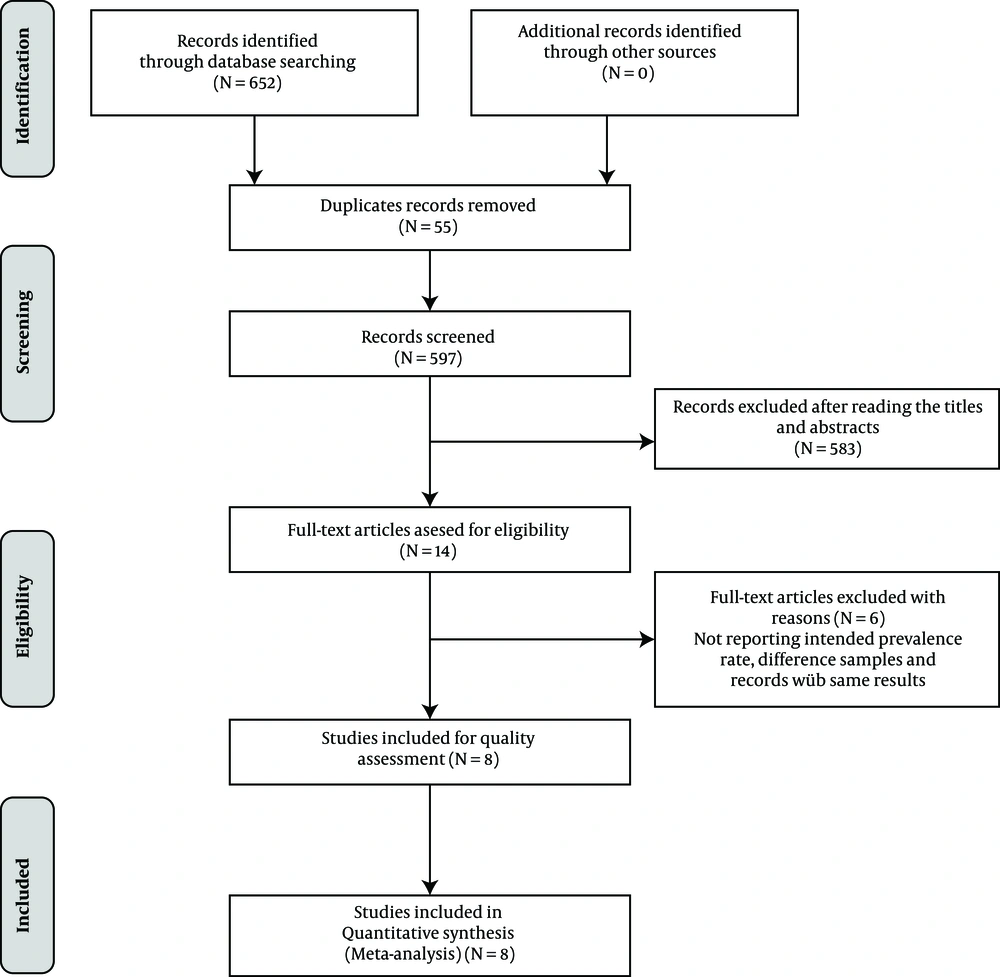
Figure 1.
Flow diagram of data searching regarding studies assessing the prevalence of sexual dysfunction in Iranian women with multiple sclerosis
Six studies had reported the prevalence of overall sexual dysfunction (10, 26, 28-31). By combining the results of these six studies with a sample size of 943, the prevalence of sexual dysfunction in women with multiple sclerosis was estimated to be 62% (95% CI: 51% - 73%). The value of I2 was 92.5%, which was indicative of high heterogeneity between the studies. For this reason, a random effect model was used to combine the results of the studies in the meta-analysis (Figure 2).
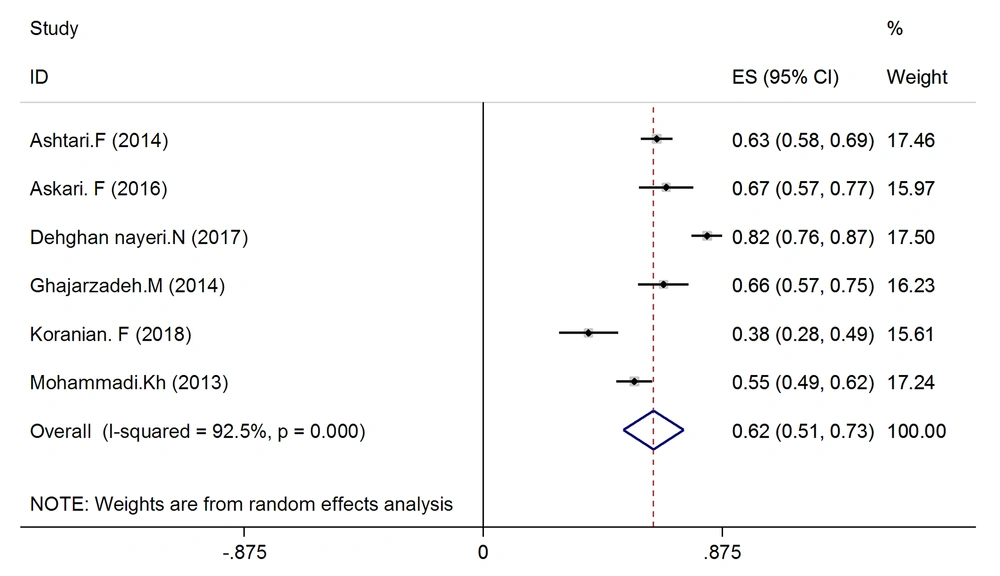
Figure 2.
Forest plot of the pooled prevalence of overall sexual dysfunction in Iranian women with multiple sclerosis
In addition, in order to cope with heterogeneity, subgroup analysis was conducted based on the type of the questionnaire used to measure the prevalence of sexual dysfunction. The result of subgroup analysis showed that the prevalence of overall sexual dysfunction using the FSFI was 57% (95% CI: 46% - 68%), and using the MSISQ-19 was 73% (95% CI: 55% - 91%) (Figure 3).
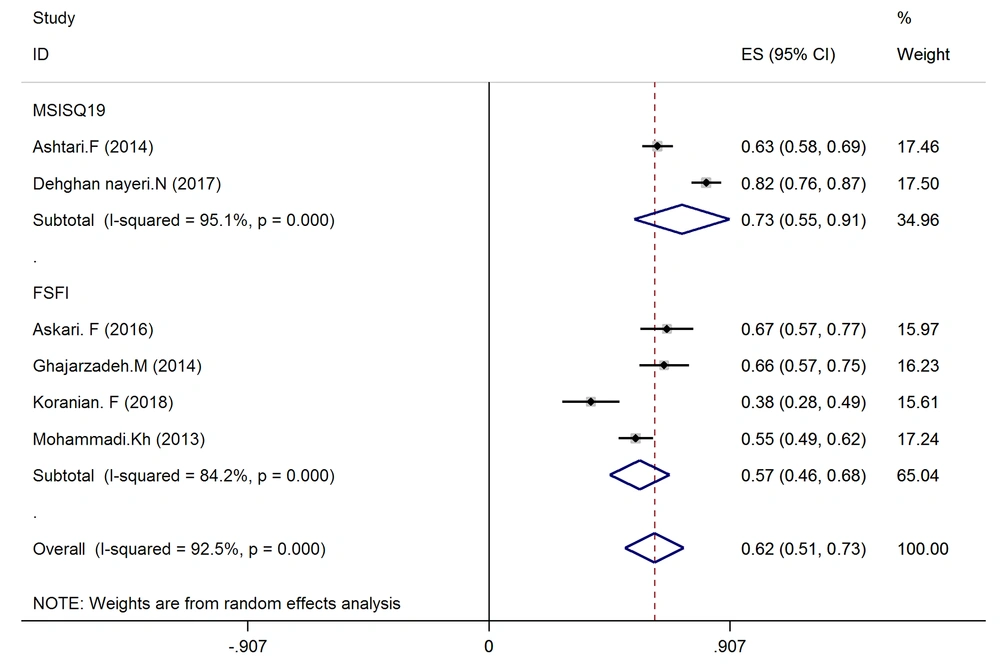
Figure 3.
Forest plot of the pooled prevalence of overall sexual dysfunction in Iranian women with multiple sclerosis based on type of questioner
Figure 4 shows a combination of the results of studies based on the different levels of sexual dysfunction that were measured by using the MSISQ-19. Accordingly, the prevalence of primary sexual dysfunction was estimated to be 65% (95% CI: 45% - 84%), secondary sexual dysfunction 38% (95% CI: 33% - 42%), and tertiary sexual dysfunction 42% (95% CI: 38% - 47%).
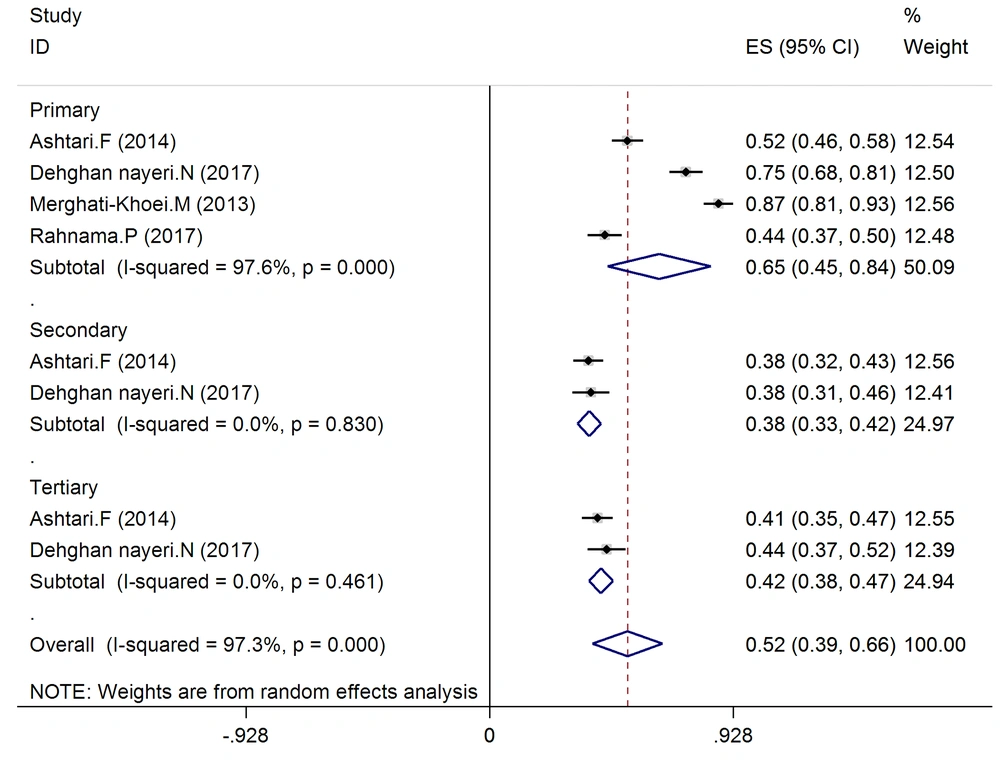
Figure 4.
Forest plot of the pooled prevalence of different levels of sexual dysfunction based on MSISQ-19 in Iranian women with multiple sclerosis
According to the results of the two statistical tests; namely, Begg’s test and Egger’s test, no significant bias has occurred in the publication of results regarding the prevalence of sexual dysfunction in women with multiple sclerosis (P = 0.322 and P = 0.277, respectively) (Figure 5).
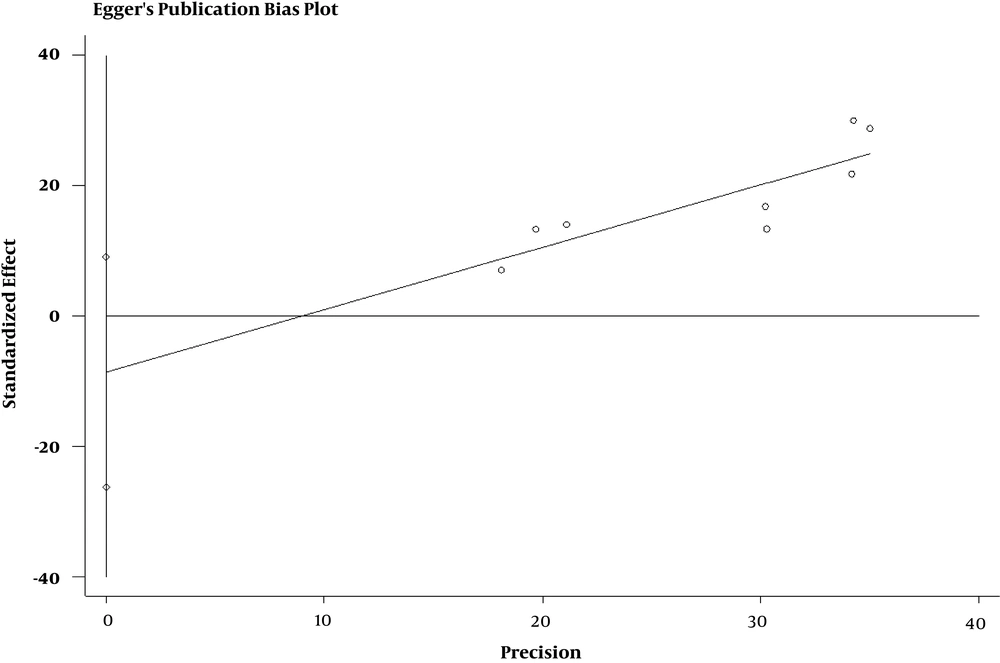
Figure 5.
Egger’s publication bias plot in prevalence of sexual dysfunction in Iranian women with multiple sclerosis
4. Conclusions
The present meta-analysis study was conducted for the first time in Iran with the aim of studying the prevalence of sexual dysfunction in women with MS. The results indicated that the overall prevalence of sexual dysfunction was 62% among Iranian women with MS. Sexual relationships are very complicated, and are under the influence of individual factors, interpersonal relationships, living conditions, and sociocultural factors (32, 33).
In a meta-analysis study conducted in Iran in 2016, the prevalence of sexual dysfunction was reported to be 48% among women in the general population (34). In a study conducted by Ramezani Tehrani et al. in 2014 on 784 women of reproductive age in four provinces: Qazvin, Kermanshah, Golestan, and Hormozgan, the prevalence of sexual dysfunction was estimated to be 27.3% among women of reproductive age (35). The results of our study indicate that the prevalence of sexual dysfunction is higher in women with MS than in women in the general population, which is consistent with the results of studies by Bronner et al. and Lew-Starowicz et al. In the review study conducted by Bruner et al. in Israel, the prevalence of sexual dysfunction was reported to be 40% - 74% in women with MS, which was higher than that in the general population (43% - 44%) (6). In the study conducted by Lew-Starowicz and Rola in Poland on 137 women with multiple sclerosis, the prevalence of sexual dysfunction was reported to be 82%. Similarly, in this study, they stated that this prevalence rate was higher than a prevalence of 43% for sexual dysfunction among women in the general population (36). Sexual function in MS patients is under the influence of multiple factors, including psychological factors, hormonal factors, and physical factors such as: fatigue, disability, urinary incontinence (UI), and the side effects of drugs being used, all of which are more common in these patients than in women in the general population (37-39).
The results of the present study indicated that the overall prevalence of sexual dysfunction was 62% among Iranian women with MS. In a study conducted in Serbia in 2008, the prevalence of sexual dysfunction was reported to be 85% in women with MS (40). In a study in Italy, Zorzon et al. reported that the symptoms of sexual dysfunction were found in 88% and 100% of MS patients at primary and secondary progressive disease stages, respectively (41). The difference between the reported prevalence rates can be due to the difference in the method of data collection, which was done through individual interviewing by physicians in those two studies, but in the present study data were collected using questionnaires and through self-reporting. On the other hand, this difference can be due to cultural differences between countries. Despite the high prevalence of MS in women in Iran, it is very difficult for women to talk with health care providers and physicians about sexual issues due to religious and cultural issues. On the other hand, Janghorban et al. showed in their study that sexual consultations are not provided properly by physicians and treatment teams due to their inadequate knowledge and not feeling comfortable with women (12, 42). Therefore, due to insufficient sexual consultations in the treatment process of these patients, the taboo of talking about sexual issues, feelings of shame and embarrassment of expressing sexual issues and problems in women with this disease in Iran, as well as the way of measuring sexual dysfunction, this disease is likely to be diagnosed less than what occurs in reality in these studies (5, 12, 43).
In this study, the prevalence of sexual dysfunction was estimated to be 57% using the FSFI, and 73% using the MSISQ-19. This issue can be due to differences in the domains studied by the two questionnaires. On the other hand, the FSFI measures sexual function over a past month, and the MSISQ-19 measures it over the past six months (14, 18). The above reasons can cause the higher prevalence rate of sexual dysfunction reported using the MSISQ-19.
In the present study, the primary sexual dysfunction with a prevalence of 65% was the most common type of sexual dysfunction in these patients. This type of sexual dysfunction is due to the direct effects of the complications of nerve damage, such as: changes in sexual response, decreased libido, delayed orgasm, and decreased lubrication and arousal (13). In a study by Merghati Khoei et al. the most common sexual problem in the studied women was reported to be orgasm disorder, which is one of the symptoms of primary sexual dysfunction (44). These findings are consistent with the results of a study by Demirkiran et al. in Turkey. In that study, the primary sexual dysfunction with a prevalence of 80.4% was the most common type of sexual dysfunction. This can be because in addition to the fact that the process of the disease itself directly causes disorders in lubrication, orgasm, arousal, and genital sensation due to nerve damage, the symptoms of secondary and tertiary sexual dysfunction can also exacerbate the symptoms of primary sexual dysfunction (45). Moreover, in the present study, the prevalence of secondary and tertiary sexual dysfunction was estimated to be 38% and 42%, respectively. These two types of sexual dysfunction are respectively due to physical and psychological reactions resulting from this disease, which indirectly affect sexual function. Pelvic floor muscle weakness and urinary and fecal incontinence can cause decreased lubrication and orgasm disorder (6). In a study, psychological complications have been reported in nearly half of the 8983 MS patients having been studied. The most commonly reported psychological disorder, in these patients, was depression (46). The depression caused by this disease can result in decreased libido and lubrication, delayed orgasm, and, in general, sexual dissatisfaction (6), which indicates the multidimensional nature and complexity of sexual dysfunction in women with MS (47).
From among the limitations of the present study, we can refer to the limited number of studies conducted in this field in Iran. Given that this study was conducted for the first time in Iran, we tried to carry out the present meta-analysis on all relevant articles in this field that meet the inclusion criteria through careful searches. In addition, the lack of diversity in the geographical locations of the study was one of the other limitations of the present study. Therefore, it was not possible to report the prevalence of sexual dysfunction based on geographical areas. Hence, it is suggested that more extensive population-based studies be conducted in other parts of Iran in order to investigate the prevalence of sexual dysfunction in women with MS.
4.1. Conclusions
The results of the present study were indicative of a prevalence of 62% for sexual dysfunction in Iranian women with MS. Considering the high prevalence of sexual dysfunction and its impact on the quality of marital life of women affected by MS, as well as on the family strength, it seems essential for treatment teams to pay attention to and plan for identifying and designing effective interventions in this regard.

