
1. Background
The exercise physiology scientists and experts believe that the cardiopulmonary endurance factor is more important in physical fitness than other factors (1). Intense and long-term activity depends on the efficiency of the cardiovascular system. The more efficient this system leads to, the greater the amount of physical activity before it reaches fatigue. If not enough oxygen is provided to the working muscles by the cardiorespiratory system, the quality and rate of performance will be reduced (2). The effect of physical activity on cardiovascular health has been well established (3-5). Therefore, it is necessary to use practice tests to assess the physical fitness and health of athletes.
Volleyball is a high-intensity interval sport. In addition, in this sport, the presence of aerobic and anaerobic energy sources and unforeseen fluctuations of biological needs can be observed (6-8). From a biochemically proven point, athletes with higher aerobic capacity have a more remarkable ability to regenerate phosphocreatine and faster excretion of lactate and hydrogen ions (9, 10). Accordingly, aerobic exercise has a special place in the training programs of volleyball players. Aerobic capacity is typically measured in the laboratory using advanced breathing gases and pulmonary ventilation, which are time-consuming for many teams due to their high cost and require highly trained personnel for performed the tests. They have acceptable validity and have been designed to measure the aerobic capacity of players, especially for team disciplines (11, 12).
Many aerobic power measurement field tests are designed in a way that is not specific to a particular sport and is used to measure aerobic power in all sports and with any level of physical fitness, such as the Yo-Yo or Shuttle run tests (13, 14). One of the drawbacks of these tests is the lack of attention to the movement pattern in different disciplines, and their focus is more on the metabolic pattern. The principle of exercise characteristics and compliance with exercise mode was not observed in these tests. Note that the role of adhering to proper exercise mode is significant and can produce different results (15, 16). Therefore, it is better to design physical fitness tests, especially aerobic power tests, as much as possible based on specific movement patterns of each sport in laboratory or field conditions. The increasing growth of aerobic power tests in the last decade shows the importance of designing and validating field tests with a specific pattern. In recent years, considerable attention has been paid to the design of special field tests for each sport, such as specific aerobic capacity tests designed for intermittent ball disciplines such as football (17, 18), futsal (19), and basketball (20). In volleyball, only one test has been designed and validated by Rodriguez-Marrovo et al. to measure aerobic power (21).
Examination of this test shows that not all volleyball skills are included in this test. It seems necessary to design and validate a test that can include all volleyball skills during the test process to measure aerobic power. Today, after the World Federation removed the net rule (continuation of the game after the service ball hits the net and enters the opponent’s court) and because many spikes hit the opposing team’s defenders and the main direction of the ball is changed, the players move, and their trajectory is unpredictable. The same is true in the discussion of receiving service and catching the ball. Even in some cases, it has been observed that players in the field go more than 15 meters to return the ball to the field of play. To design this test, we have tried to use the foot movement skills of players in various positions such as service, spike, defense, receiving, passing, shooting, and moving players on the field, as well as the dimensions of the volleyball court to simulate this test to increase the effectiveness of the test. The type of movement and arrangement of movements and movement of players in this test is based on the following points: movement for spikes, the movement for return attacks, passer movements, the movement for shooting, supporting the attacker, and supporting the defender. The important point is that in volleyball skills, despite the appearance that the hands are very active, the movements of the legs play an essential role in performing volleyball skills. It can be said that this particular test for volleyball players is modeled on the actual game of volleyball.
It is better to note that time is an important factor in today’s world. This issue is also essential for athletes and the general public. Therefore, instead of using long tests, it is better to design tests that assess cardiovascular readiness in a short time. Many laboratory tests, such as the Bruce test, have this condition. Therefore, designing short-term field tests is essential.
A literature review in this area shows only one field test with a volleyball pattern to determine aerobic power, which is also designed for male subjects. Then, it is necessary to design a test close to the volleyball movement pattern while evaluating the cardiorespiratory function. In the present study, an attempt has been made to design a valid test with these characteristics for women volleyball players.
2. Objectives
This study aimed to design and validation of functional cardiorespiratory exercise field tests in women volleyball players.
3. Methods
In a diagnostic value study, 64 competitive female volleyball players (with an average weight of 64.5 Kg, height 163.5 cm, age 27 years) with three years of experience in the first and second division of Tehran league competitions with different levels of aerobic performance, volunteered from the category league players. First division league of Tehran was selected and participated in the present study. A sampling method was available in this purposive study. Participants were selected from female competitive volleyball players based on inclusion criteria (having the necessary skills in volleyball and participating in official volleyball competitions for at least three years). After selecting the subjects, a complete description of the study process (data collection) was explained to them during the sessions, and the subjects signed the consent to participate in the study. Inclusion criteria were having the necessary skills in volleyball and participating in official volleyball competitions for at least three years. Also, the participants should not have been injured at the study time or were under medical treatment. Exclusion criteria were acute injury after one week of testing or having a strenuous training session or competition during the research phase.
The participants were called to the hall (laboratory) of sports physiology of the Tarbiat Dabir Technical University of Dr. Shariati (Tehran, Iran) to assess their general characteristics and familiarity with the tests. The height and weight of the participants were measured using a wall stadiometer and a digital scale. Body mass index (BMI) was also calculated based on the division of weight in Kg by the power of two heights per meter (Kg/m2). Participants became familiar with how to run on a treadmill and the steps of the Bruce test and performed the Bruce test experimentally. After this stage, the volleyball-specific cardiorespiratory function test was explained to them, and each subject performed the test several times experimentally with minimal effort. This familiarization step was performed to eliminate the effect of learning on the study results.
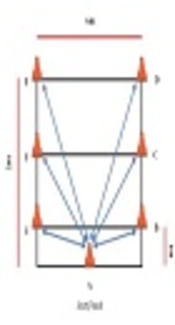
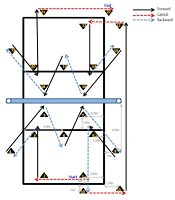
In this study, the Bruce aerobic strength test on a treadmill was used as the standard to determine the volleyball-specific cardiorespiratory function test (22). In this test, the participants start their activity on the treadmill for three minutes at a speed of 2.7 km/h with a slope of 10%. After this stage, the workload, including speed and slope, increases every three minutes until the person reaches exhaustion. It should be noted that the time to reach exhaustion is determined based on the subject’s heart rate and expression. This indirect test calculates the VO2max using the formula based on the length of time the subject has been working on the tape recorder (22). The test method is described in Figure 1.
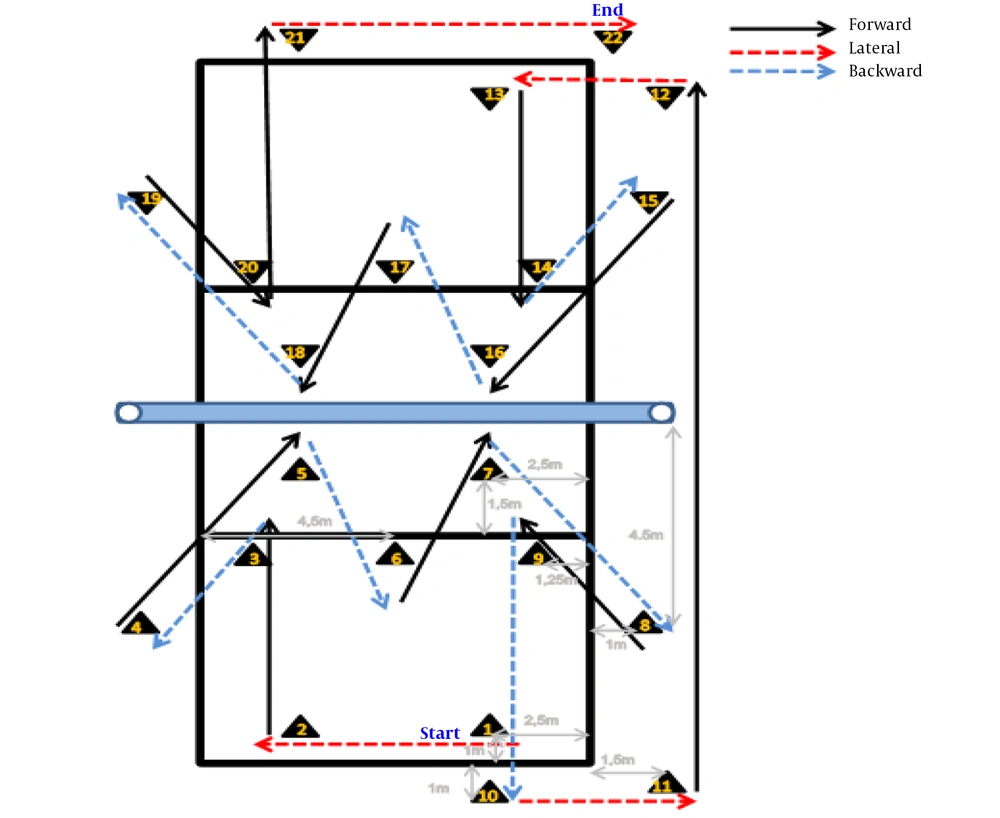
Figure 1.
Field test of volleyball-specific cardiorespiratory function measurement. (If the test time is less than 41.02 seconds, the person is more substantial and has the better aerobic capacity, and the more, the weaker and less aerobic capacity (field test to measure cardiorespiratory function).
3.1. Statistical Analysis
Kolmogorov-Smirnov test was used to determine the normality of the data (Bruce test results and volleyball aerobic power test results). Based on the statistical test results, the data obtained from these two tests had a normal distribution. ROC curve was used to distinguish the field test of volleyball for cardiorespiratory function with the Bruce test (golden standard). Based on this, the area under the curve (AUC) was calculated. Area changes under the curve were included less than 0.5 (the sign of the unreliable correlation between the two tests), half to 0.6 (the sign of useless correlation), 0.6 to 0.7 (the sign of weak correlation), 0.7 to 0.8 (the sign of relatively good), between 0.8 0 to 0.9 (is good) and above 0.9 is very good. Based on the area under the ROC curve, the sensitivity and specificity of the new aerobic power test were calculated. After this step, the cut-off point of the new test was determined using the Youden index. The ability to differentiate the new aerobic power test to identify athletes with the high aerobic ability and those with lower aerobic ability was determined using a positive diagnostic value (PPV) or false (NPV). The difference between the aerobic capacity of the subjects with the high aerobic ability and the athlete with low aerobic ability was compared based on the cut-off point obtained from the Youden index using the t-test. Calculations were performed using STATA statistical software version 14, and the significance level of the tests was considered P ≤ 0.05.
4. Results
The ROC curve analysis test utilized to compare the new aerobic power test with the Bruce standard test showed the area below the curve of 0.7181 for the new test. Based on the area under the curve obtained, the new test has a relatively good correlation with the Bruce standard test. Based on this, it is determined that the ability of the new test to detect aerobic power is at an acceptable level (Figures 2 and 3).
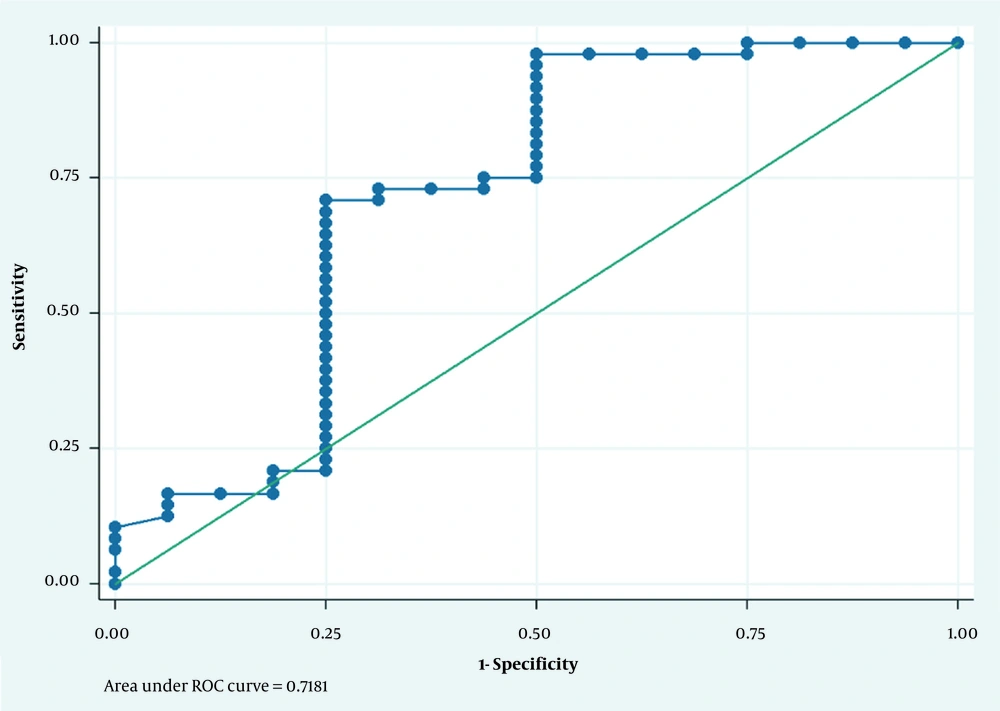
Figure 2.
Represents the area under the curve in the ROC decomposition test between athletes with high aerobic and low aerobic capacity.
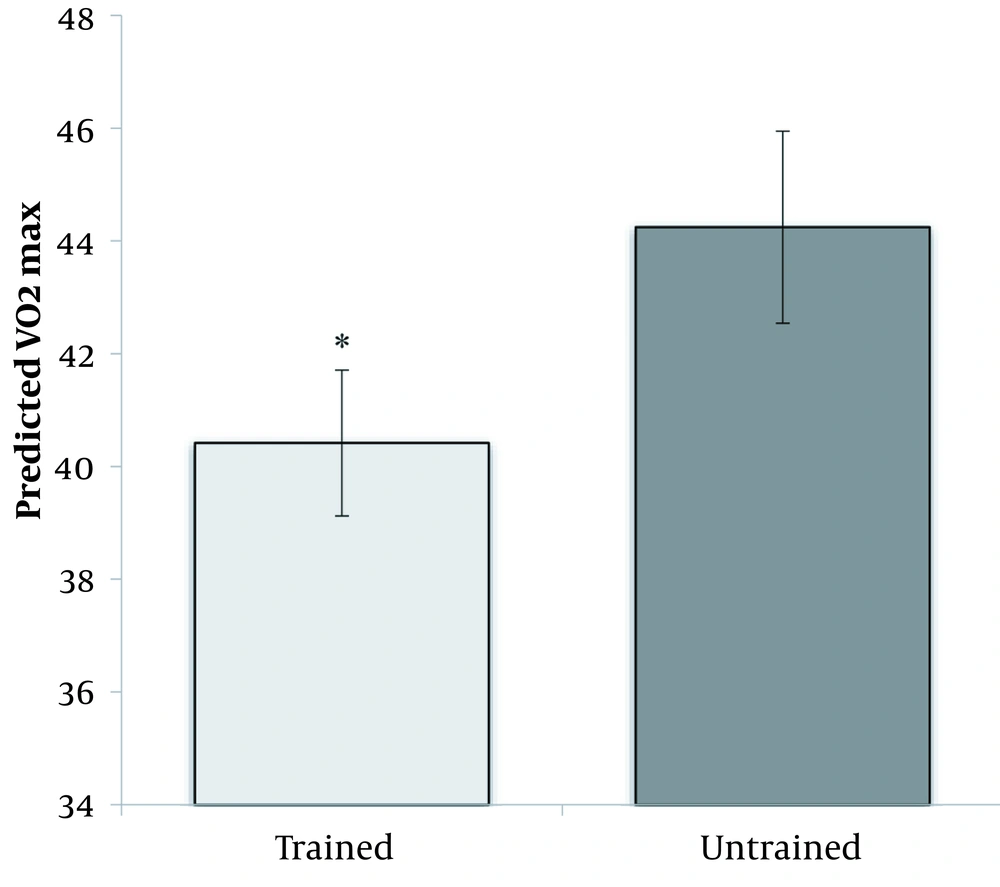
Figure 3.
Comparison of test-based aerobic performance in athletes with high and low aerobic capacity. * Difference with the group of athletes with low aerobic ability.
The result of this test was calculated to be 70.8 for determining athletes with low aerobic ability and 75% for identifying athletes with high aerobic ability. It was calculated based on the sensitivity and specificity of the cutting point to determine people with low and high aerobic capacity. The cut-off point based on the Youden index in this test was considered as 41.02 seconds. Individuals who score less than this in the new test are considered athletes with high aerobic capacity, and higher than this level are considered athletes with low aerobic capacity. After comparing the aerobic power of volleyball players with independent t-test, it was found that there was a significant difference between the aerobic power of volleyball players, the athlete with the high aerobic ability (trained), and athletes with low aerobic ability (untrained) based on values less and more than the cut point of 41.02 (P = 0.001, t = 4.8).
The PPV obtained in this study was 89.5, which shows that the person in this group of athletes with high aerobic ability is an athlete with high aerobic ability. The NPV was 46.2, indicating that a person in the athlete group with low aerobic capacity may be an athlete with high aerobic capacity. The odds ratio, which evaluates the probability of a test result based on the Iddaritho likelihood ratio (+ 83.2) and the Iddaritho likelihood ratio (-389), is equal to 7.29, probability of the odds of the result increases between Bruce’s maximum test compared to the new specific volleyball test for measuring VO2max.
5. Discussion
This study aimed to analyze the reliability of the field test according to the characteristics and movement pattern of volleyball to measure the cardiorespiratory function of women volleyball players compared to the standard Bruce maximum test. However, the new field test has a relatively good ability to evaluate elite and ordinary athletes. However, due to the sensitivity and specificity obtained, this test is more suitable for screening, which means it is more suitable for diagnosing athletes with low aerobic ability. Given that the sensitivity of the new test is reasonably acceptable compared to the Bruce standard test and with positive predictors of variables, it can show how prepared the test taker is, and so on. The important principle is that this test can screen and distinguish athletes with low aerobic capacity from athletes with high aerobic capacity.
A similar finding has previously been reported by Häkkinen (1993) in female volleyball players. Häkkinen, like others in previous research, has reported mainly changes in explosive power performance in volleyball players (22). George et al. obtained the correlation between the V02max treadmill and the inactivity test performed on physical education students (r = 0.85), close to the present study. This difference was probably because it used male and female subjects, and the test was without physical activity. The validity of George et al. research was reported to be equal to (0.85) (23). Malek and Housh obtained a correlation (0.82) between the VO2max treadmill and the inactivity test performed on endurance athletes, which is close to the present study (24). Also, the findings of Jurca et al., who in their study obtained the VO2max correlation of the treadmill test and the test without sports activity equal to 0.75, are consistent with the present study (25).
Performing maximal tests like Bruce requires a unique treadmill that can increase its inclination and speed according to the Bruce protocol and the athlete’s ability and considering that a person may approach his maximum heart rate during maximal tests. Be subjected to much pressure, so the presence of medical staff during the test protocol seems necessary. One of the reasons why the new test was designed is that it is not maximal and increases the speed and number of steps according to the participant’s ability. Another important point is the movement pattern, which in real volleyball is in the form of foot boxing or moving left and right and quick steps back and forth, which is not the pattern of movement in Bruce’s maximum test. It seems a new volleyball test because it has relatively good reliability with the Bruce standard test and follows a specific volleyball movement pattern. It can be used as a suitable field tool for the cardiopulmonary assessment of women volleyball players. In this study, it was not possible to use a gas analyzer to determine the exact amount of oxygen consumed by the subjects. Therefore, the Bruce test on a treadmill was used to estimate the aerobic capacity of the subjects. It is recommended that the aerobic capacity of the subjects be measured using a gas analyzer.
5.1. Conclusions
Preliminary research suggests that the newly designed test for volleyball may have acceptable validity for measuring cardiorespiratory function among women volleyball players but should be considered in different groups to determine certainty. Based on the findings of this study, it is recommended that the volleyball aerobic power test can identify weak volleyball players in terms of aerobic power, and due to its validity and simplicity, volleyball coaches can use this test, especially for screening volleyball players. However, the need for further studies for the effectiveness of this test in different age groups seems necessary.