
1. Background
Breast cancer (BC) is the most frequent malignancy among females (1). Several common genetic BC-associated variants, including single nucleotide polymorphisms (SNP), have been recognized by association studies (2, 3).
Members of epidermal growth factor-related (Her) receptor tyrosine kinases family, HER1 (ErbB1, EGFR), HER2 (ErbB2, neu), HER3 (ErbB3) and HER4 (ErbB4) showed a critical role in the pathogenesis and tumorigenic processes of BC (4, 5). Controversially, the prognostic and predictive value of HER4 expression was indefinite, and both favorable and unfavorable impacts of HER4 expression have been reported (5-12). Therefore, HER4 can act either as a tumor suppressor or an oncogene in BC.
MicroRNAs (miRNAs) are endogenous small non-coding RNAs that hybridize to 3′-Untranslated Regions (3′-UTRs) and mediate mRNA translational inhibition or cleavage and may consequently contribute to various pathological events (13, 14). Many studies have been designed to illustrate functional genetic polymorphisms that dysregulate miRNA regulation via different molecular mechanisms and could be associated with several pathological events. Functional SNP related to the miRNAs mechanism of action is categorized to two groups, first, polymorphisms in precursor miRNAs (pre-miRNAs), which may disturb miRNA expression possibly through changing pre-miRNA stability, and second, polymorphisms within miRNA target sites (3′-UTR of targets), which may modify miRNA-mRNA binding strength. Bioinformatics tools are useful to predict the effects of SNPs at miRNA loci and targets and offer probable descriptions for the phenotypic associations (15, 16).
HER4 gene variations in breast cancer have been less extensively investigated. In a previous study, we reported a possible association between rs1836724 in the 3′-UTR of HER4 gene and BC incidence in the Iranian population (17).
2. Objectives
In the present study, we analyzed the frequencies and predictive value of another HER4 3′-UTR SNP, rs1595065 (c.*5699T > C), in the Iranian population upon BC clinicopathological features. In addition, an in silico evaluation was used to estimate the functional influence of the SNP.
3. Methods
3.1. Study Subjects
This paper originated from a research study, the protocol of which was approved by the Islamic Azad University. All subjects were provided with written informed consents. A total of 82 females with breast cancer and 74 control individuals were included in the present study. All blood samples were collected randomly from Seyedo-Shohada hospital, Isfahan University of Medical Sciences, Isfahan, Iran, over the course of one year, from February 2015 to 2016. Control blood samples were collected randomly from the female subjects, who attended Seyedo-Shohada hospital for general examinations. The patients with other malignancies or bilateral breast cancer, and the control subjects with any breast cancer symptoms were excluded from the study. Ethics approval was provided by the Iranian ministry of health and medical education.
3.2. DNA Extraction and rs1595065 Genotyping With RFLP-PCR Analysis
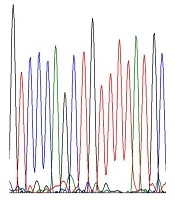
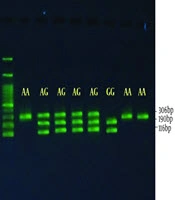
DNA was isolated from whole blood samples using the PrimePrep Genomic DNA Isolation Kit (GeNetBio, Chungnam, South Korea), according to the protocol of the company. The primers used for amplification of the rs1595065 were 5′-GCT AAC TCG TCT CAA ATT CCT-3′ and 5′-CCT TTC TTA AGC CAT AGT GGA-3′. Regular cycling was applied in a ASTEC PC-818 thermocycler (ASTEC, Fukuoka, Japan) with the following condition: initial denaturation at 96°C for three minutes followed by 30 cycles at 94°C for 30 seconds, 51°C for 30 seconds, 72°C for 30 seconds, and finally 72°C for seven minutes. Allelic variants were identified by digesting PCR products with restriction of endonuclease AciI (#ER1791, Thermo Fisher Scientific Inc., Waltham, MA, USA). The AciI restriction endonuclease was chosen in order to cut the 233 bp PCR product, containing C allele to two fragments of 140 bp and 93 bp, while the enzyme did not cut PCR products containing the T allele. Electrophoresis of restricted fragments was visualized by 1.5% agarose gel electrophoresis in 1x Tris-Borate-EDTA buffer at 100V and finally stained with RedSafe™ nucleic acid staining solution (20,000x) (Boca Scientific Inc., Boca Raton, Florida, USA).
3.3. Patient Characteristics
Pathology Laboratory of the Seyedo-Shohada Hospital is a reference test center where Immunohistochemistry (IHC) and pathological tests have been assessed centrally by expert operators and a dedicated pathologist, who tracks strict sample handling, processing and reporting protocols, thus ensuring the reliability of results. The pathological and clinical characteristics of the patients are listed in Table 1.
Table 1.
The Clinicopathological Features of the Patients with Breast Carcinoma
| Characteristic | Status | TT Genotype | TC/CC Genotype | Odds Ratio (95%CI) | P Valuea |
|---|---|---|---|---|---|
| HER2b | Positive | 42.86 | 57.14 | 3.111 (0.886 - 10.925) | < 0.046 |
| Negative | 70 | 30 | |||
| ERc | Positive | 57.14 | 42.86 | - | 0.375 |
| Negative | 83.33 | 16.77 | |||
| PRd | Positive | 52.63 | 47.37 | - | 0.384 |
| Negative | 87.50 | 12.50 | |||
| Grade | Grade I | 100 | 0 | - | 0.114 |
| Other | 62.96 | 37.04 | |||
| Grade II | 60 | 40 | - | 0.126 | |
| Other | 76.47 | 23.53 | |||
| Grade III | 66.66 | 33.33 | - | 0.310 | |
| Other | 70 | 30 | |||
| Stage | Stage I | 85.71 | 14.29 | - | 0.118 |
| Other | 68.85 | 31.15 | |||
| Stage II | 66.66 | 33.33 | - | 0.128 | |
| Other | 73.02 | 26.98 | |||
| Stage III | 33.33 | 66.66 | - | 0.630 | |
| Other | 77.27 | 22.73 | |||
| Stage IV | 75 | 25 | - | 0.115 | |
| Other | 68.57 | 31.43 | |||
| Metastasis | Positive | 74.07 | 25.93 | - | 0.865 |
| Negative | 71.43 | 28.57 |
aChi-Square test.
bHuman epidermal growth factor receptor 2.
cEstrogen receptor.
dProgesterone receptor.
3.4. In Silico Analysis
The miRNASNP tool (microRNArelated Single Nucleotide Polymorphisms) (http://www.bioguo.org/miRNASNP/index.php) (18) was used in order to predict the effect of 3′-UTR SNP, rs1595065 considering miRNAs interaction.
3.5. Statistical Analysis
Deviation from Hardy-Weinberg Equilibrium (HWE), odds ratios (ORs) with 95% confidence intervals (CIs), and Armitage’s trend test were completed using the DeFinetti program (http://ihg.gsf.de/cgi-bin/hw/hwa1.pl). Markedly, Armitage’s trend test reflects the individuals' genotypes rather than just the alleles for association assessment.
Hardy-Weinberg Equilibrium (HWE) and association test P-values were tested by Pearson's chi-square test. Logistic regression models were used to account for odds ratios (OR) and related 95% Confidence Intervals (95% CI). P < 0.05 were considered statistically significant.
4. Results
4.1. Frequencies of HER4 3'-UTR Variant rs1595065 (c.*5699T > C)
To investigate the prevalence of the HER4 3′-UTR SNP, DNA samples from 162 females, either with no tumor or with BC were studied. Genotype frequencies, allele frequencies, and HWE P value were calculated as follows: T/T, 0.68; T/C, 0.21; C/C, 0.12; T, 0.78; C, 0.22; and HWE P value, 3 × 10⁻⁶. As a deviation from HWE was observed, Armitage test for trend, which is a statistical method that does not assume HWE, was used for association test between the SNP and BC phenotypes (19). The age difference between controls and breast cancer cases was significant (independent t test, P < 0.0001). The mean + standard deviation (SD) of controls and cases was 52.88 ± 10.07 and 37.79 ± 16.25, respectively.
3.2 Association test of the HER4 SNP rs1595065 C allele with breast cancer and clinicopathological features of the patients
Univariate analysis showed that C allele of rs1595065 was significantly associated with HER2 positivity among patients; odds ratio = 3.111 (95%CI: 0.886 - 10.925), P = 0.046 (Table 1). Noticeably, rs1595065 in HER4 gene was not significantly associated with BC, ER positivity, PR positivity, stage IV (advanced BC), grade III (poorly differentiated), and metastatic phenotypes incidence.
4.3. In Silico Results
Computational assessment proposed that rs1595065 is located in HER4 3′-UTR within the potential target sequence of miR-199a-3p, miR-199b-3p, miR-1244, and miR-3129, and as a result, C allele can reduce miRNA-mRNA binding occurrence (Table 2). Up-regulation of HER4 gene can be predicted when the mRNA has C allele at rs1595065 position.
Table 2.
In Silico Examination of the SNP-miRNA Binding
| miRNA | miRNA Sequence | miRNA Site on ErbB4 3′-UTR With rs1595065 | Energy Change (kcal/mol) C vs. U Allele |
|---|---|---|---|
| miR-199a-3p | AUUGGUUACACGUCUGAUGACA | CAAACUAC[U/C]G | +17.4 |
| miR-199b-3p | AUUGGUUACACGUCUGAUGACA | CAAACUAC[U/C]G | +17.4 |
| miR-1244 | UUGGUAGAGUAUGUUUGGUUGAUGAA | CUGUUUAAGUGAACUAUCAAACUAC[U/C] | +19.5 |
| miR-3129 | UUUGGUUAGAGAUGUGAUGACG | UAAGUGAACUAUCAAACUAC[U/C]G | +22.3 |
5. Discussion
The effect of HER4 expression on the progression and outcome of BC remains mostly unclear. In-vitro and in-vivo studies demonstrated both good and poor prognostic ability for HER4 expression (5-12). Most of the published reports have shown an association between high expression level of HER4 and positivity status of ER, lower grades of breast malignancy and lower rate of proliferation (20). Moreover, Fujiwara, et al. determined that HER4 overexpression is associated with a better prognosis (5).
In 2011, Zhu et al. (21) showed the significant association of rs1595066, located within HER4 3′UTR, with the risk of breast cancer. According to this report, AG and AA genotypes in rs1595066 position depicted significantly lower risk of breast cancer. Another study conducted to analyze rs11895168 SNP, located on HER4 gene, noticeably showed that breast cancer patients carrying rs11895168 C allele were significantly associated with elevated breast cancer risk and ER/PR positivity (22). Furthermore, Zabihi et al. (23) reported that harboring G allele in rs1972820 position, located in 3’UTR of HER4 gene, is significantly associated with decreased risk of breast cancer. Altogether, these data support the importance of HER4gene SNPs, especially the miRNA-related ones.
In the current study and with regards to the associations with clinicopathological parameters of BC, we found that C variant of rs1595065 in HER4 gene is associated with enhanced risk of HER2 positivity incidence, odds ratio = 3.111, 95% CI: 0.886-10.925 (P = 0.046). As compared to other studies, here we showed the importance of a single nucleotide polymorphism in HER4 gene in terms of its association with HER2 positivity status. In addition, the functional consequence of the C allele was investigated bioinformatically and a possible association between C allele and decreasing miRNA interaction and the following up-regulation of HER4 was suggested. However, more biochemical studies, such luciferase reporter assay, are required to validate this potential interaction. In contrast to our results, ErbB4 expression is typically linked to estrogen receptor (ER) and progesterone receptor (PR) positivity, HER2 receptor-negativity, well-differentiated phenotype (lower tumor grade), smaller tumor size, lower risk for relapse, longer overall survival and better clinical outcome (10).
This study had several limitations. First was depart from HWE observed in our sample cohort; more holistic investigations should be implemented on a new independent sample set with a larger size to verify the outcomes of this study. Next, this study did not evaluate the expression of HER4 gene along with rs1595065 genotyping analysis; as a result, we could not discuss the connection between HER4 gene expression and rs1595065 genotypes.