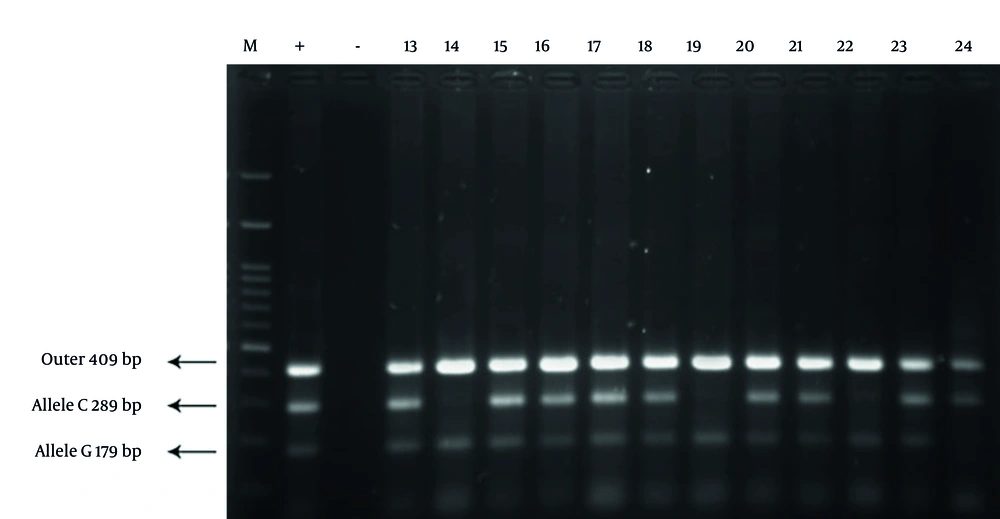
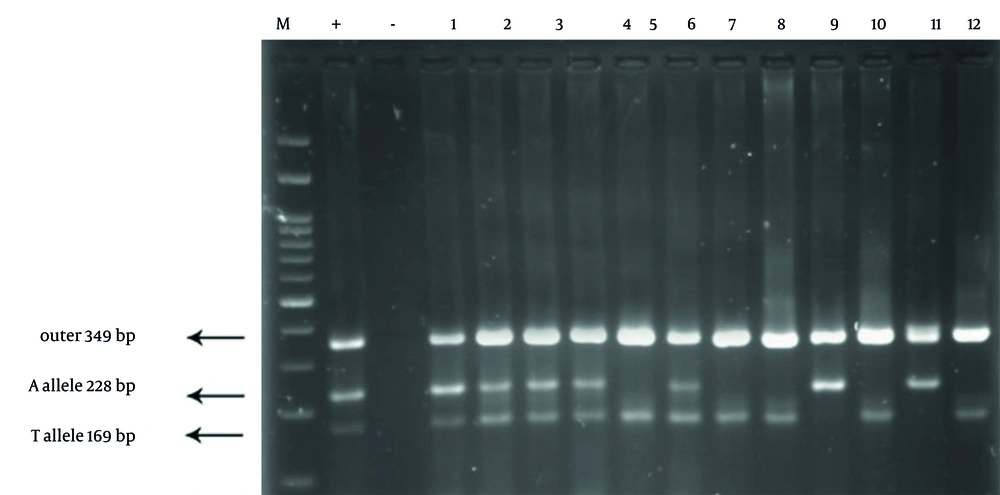
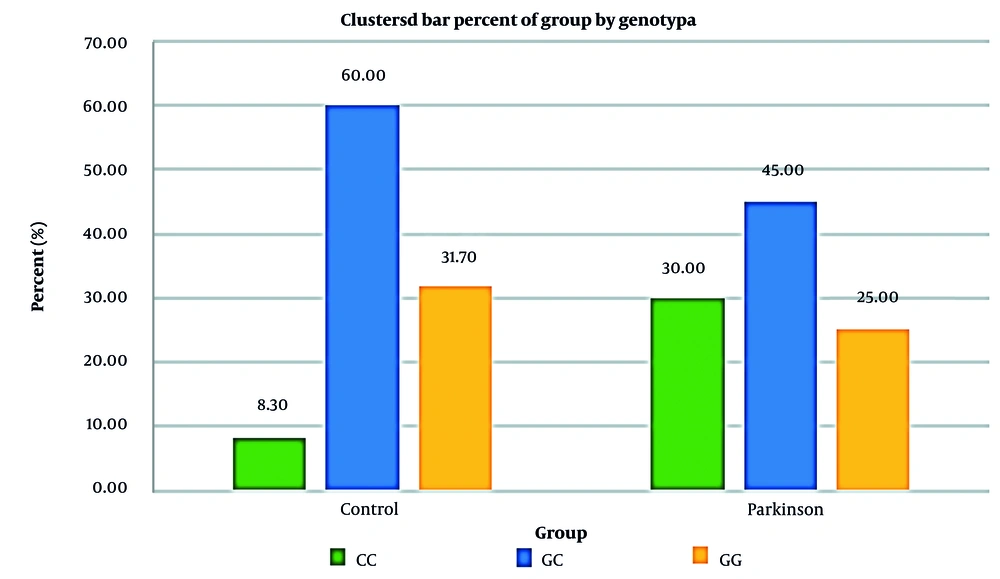
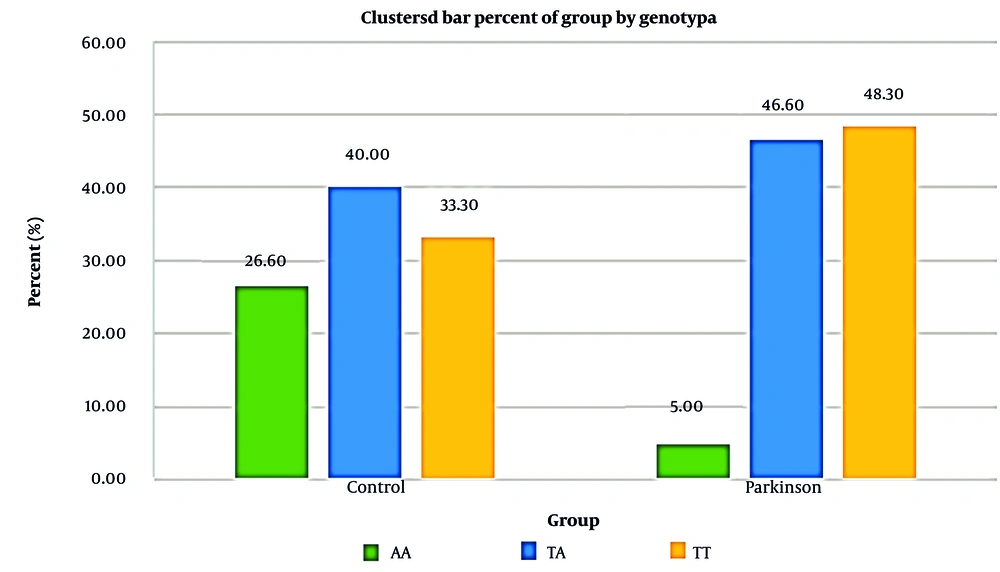
The present study aimed to explore the association between polymorphisms in the IL-2 and IL-8 genes and susceptibility to PD, employing a novel tetra-primer ARMS-PCR method. We hypothesized that specific genetic variants of these interleukin genes, which play central roles in modulating the immune response, could contribute to the pathogenesis of PD. Our results revealed significant associations between certain genotypes and an increased risk of PD, particularly among early-onset patients. These findings underscore the importance of immune dysregulation in the progression of PD and provide new insights into the genetic factors that may underlie this complex neurodegenerative disease.
The application of tetra-primer ARMS-PCR in this study was a methodological innovation that enhanced the specificity and sensitivity of SNP detection. Traditional methods, such as restriction fragment length polymorphism (RFLP) or standard PCR, often require additional enzymatic digestion or multiple amplification steps, thereby increasing the risk of contamination and error (
9). In contrast, tetra ARMS-PCR enables the simultaneous detection of both alleles in a single reaction, making it a faster, more cost-effective, and highly accurate approach for genotyping (
8). This technique was particularly advantageous in detecting low-frequency polymorphisms within our study population, which may have contributed to the clearer associations observed in this research. The enhanced precision of tetra ARMS-PCR also minimized the chances of misclassification — a critical advantage when investigating genetic associations in complex diseases such as PD.
Our findings align with several previously published studies, although notable variations exist. For example, Liu et al. examined IL-6 and IL-8 polymorphisms in a Taiwanese cohort and found no significant associations with PD, which contrasts with our observations. One possible explanation for this discrepancy could be differences in ethnic backgrounds, as genetic variations often exhibit population-specific distributions (
3,
15). In our predominantly Caucasian cohort, we observed a significant increase in the frequency of the IL-8 AT genotype among PD patients, suggesting that this variant may play a more prominent role in Western populations. This underscores the need for more extensive, multi-ethnic studies to fully elucidate the genetic contributions to PD susceptibility across diverse populations.
The study by Ross et al. reported a similar association between the IL-8 A-251T polymorphism and PD in an Irish cohort, where the AT genotype was found to be significantly more prevalent among PD patients. Their findings suggest that this polymorphism may influence the inflammatory response in the brain, potentially exacerbating neuronal loss (
16). Our data corroborate these results, as we also observed an elevated frequency of the AT genotype, particularly among patients with early-onset PD. This genotype appears to be associated with increased IL-8 expression, which could enhance the recruitment of immune cells to the central nervous system, thereby amplifying neuroinflammation and contributing to the degeneration of dopaminergic neurons.
Mendez et al. and Williams-Gray et al. have both emphasized the critical role of chronic inflammation in the progression of PD. Elevated levels of pro-inflammatory cytokines, including IL-2, have been associated with more severe motor symptoms and faster disease progression (
17,
18). Our study builds on these findings by providing a genetic basis for these observations, showing that the IL-2 CC genotype was significantly more common among PD patients with severe symptoms. This genotype may be linked to an enhanced immune response, possibly through increased activation of T cells, which could lead to heightened neuroinflammation and accelerated neuronal damage (
18). Interestingly, Jiang et al. reported elevated levels of IL-8 in the cerebrospinal fluid of PD patients, suggesting a direct role for this cytokine in the disease’s inflammatory processes. Our findings extend this observation by demonstrating a genetic predisposition to higher IL-8 production, particularly in individuals with the AT genotype. Increased IL-8 expression may contribute to the activation of microglia — key mediators of the brain’s inflammatory response — further driving the neurodegenerative process (
19). This supports the hypothesis proposed by Hakansson et al., who noted that genetic variants influencing cytokine production could significantly affect the inflammatory environment in neurodegenerative diseases like PD (
20).
While several studies, including those by Thome et al. and Ross, have reported conflicting results regarding the association between IL-2 and IL-8 polymorphisms and PD, these discrepancies may be attributed to differences in study design, sample size, and population characteristics. Thome’s research did not find a significant association between IL-8 polymorphisms and PD risk, possibly due to the small sample size and limited statistical power (
21). In contrast, our study — featuring a larger and more diverse cohort — provides a more robust analysis and suggests that these polymorphisms may indeed contribute to PD susceptibility, particularly when environmental factors and gene-gene interactions are taken into account. Additionally, the findings by Liu et al., which reported no association in their Taiwanese cohort, further highlight the influence of genetic background on disease risk. It is well-established that allele frequencies for many cytokine genes vary significantly between populations, and such variations can lead to differing genetic effects on disease susceptibility (
3). This underscores the importance of conducting genetic association studies in diverse populations to fully capture the spectrum of genetic influences on PD.
Our study also aligns with the observations made by Hakansson et al., who found that IL-2 polymorphisms were associated with altered immune responses in neurodegenerative conditions. They suggested that regulatory T-cell dysfunction, influenced by IL-2 signaling, could exacerbate inflammation and contribute to disease progression. Our results support this interpretation, as the IL-2 CC genotype was linked to more severe disease phenotypes, potentially due to its role in promoting a pro-inflammatory state (
20).
While our study provides novel insights into the genetic associations between IL-2 and IL-8 polymorphisms and PD, several limitations must be acknowledged. First, although the sample size is larger than that of many previous studies, it may still be insufficient to capture the full extent of genetic variability across different populations. The predominantly Caucasian cohort limits the generalizability of our findings, as genetic backgrounds can vary significantly between ethnic groups, potentially influencing the distribution and effects of these polymorphisms. Additionally, the cross-sectional design of this study does not permit the establishment of a causal relationship between cytokine gene variants and PD progression. Longitudinal studies would be valuable in determining whether these polymorphisms contribute directly to disease onset and progression.
Another limitation of this study is its exclusive focus on the IL-2 and IL-8 genes, despite growing evidence that other cytokines — such as IL-1, IL-6, and TNF-α — also play significant roles in neuroinflammation and PD pathology. Expanding the scope to include a broader panel of inflammatory markers could provide a more comprehensive understanding of the immune mechanisms involved. Furthermore, while the use of tetra-primer ARMS-PCR improved the accuracy of SNP detection, this method may still overlook rare or complex genetic variants that could contribute to PD risk. Incorporating next-generation sequencing could enable a more detailed genetic analysis, revealing additional variants and potential gene-gene interactions. Future research should prioritize larger, multi-ethnic cohorts and adopt a multi-omics approach — integrating genetic, transcriptomic, and proteomic data — to explore the broader impact of cytokine dysregulation in PD. Additionally, examining environmental factors, such as exposure to pesticides or heavy metals, alongside genetic data, could help elucidate gene-environment interactions that may contribute to PD susceptibility. Ultimately, a deeper understanding of these interactions could pave the way for personalized therapeutic strategies targeting the immune system, potentially offering new avenues for disease prevention and treatment.
5.1. Conclusions
In conclusion, our findings provide compelling evidence for the role of IL-2 and IL-8 polymorphisms in modulating the risk and progression of PD. By employing the highly sensitive tetra-primer ARMS-PCR method, we were able to detect significant associations that may have been overlooked by previous studies using less precise techniques. The observed differences in genotype frequencies between our study and others underscore the need for larger, multi-center investigations that can account for genetic and environmental diversity. Our results suggest that targeting cytokine pathways could represent a promising avenue for therapeutic intervention, particularly in individuals carrying high-risk genotypes. Future research should aim to explore the interactions between these genetic variants and environmental exposures, as well as their influence on the broader immune landscape in PD. Overall, our study contributes valuable new insights into the genetic underpinnings of PD and emphasizes the importance of considering immune-related genes in understanding the complex pathophysiology of this neurodegenerative disorder.