1. Introduction
Intravesical foreign body is a rare entity in urology. Previous studies have reported several items which were found in the urinary bladder including electrical wires, chicken bones, thermometers, pieces of Foley catheter, gauze pieces, batteries, worms, snakes and many other entities (1-3). Most of the intravesical foreign bodies are the result of self-insertion. In self-introduced foreign bodies for sexual purposes, most cases do not express their history of foreign body insertion due to embarrassment (4, 5). These patients may present suprapubic pain, bloody urethral discharge or hematuria, urinary tract infection and partial or complete retention (6, 7). Considering the anatomy of male urethra, self-insertion of a long object into the bladder is very difficult (8). Herein, we present a case of a self-inserted extremely long foreign body, a 105-cm electronic wire, into the bladder.
2. Case Presentation
A 13-year-old boy was referred to our clinic at Imam Reza Hospital affiliated to Mashhad University of Medical Sciences, Mashhad, Iran. His chief complaint was hematuria which had been developed two weeks earlier. He had no history of other lower urinary tract symptoms and suprapubic or flank pain. He did not also have a history of foreign body self-insertion in the urethra. On physical examination, no positive point was found. The Intravenous Pyelogram (IVP) was performed as the first radiologic evaluation which showed a foreign body in the bladder (Figures 1, 2). The patient underwent cystoscopy, and an electronic wire around 105 cm long was removed from the bladder by forceps (Figure 3). Following this procedure, the patient had an uneventful postoperative course and was discharged two days later. An informed consent was initially taken from his parent for reporting this unusual case.
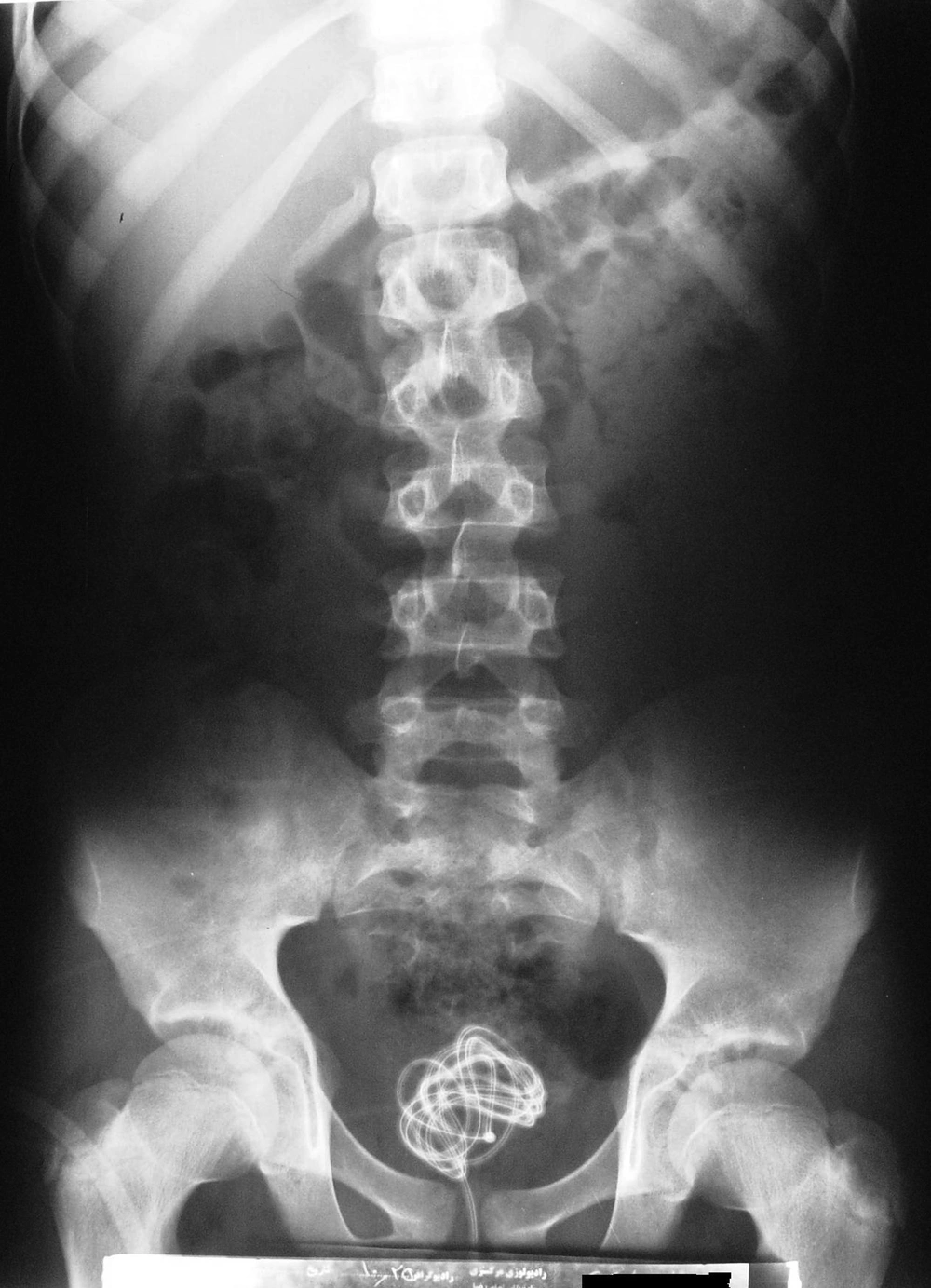
Figure 1.
Plain Abdominal X-ray of Patient With a Very Long Foreign Body in the Bladder and Urethra
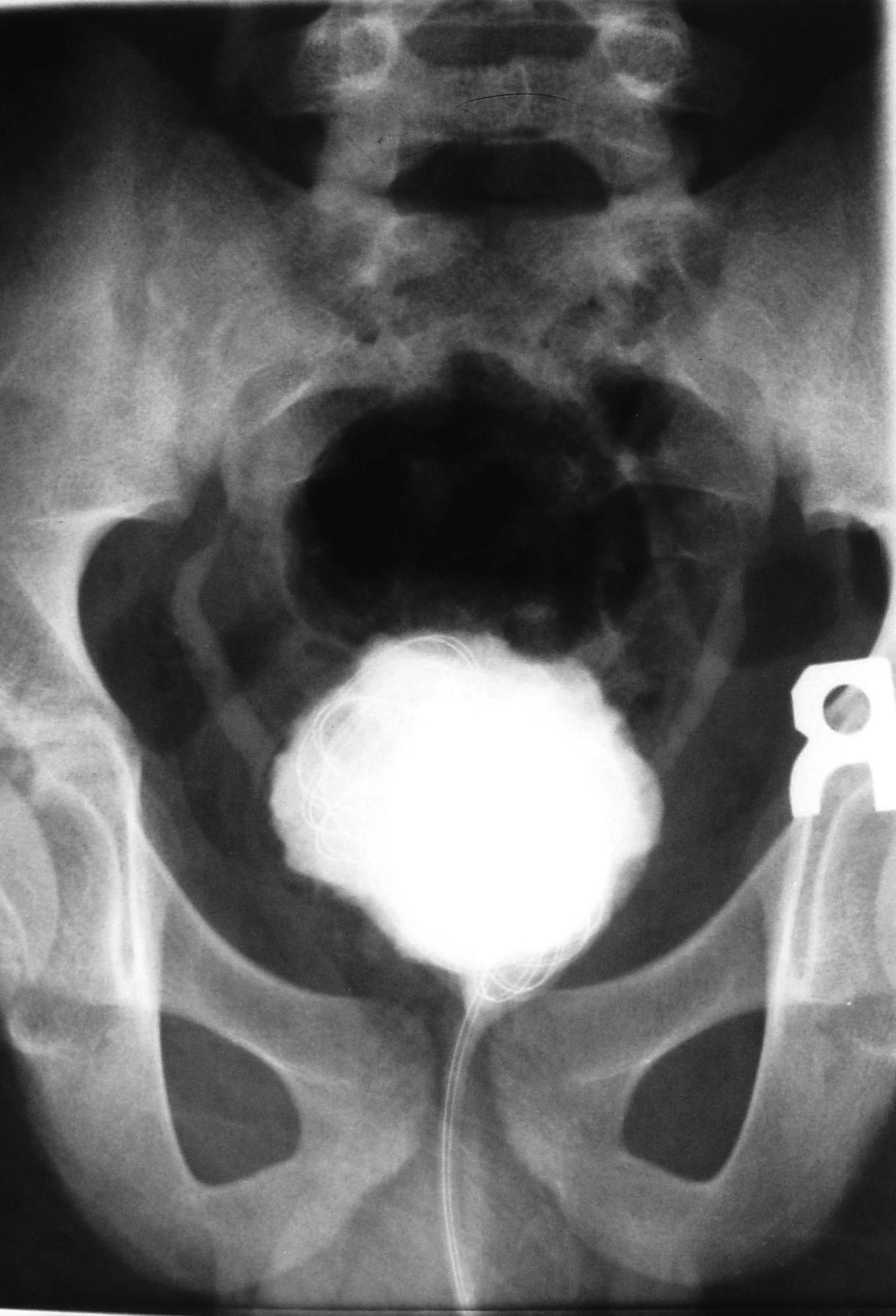
Figure 2.
Intravenous Pyelogram of Patient With a Very Long Foreign Body in the Bladder and Urethra
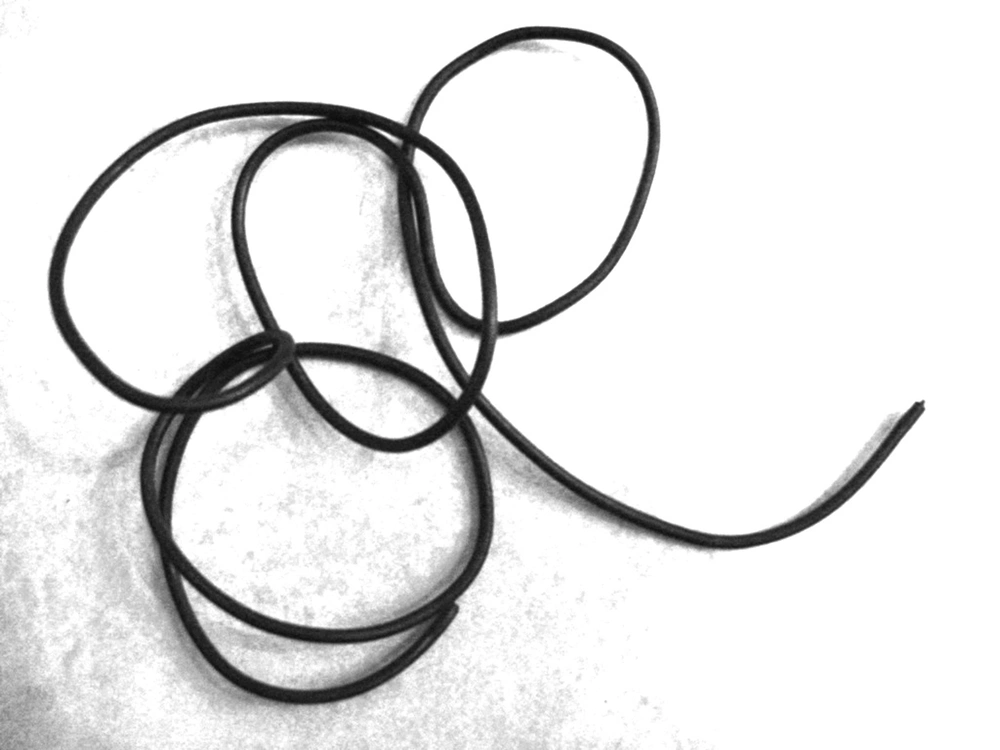
Figure 3.
105 cm Electronic Wire was Removed From the Bladder
3. Discussion
Urinary Bladder is the most common site for foreign body in the urinary tract. Intravesical foreign bodies are mostly inserted as the result of self-insertion, medical procedures, migration from the surrounding organs and penetrating injuries (9). The most common cause of self-insertion of foreign bodies into the bladder is sexual gratification (5). Intravesical foreign bodies are an important consideration in the differential diagnosis of lower urinary tract problems. A neglected intravesical foregin body can lead to serious complications such as swelling of the external genitalia, secondary stone formation, chronic cystitis, hydronephrosis and renal failure (10, 11). It is anatomically very difficult for a man to self-insert a long object into the bladder. Hence, the presented case has two unusual features. First, it is difficult for a foreign body to reach the urinary bladder in men. This is a rather unusual event where a foreign body of this size has reached the urinary bladder in a male. Based on our knowledge, few reports have been published regarding the discovery of a long foreign body in the male bladder. Jani et al. reported a young man with self-insertion of a 95 cm long plastic tube into his bladder (10). Secondly, the present case was left unattended for over two weeks. Non-attendence in this patient was due to embarrassment. In such cases, the delay in diagnosis can lead to urinary tract infection, stone formation and partial or complete urinary retention. Fortunately none of these complications were diagnosed in the current case.
The definite management for intravesical foreign bodies is complete removal of the foreign body by open surgery or the endoscopic approach. However, choosing the optimal technique for removal of foreign bodies is dependent on the patient’s condition, urinary tract injuries and the size, shape and material of the foreign body (9). The first line treatment is minimally invasive removal by cystoscopic extraction. Yet, an undetermined diameter, length or material of the object has been described as a contraindication for endoscopic removal. In this regard, common sense should be used and whenever a surgeon believes that an attempt of endoscopic removal will with no doubt result in a traumatic or unsuccessful procedure, the patient should be directly taken for open surgery (12).