Introduction
During past decade, psychologists have increasingly been attracted to the notion of happiness, its definitions, its predictive factors and determinants and the relationship between happiness and personality. There are some fundamental questions regarding the notion: could happiness be considered as a state resulting of people's situations and their life event? Does it have anything to do with personality? Or happiness is the result of a balance between these two factors? The prominent approach in studying happiness considers it as a personality characteristic [1, 2]. Results of a lot of research acknowledged that happiness is the same as the construct called stable extroversion in Eyesenck theory and extroversion could be considered as the most robust predictive of happiness (especially in predicting social happiness). Some studies showed that the quality of satisfaction from the whole life span could determine the level of happiness i.e. people that are more satisfied with their life, are happier. Consequently, lower level of happiness is caused by some events that reduce the level of satisfaction. It is worth to note that these are not the facts themselves which resulting in increased or decreased satisfaction level. Rather, peoples' judgments and perceptions are the determinant factors. Therefore, avoiding negative judgments is the key factor of living a happy life. The results of cross-cultural study showed that happiness could be considered as a different and distinct construct in terms of people's culture, environmental situation and social context [2]. This differentiation is stable and the stability suggests the relationship between happiness and personality factors rather than life events.
As a result, happiness is a personality variable and it has biological foundation, based on Eyesenck theory. Most of the studies aiming to determine the external and internal factors affecting happiness suggest that first of all, the external factors do not play important roles in happiness and their effects on happiness are not persistent. Moreover, happiness is linked to some personality factors such as extroversion, neuroticism and psychoticism. So that extroversion is positively correlated to happiness but neuroticism and psychoticism are negatively correlated to it [3].
Lyubomirsky et al. came up with an eclectic model of genetics and personality for determining well-being and happiness. They believe that well-being and autonomic happiness are the same as environmental and genetic factors [4]. It seems that individual differences on happiness could partly be explained by personality differences which could be as the results of genetic factors. In other words, happiness is a personality variable with biological foundation [5].
Various studies showed that personality factors (neuroticism, extroversion, openness, agreeableness and conscientiousness) have considerable influences on happiness. According to some experts, two out of five personality factors have significant relationship with happiness. Denver and Cooper and Argyle et al. respectively reported correlation coefficients 0.22 and 0.45 between extroversion and happiness [6, 7].
Costa and Mc Care showed that happiness associates with higher level of extroversion and lower level of neuroticism. Neuroticism has a negative correlation with positive affect and happiness [8]. However, neuroticism correlates positively with depression [9].
Thalassemia is a common form of inherited autosomal recessive blood disorder that is caused by the weakening and destruction of red blood cells. Thalassemia is caused by variant or missing genes that affect how the body makes hemoglobin. Therefore, patients who are suffering from thalassemia need properly professional treatment in order to live a normal life. In recent years, life expectancy index and the quality of life have been increased in patients with thalassemia due to considerable medical progress and efficient treatments. As a result, people with thalassemia live their lives in the society such as non-patients. People with thalassemia mostly have been subjected in medical rather than psychological studies and there are a few psychological studies regarding thalassemia [10].
Since last years of the twentieth century, there has been a growing attraction to the subject of positive emotions in psychology [11, 12]. There has been increasing number of studies with the subject of happiness since 1960 [12]. Ryff and Singer defined happiness as an attempt to perfection that shows the real potentials of the person [13]. A happy person is light-hearted, healthy, open-minded, extrovert, optimist, non-worrier, religious, with high self-esteem, faithful to ethics, humble and intelligent [14]. Happiness include different aspects of life such as life satisfaction, absence of negative emotions such as depression and anxiety, healthy inter-personal relationships, personal growth and loving nature and other people. As a result of their personality, some people are happier than others because personality is a key factor in predicting happiness. Personality is basically an important factor in determining humans' behavior [15]. Therefore, the aim of the present study is to determine the relationship among personality factors and happiness in people with thalassemia (major).
Discussion
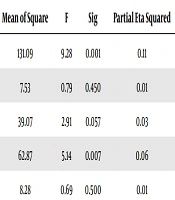
The study was aimed to examine the relationship among personality factors and happiness in people with thalassemia (major). The results admitted that there are correlational relationships among predictive variables and criterion. A statistically meaningful negative correlation was found between neuroticism and happiness.
The result is consistent with past research [8, 21-27]. As the results show, increased neuroticism corresponds with decreased happiness. Adopting positive attitude prevents tension and anxiety. Consequently, people with high level of happiness tend to experience positive emotions and judge the events in an optimistic way. However, unhappy people do negative evaluations under unpleasant environment and more frequently experience negative emotions such as anxiety, depression an anger. One explanation could be the fact that there is a negative relationship between depression and happiness so that depression and anxiety are some traits of neuroticism. On the other hand, happy people avoid negative emotions (such as depression) and seek for positive intimate relationships with others.
Indeed, a meaningful correlation between extroversion and happiness was found. The result is consistent with past research [2, 6, 20, 22-24, 28-30]. Different studies admitted that most of the happy people are extrovert and capable of developing strong bonding. Happy people feel happiness with or without other people, comparing with unhappy people. Capability of establishing positive relationships is an important aspect of mental health. According to Martin study [31], extroverts are usually witty and are benefited from some abilities attributed to emotions like emotional intelligence and proper social interaction. Chan and Joseph [32] acknowledged that firstly, extroversion is correlated to happiness, self-actualization and self-esteem. Secondly, there is a positive relationship between socialization and happiness but the correlation between happiness and neuroticism is negative. In conclusion, there is a positive relationship between happiness and well-being, a negative relationship between neuroticism and well-being and negative correlation between psychoticism, conscientiousness and compatibility.
The hypothesis on relationship between openness and happiness in people with thalassemia was confirmed. The result is supported by Abedi et al. [33]. Openness to new experience is one of the dimensions of mental health. People with great flexibility are curious about their internal and external world. Consequently, their life is filled with new experience. They tend to accept novel attitudes and unaccustomed values therefore they experience more emotions (positive and negative) deeper than inflexible people.
A meaningful relationship between agreeableness and happiness was found that is consistent with studies made by Garousi et al. and McCrae and Costa [26, 34]. Agreeableness has a strong environmental component, compared with other personality factors. It facilitates positive experience in social situations and results in success that increases happiness in return. Researchers believe that people who adopt negative attitudes towards their abilities and hold false believes, might not explore meaning behind the events and are vulnerable to physical-mental disease so they might be less happy with their lives.
Conscientiousness had a significant correlation with happiness. The result is supported by McCrae and Costa [34], Hayes and Joseph [24], Garousi et al. [26] and Abedi et al. [33]. Conscientiousness is defined as the ability to control impulses in a socially acceptable way. Therefore, it facilitates task-based and goal-oriented behaviors. Conscientiousness involves thinking before acting, postponing urges, obeying norms and social codes and organizing and prioritizing tasks. One explanation is that thalassemia that is an incurable chronic physical condition, acts as a critical situation for both patients and their families.
The patients need to learn the suitable coping skills because if the critical condition continues, it might result in worsening the physical condition and prevents suitable treatment. Thus frustrating situation caused by the disease might make the patients vulnerable to mental problems and disorders. Also it makes the patients helpless and desperate that in return leads to reduced happiness, self-confidence and hope. Since the patients with thalassemia demonstrate limited physical proficiency in their normal life, it makes them anxious, angry and depressed so they face mental crisis and stress. It might result in vulnerability to mental problems. One of the limitations of the current study was available sampling method that confines the generalize ability of the findings. Furthermore, since the design of the study was correlational, casual explanation is not allowed.