1. Introduction
Ménière's Disease (MD) was recognized as an otologic diagnosis when Prosper Meniere first reported a person with vertigo and hearing disorders in 1861. The MD prevalence varies widely across countries, usually about 7.5 - 157 cases per 100,000 people. In a study, out of 55 children with symptoms of vertigo, only 2 children were diagnosed with MD (excluding children with otitis media), and the prevalence of children with MD was 2.6% among total MD patients (1, 2).
There is no effective test method for a definitive or probable diagnosis of MD. Current diagnoses are based on the patient's reported symptoms, such as periodic vertigo, fluctuating hearing loss, or physical examinations. In 1959, Sorenson reported a case report of MD in a 7-year-old girl who suffered from recurrent vertigo attacks, nausea, and hearing disturbances (3). In 1941, Aubrey presented a case report of MD in a 12-year-old child suffering from vertigo, whose auditory nerve underwent a partial excision surgery (4, 5). These are among a few reported cases of MD in pediatrics.
Ménière's disease usually involves the cochlear duct and saccule in the early stages. As the symptoms progress, more cochlear and vestibular labyrinth areas are affected (3, 4). In the final stages, since the entire endolymphatic system is affected, it can cause rupture and collapse in any part of the membranous labyrinth, and the end organs of the vestibular system suffer permanent and serious damage (6, 7). In general, MD occurs bilaterally in 15% of cases, and vertigo occurs in 96% of patients with MD, which is debilitating and the worst symptom of the disease (8, 9). During audiological and electrophysiological examinations, it was found that MD occurred bilaterally in children. The prevalence of bilateral MD in children is very rare as in adults. Delayed endolymphatic hydrops is another type of MD where the patients complain of sudden hearing loss and dizziness. If hearing loss occurs in childhood, it can be said that the patient suffers from delayed endolymphatic hydrops (5). According to Choung, the initial audiogram in children with MD generally shows high-frequency hearing loss (1, 2), while in adults, the audiogram shows low-frequency hearing loss (4).
The diagnostic tests for MD include electrocochleography (EcoG), video head impulse test (VHIT), subjective visual vertical (SVV), and video nystagmo graphy (VNG). The most important symptom for diagnosing MD is unilateral fluctuating hearing loss, which is usually mentioned by the patient on the first visit. Sensorineural hearing loss usually occurs at low frequencies (4). The best threshold is at the frequency of 2,000 Hz. Also, the EcoG test is a clinical test to diagnose MD (4, 7). Schimat et al. reported for the first time that some MD patients showed increases in the SP range in this test (4, 6), and subsequently, wide inter-individual variability in SP ranges was reported (4, 10), but the ratio of SP/CAP varies less among people. In fact, the domains of SP and CAP are very consistent within individuals. For this reason, the SP/CAP ratio reflects different pathologies among individuals. In MD patients, this ratio increases. The increase of SP, along with other types of sensorineural hearing loss, has rarely been seen. Thus, the increase in SP is specific to this disease.
In many cases, even after treating MD symptoms such as vertigo and ear fullness, the SP/CAP ratio does not return to normal (4, 10). The VHIT test is very important in evaluating the function of horizontal canals because it is very fast and provides important clinical information. As a very basic reflex, the horizontal VOR reflex stabilizes images on the retina during horizontal head movements. In healthy people, horizontal movements of the head to one side (right or left) cause eye movements in the opposite direction, stabilizing the images on the fovea during head movements to the sides. Also, VOR gain is calculated by the eye-to-head movement velocity ratio. In patients with unilateral balance disorders who visit the clinic with symptoms such as dizziness and imbalance, the VHIT test provides important information (4, 10).
As mentioned, endolymphatic hydrops is the main and important finding in MD. In the early stages of hydrops, it causes cochlear duct and saccule involvement. Since the SVV test checks otoliths' function, this test is recommended for MDs, especially in the early stages of pathology. Another test performed in patients with MD is the VNG test, which has received much attention. This test is very helpful in diagnosing patients with vestibular disorders and differentiating peripheral from central origin of vestibular disorders. Moreover, this test is decisive in managing patients with vestibular disorders before surgical interventions. During the VNG, saccade, slow pursuit, optokinetic and caloric evaluations are also performed in MD patients.
2. Case Presentation
A 14-year-old boy visited Echo Hearing/Balance Clinic in Mashhad, Iran, on October 1, 2022. According to the patient and his parents, he had 4 vertigo attacks last year, and his hearing loss fluctuated during this period. He was referred to an otolaryngologist or otologist, but no diagnostic tests were performed on this patient. The symptoms subsided after taking drugs such as betahistine and dimenhydrinate, and his hearing returned to some extent. However, the last periodic attack was severe, making the patient visit an otolaryngologist for specialized and clinical evaluations. The patient's main complaints were hearing loss, severe vertigo, and nausea. The main cause of hearing loss and vertigo was unclear and indicated that the hearing loss was idiopathic. The child's family had no history of hearing loss or underlying diseases. The mother's delivery was completely normal, and the child indicated no history of jaundice or cardiovascular problems, no history of hospitalization and surgery, or migraine symptoms.
Forty-eight hours before hearing and balance tests, the patient was asked not to take any special drugs and to avoid caffeine and salt. Otological evaluations were performed on the patient and showed that the external ear, auditory canal, and tympanic membrane were normal. The nose, throat, head, and neck were completely normal, and no sign of a tumor or cyst was observed in the patient. The patient's audiogram (Figure 1) showed mild to moderate bilateral sensorineural hearing loss at high frequencies. The speech discrimination score in both ears was very good, and the SRT in both ears was in perfect agreement with the hearing thresholds. Acoustic reflex thresholds in both ears were fully observed and were at a relatively good range. Tympanometry in both ears was completely normal, and type A was reported (Figure 2). The EchoG test results confirmed MD (Figure 3). The SP/CAP amplitude ratios in the right and left ears were 0.6 and 0.4, respectively, much higher than the normal value (0.3). For the SVV test, the patient sat on a chair with the head tilted forward at zero degrees (fixed forward gaze) and 30 degrees to the right and left (Figure 4). The patient was asked to adjust the image of the object in the vertical position in three states of fixed forward gaze and head tilt to the right and left.
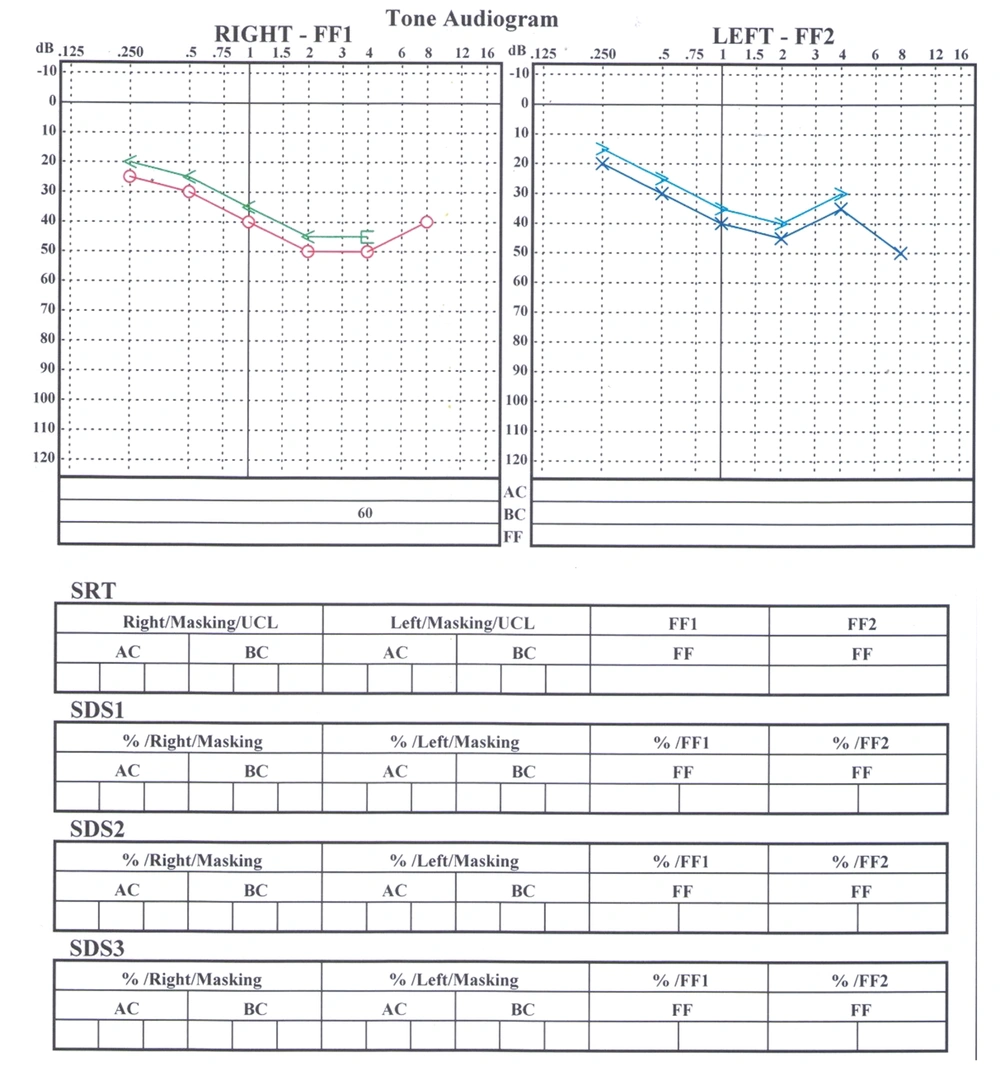
Figure 1.
Tympanometry
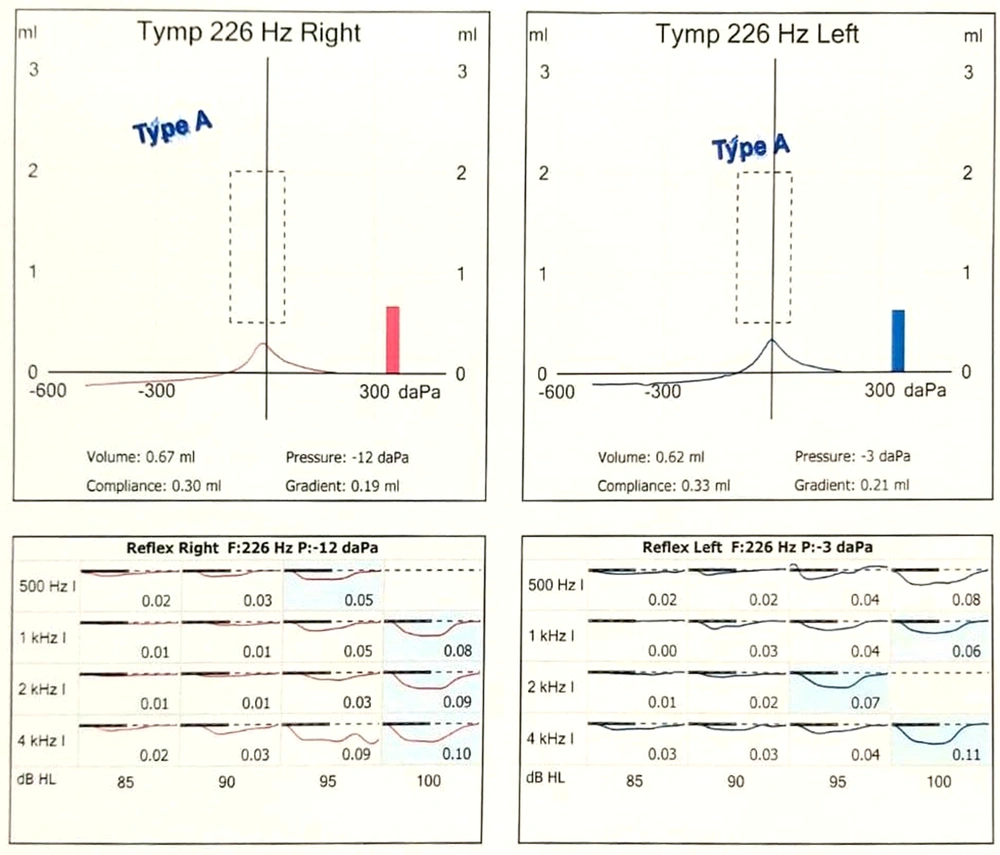
Figure 2.
Reflex level
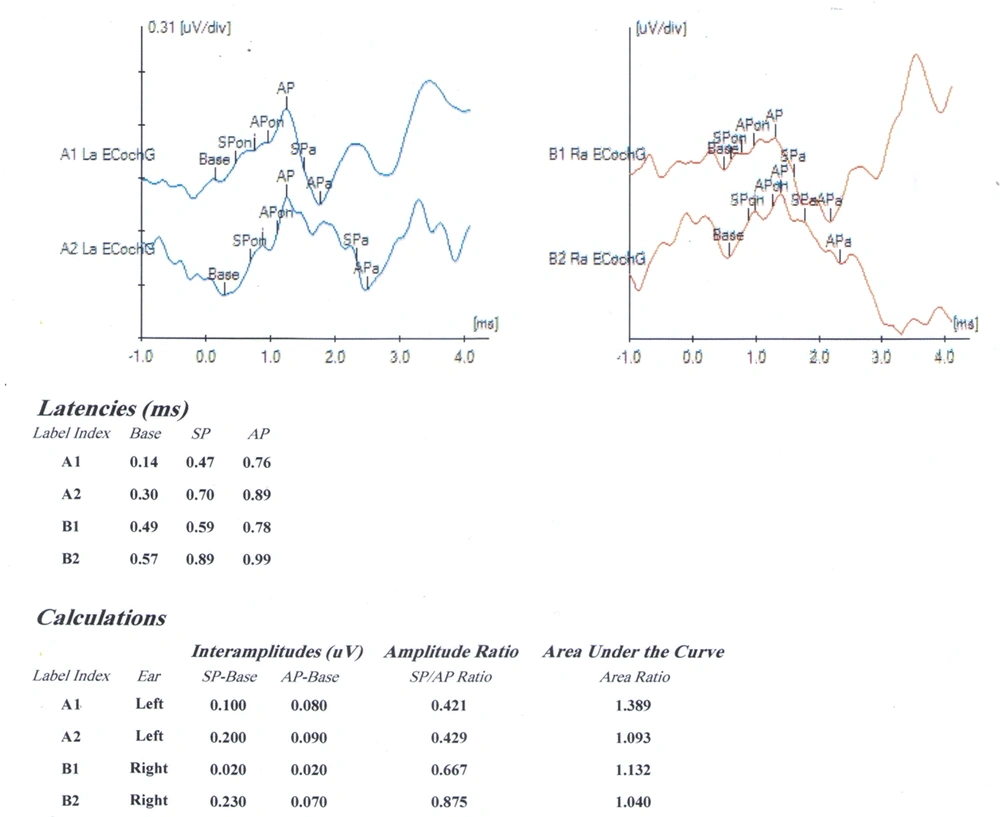
Figure 3.
EchoG test
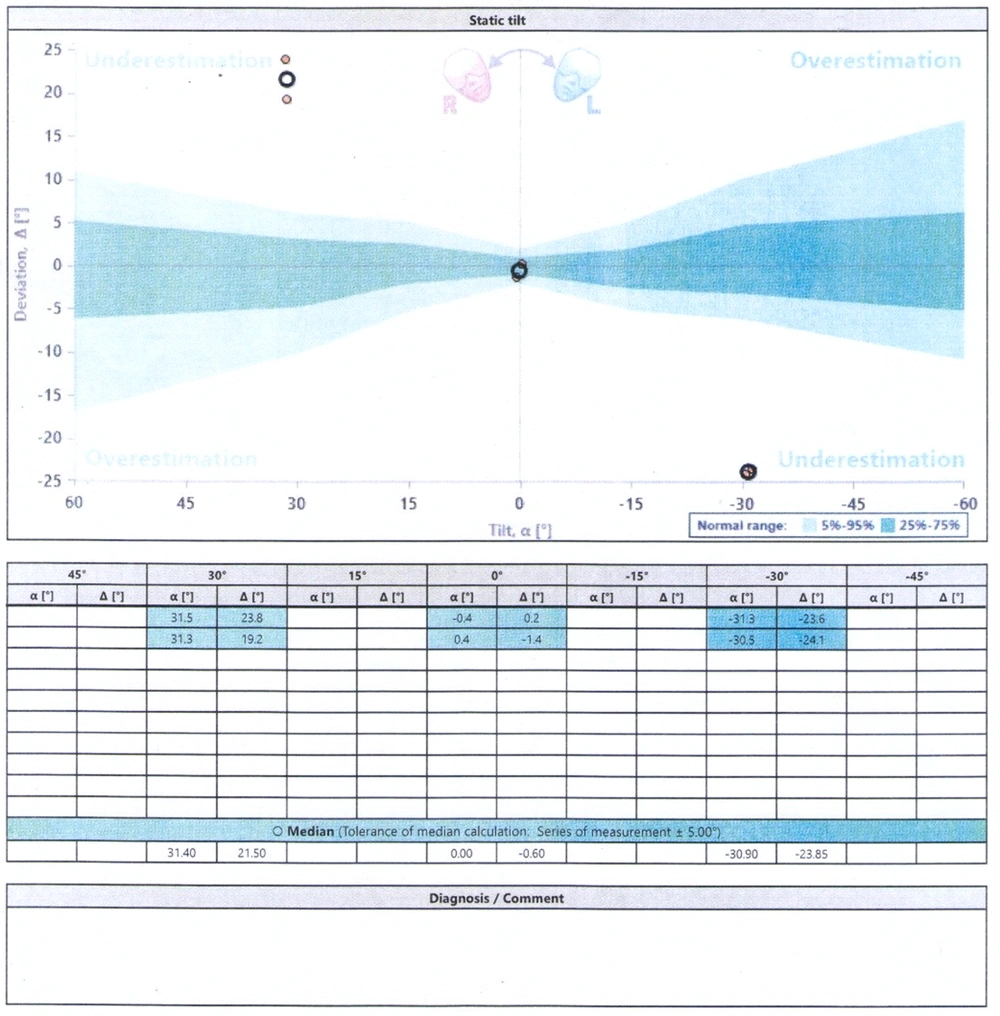
Figure 4.
SVV test
According to Figure 4, SVV deviation in zero degrees (head forward) was in the normal range of ± 2 (11). However, when the patient's head was tilted to the sides at an angle of 30 degrees, the results were very different, and the SVV deviation was much higher than normal, indicating that the SVV test findings are very helpful in diagnosing hydrops. The VHIT also confirmed endolymphatic hydrops in the patient. In this test, rotating the head around the yaw axis stimulates the horizontal channels and creates the horizontal VOR reflex, which is useful in evaluating patients with MD. The results of the VHIT are illustrated in Figures 5, 6, and 7, showing a slight or relative decrease in the function of the horizontal channels on both sides. The VOR gain is close to 1 in normal people. Our patient's values were less than 1, indicating a slight drop in VHIT results caused by the weakness of the horizontal channels.
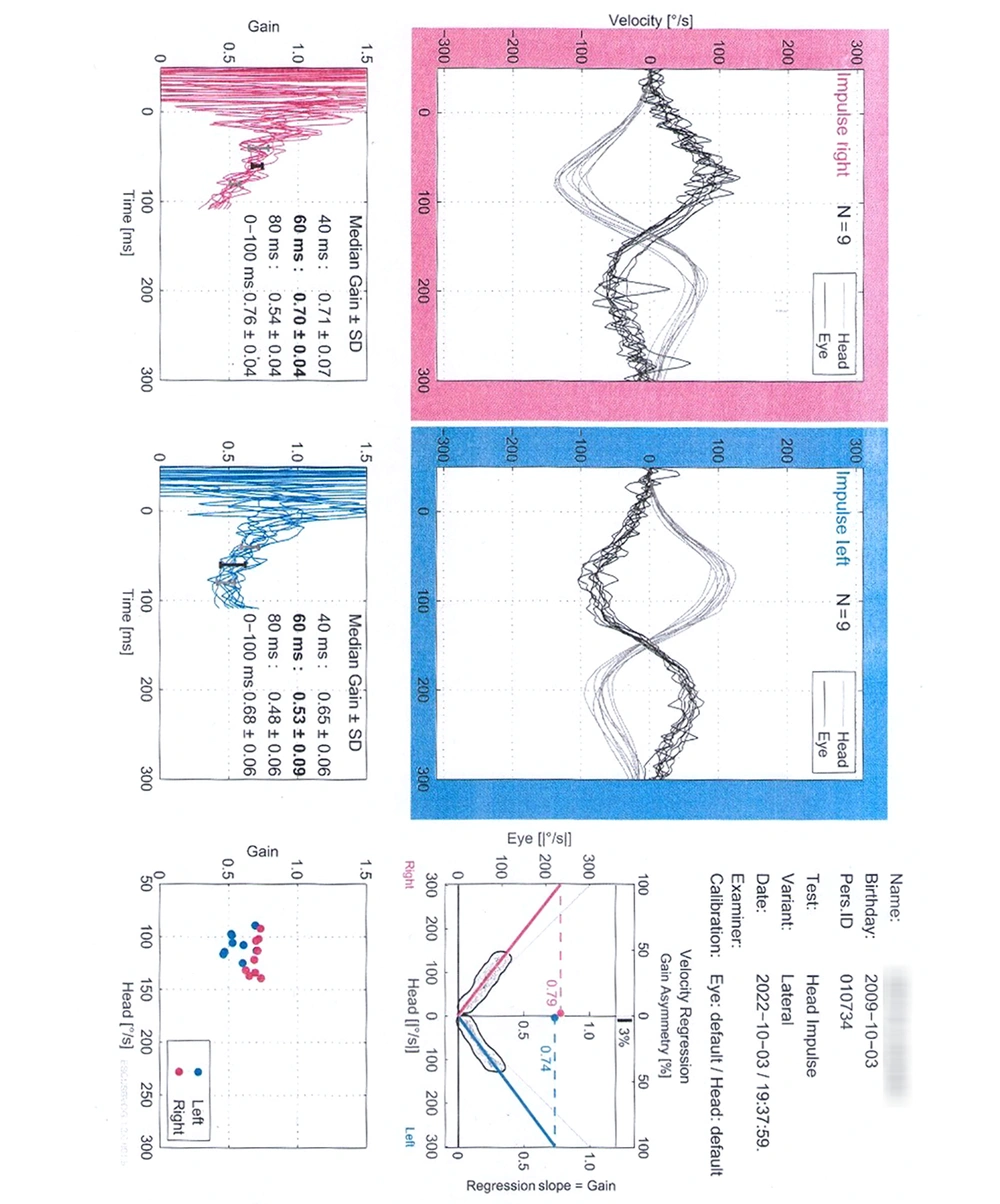
Figure 5.
VHIT test
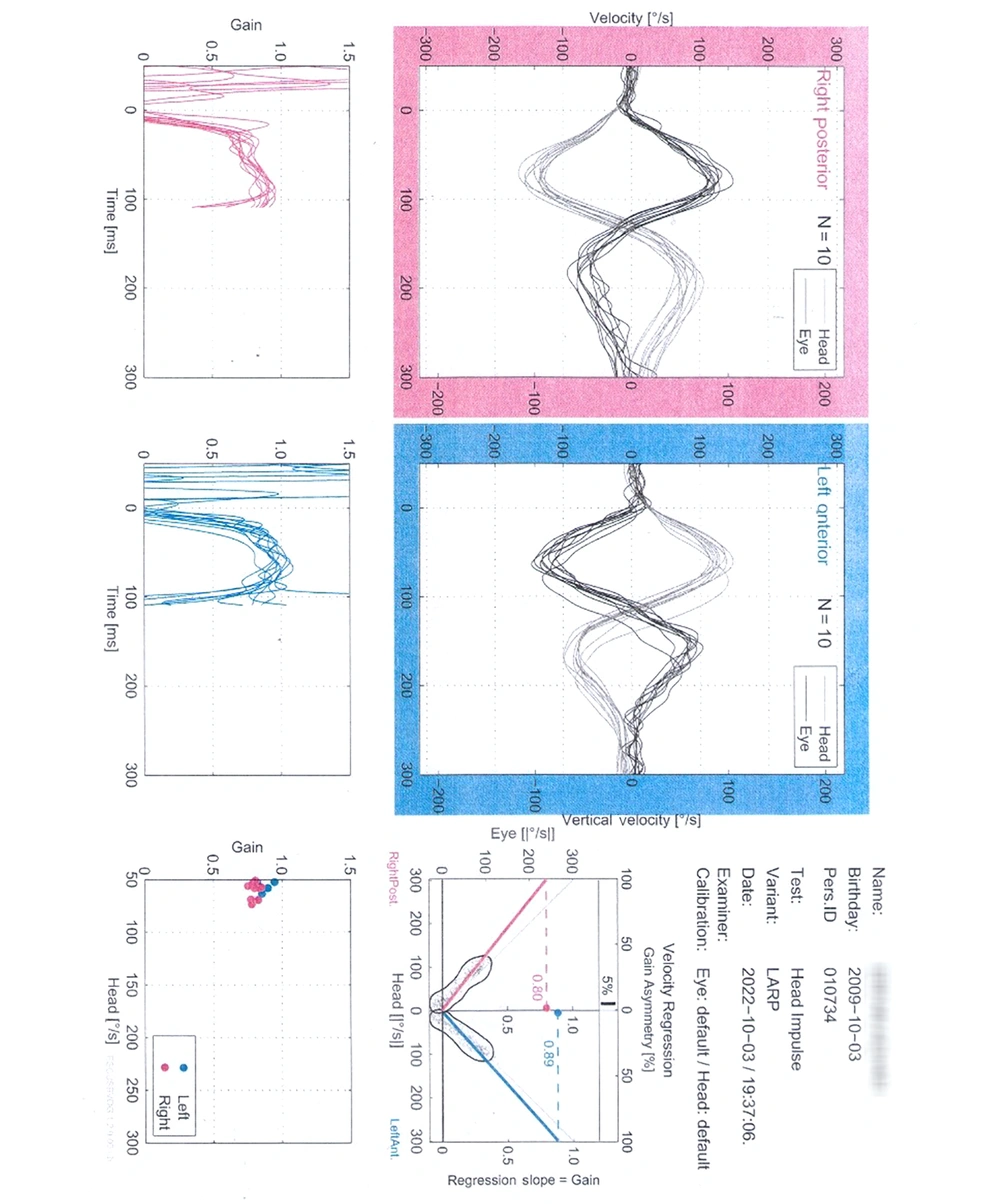
Figure 6.
VHIT test, variant lateral
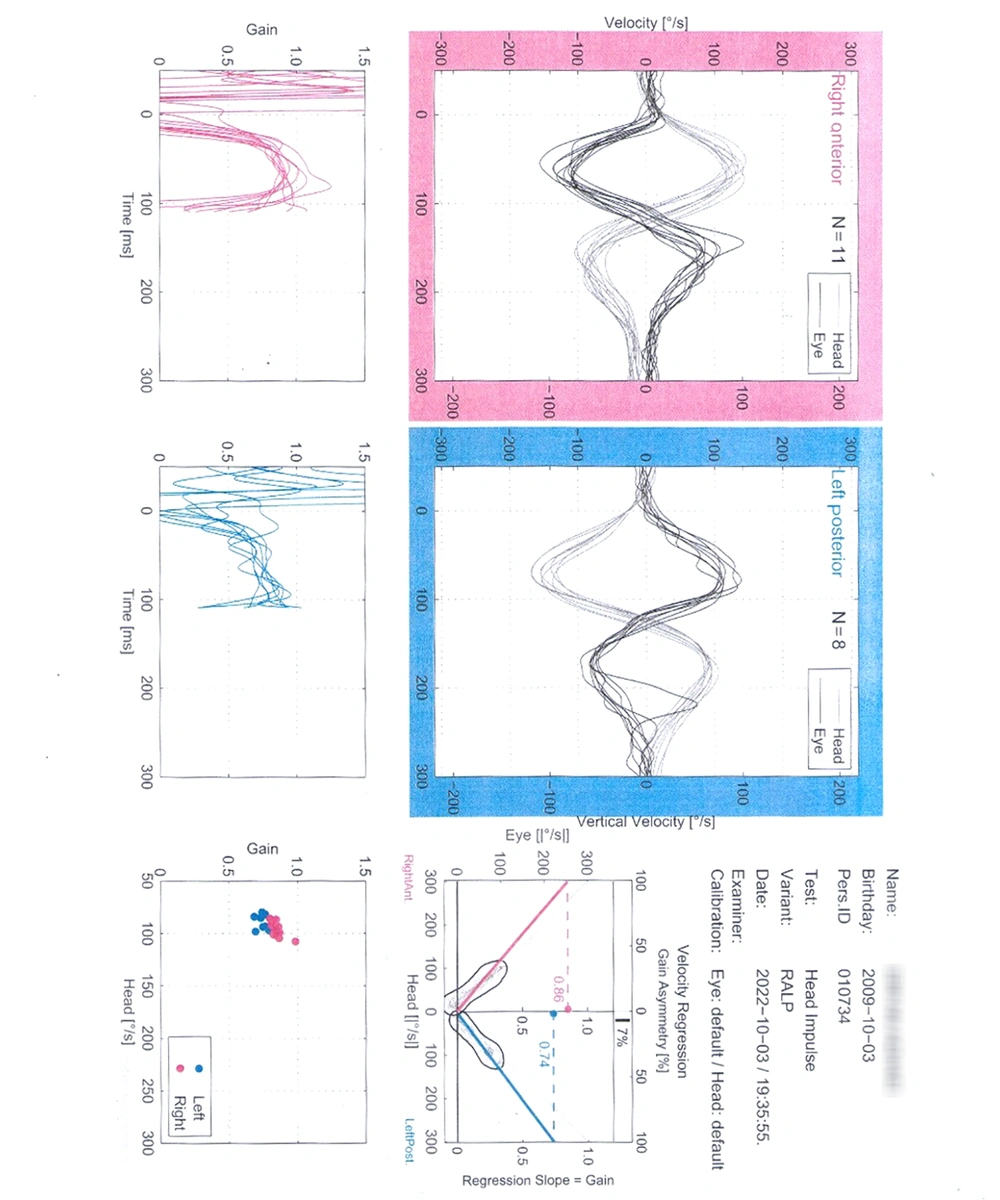
Figure 7.
VHIT test, variant RALP
It should be noted that this test is also effective for examining the upper and posterior channels. This test was completely performed on the patient, and the results confirmed that the upper and posterior channels were not damaged, and the lesion only caused damage in the horizontal channels. Finally, VNG was the last and most important test performed on the patient. In this test, goggles are placed on the patient's face, and eye movements are checked. Inside the goggles, a camera records these eye movements completely. In patients with balance disorders, eye movements are usually affected by the phase of the disease and its severity. In fact, balance disorders affect eye movements, which is called nystagmus. In our patient, under the VNG test, oculomotor tests (saccade and pursuit, optokinetic movement, and gaze stability) and caloric tests were performed, and the results were completely normal (Figure 8).
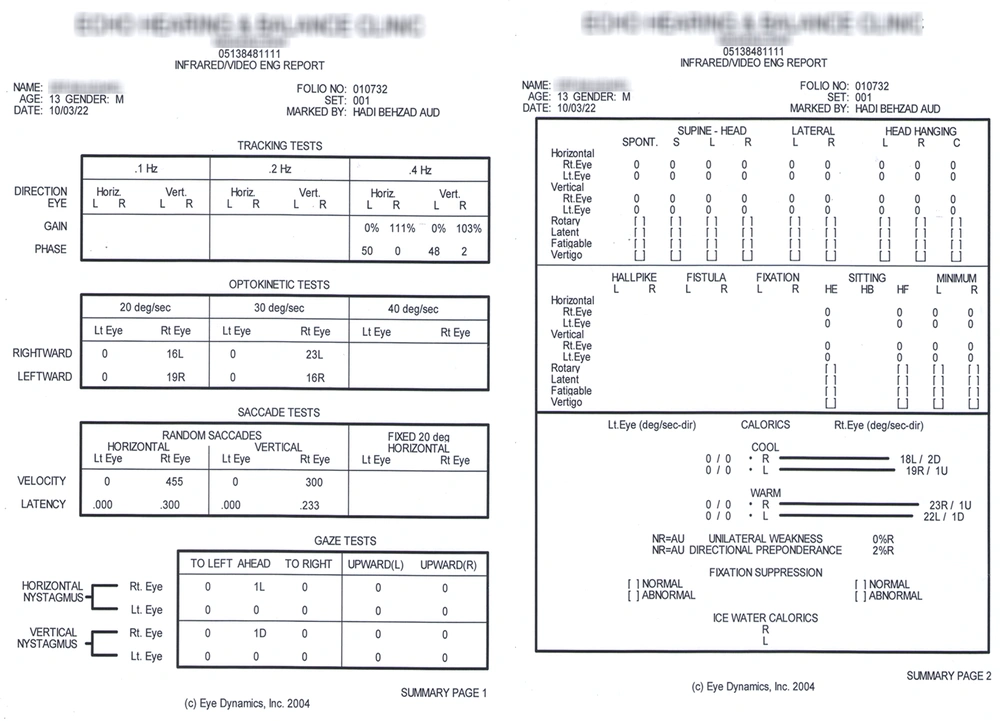
Figure 8.
VNG test
3. Discussion
Compared to adults, children whose main complaint is vertigo are often neglected, perhaps because they cannot express their signs and symptoms well or the cause of vertigo is not easily understood. Auditory symptoms in children with MD appear over a long period, so the diagnosis of MD usually occurs near the second decade of life. In general, there are very few reports of early symptoms of MD in children. The cause of these symptoms in children is relatively different from those in adults. In more than 50% of cases, the cause of vertigo in children is due to otitis media, migraine, and vestibular neuritis. For this reason, it is very difficult to diagnose the cause of vertigo in children (5, 12).
Hydrops occurs bilaterally in 15% of MD cases, and the prevalence of bilateral MD is rare. In this study, in all hearing and balance tests, including EchoG, SVV, and VHIT, except for VNG, the results were bilaterally abnormal, indicating the occurrence of bilateral MD in the child. The SP/CAP ratio in the EchoG test exceeded the normal level, which was clear evidence of MD. The SVV test results were within the normal range at zero degrees (in the static state where the head is fixed forward), but when the head tilted 30 degrees to the sides, the responses were abnormal. This indicates that tilting the head to the sides causes endolymph movement, thereby stimulating or inhibiting the vestibular labyrinth on two opposite sides and leading to excitatory or inhibitory responses. It can be concluded that performing the SVV test in dynamic mode is very helpful in diagnosing hydrops, and we should not just pay attention to the static SVV results, indicating the great ability of the SVV test in the diagnosis of these patients, especially when the disease is in an acute phase.
Paying attention to caloric and VHIT results in patients with endolymphatic hydrops is very important. Caloric responses occur due to vestibular system stimulation, which is generally caused by low-frequency stimulation. In fact, low-frequency stimuli are very effective in extracting caloric information, which is very important in extracting information in patients with hydrops. Since in hydrops, the disorder generally occurs in the low-frequency range; caloric results are more affected than the VHIT results (10). The VHIT stimulates the vestibular system in the high-frequency range, and most of the head movements during daily life activities stimulate the vestibular system in the high-frequency range. This shows the high effectiveness of the VHIT, but it is less sensitive in diagnosing hydrops compared to caloric tests (10). In our study, the results of VHIT were abnormal in the child, but the caloric results were normal. This indicates that, although the caloric test has a high sensitivity in diagnosing hydrops compared to VHIT (13), it alone cannot give definitive results in the diagnosis of this disease, and it is better to perform the VHIT test as a complementary test along with the caloric test. The information obtained about the caloric test can be more helpful in the advanced stages of hydrops, but the VHIT results are not affected by the early or advanced stages of the disease. According to the obtained results, it can be said that endolymphatic hydrops in the child was in the early stages and had not yet reached the advanced stages of this disease. This makes interventions and treatment management more effective and comprehensive.
Very few studies have been conducted about MD in children; hence, the conclusion about this disease is very complicated. In a study conducted by Behzad et al. on a 14-year-old girl with MD, the audiogram results showed mild to moderate sensorineural hearing loss at low frequency, which is different from the audiometric test results in our patient, who was a 14-year-old boy and his hearing loss was at high frequency. The different anatomical structure of the cochlea between males and females may have caused different results in the audiogram of these two patients, but it is not possible to say it definitively because the studies about this disease in the pediatric group are rare and there is a need for further studies in this field. According to studies by Choung et al., hearing loss in children with hydrops was in the high-frequency range (1, 2), which is consistent with the results of our study.
3.1. Conclusions
Attention to signs and symptoms of hearing and balance disorders in children who refer to clinics and medical centers is very important. Bilateral hearing loss at high or low frequencies is associated with severe vertigo and tinnitus; therefore, accurate history taking and using a set of hearing and balance tests by an audiologist can often lead to a better diagnosis of MD.