
Zahedan J Res Med Sci

Image Credit:Zahedan J Res Med Sci

A Narrative Review on APOE in Breast Cancer: From Prognosis to Cognitive Decline

Author(s):
Alireza KhosravinejadAlireza KhosravinejadAlireza Khosravinejad ORCID1, Shohreh Zare KariziShohreh Zare KariziShohreh Zare Karizi ORCID2,*
1Department of Biology, Science and Research Branch, Islamic Azad University, Tehran, Iran
2Department of Biology, Varamin Pishva Branch, Islamic Azad University, Varamin, Iran

Zahedan Journal of Research in Medical Sciences:Vol. 28, issue 1; e165536
Published online:Sep 07, 2025
Article type:Review Article
Received:Aug 17, 2025
Accepted:Aug 26, 2025
How to Cite:Khosravinejad A, Zare Karizi S. A Narrative Review on APOE in Breast Cancer: From Prognosis to Cognitive Decline.Zahedan J Res Med Sci.2025;28(1):e165536.https://doi.org/10.5812/zjrms-165536.

Abstract

Context:

Apolipoprotein E (APOE), encoded by three significant alleles (ε2, ε3, and ε4), is a multifunctional protein. Its well-established roles include lipid metabolism and neurological homeostasis. However, recent studies have expanded its relevance to cancer biology, particularly in breast cancer pathogenesis. Apolipoprotein E influences breast cancer development, tumor progression, and clinical outcomes, as well as cancer-related cognitive impairment (CRCI), especially after chemotherapy. The ε4 variant, in particular, has been implicated in tumor aggression and cognitive decline, underscoring its dual role in oncogenic and neurotoxic pathways.

Evidence Acquisition:

This narrative review synthesizes findings from recent studies investigating APOE’s role in breast cancer and CRCI. The focus is on the ε4 allele’s association with tumor aggression and cognitive dysfunction, drawing from molecular and clinical research to elucidate its underlying mechanisms.

Results:

The ε4 variant of APOE has been identified as a critical factor in both breast cancer progression and cognitive decline. It contributes to oncogenic pathways that drive tumor aggression and neurotoxic pathways linked to CRCI. These insights highlight the potential for precision medicine strategies that incorporate genetic profiling, such as APOE genotyping, into clinical guidelines. Such approaches could optimize treatment plans by mitigating cognitive side effects and improving the quality of life for survivors.

Conclusions:

Understanding the molecular mechanisms of APOE alleles, particularly ε4, is pivotal for developing targeted therapies in breast cancer. Precision medicine strategies that integrate genetic profiling hold promise for optimizing treatment outcomes and addressing neurological challenges in patients. By leveraging detailed insights into APOE’s complex roles, researchers can advance personalized therapies that improve both oncological and neurological outcomes. Consequently, breast cancer survivors may benefit from a better quality of life.

1. Context

Apolipoprotein E (APOE) is a glycoprotein that plays a critical role in lipid transport and metabolism. It is encoded by the APOE gene, which primarily exists in three allelic variants: ε2, ε3, and ε4 (1). Among these, the ε4 allele is widely recognized as a key genetic risk factor for Alzheimer’s disease, where it promotes neuroinflammation and disrupts neuronal repair processes (2). Apolipoprotein E has a well-known function in lipid metabolism and neurodegenerative diseases. However, recent studies have revealed its influence in oncology, particularly in breast cancer, as it induces tumor progression while also contributing to cancer-related cognitive impairment (CRCI) (3). Apolipoprotein E three isoforms, ε2, ε3, and ε4, have distinct effects on tumor biology and cognitive outcomes (4). Apolipoprotein E influences the tumor microenvironment (TME) by modulating immune responses, particularly through macrophage polarization (5, 6). It can either act as a tumor suppressor or an activator factor (7-9). Also, the ε4 allele has been found in association with cognitive impairment in chemotherapy survivors, indicating APOE’s role in cancer treatment-related neurotoxicity (10). These findings highlight the potential of APOE genotyping to guide clinical pharmacy practice and enable clinicians to design personalized treatment plans, optimize medication regimens, and mitigate cognitive side effects. This brief review synthesizes current knowledge on APOE’s role in breast cancer and CRCI, emphasizing its applications in pharmacy practice to enhance patient-centered care and rational drug use.

2. Apolipoprotein E in Breast Cancer

Apolipoprotein E plays a key role in creating cancer’s TME, mainly by modulating immune responses and controlling macrophage polarization (11). Apolipoprotein E is highly expressed in solid tumors, including breast cancer, and significantly regulates macrophage polarization, a key component of the TME (12, 13). In this pathway, macrophages are polarized toward an M2-like phenotype to induce an immunosuppressive microenvironment, facilitating tumor growth and metastasis (14). An elevated level of M2-like macrophages within the TME is correlated with poorer prognosis in breast cancer, highlighting the influential role of APOE in tumor progression (15).

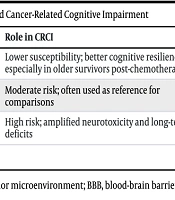
The function of APOE in the lipid metabolism pathway significantly impacts tumor progression. Apolipoprotein E promotes lipid accumulation in tumor-associated macrophages (TAMs), contributing to the metabolic reprogramming of these cells (16). Lipid-associated macrophage subpopulations (LAM2) with high levels of APOE have also been detected in invasive breast cancer, correlating with immunosuppressive functions. This lipid dysregulation supports tumor growth and creates a pro-TME (17). These processes may vary with different alleles (Table 1); the ε4 allele exacerbates these effects by increasing the risk of tumor progression with or without cardiovascular comorbidities, while ε3 is often neutral, and ε2 may suppress tumor growth via enhanced anti-inflammatory lipid transport. For example, ε4 carriers show higher breast cancer susceptibility compared to ε3 (18).

Table 1.Comparative Roles of Apolipoprotein E Alleles in Breast Cancer and Cancer-Related Cognitive Impairment
AllelesRole in Breast CancerRole in CRCIKey Mechanisms
ε2Potentially protective (reduced metastasis risk via anti-inflammatory effects and enhanced lipid clearance)Lower susceptibility; better cognitive resilience, especially in older survivors post-chemotherapyReduced neuroinflammation, better cholesterol efflux
ε3Neutral/baseline; context-dependent modulation of tumor progressionModerate risk; often used as reference for comparisonsStandard lipid transport, minimal disruption to TME or neurogenesis
ε4Pro-oncogenic (promotes M2 polarization, immunosuppression, increased cancer risk)High risk; amplified neurotoxicity and long-term deficitsBBB dysfunction, oxidative stress, enhanced neuroinflammation

Abbreviations: CRCI, cancer-related cognitive impairment; TME, tumor microenvironment; BBB, blood-brain barrier.

The APOE protein plays a complex, context-dependent role in changing immune responses within the TME (19). Apolipoprotein E can suppress immunity by stimulating regulatory T-cells and decreasing the activity of effector T-cells in several cancers (20). However, it can also promote immune cell infiltration under certain conditions, creating a more immunogenic environment (19). For example, in HER2-positive breast cancer, APOE’s immune-augmenting effects have been linked to higher levels of tumor-infiltrating lymphocytes (TILs), which may improve the effectiveness of immune checkpoint inhibitors like anti-PD-1/PD-L1 therapies (21). Because of this varied behavior, APOE could serve as both a biomarker and a therapeutic target to enhance immunotherapy outcomes in HER2-positive breast cancer. However, more research is needed to confirm its clinical potential (22).

3. Apolipoprotein E and Cognitive Decline in Breast Cancer Survivors

The CRCI, known as chemobrain, is an acute concern for 13% to 70% of breast cancer survivors. It influences cognitive functions, including memory, attention, processing speed, and executive function (23). In this context, the APOE ε4 allele has been introduced as a significant genetic risk factor, especially for subjects undergoing chemotherapy (10). Recent evidence has indicated that, in the long term, APOE ε4 carriers have worse cognitive function compared to non-carriers, with these deficits lasting for years after treatment. For example, in a study of breast cancer survivors averaging 8.8 years post-treatment, ε4 carriers showed notably lower scores in visual memory, spatial ability, and executive function (24).

These findings are supported by preclinical studies employing APOE knock-in mice treated with doxorubicin, a widely used chemotherapeutic agent. Mice carrying the APOE4 allele showed more severe impairments in spatial learning and greater reductions in gray matter volume in the frontal cortex compared to mice with the APOE3 allele (25). These findings provide critical mechanistic clues about how APOE may contribute to cognitive decline following chemotherapy. Further studies reveal that ε4 carriers without a smoking history showed reduced processing speed and working memory at 1, 6, and 18 months post-chemotherapy. Survivors aged 60 and above, who were exposed to chemotherapy and carried the APOE4 allele, showed notable declines in attention, processing speed, and executive function (26). These findings imply that APOE4 might intensify the effects of chemotherapy on brain aging, possibly hastening cognitive decline in this population.

Comparatively, APOE2 variations have been reported to have a protective role against cancer-related cognitive decline in older breast cancer survivors (27). Moreover, a lack of impairments in spatial memory in APOE3 mouse models treated with doxorubicin was observed compared with APOE4 ones (25, 28).

Briefly, the mechanisms underlying APOE4-associated CRCI involve several key pathways:

- Chemotherapy-induced neurotoxicity: APOE4 magnifies chemotherapy-induced neurotoxicity by mechanisms such as impaired hippocampal neurogenesis, oxidative damage, and neuroinflammation (10).

- Blood-brain barrier (BBB) dysfunction: APOE4 compromises BBB integrity, allowing neurotoxic chemotherapeutics like doxorubicin to penetrate the brain. This increased permeability contributes to neuronal damage and cognitive deficits (29).

- Neuroinflammation: APOE4 amplifies glial activation, leading to increased neuroinflammation and synaptic damage. This pro-inflammatory state exacerbates cognitive deficits in breast cancer survivors (30).

- Impaired hippocampal neurogenesis: APOE4 knock-in mice treated with doxorubicin exhibit reduced hippocampal neurogenesis, critical for learning and memory. This impairment is associated with spatial learning deficits and reduced frontal cortex gray matter volume (25, 28).

- Interactions with endocrine therapy: APOE4 may also interact with endocrine therapies, amplifying cognitive deficits in attention and learning domains, particularly in ε4 carriers (31, 32).

4. Shared Pathways: Cancer and Neurodegeneration

APOE4 links shared molecular pathways between cancer and neurodegenerative diseases (33). Oxidative stress and insulin resistance, for example, are common pathological factors in both breast cancer and Alzheimer’s disease (34). The mitochondrial dysfunction driven by APOE4 and its association with metabolic syndrome further underscores the convergence of these conditions (35). Identifying these related mechanisms may provide critical insights for developing new therapeutic strategies that simultaneously target cancer progression and cognitive decline.

5. Clinical Implications

Promoting tumor progression through immunosuppression in the TME and susceptibility to CRCI induced by APOE poses a therapeutic challenge, underscoring its function in targeted therapy of breast cancer and the need for medication therapy management. The clinical implications of the role of APOE require approaches that address personalized patient care in multiple ways. In this regard, genetic profiling could diagnose high-risk patients who are potentially at risk of cognitive destruction and allow for selecting personalized treatment modalities that consider oncological and cognitive outcomes. For example, breast cancer subjects carrying APOE ε4 may benefit from cognitive monitoring and neuroprotective interventions during chemotherapy (10). However, using genetic testing in routine oncology care and considering the efficacy of cognitive interventions requires ethical and practical considerations crucial to translating the multiple roles of APOE into applicable clinical programs.

6. Future Directions

Elucidating the molecular mechanisms by which APOE influences the TME and CRCI is critical to advancing our understanding and developing targeted therapies. Applied research should focus on molecules that target shared pathways between cancer and cognition, thereby bridging the gap between oncological and psychological outcomes. Investigating different APOE genotypes and their interactions with lifestyle factors in clinical studies to determine the extent of cancer risk and cognitive impairment, and the importance of response to treatment, could help optimize cancer therapies and reduce cognitive side effects, consequently improving both survival and quality of life for breast cancer survivors. In summary, future research should seamlessly integrate basic mechanistic studies, translational research, and clinical applications to explore the APOE function.

7. Conflicting Findings and Limitations

The ε4 isoform is consistently linked to increased tumor aggression and CRCI in many studies. However, conflicts exist; for instance, some longitudinal analyses find no worsening of cognition in ε4 carriers over time. Moreover, APOE’s role in immune augmentation in specific subtypes, such as HER2-positive, contradicts its immunosuppressive effects elsewhere. Also, there are some limitations in studies, including small cohort sizes, heterogeneous treatment protocols, ethnic biases in allele frequency data, and reliance on animal models that may not fully mimic human physiology. Larger, diverse trials are needed to resolve these inconsistencies.

8. Conclusions

The role of APOE in breast cancer development and CRCI highlights its potential for targeted therapy. In this regard, further research should clarify the allele-specific molecular mechanisms, focusing on the development of targeted therapies. Incorporating genetic profiling into clinical practice could help plan personalized treatment strategies that balance cancer treatment and preservation of cognitive function. As a result, clinicians can improve both tumor control and long-term mental health for survivors in the care of breast cancer patients.

Footnotes

References

  • 1.
    Phillips MC. Apolipoprotein E isoforms and lipoprotein metabolism. IUBMB Life. 2014;66(9):616-23. [PubMed ID: 25328986]. https://doi.org/10.1002/iub.1314.
  • 2.
    Ahles TA, Root JC, Ryan EL. Cancer- and cancer treatment-associated cognitive change: an update on the state of the science. J Clin Oncol. 2012;30(30):3675-86. [PubMed ID: 23008308]. [PubMed Central ID: PMC3675678]. https://doi.org/10.1200/JCO.2012.43.0116.
  • 3.
    Ahles TA, Saykin AJ, Noll WW, Furstenberg CT, Guerin S, Cole B, et al. The relationship of APOE genotype to neuropsychological performance in long-term cancer survivors treated with standard dose chemotherapy. Psychooncology. 2003;12(6):612-9. [PubMed ID: 12923801]. https://doi.org/10.1002/pon.742.
  • 4.
    Correa DD, Satagopan J, Baser RE, Cheung K, Richards E, Lin M, et al. APOE polymorphisms and cognitive functions in patients with brain tumors. Neurology. 2014;83(4):320-7. [PubMed ID: 24944262]. [PubMed Central ID: PMC4115606]. https://doi.org/10.1212/WNL.0000000000000617.
  • 5.
    Liu C, Xie J, Lin B, Tian W, Wu Y, Xin S, et al. Pan-Cancer Single-Cell and Spatial-Resolved Profiling Reveals the Immunosuppressive Role of APOE+ Macrophages in Immune Checkpoint Inhibitor Therapy. Adv Sci (Weinh). 2024;11(23). e2401061. [PubMed ID: 38569519]. [PubMed Central ID: PMC11186051]. https://doi.org/10.1002/advs.202401061.
  • 6.
    Wang H, Yung MMH, Ngan HYS, Chan KKL, Chan DW. The Impact of the Tumor Microenvironment on Macrophage Polarization in Cancer Metastatic Progression. Int J Mol Sci. 2021;22(12). [PubMed ID: 34207286]. [PubMed Central ID: PMC8235734]. https://doi.org/10.3390/ijms22126560.
  • 7.
    Zhou Y, Luo G. Apolipoproteins, as the carrier proteins for lipids, are involved in the development of breast cancer. Clin Transl Oncol. 2020;22(11):1952-62. [PubMed ID: 32306242]. [PubMed Central ID: PMC7505814]. https://doi.org/10.1007/s12094-020-02354-2.
  • 8.
    Xu X, Wan J, Yuan L, Ba J, Feng P, Long W, et al. Serum levels of apolipoprotein E correlates with disease progression and poor prognosis in breast cancer. Tumour Biol. 2016;37:15959-66. [PubMed ID: 27709551]. https://doi.org/10.1007/s13277-016-5453-8.
  • 9.
    El Roz A, Bard JM, Valin S, Huvelin JM, Nazih H. Macrophage apolipoprotein E and proliferation of MCF-7 breast cancer cells: role of LXR. Anticancer Res. 2013;33(9):3783-9. [PubMed ID: 24023310].
  • 10.
    Fernandez HR, Varma A, Flowers SA, Rebeck GW. Cancer Chemotherapy Related Cognitive Impairment and the Impact of the Alzheimer's Disease Risk Factor APOE. Cancers (Basel). 2020;12(12). [PubMed ID: 33352780]. [PubMed Central ID: PMC7766535]. https://doi.org/10.3390/cancers12123842.
  • 11.
    Talmadge JE, Gabrilovich DI. History of myeloid-derived suppressor cells. Nat Rev Cancer. 2013;13(10):739-52. [PubMed ID: 24060865]. [PubMed Central ID: PMC4358792]. https://doi.org/10.1038/nrc3581.
  • 12.
    Hui B, Lu C, Li H, Hao X, Liu H, Zhuo D, et al. Inhibition of APOE potentiates immune checkpoint therapy for cancer. Int J Biol Sci. 2022;18(14):5230-40. [PubMed ID: 36147474]. [PubMed Central ID: PMC9461658]. https://doi.org/10.7150/ijbs.70117.
  • 13.
    Chen J, Zhu H, Chen S, Mi H. Apolipoprotein E is a Potential Biomarker for Predicting Cancer Prognosis and is Correlated with Immune Infiltration. Onco Targets Ther. 2024;17:199-214. [PubMed ID: 38523659]. [PubMed Central ID: PMC10960509]. https://doi.org/10.2147/OTT.S447319.
  • 14.
    Baitsch D, Bock HH, Engel T, Telgmann R, Muller-Tidow C, Varga G, et al. Apolipoprotein E induces antiinflammatory phenotype in macrophages. Arterioscler Thromb Vasc Biol. 2011;31(5):1160-8. [PubMed ID: 21350196]. [PubMed Central ID: PMC3529398]. https://doi.org/10.1161/ATVBAHA.111.222745.
  • 15.
    Li Y, Ganesan K, Chen J. Role of Biological Mediators of Tumor-Associated Macrophages in Breast Cancer Progression. Curr Med Chem. 2022;29(33):5420-40. [PubMed ID: 35619312]. https://doi.org/10.2174/0929867329666220520121711.
  • 16.
    Qiao X, Hu Z, Xiong F, Yang Y, Peng C, Wang D, et al. Lipid metabolism reprogramming in tumor-associated macrophages and implications for therapy. Lipids Health Dis. 2023;22(1):45. [PubMed ID: 37004014]. [PubMed Central ID: PMC10064535]. https://doi.org/10.1186/s12944-023-01807-1.
  • 17.
    Timperi E, Gueguen P, Molgora M, Magagna I, Kieffer Y, Lopez-Lastra S, et al. Lipid-Associated Macrophages Are Induced by Cancer-Associated Fibroblasts and Mediate Immune Suppression in Breast Cancer. Cancer Res. 2022;82(18):3291-306. [PubMed ID: 35862581]. https://doi.org/10.1158/0008-5472.CAN-22-1427.
  • 18.
    Saadat M. Apolipoprotein E (APOE) Polymorphisms and Susceptibility to Breast Cancer: A Meta-Analysis. Cancer Res Treat. 2012;44(2):121-6. [PubMed ID: 22802750]. [PubMed Central ID: PMC3394861]. https://doi.org/10.4143/crt.2012.44.2.121.
  • 19.
    Schlam I, Church SE, Hether TD, Chaldekas K, Hudson BM, White AM, et al. The tumor immune microenvironment of primary and metastatic HER2- positive breast cancers utilizing gene expression and spatial proteomic profiling. J Transl Med. 2021;19(1):480. [PubMed ID: 34838031]. [PubMed Central ID: PMC8626906]. https://doi.org/10.1186/s12967-021-03113-9.
  • 20.
    Yin C, Ackermann S, Ma Z, Mohanta SK, Zhang C, Li Y, et al. ApoE attenuates unresolvable inflammation by complex formation with activated C1q. Nat Med. 2019;25(3):496-506. [PubMed ID: 30692699]. [PubMed Central ID: PMC6420126]. https://doi.org/10.1038/s41591-018-0336-8.
  • 21.
    Krasniqi E, Barchiesi G, Pizzuti L, Mazzotta M, Venuti A, Maugeri-Sacca M, et al. Immunotherapy in HER2-positive breast cancer: state of the art and future perspectives. J Hematol Oncol. 2019;12(1):111. [PubMed ID: 31665051]. [PubMed Central ID: PMC6820969]. https://doi.org/10.1186/s13045-019-0798-2.
  • 22.
    Holgado E, Perez-Garcia J, Gion M, Cortes J. Is there a role for immunotherapy in HER2-positive breast cancer? NPJ Breast Cancer. 2018;4:21. [PubMed ID: 30131972]. [PubMed Central ID: PMC6093898]. https://doi.org/10.1038/s41523-018-0072-8.
  • 23.
    Oliva G, Giustiniani A, Danesin L, Burgio F, Arcara G, Conte P. Cognitive impairment following breast cancer treatments: an umbrella review. Oncologist. 2024;29(7):e848-63. [PubMed ID: 38723166]. [PubMed Central ID: PMC11224991]. https://doi.org/10.1093/oncolo/oyae090.
  • 24.
    Orszaghova Z, Mego M, Chovanec M. Long-Term Cognitive Dysfunction in Cancer Survivors. Front Mol Biosci. 2021;8:770413. [PubMed ID: 34970595]. [PubMed Central ID: PMC8713760]. https://doi.org/10.3389/fmolb.2021.770413.
  • 25.
    Speidell AP, Demby T, Lee Y, Rodriguez O, Albanese C, Mandelblatt J, et al. Development of a Human APOE Knock-in Mouse Model for Study of Cognitive Function After Cancer Chemotherapy. Neurotox Res. 2019;35(2):291-303. [PubMed ID: 30284204]. [PubMed Central ID: PMC6333492]. https://doi.org/10.1007/s12640-018-9954-7.
  • 26.
    Ahles TA, Li Y, McDonald BC, Schwartz GN, Kaufman PA, Tsongalis GJ, et al. Longitudinal assessment of cognitive changes associated with adjuvant treatment for breast cancer: the impact of APOE and smoking. Psychooncology. 2014;23(12):1382-90. [PubMed ID: 24789331]. [PubMed Central ID: PMC4214914]. https://doi.org/10.1002/pon.3545.
  • 27.
    Van Dyk K, Zhou X, Small BJ, Ahn J, Zhai W, Ahles T, et al. Protective Effects of APOE epsilon2 Genotype on Cognition in Older Breast Cancer Survivors: The Thinking and Living With Cancer Study. JNCI Cancer Spectr. 2021;5(2). [PubMed ID: 33748669]. [PubMed Central ID: PMC7962698]. https://doi.org/10.1093/jncics/pkab013.
  • 28.
    Demby TC, Rodriguez O, McCarthy CW, Lee YC, Albanese C, Mandelblatt J, et al. A mouse model of chemotherapy-related cognitive impairments integrating the risk factors of aging and APOE4 genotype. Behav Brain Res. 2020;384:112534. [PubMed ID: 32027870]. [PubMed Central ID: PMC7082850]. https://doi.org/10.1016/j.bbr.2020.112534.
  • 29.
    Montagne A, Nation DA, Sagare AP, Barisano G, Sweeney MD, Chakhoyan A, et al. APOE4 leads to blood-brain barrier dysfunction predicting cognitive decline. Nature. 2020;581(7806):71-6. [PubMed ID: 32376954]. [PubMed Central ID: PMC7250000]. https://doi.org/10.1038/s41586-020-2247-3.
  • 30.
    Parhizkar S, Holtzman DM. APOE mediated neuroinflammation and neurodegeneration in Alzheimer's disease. Semin Immunol. 2022;59:101594. [PubMed ID: 35232622]. [PubMed Central ID: PMC9411266]. https://doi.org/10.1016/j.smim.2022.101594.
  • 31.
    Koleck TA, Bender CM, Sereika SM, Ahrendt G, Jankowitz RC, McGuire KP, et al. Apolipoprotein E genotype and cognitive function in postmenopausal women with early-stage breast cancer. Oncol Nurs Forum. 2014;41(6):E313-25. [PubMed ID: 25355028]. [PubMed Central ID: PMC4406250]. https://doi.org/10.1188/14.ONF.E313-E325.
  • 32.
    Van Dyk K, Crespi CM, Bower JE, Carroll JE, Petersen L, Ganz PA. Association of APOE4 genotype and treatment with cognitive outcomes in breast cancer survivors over time. NPJ Breast Cancer. 2021;7(1):112. [PubMed ID: 34480030]. [PubMed Central ID: PMC8417038]. https://doi.org/10.1038/s41523-021-00327-4.
  • 33.
    Miao G, Zhuo D, Han X, Yao W, Liu C, Liu H, et al. From degenerative disease to malignant tumors: Insight to the function of ApoE. Biomed Pharmacother. 2023;158:114127. [PubMed ID: 36516696]. https://doi.org/10.1016/j.biopha.2022.114127.
  • 34.
    Sosa YJ, Sosa HM, Epiter-Smith VA, Topaz GR, Stieglitz KA. Connecting Pathway Errors in the Insulin Signaling Cascade: The Molecular Link to Inflammation, Obesity, Cancer, and Alzheimer’s Disease. In: La Porta FDA, Taft CA, editors. Emerging Research in Science and Engineering Based on Advanced Experimental and Computational Strategies. New York City, USA: Springer Nature; 2020. p. 223-58. https://doi.org/10.1007/978-3-030-31403-3_9.
  • 35.
    Pires M, Rego AC. Apoe4 and Alzheimer's Disease Pathogenesis-Mitochondrial Deregulation and Targeted Therapeutic Strategies. Int J Mol Sci. 2023;24(1). [PubMed ID: 36614219]. [PubMed Central ID: PMC9821307]. https://doi.org/10.3390/ijms24010778.

Crossmark
Crossmark
Checking
Share on
Cited by
Metrics

Purchasing Reprints

  • Copyright Clearance Center (CCC) handles bulk orders for article reprints for Brieflands. To place an order for reprints, please click here (   https://www.copyright.com/landing/reprintsinquiryform/ ). Clicking this link will bring you to a CCC request form where you can provide the details of your order. Once complete, please click the ‘Submit Request’ button and CCC’s Reprints Services team will generate a quote for your review.
Search Relations

Author(s):

Related Articles