
1. Background
In the early 20th century, there was an increase in the outbreak of chronic diseases (1). One of the biggest challenges of health systems throughout the world is the incremental load of chronic diseases (2). Generally, chronic disorders are diseases that are not curable, but patients and health professionals can control them. Arthritis, diabetes, heart diseases, and multiple sclerosis are among chronic disorders. Psychological factors play a role in all of these disorders, whose control and treatment need interventions (3). In chronic physical disorders, patients need to confront the pain and tolerate multiple pressures besides their disease, which, in turn, result in mood shifts, anxiety, disappointment, and decreased life quality (4).
Multiple sclerosis is a disorder in which psychological problems of patients are not regarded as much as their physical problems are. In this disease, the immune system attacks myelin (fat pod), as the cell protector in the central nervous system and destroys it; thus, a wound tissue (plaque) is created in the damage site. The destruction of myelin in neural cells interrupts the transfer of neural messages from the brain and spinal cord to other organs of the body and vice versa, which, in turn, presents the symptoms of multiple sclerosis (5). Multiple sclerosis is the second common cause of inability in the youth. Usually, the symptoms appear in early adolescence (age of 20 - 40) (6). There are a large number of people around the world suffering this disease, and it is increasing every day.
About 1.1 million people throughout the world are suffering MS. The lack of diagnosis and definite treatment, chronic nature of the disease, and the young age of patients lead to several mental disorders, among which anxiety and stress are more common (7). Different studies investigated and proved the effect of anxiety on the prevalence and acceleration of MS (8-13). It seems that generalized anxiety disorder, as the most common form of anxiety disorder, is one of the psychological problems of patients suffering MS (14).
Today, generalized anxiety disorder is one of the most common psychological disorders (14). In DSM5, generalized anxiety disorder is defined as the anxiety and extensive worrisome in most of the days about some events or activities for six months (15). The diversity of the mentioned problems and the chronic process of the disease cause patients to seek the best treatment. In recent years, non-pharmacological methods, known as complementary therapies, have attracted the attention of patients, especially MS patients. Complementary therapies have many advantages for MS patients, and they are used widely by these patients (16). However, pharmacotherapy is the main treatment used for this disease. Regarding the problems of pharmacotherapy and its side effects and the fact that MS patients suffer different psychological problems, it is necessary to use psychological treatments for these patients. The effectiveness of some treatment methods has been proven for MS patients including cognitive-behavioral therapy (17-19), teaching coping skills (20), supportive-expressive group psychotherapy (21), stress inoculation training (22), mindfulness-based intervention (23), Internet-delivered behavioral intervention (24), and self-hypnosis training (25).
De Shaze and Berg (26) first introduced solution-focused therapy in psychotherapy and counseling in which the focus is on solutions rather than problems. It soon became popular due to its rapid effectiveness. The fundamental philosophy of this approach is that changes are constant and inevitable. In this therapy, the emphasis is on what is possible and changeable rather than what is impossible. It helps the patients to find possible solutions for their problems by focusing on their abilities and resources and emphasizing the present moment. According to experts, the most important features of this approach are its short-term nature and optimistic view (26). This approach is among the post-modern therapies. It encompasses a wide range of clinical problems and issues, and it is effective in different situations and areas (27). This approach believes that patients themselves have the required competency and creativity for change. Solution-focused therapy is known as hope counseling as it believes that the change is inevitable and the constructive change is possible. Based on this view, solutions for the patients’ problems already exist in their lives (28).
The most important feature of this therapeutic approach is to help patients to find exceptions; that is, thinking about times in the past that the problems decreased or did not exist at all or times that there were problems, but she/he confronted them in an acceptable way (28). There is no analysis of past, diagnosis, or insights in solution-focused therapy. Instead, patients are encouraged to focus and do different things. Solution-focused therapists help patients to think about what different activities they can do. As soon as a solution is found, the patient and the therapist go toward it step by step (29). In addition, they focus on improving constructive behaviors and strengthening coping strategies. Moreover, this approach tries to use capabilities and resources and consider probable solutions rather than focusing on problems and issues (28). The solution-focused therapy has not yet been conducted on people with MS. Thus, in this research, we decided to conduct this treatment on MS patients. The effectiveness of solution-focused therapy has been proven in solving multiple psychological problems, including psychiatric syndromes (30), agency setting (31), clinical practice (32), behavioral problems of children (33, 34), communication skills (35), and depression (36).
2. Objectives
We investigated the effectiveness of solution-focused therapy in a group manner in improving generalized anxiety disorder in MS patients, as group psychotherapy has shown to be effective in improving generalized anxiety disorder of MS patients.
3. Methods
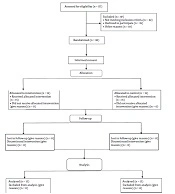
This is a practical semi-experimental study with a pretest-posttest design and unequal control group. The statistical population included the members of the MS Society of Mashhad from winter 2016 to spring 2017. The sample consisted of 40 patients selected randomly. The inclusion criteria included the members of the MS Society of Khorasan Razavi Province, no simultaneous engagement in other psychotherapy programs during the study, and agreement with taking part in the study. The participants were excluded if they did not attend a group therapy session, simultaneously engaged in other psychotherapy programs, or were reluctant to continue the study.
3.1. Instruments
3.1.1. Generalized Anxiety Disorder Inventory
Generalized anxiety disorder was measured by the seven-item generalized anxiety disorder (GAD-7) inventory. This inventory was developed by Spitzer et al. (37). It includes seven main items and one extra item to measure individual, social, family, and occupational performances of the respondent. The participants would choose one of the following choices as an answer to each item: never, some of the days, most of the days, and almost every day. A score was attributed to each choice from 0, 1, 2, to 3, respectively. The highest score could be 21. Spitzer et al. (37) reported the Cronbach’s alpha coefficient of 0.92 and the test-retest coefficient of 0.83 for GAD-7. The convergent validity of the questionnaire was investigated using the Beck anxiety inventory, symptom checklist-90 (SCL-90), and 20-item Short-form Health survey (SF-20). The correlation coefficients of GAD-7 were 0.72 with the Beck anxiety inventory and 0.74 with SCL-90. The coefficients were 0.30 for physical performance and 0.75 for mental health aspects of SF-20.
An investigation on Iranian students based on the results of exploratory factor analysis in a clinical sample revealed that there was a factor with 53% of explanation. The short-scale correlation of GAD-7 with the Spielberger state-trait anxiety inventory (STAI) was 0.71 for the state subscale and 0.52 for the trait subscale, and in 12-item anxiety subscale of symptom checklist-90 (SCL-90) was 0.63. The short-scale correlation between GAD-7 and the mental health aspects of the Short-form Health survey (SF-36) was 0.28. Moreover, the short-scale correlation of GAD-7 had diagnostic validity. This scale was also reliable, based on the Cronbach alpha coefficient of 0.85 (38). The reliability of the scale was confirmed in this study through the Cronbach alpha coefficient of 0.87.
3.2. Procedure
The sample was selected in two stages. In the pretest stage, generalized anxiety was measured. Then, a solution-focused group therapy based on the short-term solution-focused intervention protocol was conducted for six weeks according to the objectives of the study. In the posttest stage, generalized anxiety was measured again after solution-focused therapy had been conducted.
3.3. Solution-Focused Therapy
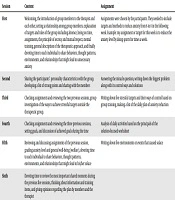
The therapeutic sessions of solution-focused group therapy were held based on the short-term solution-focused intervention protocol of Gutterman (28), as shown in Box 1.
Box 1.
The Therapeutic Sessions of Solution-Focused Group Therapy Based on the Short-Term Solution-Focused Intervention Protocol of Gutterman (28)
| Session | Content | Assignment |
|---|---|---|
| First | Welcoming, the introduction of group members to the therapist and each other, setting a relationship among group members, explanation of targets and rules of the group including absence, being on time, assignments, the principle of secrecy and mutual respect, mental training, general description of the therapeutic approach, and finally devoting time to each individual to share behaviors, thought patterns, environments, and relationships that might lead to unnecessary anxiety | Assignments were chosen by the participants. They needed to include targets and methods to reduce anxiety from 6 to 8 in the following week. Example: my assignment or target for this week is to reduce the anxiety level by doing sports for times a week. |
| Second | Sharing the participants’ personality characteristics with the group, developing a list of strong points and sharing with the members | Answering the miracle question, writing down the biggest problem along with its control ways and solutions |
| Third | Checking assignments and reviewing the two previous sessions, group investigation of the ways to achieve stressful targets outside the therapeutic group. | Writing down five stressful targets and their ways of control based on group training, making a list of the daily plan of anxiety reduction |
| Fourth | Checking assignments and reviewing the three previous sessions, setting goals, and discussion of achieved goals during the time | Analysis of daily activities based on the principals of the solution-focused worksheet |
| Fifth | Reviewing and discussing assignments of the previous session, grading anxiety level and general well-being (welfare), devoting time to each individual to share behaviors, thought patterns, environments, and relationships that might lead to his/her solace | Writing down five environments or events that caused solace |
| Sixth | Devoting time to review the most important shared moments during the previous five sessions, thinking about information and training items, and giving opinions regarding the plan by members and the therapist |
We used analysis of covariance (ANCOVA) in SPSS version 24 to analyze the data. The ANCOVA was used to remove the effect of pretest GAD on posttest GAD. The ANCOVA could covariate the variance of GAD in the pretest and remove its effect from the posttest. Thus, it can be concluded that the difference in the posttest mean score is due to the effect of groups.
4. Results
The descriptive parameters in the pretest and posttest of the study are shown in Table 1.
Table 1.
Mean and Standard Deviation of Generalized Anxiety Disorder Scores in Treatment and Control Groups in Pre-Test and Post-Testa
| Variable | Stage | Statistical Index (Group) | Values |
|---|---|---|---|
| Generalized Anxiety Disorder | Pretest | Treatment | 12.35 ± 1.95 |
| Control | 12.45 ± 3.05 | ||
| Posttest | Treatment | 10.70 ± 2.49 | |
| Control | 12.20 ± 3.82 |
aValues are expressed as mean ± SD.
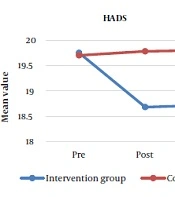
As Table 1 shows, in the pretest, the mean and standard deviation of generalized anxiety disorder scores were 12.35 and 1.95 in the treatment group and 12.45 and 3.05 in the control group, respectively. In the posttest, the mean and standard deviation of generalized anxiety disorder scores were 10.70 and 2.49 in the treatment group and 12.20 and 3.82 in the control group, respectively. The Kolmogorov-Smirnov test results confirmed the null hypothesis of the normal distribution of generalized anxiety disorder scores in both groups; that is, the null hypothesis of the normal distribution of the pretest scores in both treatment and control groups was confirmed.
We used one-way ANCOVA to investigate the effect of solution-focused group therapy on generalized anxiety disorder in MS patients.
As Table 2 shows, by controlling for the pretest scores, there was a significant difference between the treatment and control groups in generalized anxiety disorder (F = 5.82 and P = 0.021). In other words, solution-focused group psychotherapy led to a reduction in generalized anxiety in the treatment group compared to the control group. The significance value was 0.021. In other words, 14% of the difference in the posttest scores of generalized anxiety disorder was related to the effectiveness of solution-focused psychotherapy. Therefore, the research hypothesis was confirmed.
Table 2.
One-Way ANCOVA of the Mean Scores of Generalized Anxiety Disorder in the Posttest in Experimental and Control Groups After Controlling for Pretest Scores
| Variable | SS | df | MS | F | P | Effect Size | Observed Power |
|---|---|---|---|---|---|---|---|
| Generalized Anxiety Disorder | 19.47 | 1 | 19.47 | 5.82 | 0.021 | 0.14 | 0.65 |
5. Discussion
The results of data analysis showed that by controlling for the pretest scores, there was a significant difference between the treatment and control groups of MS patients in generalized anxiety disorder. In other words, solution-focused therapy could reduce generalized anxiety disorder in MS patients. To explain the effectiveness of solution-focused group therapy in the reduction of interpersonal problems in MS patients, it can be said that this approach is based on the cognitive approach so that it reduces the past negative, inefficient cognition or decreases factors such as the fear of negative judgments and anxiety sensitivity, which, in turn, lead to the reduction of generalized anxiety disorder.
This finding is in line with those obtained by Mirhashemi and Najafi (39) that showed solution-focused therapy increased tolerance against stress and the sense of coherence in MS patients. It is also compatible with the findings by Pomeroy et al. (40) that showed solution-focused therapy reduced depression and anxiety in 12 HIV patients who were depressed and unsatisfied with their life. Finally, this finding confirms the results by Neilson-Clayton and Brownlee (41), who showed the decreased physical symptoms and anxiety of cancer patients by solution-focused therapy. Kim et al. (42) successfully used solution-focused therapy to cure individuals with substance abuse. Solution-focused therapy has also been effective in medical settings (43) and body image (44).
In solution-focused therapy, the participants are asked to find exceptional times regarding their problems; that is, times when they did not have any anxiety and they could manage it well. These help participants to choose their environments. Repeating these exceptions help the participant to use them as solutions. The therapist asks them to score their anxiety level between 0 and 10. This scoring helps the therapist to understand if there is any progress about a specific problem. This approach focuses on individuals’ capabilities during treatment rather than their deficiencies and disabilities. Then, by recognizing exceptional cases in participants’ lives, it gradually inspires hope for a better future, which finally leads to anxiety reduction.
Moreover, this therapeutic approach believes that patients have the required competencies and creativity to change themselves. It considers change as an inevitable issue and emphasizes that constructive change is possible. Therefore, instead of focusing on difficult and unchangeable issues, it focuses on things that can be changed. Solution-focused therapy helps patients to change their negative beliefs and thoughts so it reduces generalized anxiety disorder in patients.
The limitations of this research included the low number of participants and the use of a self-report assessment tool. We suggested that these limitations be removed in future studies.