
1. Background
Propolis as an active natural substance [1] and one of the most potent natural antibiotics characterized by a very wide spectrum of effect [2]. Propolis natural character makes therapeutic application without inducing any antibiotic resistance or destroying useful flora [2]. There are two different major chemical compositions of propolis present including ethanolic extract and essential oil [3]. While oily propolis exhibited antibacterial activity against Staphylococcus epidermidis, Streptococcus pyogenes, Escherichia coli and Staphylococcus aureus [3, 4]. In vitro methods commonly used to evaluate the activity of propolis against Gram-positive bacteria [4]. Authors have mentioned that propolis inhibited the growth of Bacillus cereus and Staphylococcus aureus [5, 6]. Also Shigella sonnei is mentioned as the most sensitive microorganism to propolis in the Gram-negative group and Streptococcus mutans [5] in the Gram-positive. The purpose of this study was to verify the activity of an oily liquid extract of propolis called propolis extract in oil (B Natural. Italy) against some Gram-positive and Gram- negative bacteria. The difference of this study and similar researches is the oily form of propolis with methanol and dimethyl sulfoxide (DMSO) was affected on different bacteria.
2. Methods
This experimental study was performed in Department of Pathobiology, Tehran University of medical sciences, Tehran, Iran.
2.1. Propolis Preparation
The oily liquid extract of propolis called propolis extract in oil (B Natural. Italy) examined in this research, was contained 30% of propolis and 70% soy seeds oil. This liquid propolis in different concentration of ethanol, methanol and DMSO as diluents was used. The bactericidal activity of this extract was analyzed by serial dilution from 10% to 90% in agar plate diffusion and 1% to 9% in serial dilution in microplate for minimal inhibitory concentration (MIC) determination [4]. The compositions of the dilutions were as follows: 10 (propolis oil 10%, diluent 90%) to 90 (propolis oil 90%, diluent 10%). Pure soy seed oil, methanol (Merck, Germany), DMSO and propolis oil (100%) were used as control to test the inhibitory effect of the solvent [4]. Aseptic conditions was observed during the microbiological study and we determined the antimicrobial activity of the studied preparation, using disk on solid growth media, the well technique and tubes serial dilution [4].
2.2. Serial Dilution in Tubes
Serial dilution was carried out using sterile Mueller-Hinton broth (Merck, Germany) in order to obtain several concentrations between 1% to 10% of propolis extract per mL of broth [4]. The tubes were inoculated with 20 μL of the bacteria suspension per mL of broth, homogenized and incubated at 37ºC for 24 hours [4]. The minimal inhibitory concentration (MIC) was determined as the lowest concentration that will inhibit the visible growth of a microorganism after overnight incubation in the tubes [4].
2.3. Microorganisms
The bacteria with antibiotic resistant gene are more resistant to common antibiotics and these bacteria cause serious infections. In this study, the bacterial selection was performed in two antibiotic resistant and non- resistant groups’ bacteria to compare the effect of solution. The following species were tested: Staphylococcus aureus ATCC 25923, Pseudomonas aeruginosa ATCC 27853, Escherichia coli ATCC 25922, Escherichia coli (blaCTX-M positive), Enterococcus faecalis ATCC 29212, Pseudomonas aeruginosa (blaVIM positive), Shigella flexneri, Shigella sonnei, Pseudomonas aeruginosa PAO1, Klebsiella pneumoniae ATCC 700603, Escherichia coli MK148 (AmpC β-lactamase positive), Staphylococcus aureus S1 (SCCmec I positive), Staphylococcus aureus S3 (SCCmec III positive) and Pseudomonas aeruginosa (blaVEB positive). The Gram-positive and Gram-negative bacteria used in these tests were obtained from 24 h cultures and suspended in sterile saline solution to obtain concentrations of approximately 108 [4], 107 and 105 CFU/mL [1, 4]. Resistance to preparations from natural material was examined in cultures of microorganisms in Mueller-Hinton agar (Merck, Germany) [1]. The surface of the plates was inoculated using a sterile swab containing the suspension of bacteria in normal saline [4]. The cultures were incubated for 24 hours at 37°C, and then the microorganism growth was evaluated [1].
2.4. Antimicrobial Assay
The following methods were used to evaluate the activity of the propolis extracts [4].
2.4.1. Agar Plate Diffusion Tests, Using Paper Disks
Sterile paper disks (6.0 mm) containing different dilution of propolis extract (from 10% to 90% of propolis extract with ethanol, methanol and DMSO were put on three agar surfaces inoculated with different suspension diluents including 108, 107 and 105 [4]. Each diluent with propolis was used in separate plate.
2.4.2. Agar Plate Diffusion Tests, Creating Wells in Agar Plate
Agar surface inoculated with different suspension diluents including 108, 107 and 105. Wells were formed in the agar surface and were filled with 40 to 60 µg of studied preparation propolis in different diluents from 10% to 90% and dilutions as mentioned before (1). Agar wells were 6 mm in diameter [1].
2.5. Statistical Analysis
Statistical analysis was applied by Chi-Square and Kappa methods, using Open Epi and Graph Pad Prism Software (Graph Pad, San Diego, California, USA). Graphs were plotted by Microsoft Excel software.
3. Results
In this study no inhibition zone was seen for propolis dilution in ethanol as solvent. However any bactericidal effect was shown by methanol (Figure 1) and it is a good solvent for more consistent extraction of antimicrobial substances without antibacterial effect compared to other solvents including ethanol. So addition the methanol to propolis doesn’t show anti-bacterial effect. In the agar diffusion tests using wells containing 60 μL or 80 μL of propolis suspension with methanol/DMSO per wells, growth inhibition within the wells was measured (Figures 3 and 4). The bacteria including Staphylococcus aureus ATCC 25923, Enterococcus faecalis ATCC 29212, Pseudomonas aeruginosa (PAO1) and Staphylococcus aureus S3 (SCCmec III positive) were most sensitive to the effect of propolis preparations (Tables 1 and 2). The minimal inhibitory concentration (MIC) of propolis oil was 0.8 mg/mL (0.8%). Shigella flexneri and Shigella sonnei, as two resistant bacteria, were sensitive to propolis diluent in methanol but only Shigella flexneri was sensitive to propolis diluent in DMSO. The most resistance microorganisms to the studied preparations were Pseudomonas aeruginosa (blaVIM positive) and Pseudomonas aeruginosa (blaVEB positive) for methanol as diluent (Figure 5) and Pseudomonas aeruginosa (blaVEB positive) and Pseudomonas aeruginosa (blaVIM positive) for DMSO as diluent (Figure 6). For the agar diffusion test with wells, the propolis extracts with the largest growth inhibition zones were those extracted with 20% and 40% propolis with methanol. For propolis with DMSO, higher dose (about 40% - 60%) of propolis was needed for bactericidal effect. Most of the propolis with diluents (methanol or DMSO) testes showed greater growth inhibition zones than the pure oily methanol as control. The methanol and DMSO in the medium did not affect the growth of the strains during the experiments. The results of serial dilution in wells indicated that the bactericidal activity of the samples extracted with 20% and 60% propolis were the greatest, followed by those extracted with methanol and DMSO, respectively. The extracts obtained using pure propolis showed the weakest bactericidal activity. The inhibition of the growth of bacteria in the concentrations tested was not observed in the control wells containing only pure methanol and DMSO.
Table 1.
Bacteria Inhibitory Zone in 108, 107 and 105 Concentration Affected Propolis with Methanol as Diluent
| Bacteria | Total P Value | Min | Max | Mean | 108 P Value | 107 P Value | 105 P Value | |||||||
|---|---|---|---|---|---|---|---|---|---|---|---|---|---|---|
| Species | Gram +/- | 108 | 107 | 105 | 108 | 107 | 105 | 108 | 107 | 105 | ||||
| Escherichia coli MK148 (AmpC β-lactamase positive) | negative | 0.0497 * | 5 | 5 | 5 | 18 | 22 | 24 | 8.667 | 11.33 | 9.55 | 0.0815 | 0.0160 * | 0.0661 |
| Staphylococcus aureus ATCC 25923 | positive | 0.0007 *** | 5 | 5 | 6 | 14 | 5 | 9.5 | 18.11 | 11.11 | 12.22 | 0.0005 *** | 0.0094 ** | 0.0021 ** |
| Pseudomonas aeruginosa (blaVIM positive) | negative | 0.1327 | 5 | 5 | 5 | 11 | 18 | 24 | 7.33 | 8.11 | 9.55 | 0.0081 ** | 0.1080 | 0.0687 |
| Escherichia coli ATCC 25922 | negative | 0.0024 ** | 5 | 5 | 5 | 17 | 12 | 15 | 9.89 | 8.66 | 9.66 | 0.0087 ** | 0.0083 ** | 0.0071 ** |
| Enterococcus faecalis ATCC 29212 | positive | 0.0005 *** | 8 | 5 | 5 | 25 | 20 | 22 | 17.22 | 11.78 | 10.67 | < 0.0001 **** | 0.0076 ** | 0.0358 * |
| Klebsiella pneumonia ATCC 700603 | negative | 0.0391 * | 5 | 5 | 5 | 12 | 17 | 16 | 6.889 | 9.222 | 8.222 | 0.0779 | 0.0295 * | 0.0322 * |
| Shigella flexneri | negative | 0.0113 * | 5 | 5 | 6 | 5 | 20 | 16 | 5 | 11.33 | 10.11 | 1.000 | 0.0221 * | 0.0015 ** |
| Pseudomonas aeruginosa ATCC 27853 | negative | 0.0005 *** | 5 | 5 | 5 | 5 | 15 | 23 | 7.11 | 12.78 | 9.22 | 0.1303 | 0.0027 ** | 0.0269 * |
| Pseudomonas aeruginosa PAO 1 | negative | 0.0379 * | 5 | 6 | 5 | 14 | 20 | 29 | 9 | 12 | 10 | 0.0060 ** | 0.0034 ** | 0.0883 |
| Staphylococcus aureus S3 (SCCmec III positive) | positive | 0.0002 *** | 5 | 5 | 5 | 17 | 19 | 14 | 12.22 | 10 | 9 | 0.0002 *** | 0.0107 * | 0.0076 ** |
| Escherichia coli (blaCTX positive) | negative | 0.1729 | 5 | 5 | 5 | 11 | 25 | 12 | 7.22 | 9.88 | 7 | 0.0138 * | 0.0888 | 0.0486 * |
| Shigella sonnei | negative | 0.0104 * | 5 | 5 | 5 | 5 | 20 | 23 | 5 | 10.89 | 10.67 | 1.000 | 0.0130 * | 0.0279 * |
| Pseudomonas aeruginosa (blaVEB positive | negative | 0.1729 | 5 | 5 | 5 | 11 | 25 | 12 | 7.22 | 9.88 | 7 | 0.0138 * | 0.0888 | 0.0486 * |
| Staphylococcus aureus S1 (SCCmec I positive) | 0.0260 * | 5 | 5 | 5 | 12 | 20 | 14 | 7.11 | 10.56 | 9.33 | 0.0382 * | 0.0086 ** | 0.0053 ** | |
Table 2.
Bacteria Inhibitory Zone in 108, 107 and 105 Concentration Affected Propolis with DMSO as Diluent
| Bacteria | Total P Value | Min | Max | Mean | 108 P Value | 107 P Value | 105 P Value | |||||||
|---|---|---|---|---|---|---|---|---|---|---|---|---|---|---|
| Strain | Gram+/- | 108 | 107 | 105 | 108 | 107 | 105 | 108 | 107 | 105 | ||||
| Pseudomonas aeruginosa ATCC 27853 | Negative | 0.0065 ** | 9 | 9 | 10 | 19 | 16 | 16 | 13.11 | 11.56 | 12.44 | < 0.0001 **** | < 0.0001 **** | < 0.0001 **** |
| Escherichia coli ATCC 25922 | Negative | 0.0028 ** | 5 | 5 | 5 | 8 | 10 | 10 | 6.44 | 6.66 | 6.55 | 0.0006 *** | 0.0357 * | 0.0384 * |
| Pseudomonas aeruginosa (PAO1) | Negative | 0.0006 *** | 6 | 7 | 9 | 13 | 15 | 14 | 10.33 | 10.33 | 11.89 | < 0.0001 **** | < 0.0001 **** | < 0.0001 **** |
| Shigella sonnei | Negative | 0.1254 | 6 | 5 | 6 | 12 | 7 | 12 | 8.11 | 6.22 | 8.44 | 0.000 *** | < 0.0001 **** | 0.0009 *** |
| Shigella flexneri | Negative | 0.0434 * | 6 | 5 | 5 | 11 | 10 | 11 | 7.77 | 7.33 | 8.11 | 0.0004 *** | 0.0037 ** | 0.0019 ** |
| Klebsiella pneumoniae ATCC 700603 | Negative | 0.4751 | 5 | 5 | 6 | 14 | 8 | 9 | 8.44 | 6.22 | 7.00 | 0.0013 ** | 0.0040 ** | < 0.0001 **** |
| Pseudomonas aeruginosa (blaVIM positive) | 0.1384 | 5 | 5 | 5 | 8 | 11 | 10 | 5.66 | 6.66 | 8.00 | 0.1501 | 0.0167 * | < 0.0001 **** | |
| Enterococcus faecalis ATCC 29212 | positive | 0.0023 ** | 6 | 6 | 6 | 16 | 12 | 12 | 11.11 | 9.55 | 9.11 | 0.0001 *** | < 0.0001 **** | 0.0001 *** |
| Staphylococcus aureus ATCC 25933 | positive | 0.0001 *** | 5 | 5 | 5 | 14 | 13 | 12 | 8.66 | 9.33 | 8.11 | 0.0037 ** | 0.0017 ** | 0.0053 ** |
| Pseudomonas aeruginosa (blaVEB positive) | 0.2939 | 5 | 5 | 5 | 7 | 11 | 10 | 5.66 | 6.33 | 6.44 | 0.0121 * | 0.0702 | 0.0293 * | |
| Escherichia coli (blaCTX-M positive) | Negative | 0.1421 | 6 | 6 | 5 | 10 | 10 | 10 | 7.0 | 7.77 | 7.0 | 0.0003 *** | < 0.0001 **** | 0.0085 ** |
| Staphylococcus aureus ATCC 33592 | positive | 0.0005 *** | 5 | 5 | 5 | 13 | 12 | 14 | 8.55 | 8.62 | 8.00 | 0.0019 ** | 0.0002 *** | 0.0125 * |
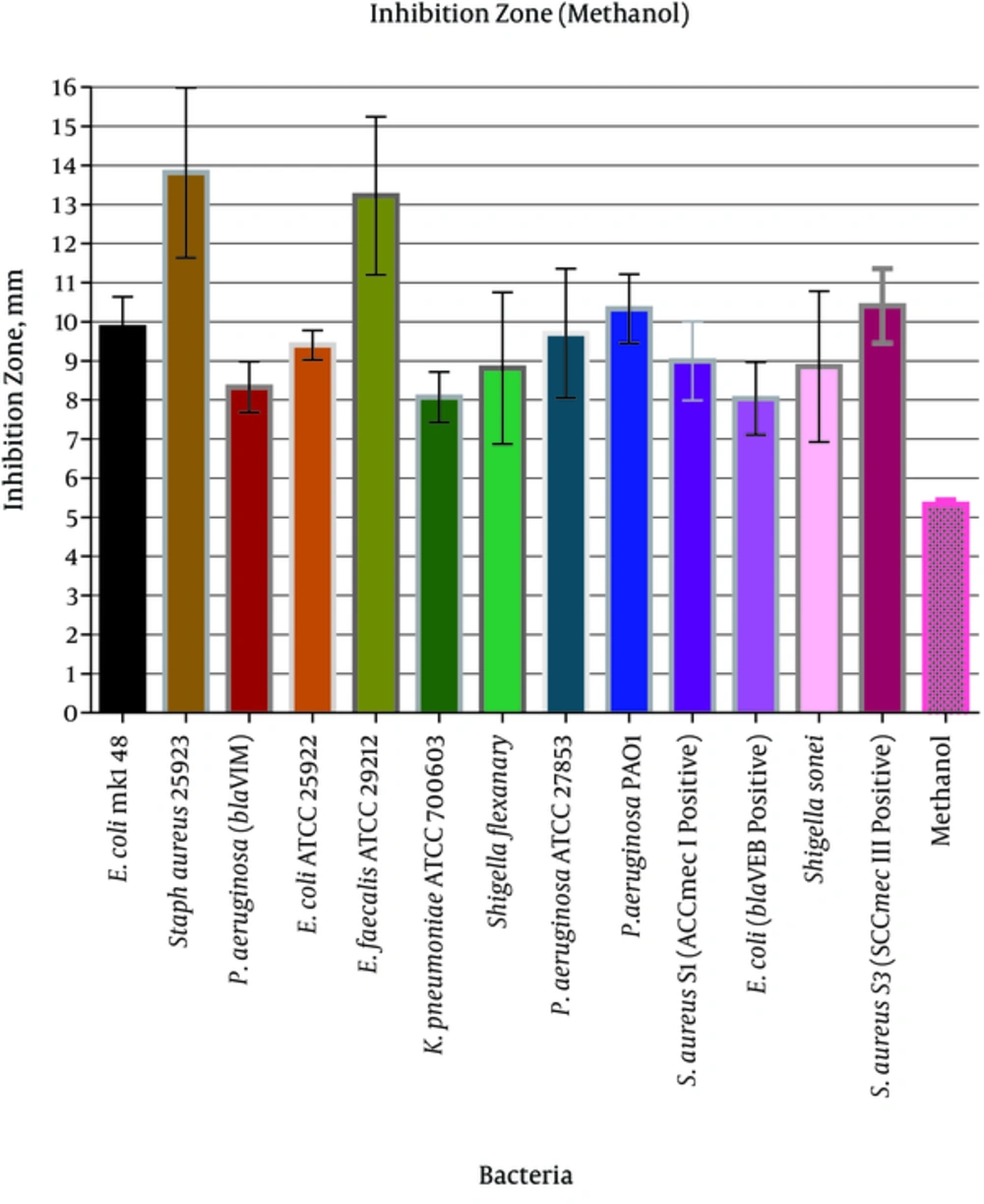
Figure 1.
Mean of Inhibition Zone for Propolis and Methanol as Diluent
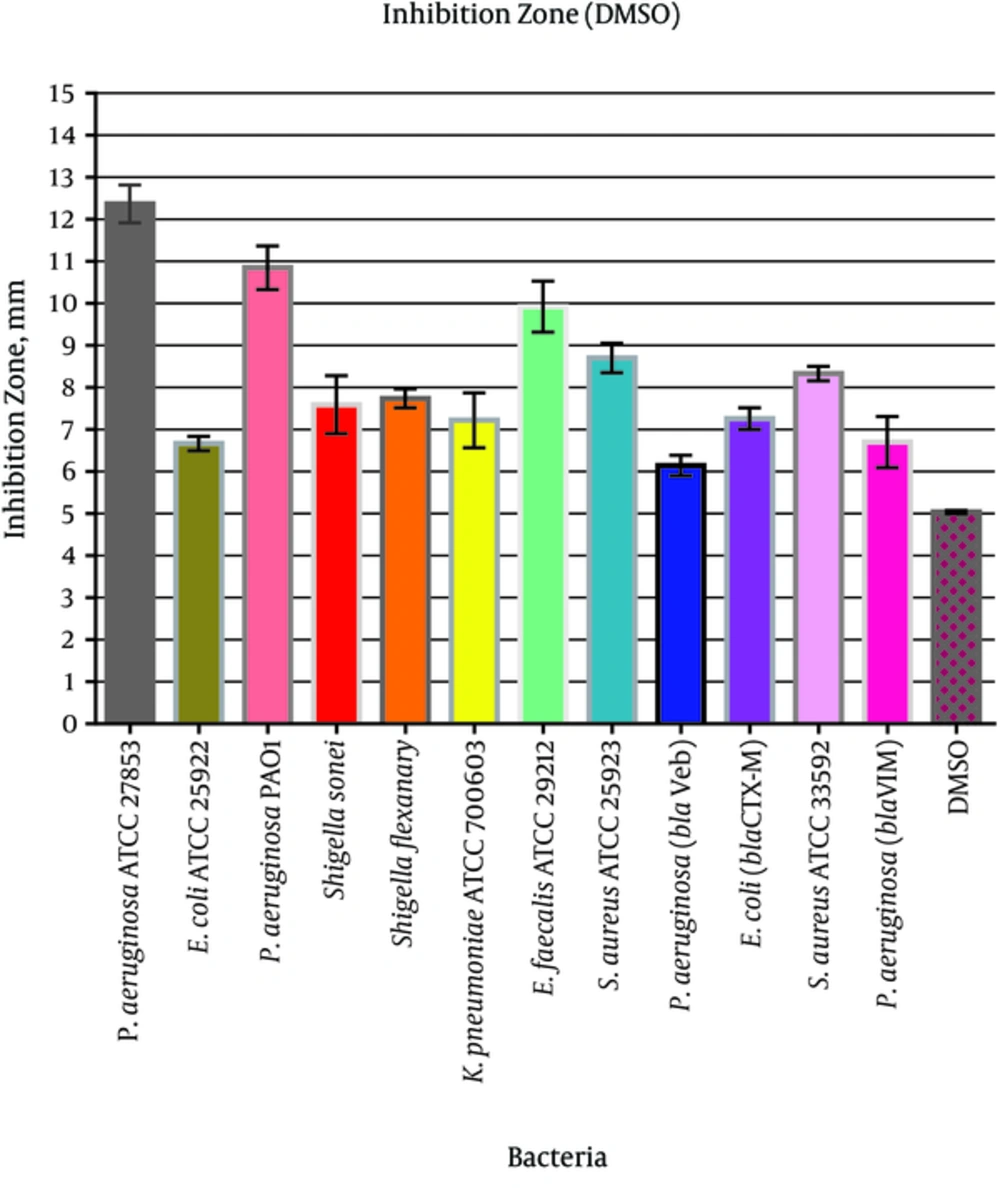
Figure 2.
Mean of Inhibition Zone for Propolis and DMSO as Diluent
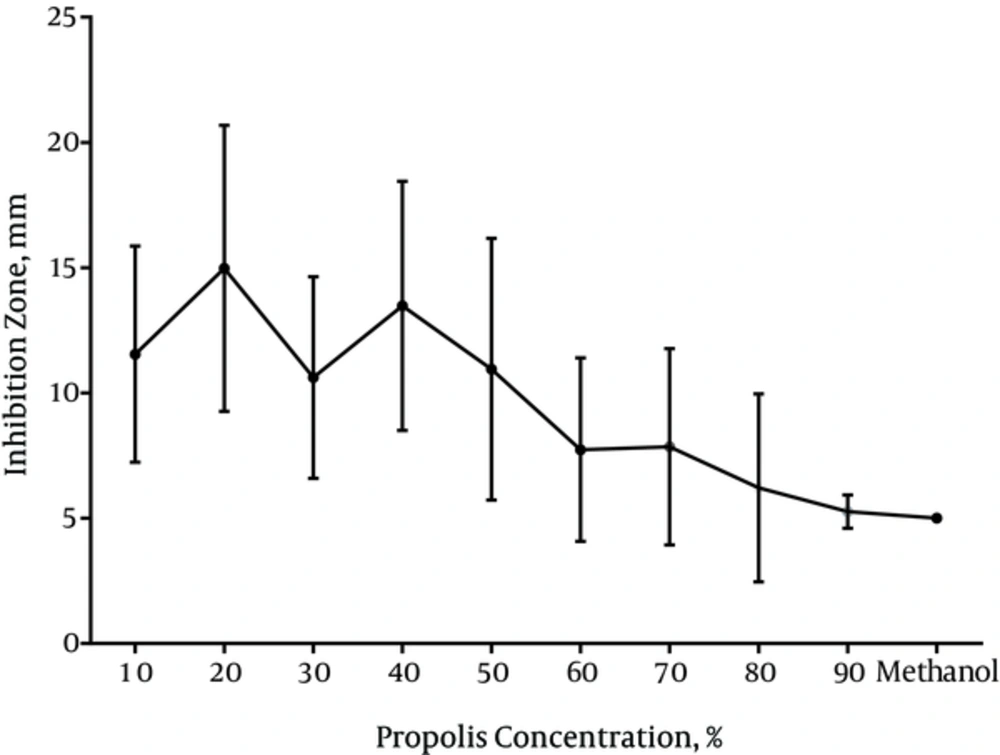
Figure 3.
Inhibition Zone for Propolis with Methanol as Diluent in Different Concentrations from 10% (10% Propolis with 90% Methanol) to 90% (90% Propolis with 10% Methanol) and Pure Methanol as Control
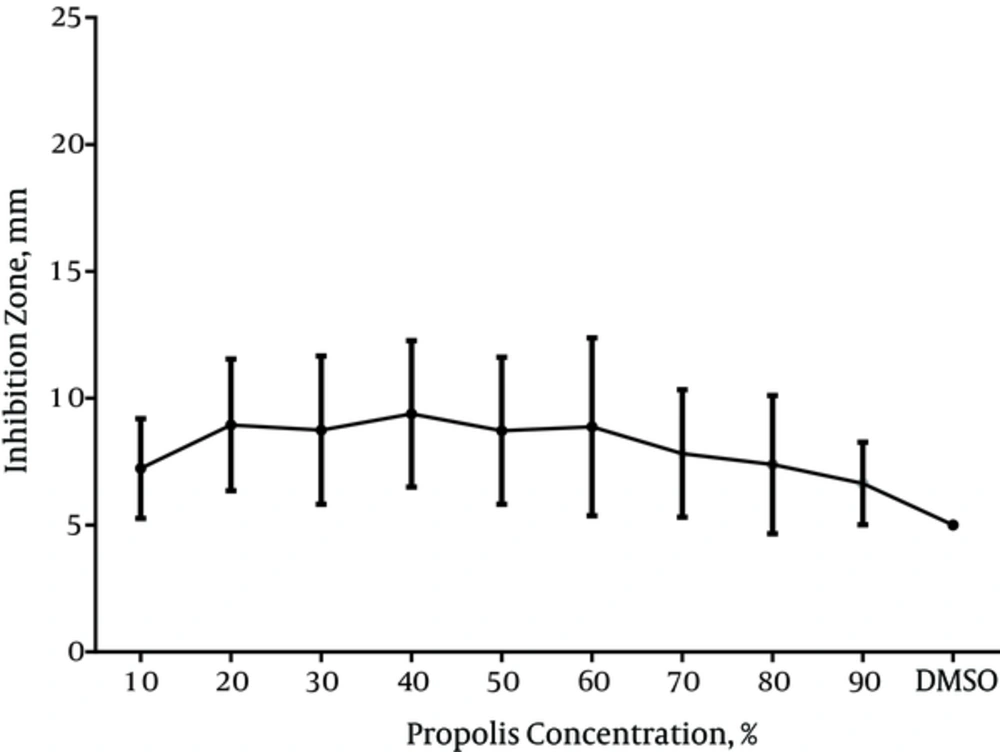
Figure 4.
Inhibition Zone for Propolis with DMSO as Diluent in Different Concentrations from 10% (10% Propolis with 90% DMSO) to 90% (90% Propolis with 10% DMSO) and Pure DMSO as Control
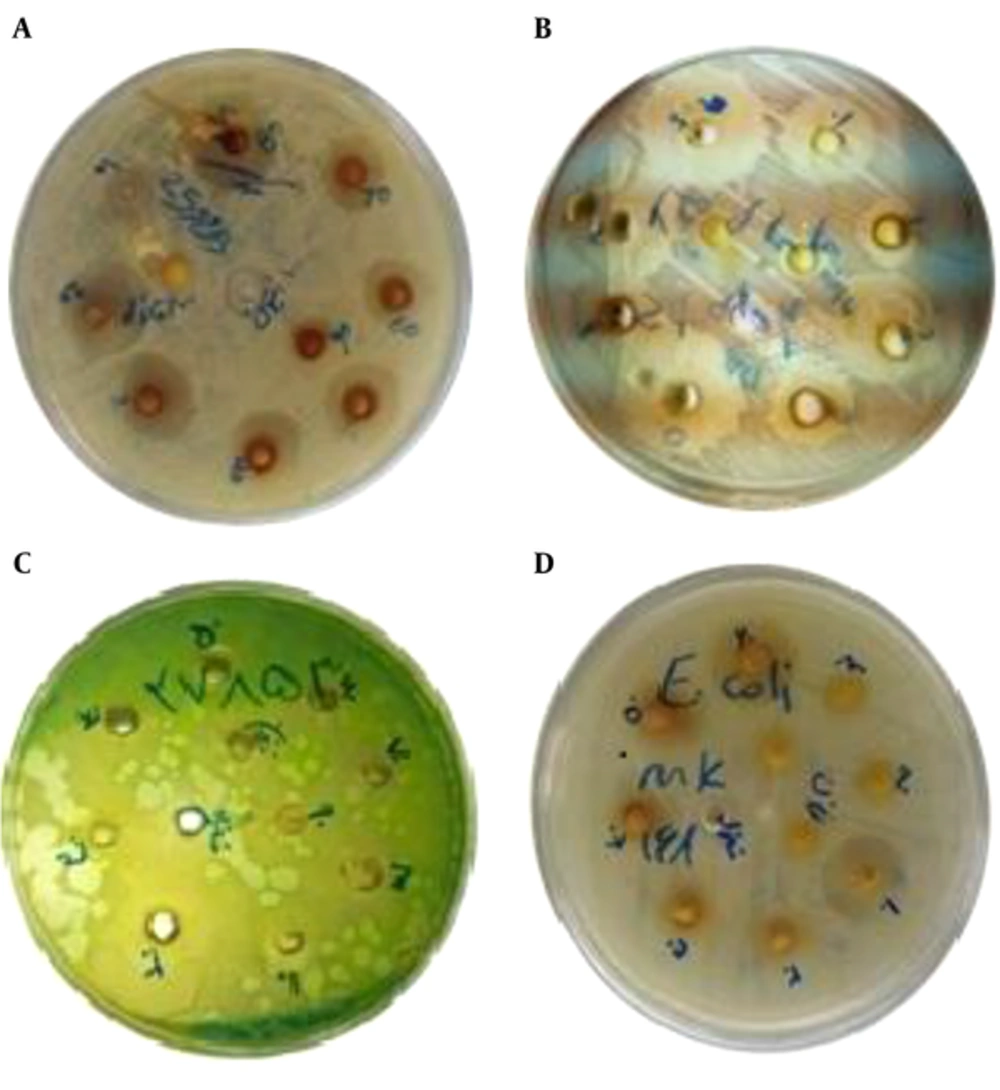
Figure 5.
(A), Staphylococcus aureus ATCC 25923; (B), Enterococcus faecalis ATCC 29212; (C), Pseudomonas aeruginosa ATCC 27853; (D), Escherichia coli MK148 (AmpC β-lactamase positive).
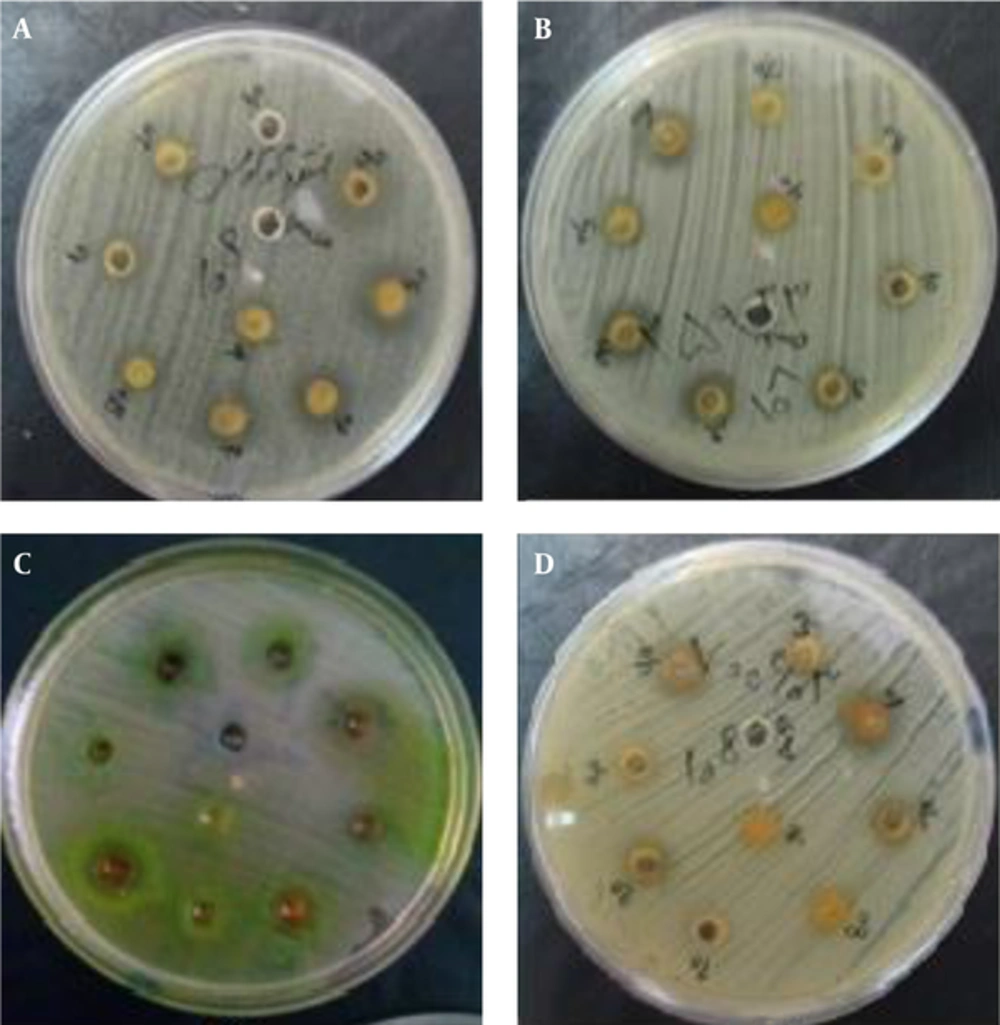
Figure 6.
(A), Enterococcus faecalis ATCC 29212; (B), Staphylococcus aureus ATCC 25923; (C), Pseudomonas aeruginosa ATCC 27853; (D), Klebsiella pneumoniae ATCC 700603).
4. Discussion
The results showed that the effectiveness of the extract against bacteria may be explained by the fact that the effect of oily propolis was statistically significant by the introduction of methanol and dimethyl sulfoxide. Propolis is a non-toxic antimicrobial preparation affecting Gram-positive and Gram-negative bacteria [1]. Active substances in propolis have an antimicrobial and antibacterial effect [1]. In recent studies, usage of propolis oily extract compare to ethanolic extract is very limited and it was used for antitumor activity [7] and humoral immunity stimulation mostly [8, 9]. Our study is important for four major reasons; first we used three different diluents including DMSO, methanol and ethanol. Second, test was performed on different standard strains ATCC (American type culture collection) and resistance bacteria about in 14 different strains. Third, three suspension in different dilutions was used to evaluate bactericidal effect of oily propolis in different bacteria count suspensions and Forth, the effect of propolis dilutions with ethanol, methanol and DMSO on bacteria suspensions was evaluated. The purpose of this study was to verify the activity of an oily liquid extract of propolis called propolis extract in oil (B Natural. Italy) against some Gram-positive and Gram-negative bacteria. The active substance of propolis that used in this study was introduced in the forms of propolis extract in oil, the only liquid form of propolis that could be replaced with other solid forms. In literature, 70% ethanol was used as the diluent for propolis. Due to ethanol is natural antibacterial activity, the evaluation of only propolis without diluent anti-bacterial effect is impossible. On the other hand, non-alcoholic diluent including dimethyl sulfoxide (DMSO) is suitable for some alcoholic limitation or diabetic patients and in some papers was noted that propolis activity was developed by DMSO diluent [10]. Our results showed that in the agar diffusion test with paper disks no growth inhibition zone was seen around control disks with methanol that is confirmed by Sawaya et al. [4]. The results of the study showed that the strongest effect against different type of bacteria was demonstrated by dilution 20% and 60% by diluent in methanol and DMSO, respectively, while the least potent effect for both diluents were seen in dilution 90% and 80% that the none of bacteria shown any inhibition zone. Attention to amount of oily propolis in dilution, methanol as diluent cause less amount of propolis and more bactericidal effect compare to DMSO, while recent paper indicated DMSO has more effect [10]. Some studies indicated Gram-negative bacteria, such as Pseudomonas aeruginosa was resistance to the bactericidal effect of propolis, but the determined inhibitory zone indicated that both Gram-positive and negative bacteria are sensitive to the studied propolis preparations, even Gram-negative bacteria are more sensitive. The evaluation of the examination results showed that the effectiveness of the extract against bacteria may be explained by the fact that the effect of propolis was statistically significant by the introduction of methanol and DMSO into the investigated emulsion systems 20% - 40% and 40% - 60%, respectively. The results of the investigations also showed that the effect of the dilution containing 20% of propolis was similar to that of dilution 40%, which contained 40% of propolis liquid. The comparison of dilution containing methanol alone (control negative) with dilution containing propolis liquid alone (control) showed any inhibition zone and any effect on the studied microorganisms; the findings also showed that increasing methanol percentage significantly (P < 0.001) increased the potency of the propolis dilution while it doesn’t change for DMSO dilution. With methanol the most inhibition effect of propolis was observed in dilution 40, containing 40% of propolis in the form of liquid and 60% pure methanol. It is noteworthy that all the investigated dilution specimens inhibited the growth of standard cultures of Gram-negative and Gram-positive microorganisms: Staphylococcus aureus (ATCC 25923) and Escherichia coli (ATCC 25922). For instance, the growth of Escherichia coli (ATCC 25922) was most strongly inhibited by dilution 10% to 30%, and the weakest inhibition was observed in dilution 90% (P > 1.00), which contained 10% of methanol. The growth of Staphylococcus aureus (ATCC 25923) was more efficiently inhibited by dilution 10% to 40% (P < 0.001). The weakest effect was exhibited by preparations that contained 80% to 90% liquid extract (Table 2). Attention to the results, dilution containing less propolis (dilution 10% - 50%) in compare to dilution with 80% - 90% propolis are more efficient. The results of this study are opposite of the literature data indicating that Gram-positive bacteria are more sensitive to propolis, compared to Gram-negative bacteria. Many researchers had investigated the antibacterial activity of propolis and its extracts against Gram-positive and Gram-negative strains and they found that propolis had antibacterial activity against a wide range of Gram-positive rods but had a limited activity against Gram-negative bacilli [5]. These kinds of differences in susceptibility among the microorganisms against antimicrobial substances in plant extracts may be explained by the differences in cell wall composition [11]. In our result shigella sonnei/ flexneri and Escherichia coli from Gram-negative bacilli group showed suitable sensitiveness to this novel propolis solution that in contrast of other result is very interesting. Although many studies determined propolis activity at higher concentrations was mainly bacteriostatic and bactericidal [12], our result indicated 20% - 40% of propolis suspension with methanol have the most efficacy. So this novel form of liquid propolis can be used widely because of less amount of solution with more bactericidal effect. The present study has shown propolis antimicrobial activity against the following periodontal pathogens [13]: antimicrobial activity against Pseudomonas aeruginosa and Escherichia coli was also demonstrated in this study, confirming previous results [13]. Different results were achieved by Nieva et al. [14] that reported antimicrobial activity against Staphylococcus aureus, but no action against Pseudomonas aeruginosa and Escherichia coli. A possible explanation for diverse results is the fact that propolis composition is variable depending on the region and season that it is collected [13].