Fulltext
The full text of this article is available on the PDF file.
Zahedan Journal of Research in Medical Sciences
The Official Journal of Zahedan University of Medical Sciences
Image Credit:Zahedan J Res Med Sci
Authors
Background: Cisatracurium is used to facilitate endotracheal intubation. However, conventional doses have slow onset time. The higher doses of this drug may eliminate this problem but may be associated with significant hemodynamic changes. The present study was designed to compare the effects of three doses of cisatracurium (0.15, 0.20, and 0.25 mg/kg) on hemodynamic parameters and the appropriate time required for endotracheal intubation.
Materials and Method: One hundred and twenty three patients, aged 20-40 years old with ASA class 1 or 2 were randomly allocated to receive one of the cisatracurium doses: 0.15 mg/kg 0.20 mg/kg and 0.25 mg/kg. After induction of anesthesia, the mean arterial pressures and pulse rates were measured at the baseline, after induction of anesthesia, and after endotracheal intubation at one minute interval for 5 minutes. The appropriate time for intubation (time of achieving TOF=0 and PTC=0) and TOF recovery after administration of cisatracurium, were also measured and compared accordingly.
Results: After induction of anesthesia, the patients of all three groups showed a significant decrease in their mean arterial pressures (p < 0.001). We also noticed a drop in pulse rates (p>0.05). The changes were more marked in the 0.15 mg/kg, 0.25 mg/kg, and 0.20 mg/kg group, respectively. However, these changes were not clinically significant and did not require any intervention. The time required for endotracheal intubation (to achieve TOF=0) in 0.15, 0.20 and 0.25 mg/k-group were 191.50±35.16, 145.40±25.08 and 100.20±25.59 seconds, respectively (p < 0.001). The time of TOF recovery in 0.15, 0.20 and 0.25 mg/kg-group were 2696.20±324.25, 3422.20 ±253.00 and 3378.90 ±626.15 seconds respectively (p< 0.001).
Conclusion: We concluded that doses of 0.20 and 0.25 mg/kg in comparison to 0.15 mg/kg of cisatracurium provide a shorter time required for endotracheal intubation but are associated with more significant changes in blood pressure and pulse rates. However, these changes are not clinically significant and need no intervention
© 2011, Author(s). This open-access article is available under the Creative Commons Attribution 4.0 (CC BY 4.0) International License (https://creativecommons.org/licenses/by/4.0/), which allows for unrestricted use, distribution, and reproduction in any medium, provided that the original work is properly cited.
Rokhtabnak F, Sehat-Kashani S, Mohaghegh Dolatabadi M, Derakhshan P, Aghakhani S, et al. The Effect of Tourniquet Inflation Time on the Pharmacodynamics of Cisatracurium During Surgery: A Randomized Clinical Trial. J Cell Mol Anesth. 2025;10(3):e164383. doi: https://doi.org/10.5812/jcma-164383
Solatpour F, Teymourian H, Mohajerani SA, Hoseinzadegan Shirazi F, Lotfollah Zadeh S, et al. Comparison of the Incidence of Sore Throat After Rapid Sequence Intubation With Succinylcholine and Cisatracurium. Anesth Pain Med. 2014;4(3):e20030. doi: https://doi.org/10.5812/aapm.20030
Shetabi H, Moradi Farsani D, Allafchian Z. Effect of Etomidate Versus Midazolam-Sodium Thiopental on Attenuating the Cardiovascular Response to Laryngoscopy and Tracheal Intubation. Anesth Pain Med. 2024;14(2):e143382. doi: https://doi.org/10.5812/aapm-143382
Paknezhad S, Serati E, Mehdizadeh Esfanjani R, Soleimanpour M, Soleimanpour H. Effects of Fentanyl Versus Remifentanil Pretreatment on the QTc Interval in Patients Undergoing Rapid Sequence Intubation: A Randomized Clinical Trial. Anesth Pain Med. 2022;12(5):e131184. doi: https://doi.org/10.5812/aapm-131184
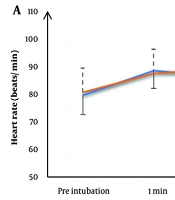
Moharam SA, Ahmed IMA, Elgarhy AM, Seyam SHA, Almalki MT, et al. Assessing the Optimal Dose of Mivacurium for Modified Rapid Sequence Intubation in Emergency Surgical Settings: A Randomized, Double-Blind Trial. Anesth Pain Med. 2024;14(5):e153629. doi: https://doi.org/10.5812/aapm-153629
More by these authors
Last Update: 3 weeks ago
Last Update: 3 weeks ago
Last Update: 3 weeks ago
Last Update: 8 hours ago
Last Update: 1 day ago
Last Update: 4 days ago