In the present study, the T-AOC in the
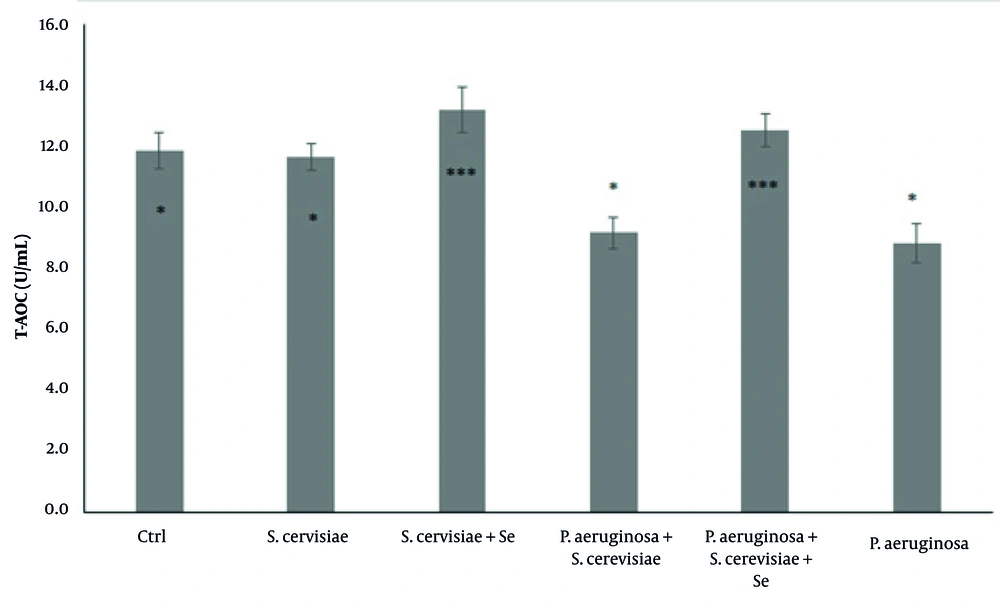
P. aeruginosa infected rats significantly decreased compared to that of the control group (
Figure 1). These changes can indicate an increase in the level of oxidative stress in the body. In line with the aforementioned results, van‘t Wout et al. reported the increased expression of the genes associated with oxidative stress, such as
C/EBP homologous protein (CHOP),
78-kDa glucose-regulated protein (GRP78), and
Growth arrest and DNA damage-inducible protein 34 (GADD34), after the infection of lung epithelial cells with
P. aeruginosa (
12). In another study, Liu et al. observed an increase in ROS levels after infecting the A549 cell lines (alveolar epithelium) with the lipopolysaccharides (LPS) wall of
P. aeruginosa (
13).
The entrance of pathogens into the body induces oxidative stress, which weakens the antioxidant system and decreases the antioxidant level (
10). The present study confirmed the decrease of the antioxidant level after introducing the
P. aeruginosa and oxidative stress response. Consistently, reducing the antioxidant capacity following the
Pseudomonas infection confirms the oxidative stress in the body.
There was a significant increase in the T-AOC level following the treatment of
P. aeruginosa-infected rats with selenium-enriched
S. cerevisiae, compared to that of the infected group (
Figure 1). In this study, it appears that
S. cerevisiae enriched with selenium prevents the induction of oxidative stress following the entry of pathogens into the body. A recent study showed the protective role of selenium-enriched probiotics in the inhibition of
Escherichia coli pathogenesis and the improvement of antioxidant status. (
14).
Zhu et al. investigated the effect of yeast
S. cerevisiae supplementation on serum antioxidant capacity and gut microbial populations in weaned piglets. The results of the aforementioned study showed an increase in serum superoxide dismutase (SOD) activity and a decrease in serum malondialdehyde concentration (P < 0.05). Zhu et al. suggested that various forms of yeast with very important antioxidant enzyme systems, such as SOD or catalase, may have moderated the body’s antioxidant capacity and boosted the intestinal immunity of weaned piglets (
15).
Kleniewska et al. studied the effects of
Lactobacillus casei and inulin prebiotics on the antioxidant capacity of human plasma. They showed a significant increase in catalase and a slight increase in the activity of SOD and GPx (
16). Roshan et al. examined the effect of probiotics and synbiotics on antioxidant status. They demonstrated that these supplements improve GSH as critical markers of antioxidant status in the body (
17). Nido et al. reported that the body weight and liver malondialdehyde level of mice fed a high-fat diet decreased significantly after treatment with selenium enriched
S. cerevisiae (
18). A recent study demonstrated the antibacterial and antioxidant features of selenium-enriched Enterococcus durans LAB18s against
P. aeruginosa pathogenesis (
19).
Various studies have shown that selenium-containing compounds increase the expression of selenoprotein-associated genes and decrease the level of oxidative stress biomarkers in the body (
20). Alyemeni et al. demonstrated that after selenium treatment, less amount of cadmium would be absorbed in tomatoes, and selenium treatment reduced the cadmium-induced oxidative stress in tomatoes by increasing the activity of antioxidant enzymes (
21). Yaghchi et al. reported that the probiotic selenium-enriched
Saccharomyces boulardii attenuates oxidative stress in rats after aluminum toxicity (
10).
It has also been proven that DL-selenomethionine can have protective effects on hepatocytes against oxidative stress induced by T-2/HT-2 toxins-induced cytotoxicity. This protective role is accomplished by increasing the expression of antioxidant genes and activity of GPX and GSH and decreasing the intracellular ROS level (
22). In addition, selenium, as a biocatalytic and functional component of the GPx family and selenoproteins, plays an important role in the detoxification of a wide range of peroxides, such as hydrogen peroxide (
23).
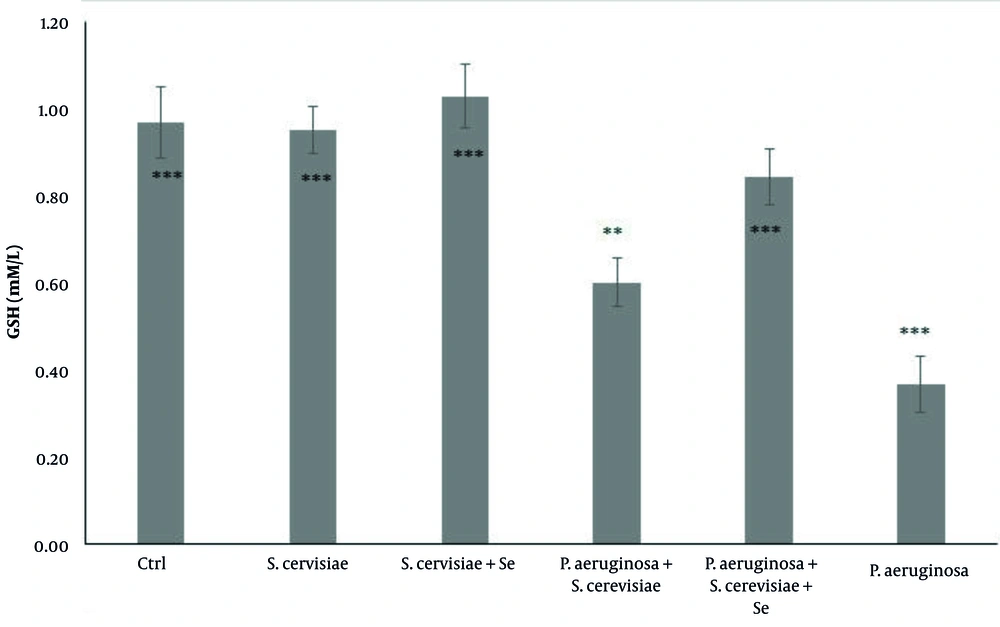
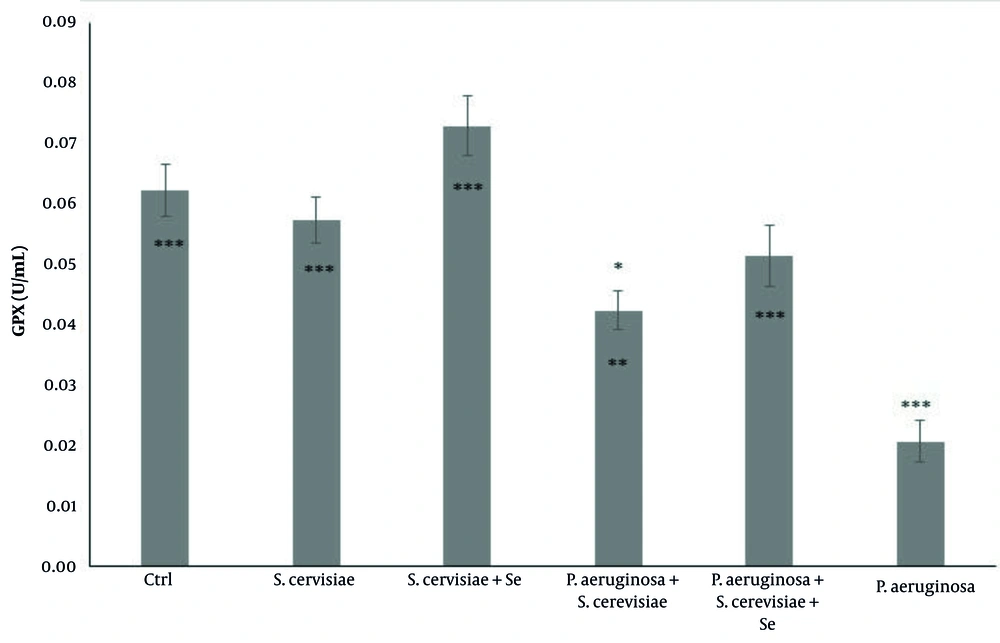
The results of the above-mentioned studies could indicate why the level of serum antioxidants in rats treated with selenium-enriched yeast significantly increased, compared to that reported for selenium-free yeast. Increased GSH levels and GPx activity (
Figures 2 and
3) also confirmed the positive effect of selenium and yeast on the inhibition of oxidative stress induced by
P. aeruginosa. In the confirmation of these results, Binte Hussain et al. demonstrated increased GSH level and GPX activity after sodium selenite treatment following oxidative stress induction by cadmium in PC12 cells (
24). Another study reported the protective effect of selenium-enriched yeast against oxidative stress and liver inflammation caused by poisoning with carbon tetrachloride in rats (
25).
In the present study, there was no significant difference in the T-AOC, GSH concentration, and GPX activity between the yeast and selenium-enriched yeast treated groups, compared to those of the control group, indicating that yeasts have no adverse effect on the rats’ bodies (
Figure 1,
2, and
3). Blood parameters were evaluated and compared between the experimental groups to ensure that the dose of yeast and selenium was safe for the body. The results showed that none of the blood parameters was influenced by selenium-enriched
S. cerevisiae and
S. cerevisiae (
Table 1). According to the results, the collected data have reported a lack of changes in the number of PLT, Hgb, Hct, RBC, and indices following the use of probiotics, such as
Kocuria SMI,
Rhodococcus and selenium-enriched
S. cerevisiae (
26), and
Lactobacillus reuteri KT260178 and selenium-enriched
S. cerevisiae (
27). Mandour et al. showed that the supra-nutritional dose of selenium-enriched yeast had no clinical or laboratory toxicity in male goats (
23).
The evidence showed that selenium supplement in Tilapia increased Hgb level, weight, and body length; however, it did not significantly alter the number of RBC and WBC. The aforementioned data suggested that selenium did not change blood factors in Tilapia; nevertheless, selenium improves physiological function and fish growth (
28). Wang et al. demonstrated that the probiotic
Lactobacillus johnsonii BS15 inhibits subclinical necrotic enteritis in chickens by improving blood parameters related to the immune system. Furthermore, the BS15 supplement improves blood parameters in healthy chickens, especially at the starter phase (
29). Variations in the impact of selenium-enriched probiotics on blood parameters might be attributed to the differences in dietary composition, probiotic dose, mode of administration, and animal species (
30).
In the current study, the number of WBC significantly increased only in the group infected with
P. aeruginosa, compared to that reported for the control group, which could be due to the stimulation of the immune system following the penetration of the pathogen into the body. The treatment of the infected rats by yeast and selenium-enriched yeast significantly caused a reduction in WBC count near the control level. The aforementioned results confirm the protective effect of this probiotic against
P. aeruginosa. It seems that through strong antioxidant effects, probiotics enhance the immune system to fight against pathogens (
Table 1).
5.1. Conclusions
The results of the present study showed that the entry of P. aeruginosa stimulated immune cells and increased ROS to fight pathogens resulting in the induction of oxidative stress and a decrease in the level of natural antioxidants in the body. Selenium and S. cerevisiae, due to their strong antioxidant properties, somewhat reduce the harmful effects of oxidative stress on the bodies of pathogen-infected groups. No change in the blood factors in the experimental groups confirmed the safety of selenium-enriched yeast for the bodies of the treated groups. Therefore, further studies are required to confirm the aforementioned results.