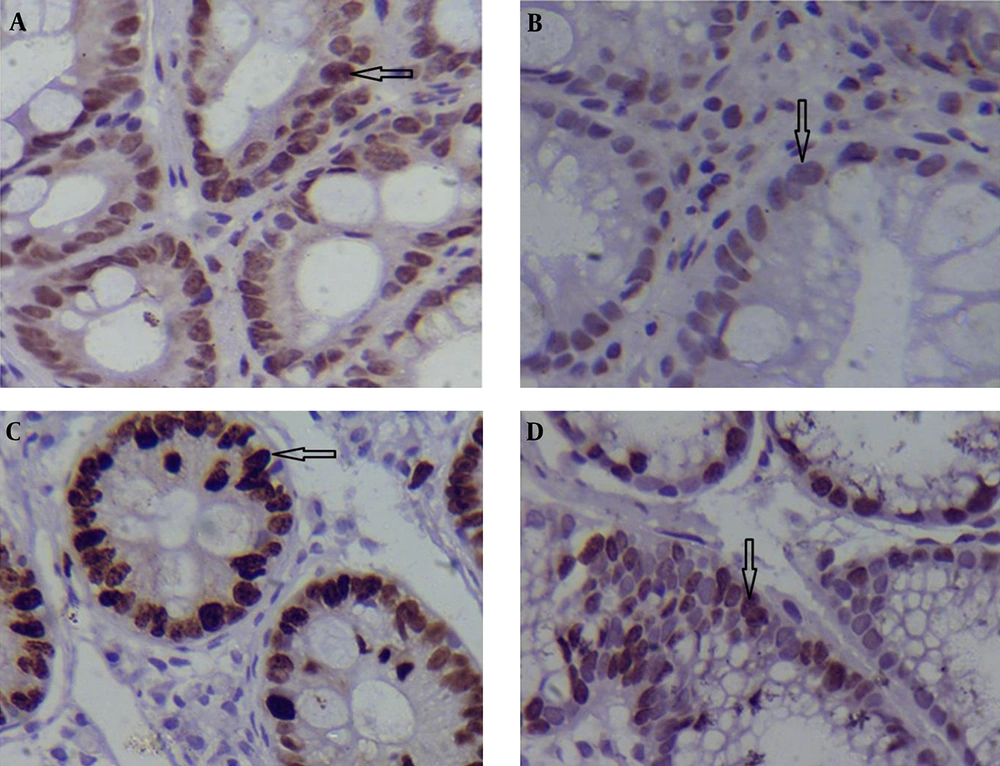
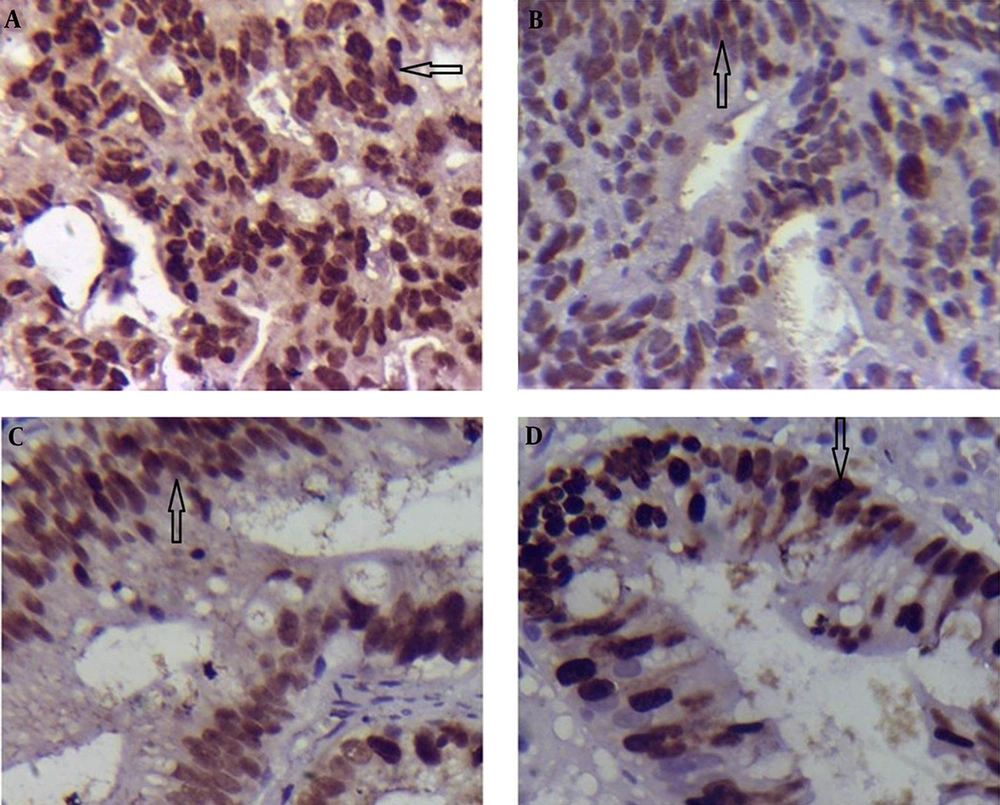
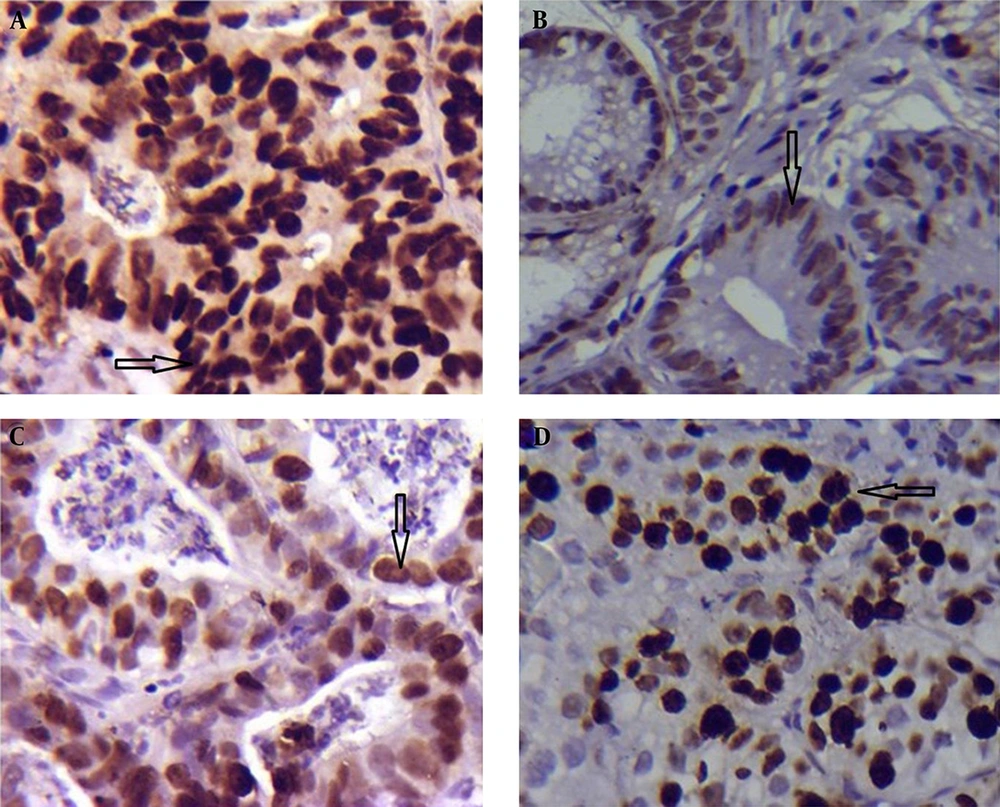
The current study investigated the
p53 and
Ki-67 expression in the gastric epithelial lesions based on the infection with
H. pylori. The study results showed that expression of
p53 in the group with
H. pylori infection was higher than that of the group without
H. pylori infection (IM, DYS and GC). In addition, it was shown that from the IM to the GC, the
p53 expression progressively increased in the group with
H. pylori infection. In the current study,
H. pylori were detected in 47.61% of IM, 50% of DYS and 45.23% of GC specimens. The lower prevalence of
H. pylori in GC samples compared to that of the precancerous lesions justified as the modified gastric mucosa may become inhospitable for the continued infection with
H. pylori and its colonization (
10,
33).
The study data showed that in the IM group, the
p53 expression in the specimens infected with
H. pylori was higher than that of the specimens not infected with
H. pylori. Zhang et al. (
34) also showed that in the metaplasia phase,
p53 expression in the group with
H. pylori infection was higher than those of the group without H. pylori infection and normal mucosa. Similarly, Yang et al. (
35) found that in IM, the expression of
p53 in the specimens with
H. pylori infection was higher than that of the specimens without
H. pylori infection. In another study by Forones et al. (
30),
p53 was negative in all of the IM specimens, , and they suggested that mutation of p53 probably occurs in the latter stages of gastric carcinogenesis.
In the study, in DYS specimens the expression of
p53 in those with
H. pylori infection was higher than that of specimens without
H. pylori infection. The findings were similar to the results reported by Zhang et al. (
34) that
p53 expression was higher in the specimens with
H. pylori infection.
The current study showed that, in the GC group, the
p53 expression in the tissues infected with
H. pylori was higher than that of the tissues not infected with
H. pylori. In line with the current study, Salih et al. (
36) reported an overexpression of
p53 in tumors infected with
H. pylori. Li et al. (
37) also reported that the GC tissue levels of
p53 in the specimens infected with
H. pylori were higher than those not infected with
H. pylori. In another study, Zhang et al. (
34) reported no expression of
p53 in normal gastric mucosa, but there was an expression of
p53 in GC tissues. Overexpression of
p53 was observed in the specimens infected with
H. pylori compared to those not infected with
H. pylori. Accordingly, they concluded that
H. pylori infection can boost
p53 mutation. Morales-Fuentes et al. (
38) reported that in the group with
H. pylori infection, 91% of cases were positive for
p53 expression while in the group without
H. pylori infection, only 14% were
p53 positive. Kubicka et al. (
39) found more
p53 mutations in patients with positive serology for
H. pylori compared to the ones with negative test (43% vs. 14%). Yang et al. (
35) showed no significant differences in
p53 expression between patients with and without H. pylori infection in DYS and GC. Berloco et al. (
40) also reported that
p53 mutations were not related to
H. pylori infection in patients with GC in an Italian population. On the other hand, Kodama et al. (
41) showed that immunoreactivity for
p53 in
H. pylori infected group before eradication was significantly higher than that of non-infected group. After eradication of infection, the labeling index for
p53 significantly reduced in both groups. This finding suggests that, the expression of
p53 can be associated with
H. pylori infection, and it can be concluded that
H. pylori can be a risk factor for gastric carcinogenesis.
In the current study, the expression of
Ki-67 in IM in the specimens with
H. pylori infection was significantly higher than that of the specimens not infected with. Similarly, Jang et al. and Cabral et al. (
42,
43) found that the expression of
Ki-67 in IM was significantly higher in the group infected with
H. pylori. This shows an agreement on the effect of
H. pylori on the expression of
Ki-67 during the precancerous phases. Some studies reported no statistically significant difference between
Ki-67 expression in in the patients with and without
H. pylori infection and IM (
17,
44).
In DYS, expression of Ki-67 in the group with H. pylori infection was lower than that of the group without H. pylori infection. In GC, expression of Ki-67 was slightly higher in the specimens infected with H. pylori compared to those not infected with, but this difference was statistically insignificant.
Gucin et al. (
14) reported that the level of
Ki-67 expression in GC specimens had a positive relationship with
H. pylori infection. Petersson et al. (
45), in specimens with
H. pylori infection, detected more than twofold and fourfold overexpression of
Ki-67 and
p53 respectively, compared to the uninfected subjects. Sasaki et al. (
46) reported that in GC specimens
Ki-67 labeling index in the group with
H. pylori infection was higher than that of the group not infected with
H. pylori. Van De Bovenkamp et al. (
47) found that in the antral area, the number of proliferating cells and
Ki-67 expression were significantly higher in the cases with
H. pylori infection compared to those not infected with
H. pylori. De Freitas et al. (
48) investigated the effect of
H. pylori infection on cell proliferation index and apoptotic index in gastric mucosa of the antrum and corpus parts. Their results showed that the expression of
Ki-67 in the antral area significantly increased in the group with
H. pylori infection, while apoptotic index increased in the gastric corpus area. There was no significant difference in apoptotic index between the groups with and without
H. pylori infection. In the current study, biopsies were performed on different locations of the stomach; most of them were from antral part. This, as a limiting point, may affect the results. In patients with GC, there was no difference regarding
Ki-67 expression between the groups with and without
H. pylori infection. In this phase,
Ki-67 overexpression is observed as a result of malignancy occurrence and this phase can be independent from
H. pylori infection.
Since in IM phase the expression of
Ki-67 was higher in the cases infected with
H. pylori, it can be concluded that the presence of bacteria is essential for the onset of the disease (
36). As observed in DYS, the expression of
Ki-67 in the group with
H. pylori infection was lower than that of the group without infection, and despite the fact that in GC there were no significant differences in the
Ki-67 expression between the cases infected and not infected with
H. pylori, it can be suggested that when the disease progresses from IM toward DYS and GC, the expression of
Ki-67 is affected by genetic changes and molecular events that take place at the earlier stages of carcinogenesis and these changes can be caused by the colonization of
H. pylori (
38). The most important limitation of the study was insufficient biopsy specimens in group dysplasia, lack of some paraffin blocks and atrophy of some samples. Future studies are required to take larger sample sizes and samples from the lesions in the same locations of the stomach to clarify the differences observed between the current study and those of the previous researches. The current study showed a strong association between
H. pylori infection and intensity of
p53 expression. It suggests that
H. pylori can be a risk factor to develop gastric cancer. Also, an association between
H. pylori infection and overexpression of
Ki-67 was observed in earlier stages of carcinogenesis. Further studies should be conducted on this matter.