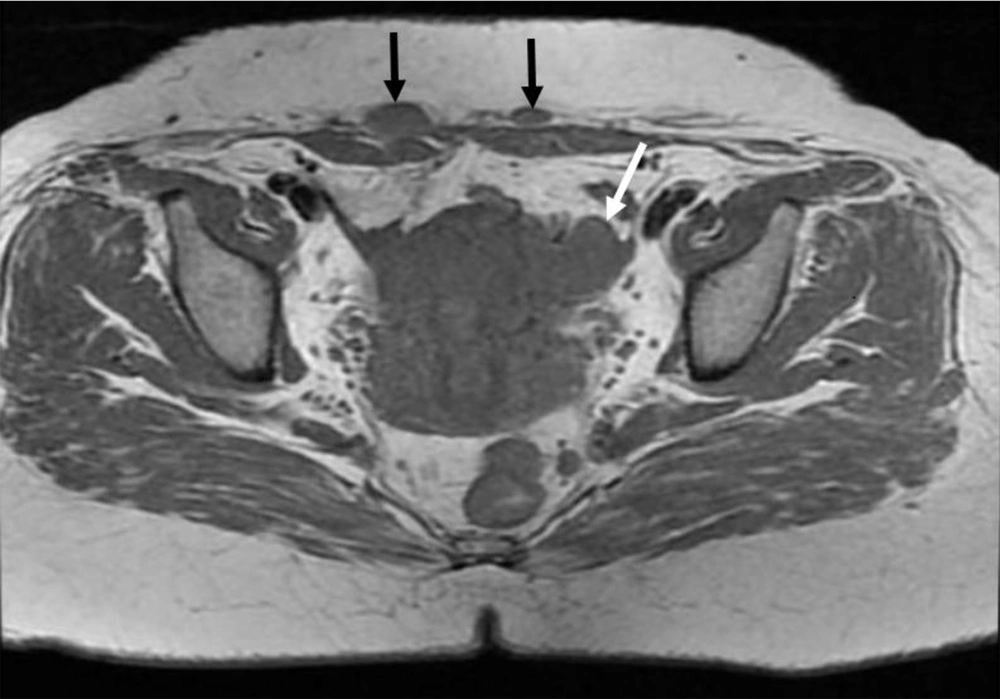
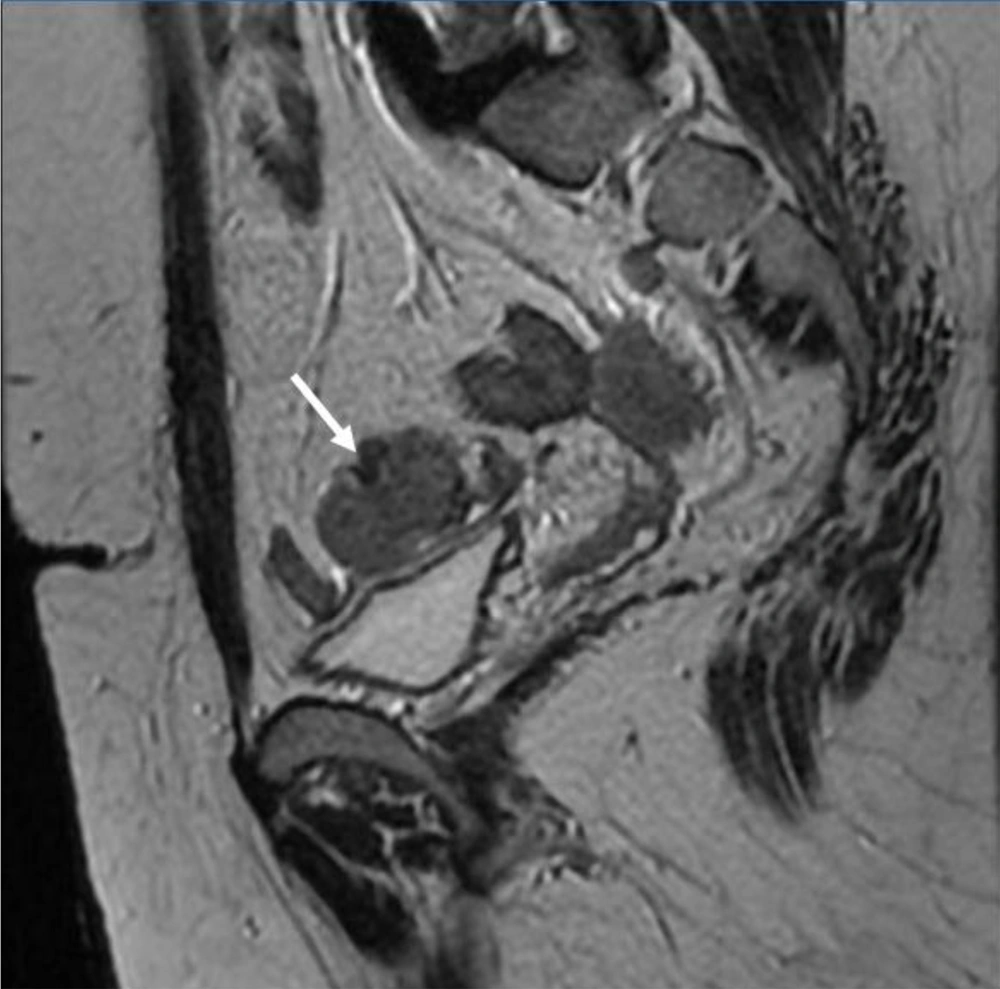
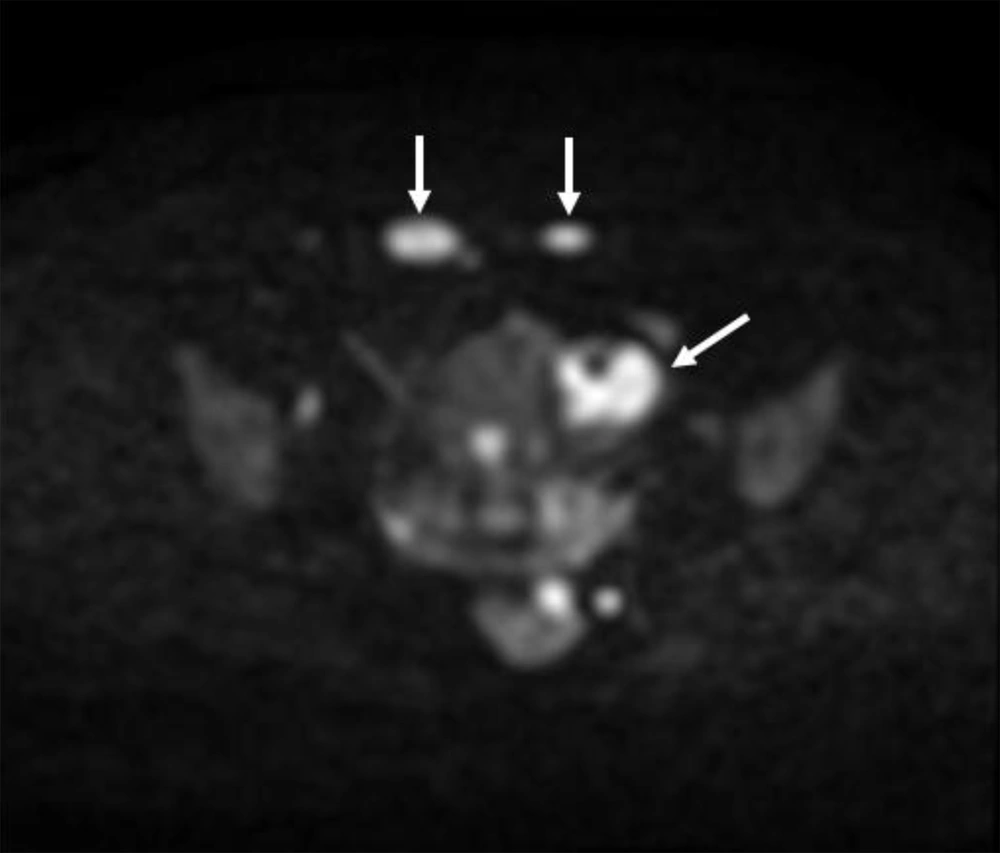
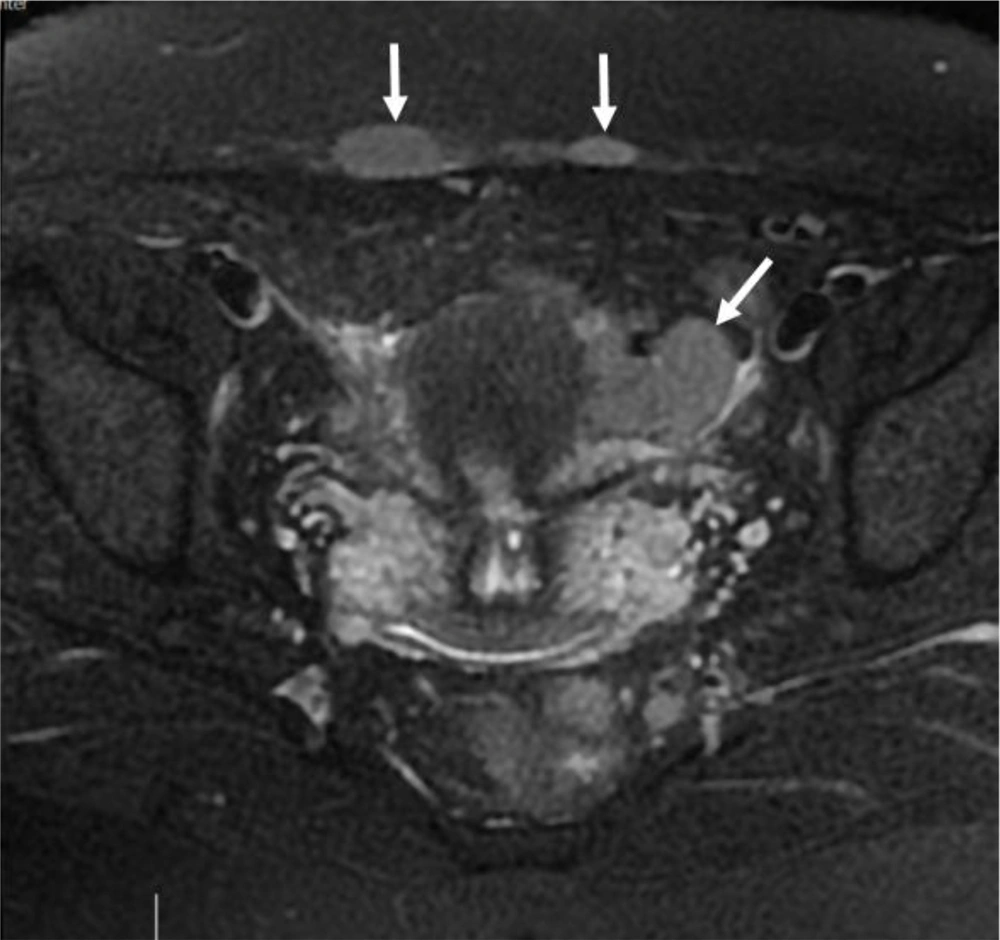
Ovarian neoplasms are categorized into 3 groups: epithelial, sex cord, and germ cells. Dysgerminoma is an ovarian tumor consisting of primitive and undifferentiated germ cells. Most of them are benign lesions and only 3% are malignant (
11). Although dysgerminoma is a chemotherapy-sensitive ovarian tumor, in the case of young women with early stages of dysgerminoma, unilateral salpingo-oophorectomy is recommended as a treatment of choice, particularly in the cases in which fertility is important. But the relapse rate is about 10% to 20% (
11,
12).
Ovarian cancers are often associated with metastasis. They can occur with the direct spread of malignant cells within the abdominal cavity or via lymphatic vessels (
13). Although pleura, liver, bone, lung, and lymph nodes are common sites of distant metastasis, cutaneous metastases are rare in ovarian malignancies (
10). Nowadays the main treatment for advanced stages of dysgerminoma, eg, disease with extra-ovarian spread, is post-operative adjuvant chemotherapy with carboplatin or cisplatin in combination with etoposide and bleomycin (
14).
Patients with skin metastasis are usually those who did not receive postoperative chemotherapy or were resistant to chemotherapy (
8). Recently skin metastases prevalence is increased because of the patient's survival improvements.
Cutaneous metastases have 2 subtypes: Umbilical metastases -also known as Sister Joseph nodules (SJNs) - which are related to peritoneal metastases and indicate a more advanced tumor; however it can be the first manifestation of the tumor in some patients (
13) and the other type is non-SJN, which usually occurs in surgical sites and the most common place is the abdominal wall (
13,
15). One of the prone places is surgical incision especially laparoscopic ports (
13,
16). Tumor cells are extended by direct implantation or via hematogenous pathways through surgery or injury by taking advantage of wound healing processes that precipitate tumor growth. Also, they can spread to lymph node vicinities after lymphadenopathy (
8).
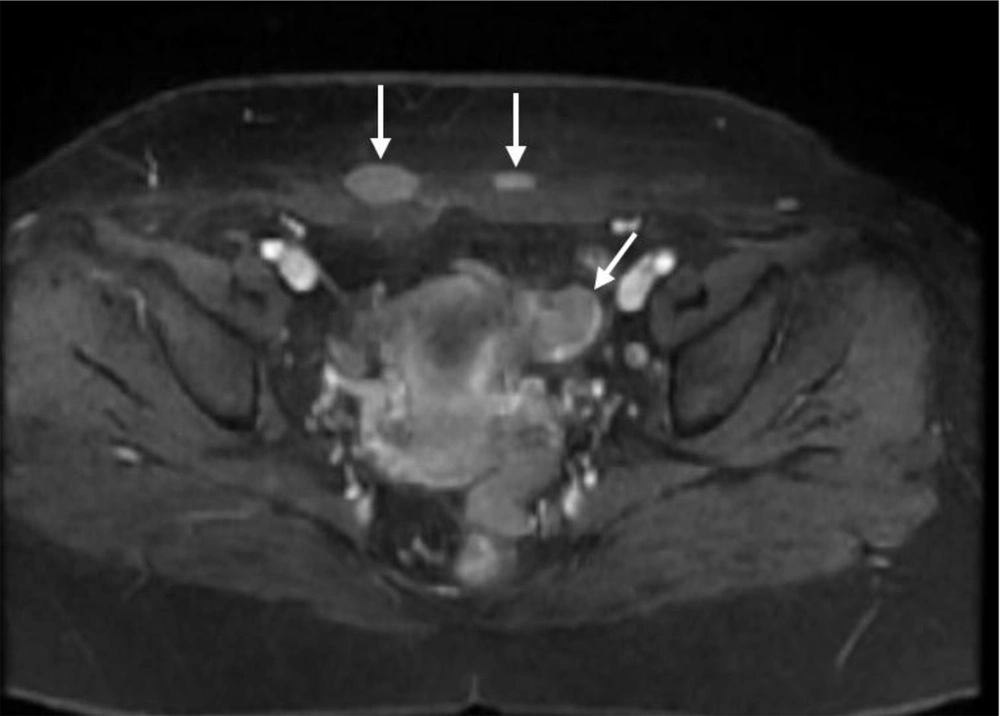
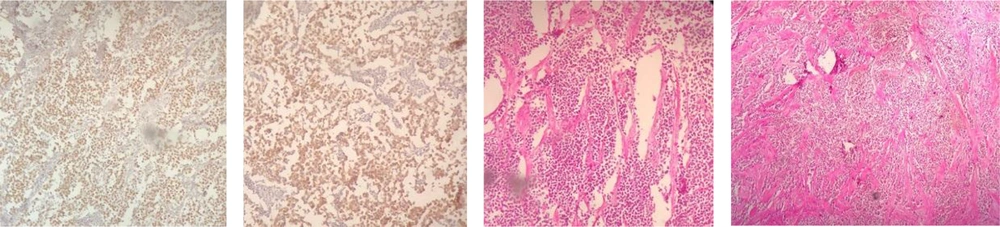
In this case presentation, we reported a rare case of incisional skin metastasis in ovarian dysgerminoma. Our patient had undergone unilateral oophorectomy without receiving chemotherapy and scar incision recurrence in our patient might be due to not taking the adjuvant chemotherapy.
3.1. Conclusions
Despite the low risk of malignancy in dysgerminoma, follow-up evaluation is of great importance particularly in the cases who had not received chemotherapy. Local recurrence and metastases (even in the surgical site skin) are the points to be considered. Therefore, the clinician must examine the site of surgery in patients with history of malignancy and MRI can be utilized in the characterization of the skin lesions in these patients.