1. Context
Cancer is the second leading cause of death globally and was responsible for 9.6 million deaths in 2018. Approximately 1 in 8 men and 1 in 10 women suffer from cancer (1). Carcinogenesis is an evolutionary process that arises from several cellular events such as genetics aberrations, dysregulation of signaling pathways, and epigenetics which leads to clonal selection and expansion of the tumor cells (2). However, the underlying mechanisms of cancer pathogenesis remain largely unknown. Although many patients benefit from various cancer therapies such as radical surgery, radiotherapy, and chemotherapy, half of them experienced tumor regression and resistance to conventional chemotherapies (3). Therefore, there is a necessary need for developing a new strategy to overcome this phenomenon. New approaches such as photodynamic therapy, gene therapy, telomerase therapy, hyperthermia therapy, immunotherapy, complementary and alternative therapy, diet therapy, insulin potentiating therapy, and bacterial treatment have been developed for cancer treatment (4). Since bacteria, as internal and external factors, have a major role in health and human diseases they play a very effective role in the prevention and development of cancer. A large body of evidence has unraveled the dichotomous manner of bacteria in tumorigenesis. On the one hand, the development of some cancers is strongly attributed to bacterial infection and over 15% of malignancies in the world can be linked to this agent. For instance, Helicobacter pylori infection is the main risk factor for gastric cancer development (5). Bacteria cause cancer by different mechanisms including the production of bacterial components, such as toxins and metabolites, as well as bacterial-induced chronic inflammation. On the other hand, some bacteria have been used for the prevention and treatment of cancers through different mechanisms including tumor-targeting bacterial therapy, gene therapy, bacterial products, arginine metabolism, magnetotactic bacteria, combination bacteriolytic therapy (COBALT), and immunomodulation of bacteria. Hereby, we reviewed the role of bacterial mechanisms in cancer development or prevention and evaluated potential approaches for bacterial cancer therapy.
2. Evidence Acquisition
A total of 80 articles in English and Persian language were considered in this study and the latest information on the role of bacteria in carcinogenesis and cancer prevention were obtain through searching in Google scholar databases, Science Direct, and PubMed until 2020, using a combination of the keywords “bacteria”, “carcinogenesis”, “cancer” and “prevention”. Articles were divided into 2 groups: carcinogenic and cancer prevention, then subtitles were determined based on an overview of related articles.
3. Results
3.1. Bacteria and Carcinogenesis
It has been shown that bacterial and viral-inflammatory microenvironments mediate the tumorigenesis process. Interaction between some microorganisms and immune systems results in chronic inflammation which leads to cancer establishment consequently (6). In the case of the mentioned points above, previous studies demonstrated that there is a significant relationship between H. pylori infection and gastric cancer. Moreover, chronic inflammation caused by Escherichia coli, Fusobacterium nucleatum, and Bacteroides fragilis has a main role in the pathogenesis of colon cancer. The bacteria can also drive cancer through their toxins, metabolites, and chronic microenvironment inflammation (7). Chronic stimulation of reactive oxygen species (ROS), interleukin-8 (IL-8), cyclooxygenase-2 (COX-2), and nitric oxide (NO) along with environmental factors are shown to significantly contribute to this process (6). Data are summarized in Table 1.
Table 1.
The Bacteria Associated with Tumorigenesis
| Cancers | Bacteria | Refrences |
|---|---|---|
| Lung cancer | Chlamydia pneumoniae; Staphylococcus aureus; Streptococcus; Escherichia coli; Haemophilus influenzae; Candida albicans; Legionella pneymophila; Bacillus; Listeria; Mycobacterium tuberculosis. | (8) |
| Pancreatic cancer | Helicobacter pylori; Porphyromonas gingivalis. | (9) |
| Breast cancer | Bacillus | (10) |
| Ovarian cancer | Chlamydia trachomatis; Mycoplasma genitalium. | (11) |
| Gallbladder carcinoma | Salmonella enterica; Helicobacter hepaticus; Helicobacter bilis; Escherichia colityphi. | (12) |
| Gastric cancer mucosa-associated lymphoid tissue lymphoma (MALToma) | Helicobacter pylori | (13) |
| Colon cancer | Streptococcus bovis; Fusobacterium nucleatum; Citrobacter rodentium; Escherichia coli; Bacteroides fragilis. | (13) |
| Cervical cancer | Chlamydia trachomatis | (14) |
| Hepatocellular carcinoma | Helicobacter hepaticus | (14) |
| Vascular tumor | Bartonella | (15) |
| Liver cancer | Helicobacter hepaticus | (15) |
| Prostate Cancer | Neisseria gonorrhoeae | (16) |
Abbreviation: MALToma, mucosa-associated lymphoid tissue lymphoma.
3.1.1. Bacterial Toxins
There are numerous bacterial toxins and antibiotics as virulence factors that eradicate and inhibit the proliferation of other microorganisms (17). Among virulence factors, bacterial protein toxins, including those connected to the development of cancer, have been the targets of a large number of studies. Bacterial toxins have great impacts on cellular and molecular procedures which are probably related to carcinogenesis such as proliferation, death, development, and differentiation of cells. Some of the prominent examples including DNA-damage toxin [colibactin, cytolethal distending toxin (CDT), cycle inhibiting factor (CIF), and cytotoxic necrotizing factor (CNF)], cell signaling disrupting toxin [cytotoxin-associated gene-A (CagA), vacuolating cytotoxin A (VacA), B. fragilis toxin, and avirulence protein A and Fad] (Table 2).
It has been demonstrated that some E. coli strains produce peptide-type genotoxin colibactin which have a meaningful contribution to cancer development by double-strand DNA breakage (18, 19). Overpresenting of E. coli harboring the colibatin-producing genes was recently illustrated that in the colorectal tumors samples (20). In one more example, it has been indicated that cdtB, a cytolethal distending toxin subunit of Salmonella enterica serovar Typhi can derive varieties of actions such as cell cycle arrest, inhibit immune cells, and chronic inflammation which has been previously elaborated in gallbladder cancer development and progression (21).
DNA-damage toxins act through destructive DNA and cause double-stranded DNA breaks. To date, digestive bacteria have this function and their toxins have contributed to cancer progression (22).
Table 2.
Different Bacterial Strategies that Might Drive Carcinogenesis
| Strategy | Examples | Reference |
|---|---|---|
| Toxicity (toxins) | DNA- damage toxin: Colibactin, CDT, Cif, CNF; Cell signaling disrupting toxin: CagA, VacA; B. fragilis toxin; Avirulence protein A; FadA. | (23, 24) |
| Metabolites | Nitrosamines; Bile acid degradations; Acetaldehyde | (24) |
| Inflammation | Cytokines /ROS/RNOS | (25) |
Abbreviations: CDT, cytolethal distending toxin; Cif, cycle inhibiting factor; CNF, cytotoxic necrotizing factor; CagA, cytotoxin-associated gene-A; VacA, vacuolating cytotoxin A; FadA, fusobacterium adhesin A; ROS, reactive oxygen species; RNOS, reactive nitrogen oxide species.
Moreover, bacterial toxins can modulate cellular procedures by alterations in signaling pathways. The cag pathogenicity island (CagA) and vacuolating cytotoxin (VacA) of H. pylori have an impact on proliferation and programmed cell death through regulating mitogen-activated-protein kinase (MAPK) and epidermal growth factor receptor (EGFR) pathways (26).
3.1.2. Bacterial Metabolites
Bacterial metabolites such as nitrosamines, bile acid degradation products, and acetaldehyde can be associated with different cancers. Previous studies revealed that the production of toxic metabolites was influenced by a high protein and low carbohydrate diet. This diet decreases the production of anti-cancer metabolites and therefore increases the risk of tumorigenesis. These oncogenic metabolites can cause tumors through mutations in DNA and increase the production of oxygen free radicals (27). Some important bacterial metabolites are mentioned below.
3.1.2.1. Nitrosamines
In some bacteria, nitrates are converted to nitrites and N-nitrosamines by reductase enzymes. N-nitrosamines are mainly accounted as a remarkable mutagen (28). It has been shown that bacterial N-nitrosamines compounds are associated with bladder cancer in animal models. Furthermore, patients with chronic urinary tract infections showed a higher level of nitrosamines in comparison to controls (29).
It has been demonstrated that dimethyl nitrosamine, a powerful carcinogen, was significantly excreted in the urine in Proteus mirabilis and E. coli infection and associated with bladder cancer (30).
Interestingly, H. pylori hypochlorhydria has been postulated to provide a proper condition for other bacteria to produce nitrosamines. Nitrosamines produced by bacteria and rising nitrite levels might enhance the susceptibility of chronic atrophic gastritis, gastric, and colon cancer (24).
3.1.2.2. Bile Acid Degradation Products
Gastrointestinal and biliary tract bacteria can degrade bile acids to secondary products (31). Deoxycholate and lithocholate are the main parts of bile acid degradation products which cause mutation in the cells (32). Secondary bile acid products also elevate the levels of ROS by converting arachidonic acid into prostaglandins through host cell membrane enzymes and mitochondria damages. Additionally, bile acids increase nitrogen species through the induction of nitric oxide synthases. ROS and RNOS can increase DNA breakage and mutagenesis (33). It is important to know that these secondary bile acid products alone do not have the potential for carcinogenesis and need co-carcinogens like nitrosamine (34).
It has been illustrated that mixed bacterial and Salmonella infections are associated with gallbladder cancer which is mainly attributed to bacterial degradation of bile and chronic inflammation that make a mutation in oncogenes such as P53 and K-ras (12). Deoxycholate has been shown that promote growth and proliferation of colon cancer cells by inhibiting protein kinase C in the cells (35). It has been shown that a high-fat diet can stimulate the secretion of bile acids which can increase secondary bile acid products (36).
3.1.2.3. Acetaldehyde
Acetaldehyde is a mutagenic, toxic, and carcinogenic metabolite that is produced by the oxidation of ethanol from bacteria that live in the digestive tract. It interferes with DNA repair and influences tumor development (37).
It has been shown that acetaldehyde production, particularly by non‐pathogenic Neisseria in oral microflora, can contribute to oral cavity carcinoma (38).
Acetaldehyde also causes breakage in chromosome and sister-chromatid exchanges leading to mutations in human lymphocytes. Previous studies showed that the production of acetaldehyde following chronic ethanol consumption increases esophageal epithelial cell generation and chances of tumor development. Furthermore, acetaldehyde causes hyperplastic and hyper-proliferative changes in the gastrointestinal tract that increase the risk of cancer (39).
3.1.3. Chronic Inflammation
Chronic inflammation is one of the most crucial cancer hallmarks which was explained for the first time by Virchow in 1863. He suggested the inflammatory reactions in schistosome-related bladder cancers stimulate cell proliferation and growth (40). Previous studies demonstrated that viruses and bacterial inflammation have been associated with higher cancer risks (41). Inflammation can drive the initiation and progression of cancer and it has been estimated that approximately one-sixth of human cancers occur as a consequence of pathogen inflammation (25). Inflammation stimulates cell renovation and proliferation and might result in DNA aberration that initiates and promotes carcinogenesis (40).
3.2. Bacterial-Mediated Tumor Therapy
For almost a century, it has been shown that bacteria can be used as a novel cancer therapy (42). However, bacteria mediated tumor therapy (BMTT) as a potential therapy with a broad range of benefits, has some limitations such as biosafety, toxicity, genetic instability, and complications with other therapies (43). It has been shown that tumor-detecting bacteria can act as a biosensor for detecting tumors, metastasis, and monitoring of residual diseases (44). Previous evidence showed that some bacteria can regress tumor cell growth by different mechanisms (8). The first observation was tumor regression in exposure to clostridial by Vautier in 1813 (45). Then the German physicians, W. Busch and F. Fehleisen in 1868 and 1882, individually observed that when the patients with cancer were infected with streptococcal bacteria and contracted erysipelas, their tumor was regressed (46). After that, William B. Coley in 1891 showed tumor regression in patients with sarcoma exposed to Coley's toxin (heat-killed streptococcal organisms combined with heat-killed Serratia marcescens) (47). In the early 20th century (1935), Connell showed that the tumor was regressed when treated by filtrated Clostridium histolyticum which was attributed to the production of enzymes (48). In addition, in 1976, it was shown that MycobacteriumBovis bacillus Calmette–Guérin (BCG) was administrated for bladder cancer and BCG eradicated the tumor and inhibited the probability of relapse. It is noteworthy to mention, controlled administration of bacteria is important for a successful BMTT particularly via the heat-inactivated bacteria (49). Currently, new bacterial strains with high capability are being designed and altered by genetic engineering to reduce the side effects and increase efficiency (50). For instance, the BCG vaccine can be used for human bladder cancer as adjuvant therapy (51). Moreover, oral administration of E. coli can provide a non-invasive detection method for finding liver metastasis via producing easily detectable color signals in urine (52).
3.2.1. Tumor Targeting Bacterial Therapy
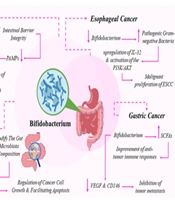
Some anaerobic bacteria were investigated for targeting therapy due to their ability to live in oxygen-free regions. When bacteria are injected into tumor cells, they migrate and penetrate deeply and assemble in necrotic areas of tumor tissue and destroy it directly (53). Some strains of bacteria such as Clostridia, Bifidobacteria, Mycobacterium, Bacillus, Listeria, and Salmonellae can colonize into the hypoxic areas of tumor cells and can devastate tumor status (54). There are several methods that bacteria would help to have anti-cancer efficiency including gene therapy, bacterial products, arginine metabolites, magnetotactic bacteria, COBALT, and immunomodulation of bacteria in cancer.
3.2.2. Gene Therapy and Vectors
The best therapy for cancer is the precise eradication of the tumor cells with minimal damage to the other parts of the body. One of these effective therapies is gene therapy. Gene therapy is the gene manipulation and regulation of DNA to prevent and treat the disease. Gene delivery system consists of 2 biological (bacteria and viruses) and non-biological categories (55). The inherent characteristics of the bacteria allow them to have adequate and effective DNA delivery to cells or tissues. Following tumor progression, the cancerous cells create new blood vessels that are highly unorganized and leaky. As a result, circulating bacteria enter the tumor and accumulate through it (56). The bacteria begin to produce compounds that kill tumor cells. Additionally, bacteria can transfer some substances coupled with antitumor agents to the human body and destroy the cancerous cells (57). Previous studies have demonstrated that the bacteria that are conjugated with anti-cancer agents are more therapeutic than monotherapy (58).
Last investigations showed that co-delivery of doxorubicin and recombinant plasmid pHSP70-Plk1-shRNA by bacterial magnetosomes can significantly inhibit osteosarcoma cells (59). Previous studies indicated the overexpression of laudin-3 (CLDN3) and claudin-4 (CLDN4) in ovarian cancer. Recently it has been shown that CLDN3/4 can be targeted by recombinant Clostridium perfringens enterotoxin (CPE) fused to tumor necrosis factor as a potential therapy in ovarian cancer (60). Furthermore, it has been demonstrated that by a recombinant E. coli expressing listeriolysin O (LLO), antigens can effectively present to dendritic cells (DCs) for cancer immunotherapy in melanoma cells (61).
The aim of gene therapy is to incorporate genes that have anti-cancer properties to anaerobic bacteria (43).
3.2.3. Bacterial Products in the Treatment of Cancer
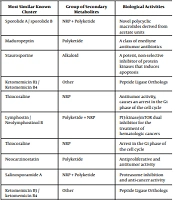
There are several natural or synthetic modified bacterial products that have been shown to have an anti-cancer activity such as myxobacterium Sorangium cellulosum epothilone A and epothilone B (EpoA and EpoB), EpoB, and desoxyepothilone B in a wide range of cancers (62). Some bacterial components such as enzymes can act as anti-tumor agents. Previous investigations discovered the anti-tumor activity of some secreted substances of bacteria for different cancer cells. For instance, bacteriocins are positively-charged peptides that are produced ribosomally in a variety of bacteria (63). Moreover, bacterial products such as lipopolysaccharide (LPS) vaccines might act as an anti-tumor agent in particular cancers (64). For instance, LPS vaccines of Pseudomonas aeruginosa increased tumor regression and improved overall survival rate in patients with acute myeloid leukemia in comparison to non-treated LPS patients (65). A large body of evidence has revealed that LPS remarkably elevated apoptosis in colorectal cancer cell lines compared to 5-fluorouracil (5-FU) (64, 66). Moreover, staphylococcal superantigens-like (SSL) which is produced by S. aureus binds to overexpressed receptors in cancer cells. For example, SSL10 binds to CXCR4 on human cervical carcinoma cells and competes with CXCL12 (the natural ligand of CXCR4) and therefore, inhibits the chemotactic response of HeLa cell, calcium mobilization, and cell migration of cervical carcinoma that acts as an anti-cancer agent preventing metastasis (67). Endotoxin of Serratia marcescens increases tumor regression through its hemorrhage-producing factor (68). Of note, bacteriocins preferentially bind to the negatively-charged cell membrane of cancer cells and induce its cytotoxicity. Indeed, the cancer cell membrane has higher microvilli and fluidity in comparison to normal cells which means more number binding sites for bacteriocins. Bacteriocins conduct their cytotoxicity through induction of apoptosis and/or changing the cell membrane permeability by depolarization of it (50).
3.2.4. Arginine Metabolism in Bacterial Pathogenesis and Cancer Therapy
Amino acid metabolism pathways are critical for both bacterial and cancer cell growth, and recently they have been considered as therapeutic targets for bacterial infections and cancer therapy (69). Effective cancer therapy is the depletion of key amino acids that are essential for tumors to survive (70). One of these amino acids is arginine. Correlation between arginine metabolism and tumorigenesis has been known for a long time and shows that arginine can influence tumor cell growth and proliferation (71). A huge body of studies has revealed that arginine deprivation could be a potential therapeutic approach in cancer therapy. Three major enzymes [arginase, arginine deiminase (ADI), and arginine decarboxylase (ADC)] participate in the depletion of arginine in archaea, bacteria, and eukarya (72). Studies demonstrated that, among the arginine degrading enzymes, arginine deiminase (ADI) has an antitumor effect in a variety of cancers such as hepatocellular carcinomas and melanomas (HCCs) (73). In this case, some microorganisms such as Pseudomonas, Mycoplasma, Halobacterium, Lactobacillus, Lactococcus, and Streptococcus can catabolize arginine to citrulline and ammonia by ADI enzyme (74). Of importance, Mycoplasma arginine deiminase enzyme is known as a potent anti-cancer agent that inhibits tumor growth in hepatocellular carcinoma, leukemia, melanoma, renal cell carcinoma, and prostate cancer (75).
3.2.5. Magnetotactic Bacteria for Cancer Therapy
Recently, nanotechnology has opened many therapeutic windows in cancer treatment. Among different new methods in this field, using magnetotactic bacteria (MTB) is one of the significant methods. MTB is a group of Gram-negative, motile, and aquatic bacteria that can move along geomagnetic field lines. These bacteria synthesized intracellular structures and nano-sized magnetic crystals, named "magnetosomes" (76). Both MTB and their magnetosomes are being applied in cancer treatment in different ways. The whole MTB and magnetosomes are being used for delivering medication. Magnetococcus marinus strain MC-1 is also used to transport drugs with nanocarriers (nanoliposime) on the oxygen-free region of colorectal cancer in mice. Furthermore, scientists demonstrated the anti-tumoral activities of the complex of magnetosome and a chemotherapy medication called doxorubicin (DOX) in the cell lines of mouse breast cancer and human leukemia (77). Another interesting feature of magnetosome is the detection of tumor cells by magnetic resonance imaging (MRI). For instance, Xiang Z et al. detected breast cancer cells by magnetosome nanoparticles. The advantage of this system is that a low dosage of magnetosome can be used due to its high affinity to target cells because of specific proteins binding to the magnetosome surface (78). Another application of magnetic particles in the treatment of cancer is hyperthermia (increasing the temperature within the tumor in the range of 37 - 45 °C) which is induced by altering the magnetic field (79). Scientists demonstrated that using magnetosomes in the hyperthermia treatment of tumors reduce the size of tumor cells and eliminate the cancerous cell completely.
3.2.6. Combination Bacteriolytic Therapy
Different bacteria are tested for combination therapy of cancers. Among 26 various bacteria, an anaerobic bacteria named "Clostridium novyi-NT" (C. novyi without α-toxin) which grows in the hypoxic region of the tumors seems particularly useful in cancer therapy (80). The spores of this bacteria are used in combination with several chemotherapeutic agents, such as docetaxel, vinorelbine, mitomycin C, and dolastatin-10. This strategy is called COBALT, it causes hemorrhagic necrosis of tumors which destroys tumor cells and prolongs antitumor effects (81).
3.2.7. Immunomodulation of Bacteria in Cancer
Immunomodulation as a part of immunotherapy includes the interaction of bacteria with the host’s immune system in different ways. Bacteria can enhance human immunity through activation of inflammasome pathways and producing inflammatory cytokines, which suppress tumor growth (82). Some anaerobic bacteria initiate the defense mechanism of the host by producing anti-tumor effectors T cell (CD4, CD25, and CD8) responses (83). Some gram-positive anaerobic bacteria can augment the induction of tumor-specific T cells and enhance the accumulation of antigen-specific CD8 + T cells and thus destroy cancer cells (84).
3.2.8. Immune-Surveillance
One of the functions of the immune system is the identification and destruction of deformed and abnormal cells before they become a tumor cell, and also the removal of it after formation (85). These functions lead to the emergence of the "cancer immune-surveillance" hypothesis by Burnet and Thomas (86). Many factors are involved in immune-surveillance such as cytokines and chemokines. Tumor necrosis factor (TNF) is an inflammatory cytokine that induces hemorrhage necrosis in cancers. This cytokine has a dual role in tumor progression. On the one hand, TNF-α can inhibit tumor progression, on the other hand, it promotes tumor growth (87). Some bacteria were positively correlated with TNF response, while other bacteria reduced the TNF response. Engineered bacteria-induced TNF-α production and improved cancer treatment (88). Additionally, immune responses against liver cancer were modulated by the gut microbiome through bile acid–regulated NKT cells [natural killer (NK) cells are the main innate lymphocyte subsets that mediate anti-tumor and anti-viral responses (89)]. These gut bacteria use bile acid as transportation and regulate the chemokine CXCL16 level on liver sinusoidal endothelial cells (LSEC). This regulation controls the accumulation of CXCR6+ hepatic NKT cells to inhibit the development of liver tumors (90).
4. Conclusions
In sum, bacteria and cancer are linked to each other by different mechanisms. Bacteria are one of the most important factors contributing to the progression of cancer, whereas they are also widely used in the treatment of cancer. Since bacteria are an integral part of human life, and especially the immune system of each individual is strongly affected by the bacteria in the living environment and the bacteria within the body, so extensive research into the role of bacteria in human health and disease, especially complex diseases such as cancer, should be undertaken because there are still many questions that need to be answered.