1. Background
Cancer is one of the three main causes of death around the world (1). The death rate from cancer was 8,200,000 in 2012, which has had a 4.8% increase since 2008 (1, 2). In Iran, cancer is the third most prevalent cause of death. Annually, over 30,000 people lose their lives due to cancer in Iran (3). It is estimated that each year more than 70,000 new cases of cancer occur in Iran and with increasing life expectancy and the percentage of elderlies in the population, it is expected that the incidence of cancer be doubled in the next two decades (3, 4). Investigating the causes of women’s mortality showed that cancers are the second cause of death in women, and among gynecologic cancers, ovarian cancer, is the fourth leading cause of mortality in women (5). Gynecologic cancers are also the most common cause of death in women in North America, Northern Europe and Western Europe (1, 6, 7). The incidence of this cancer varies from 9 to 17 new cases per 100,000 women per year (7, 8). Ovarian cancer has the highest mortality rate among gynecologic cancers (9). The most common ovarian cancer is the epithelial type and usually about 60% of patients present with metastasis due to minimal symptoms (10, 11). The mean age of women at diagnosis is 51 years (12). Although the improved treatment methods of ovarian cancer has increased the life expectancy of patients in the last decade, patients’ survival has ultimately increased slightly (13). One of the major causes of mortality in these patients, despite appropriate treatment, is delay in referral of women with ovarian cancer, especially epithelial tumors (14). Therefore, measures should be implemented in order to prevent the risk factors and identification of symptoms to patients, so that the prevalence of the disease and its complications decline. In particular, in the era of modern health care systems, where prevention in the first level is the preferred method, compared to other issues. Only 10% of tumors occur in women younger than 40 years and about 3% in women under 30 (15).
Currently, there is no approved method for screening ovarian cancer, so efforts are conducted to identify early symptoms of ovarian cancer with the hope that cancer can be diagnosed and treated at an early stage (16, 17). If the diagnosis in the first phase can reach from 25% to 75%, the mortality rate of this disease will decrease by 50% (17). Several factors are involved in the development of ovarian cancer, including reduced number of pregnancies, in addition to infertility that increase the incidence of the disease (18). Other important factors include the long reproductive period, (early menarche, and late menopause) and history of infertility (19). Obesity in adulthood can increase its prevalence up to 50% before menopause. On the other hand, having at least one child or using oral contraceptives for more than 5 years reduces the risk of ovarian cancer (20). The survival rate of the affected patients is placed after the survival rates of the breast, lung and colon cancers; the 5-years’ relative survival of this cancer in general is reported from 30 to 50% in various reports, but at the same time, sufficient studies have not been conducted in this regard in Iran (21).
2. Objectives
It seems that the prevalence of this disease is high in Iran, but there is no study determining the trend of this important disease and the changes in its incidence in recent decades and its epidemiology in Iran; the few studies are regional with limited samples and as far as epidemiologic data is a prerequisite for successful planning, this study aimed to assess the epidemiology and determine the trends in the incidence of ovarian cancer in Iran from 2003 to 2009.
3. Methods
The present cross-sectional study was conducted using available data. The data from national cancer registry and the center for disease control of the ministry of health and medical education has been used. Center for Disease Control receives data from pathology centers in the country, and controls them for accurate coding, information deficits and duplications by Pars software. Population-based cancer registries, by definition, use multiple sources (including hospital records, records from diagnostic facilities and even death certificates) to collect cancer data. While this is usually easier to achieve in smaller countries, a vast geographical territory such as Iran, with its climate and cultural diversity, may pose technical and logistic problems to this objective. While the pathology-based cancer registration is in place, we hope that the addition of the population-based cancer registries, and establishment of new registries in poorly covered areas, will improve cancer reporting in the country (22, 23). In this study, all cases, registered since 2003 to 2009 in the whole country as well as the statistics of ovarian cancer in all provinces, have been studied. The direct incidence reported was then standardized according to the world health organization (WHO) standards. The collected data was accordingly investigated for the whole country based on the number of cases and standardized incidence rates for provinces. After data collection, the chart of the disease trend during the study period and the prevalence of ovarian cancer were drawn for different regions. The significance of figures was calculated by using the WinPepi software.
4. Results
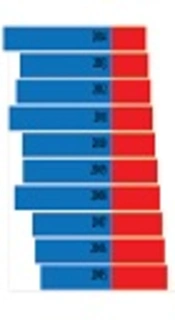
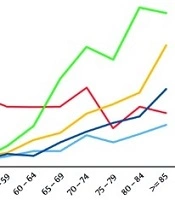
Assessing the statistics of cancer registry center in Iran shows that from 2003 to 2009, the incidence of ovarian cancer had an increasing trend in women since 2008; while after 2008, it had a decreasing trend, compared to the previous years (Figure 1). According to this statistics, 6078 cases of ovarian cancer were recorded during this period. The highest number has been reported in 2008 with 1096 cases and the lowest in 2003 with 736 cases (Table 1). The statistics of cancer registry center showed that the highest incidence in women's cancer was in 2008 with 4.25 per 100,000 women and the lowest in 2003 with 34.2 per 100,000 people. Also, the survey of central cancer registry showed the incidence of ovarian cancer in women from 2003 to 2009 in 30 provinces, as shown in Table 2. According to this table, during these seven years, the highest incidence was in Markazi province with 6.33 in 100,000 people in 2009 and the lowest incidence in the Kohkiloye Boyerahmad province in 2003 with zero reported case. This statistic shows that the central, north, and north-west provinces had the highest incidence, whereas the lowest incidence was in the east and southeast provinces. However, statistics show an increasing incidence in some of these provinces. The statistical significance of changes in trend diagram of age standardized incidence rate (ASR) of ovarian cancer per 100 thousand people was assessed by means of WINPEPI software. According to this diagram, changes in the trend of ovarian cancer occurrence in women is significant (Figure 2) (P = 0.048).
Table 1.
Incidence of Ovarian Cancer in Iran, According to the Statistics of Cancer Registry Center
| ASR | Frequency, (%) | Number of Cases | Statistics of Cancer Registry Center |
|---|---|---|---|
| 2.34 | 3.51 | 591 | 2003 |
| 2.88 | 3.59 | 736 | 2004 |
| 2.98 | 3.24 | 793 | 2005 |
| 3.18 | 3.22 | 838 | 2006 |
| 3.96 | 3.46 | 947 | 2007 |
| 4.25 | 3.23 | 1096 | 2008 |
| 4 | 3.30 | 1077 | 2009 |
Table 2.
Standardized Incidence of Ovarian Cancer in all Provinces of Iran From 2003 to 2009
| Province | 2009 | 2008 | 2007 | 2006 | 2005 | 2004 | 2003 |
|---|---|---|---|---|---|---|---|
| East Azarbayjan | 3.91 | 4.97 | 3.57 | 1.04 | 1.05 | 1.60 | 0.30 |
| West Azarbayjan | 2.78 | 2.16 | 3.23 | 2.25 | 3.68 | 2.88 | 2.37 |
| Ardebil | 4.03 | 2.02 | 1.45 | 3.18 | 0.41 | 3.76 | 0.83 |
| Isfahan | 4.36 | 4.45 | 5.01 | 4.16 | 3.11 | 2.72 | 2.27 |
| Ilam | 2.41 | 1.63 | 1.35 | 1.94 | 1.12 | 0.62 | 1.48 |
| Bushehr | 4.64 | 3.96 | 4.18 | 1.54 | 0.78 | 1.99 | 0.97 |
| Tehran | 5.70 | 4.52 | 4.29 | 4.25 | 3.76 | 2.96 | 5.80 |
| Charmahal and Bakhtiari | 1.22 | 3.56 | 4.47 | 3.91 | 2.77 | 0.88 | 0.68 |
| South Khorasan | 0.72 | 1.63 | 0.25 | 2.44 | 1.24 | 3.54 | 2.48 |
| Razavi Khorasan | 3.46 | 3.35 | 3.38 | 2.83 | 1.83 | ||
| North Khorasan | 2.89 | 1.65 | 1.12 | 0.57 | 0.52 | ||
| Khuzestan | 4.32 | 4.56 | 2.99 | 2.02 | 2.17 | 2.70 | 1.10 |
| Zanjan | 2.44 | 1.53 | 1.28 | 0.58 | 0.50 | 1.86 | 0.65 |
| Semnan | 2.11 | 4.52 | 2.93 | 0.48 | 2.44 | 2.85 | 1.44 |
| Sistan and Baluchestan | 1.02 | 1.05 | 0.60 | 0.73 | 0.34 | 1.23 | 0.36 |
| Fars | 4.61 | 3.75 | 4.12 | 3.23 | 2.36 | 1.94 | 2.40 |
| Qazvin | 3.45 | 2.75 | 2.69 | 4.17 | 2.40 | 2.01 | 2.88 |
| Qom | 1.91 | 2.18 | 1.49 | 2.35 | 1.91 | 1.37 | 2.53 |
| Golestan | 3.66 | 4.14 | 3.13 | 2.23 | 3.49 | 2.20 | 2.64 |
| Gilan | 4.54 | 2.88 | 3.31 | 1.85 | 2.33 | 2.56 | 1.44 |
| Lorestan | 3.15 | 4.07 | 3.13 | 1.84 | 2.43 | 2.48 | 0.65 |
| Mazandaran | 3.01 | 3.77 | 2.38 | 2.82 | 2.19 | 1.64 | 1.82 |
| Markazi | 6.33 | 1.33 | 3.01 | 2.42 | 3.11 | 1.68 | 2.27 |
| Hormozgan | 2.41 | 2.61 | 2.77 | 2.77 | 0.82 | 1.16 | 0.30 |
| Hamedan | 3.28 | 4.11 | 3.53 | 2.29 | 1.68 | 1.34 | 1.48 |
| Kordestan | 4.25 | 2.52 | 2.09 | 1.91 | 2.46 | 1.62 | 1.11 |
| Kerman | 3.86 | 2.14 | 2.12 | 2.31 | 2.52 | 2.70 | 1.48 |
| Kermanshah | 3.96 | 2.97 | 2.53 | 2.37 | 2.00 | 2.06 | 1.85 |
| Kohkiloye-Boyerahmad | 5.36 | 3.84 | 4.47 | 0.80 | 0.93 | 1.83 | 0.00 |
| Yazd | 5.18 | 4.86 | 2.23 | 3.03 | 4.09 | 3.21 | 2.82 |

Figure 1.
Trends in the Incidence of Ovarian Cancer From 2003 to 2009

Figure 2.
Chart of Significance of Variance Trend for Occurrence of Ovarian Cancer in Iran
5. Discussion
Ovarian cancer is the most lethal gynecologic cancer in women and includes 25% of the genital tract neoplasms in the United States (5, 24). Ovarian cancer is known as the fifth leading cause of cancer death among women in the United States (24). In Iran, it is the eighth most common cancer in terms of incidence, twelfth fatal cancer, and sixteenth considering the burden of disease attributable to cancer (3, 21). According to the study by Mousavi and colleagues (3), the age-standardized incidence rate of ovarian cancer in 2005 - 2006 in Iran has been reported 4.3 per 100,000 people (25); the results of this study showed as well that the prevalence of ovarian cancer is relatively high in Iran; the age-specific incidence rate in the current study was 3.37 that corresponds to this study. In most developed countries, the incidence and mortality of this type of cancer is declining, as the results of studies by Siesling et al. (26) and Penault-Llorca et al. (27), conducted in 2003 and 2006, respectively, showed that this type of cancer has lower prevalence in developed countries, which has been approved by the results of further studies in this areas, such as the studies by Smith et al. and Murthy et al. (26). These studies have shown that the incidence of this cancer is higher in developing countries, for example, in the study conducted in Tunisia and India, it was found that the incidence in these countries has rapidly increased over several years, as the annual percentage of changes was 7.4% in Tunisia and variable from 1.8 and 6.4% in India (4, 21, 28). The reason for this decline in developed countries versus developing countries can be the early detection with regular screening tests, such as ultrasound examination, and controlling cancer risk factors, such as obesity, smoking, immobility, poor diet, early menarche, and late menopause. According to the results of this study, the incidence of the disease is increasing in Iran, like other developing countries, which is consistent with the results obtained in the studies by Almasi and Farahmand in Shiraz, showing a growing rate of this cancer in Iran. In their study, the reason for this difference was reported to be the lower use of protective factors, such as oral contraceptives and the lower mean age of women, compared to the developed countries. The results of the study conducted by Zendeh del and colleagues in Iran, from the pathology centers, indicated an increasing trend in Iran, particularly in Yazd and Isfahan provinces, which is consistent with the data of cancer registry center (20). According to a study conducted in Semnan by Babaei and colleagues, the age-standardized incidence of cancers of the female genital tract increased over a 5 year period (76 - 80), but the highest incidence of the disease was estimated between the ages of 50 and 59 years, which is inconsistent with the statistics of cancer registry center (70 to 80 years), which might be due to the reduced exposure to risk factors and increased life expectancy (3, 20). According to Table 2, there was an increasing trend in Yazd, Kohkiluyeh and Boyer-Ahmad, Fars, Khuzestan, North and Razavi Khorasan, Tehran and Bushehr provinces from 2003 to 2008, while there was a downward trend in the Chaharmahal Bakhtiari and Qom in the incidence of ovarian cancer. Generally, Isfahan, Tehran, Yazd, East and West Azarbayjan had the highest incidence during this period. As a final point, with regard to Figure 1, we can conclude an increasing trend in the incidence of ovarian cancer that can be due to changing patterns of risk factors, such as lifestyle changes in the provinces and in the population, leading to changes in the incidence of the disease. Nevertheless, part of the increased incidence may be due to higher disease diagnosis, use of different data collection methods (population-based cancer registries since 2006), possible changes in diagnostic methods, raise in justification and awareness of physicians about the importance of reporting them and other possible causes, such as age or the cohort effect. Therefore, more etiologic studies are recommended in these areas.