Fulltext
The Full text is available in PDF.
International Journal of Cancer Management
The Official Journal of Cancer Research Center (CRC), Shahid Beheshti University of Medical Sciences
Authors
Background: Breast conserving surgery (BCS) followed by local radiotherapy is the standard treatment for early stage of breast cancer. Margin status may have an important impact on local recurrence and overall survival of patients treated with BCS, but this has not been defined adequately. In this study, we investigated the relationship between microscopic margins and outcome of BCS.
Methods: Three hundred eighty four patients treated with BCS between 1999 and 2010 were included in our study. All surgeries were performed by a single surgical team. Margins were defined as close if surgical margins were less than 2 mm, as free if surgical margins were more than 2 mm and as positive if malignant cells were present in one of the tissue edges. Demographic, clinical, and pathological factors as well as biological markers, recurrence, and survival rates were compared between the close and the free margins groups.
Results: The mean age of patients at the time of diagnosis was 54.2 years. There were 34 (9%) recurrence cases and overall survival was 128.7 months and ten years survival rate was 81%. There was no significant difference between the close and the free margins groups in terms of demographic parameters, tumor characteristics, biological factors (estrogen and progesterone receptor status) and lymphovascular invasion. Also recurrence rate did not differ significantly between these two groups.
Conclusion: Our study indicates that there is no significant difference between the patients with close and the free margins in terms of treatment results. There is no clear consensus in the surgeons’ community over the definition of acceptable margin width in BCS, so additional studies are required to find the right answer.
© 2011, Author(s). This open-access article is available under the Creative Commons Attribution 4.0 (CC BY 4.0) International License (https://creativecommons.org/licenses/by/4.0/), which allows for unrestricted use, distribution, and reproduction in any medium, provided that the original work is properly cited.
Akbari M, Mozaffar M, Heidari A, Zirakzadeh H, Akbari A, et al. Recurrence and Survival Effect in Breast Conserving Surgery: What are the Predictive and/or Prognostic Factors?. Int J Cancer Manag. 2011;4(2):e80729. doi:
Nisiri A, Omrani Pour R, Mahmood Zadeh H, Ramim T. Comparison of Surgical Margin After Breast Cancer Surgery Between Oncoplastic Technique and Conventional Breast-Conserving Surgery. Int J Cancer Manag. 2018;11(4):e9696. doi: https://doi.org/10.5812/ijcm.9696
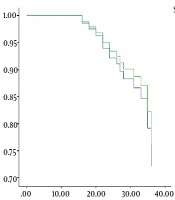
Akbari ME, Delshad B, Mousavizadeh M. Outcomes of Breast Conservation Surgery and Modified Radical Mastectomy After Neoadjuvant Chemotherapy in Patients with Locally Advanced Breast Cancer. Int J Cancer Manag. 2020;13(2):e14297. doi: https://doi.org/10.5812/ijcm.14297
Akbari M, Khayamzadeh M, Khoshnevis S, Nafisi N, Akbari A. Five and Ten Years Survival in Breast Cancer Patients Mastectomies vs. Breast Conserving Surgeries Personal Experience. Int J Cancer Manag. 2008;1(2):e80407. doi:
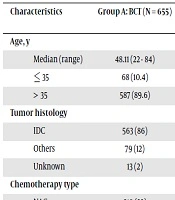
Houshyari M, Rakhsha A, Khademi M, Yousefi Kashi AS. A Comparative Matched Study of Breast-Conserving Therapy and Modified Radical Mastectomy in Iranian Women. Int J Cancer Manag. 2019;13(4):e92798. doi: https://doi.org/10.5812/ijcm.92798
Last Update: 1 month ago
Last Update: 1 month ago
Last Update: 1 month ago
Last Update: 5 days ago