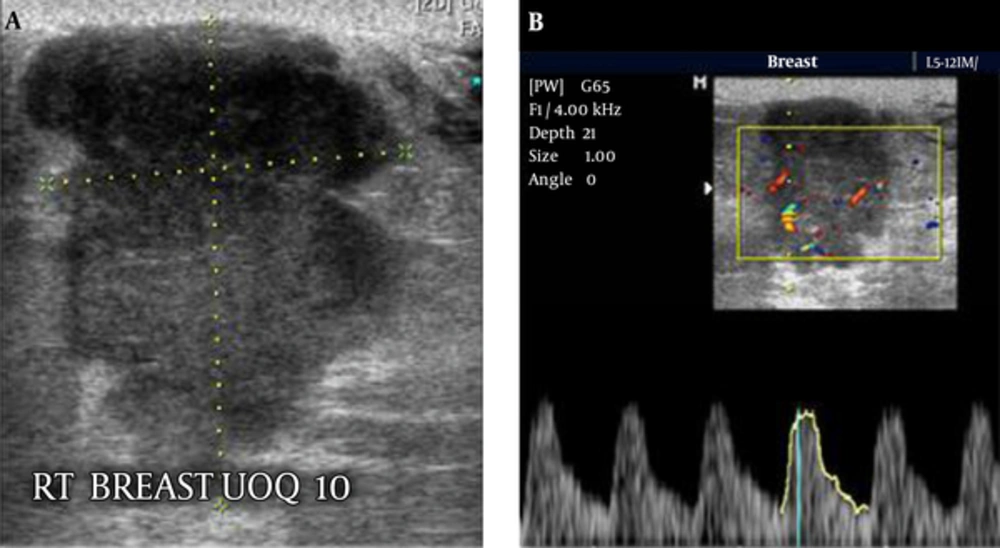
In the present study, the comparison of B-mode ultrasound findings between malignant and benign lesions revealed that malignant tumors were much larger. In addition, the main characteristics of malignant tumors included not-circumscribed margin, solid-cystic component, and mixed echogenicity. These findings are consistent with previous studies (
1-
3,
11).
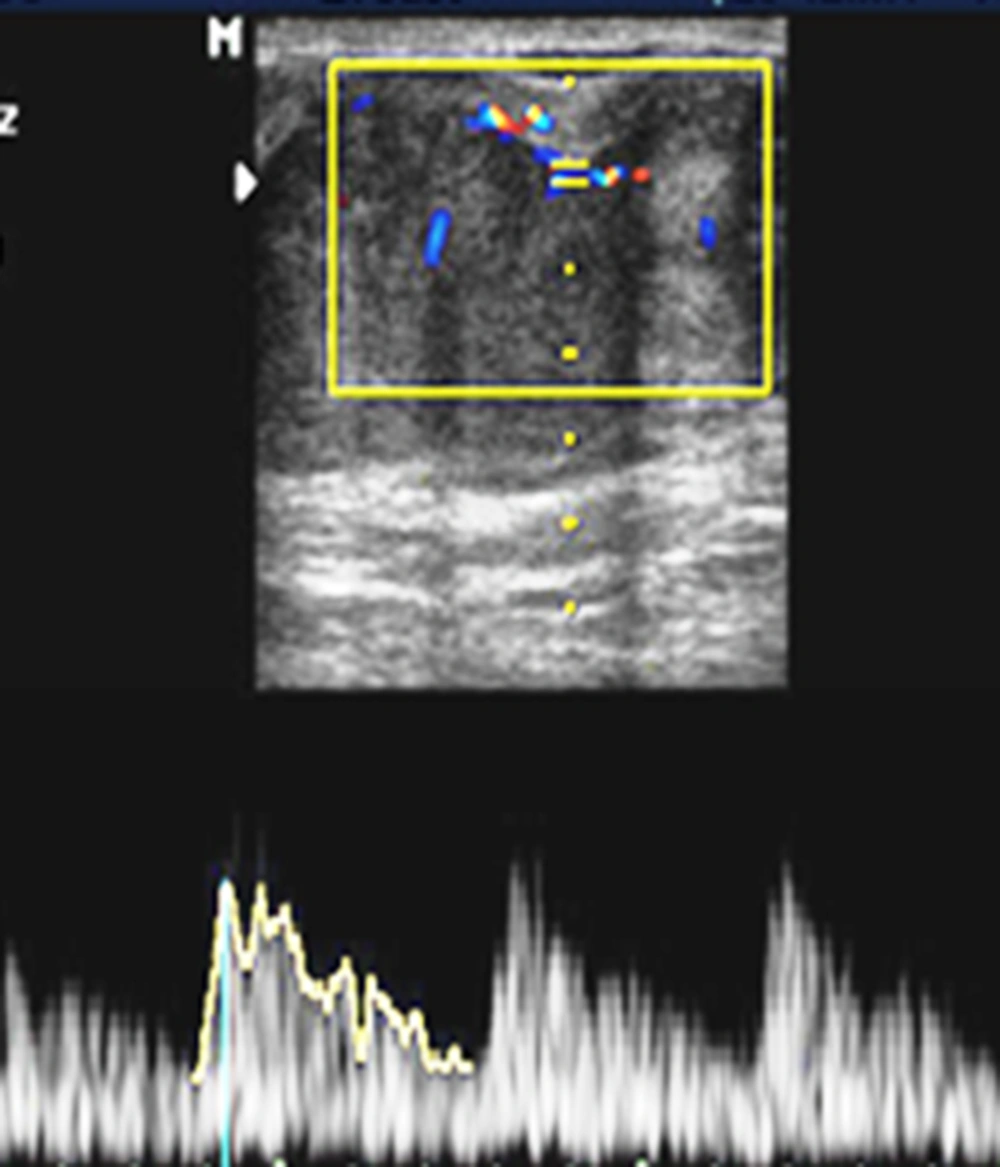
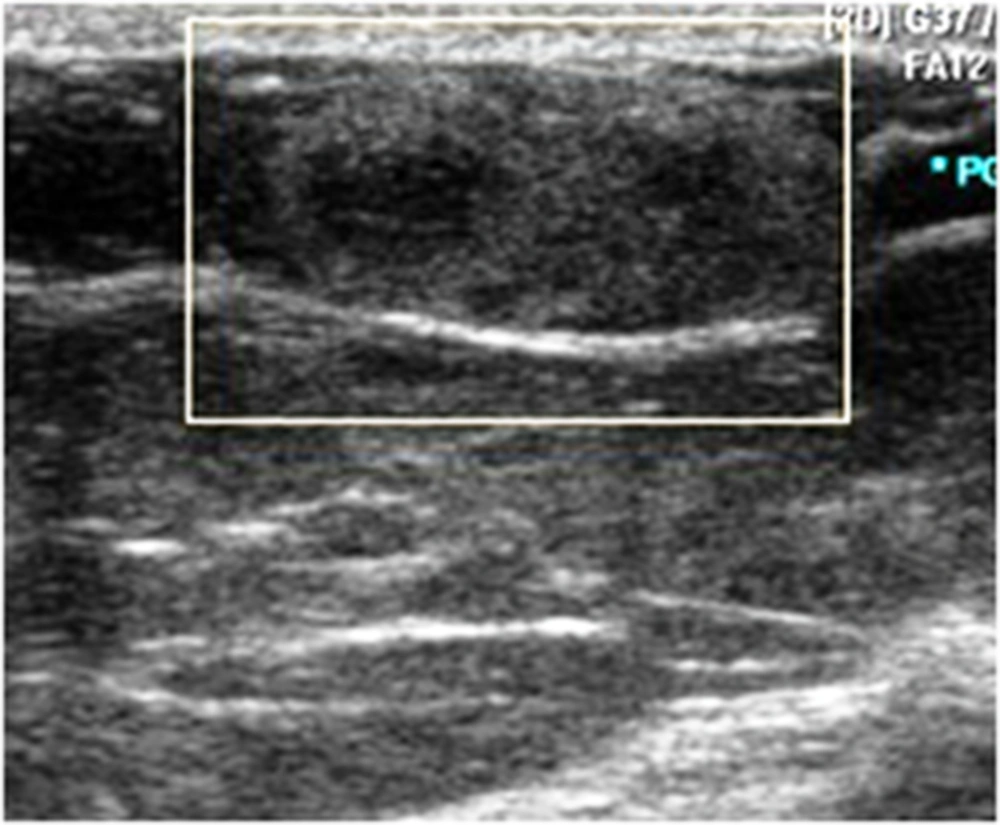
Color Doppler helps to detect neovascularization in malignant tumors and may help to distinguish them from benign breast masses (
5-
10). In the present study, hypervascularity and detectable flow were more common in the malignant lesions. Similarly, in a study conducted by Grischke et al. central blood flow was detectable in 71% and 6.6% of malignant and benign breast masses, respectively (
8). The positive predictive value (PPV) for malignancy detection based on the combination of breast B-mode ultrasound findings and color Doppler patterns was reported 92% (
9). A lesion vascularization status can be an indicator of malignant potential, metastasis potential, and invasiveness. Moreover, it may provide information about response to treatment and prognosis. Lee et al. studied 52 malignant tumors and 32 benign breast lesions, and found that the presence of high-flow in the early stages of breast tumor is associated with the higher probability of metastasis to the axillary lymph-nodes (
5). It was classically thought that malignant breast tumors have stronger color Doppler signals compared to benign lesions (
13,
14). However, subsequent studies showed that this is not always true. In general, vascularization is increased in high-grade high-cellular malignant tumors, which have special feeding vessels helping them grow and invade, while low-grade malignant tumors may have no detectable vascularity on color Doppler examination (
11,
12). On the other hand, some studies have reported that there is an overlap in color Doppler findings of hypervascular benign masses and malignant tumors (
11). This is not unusual, and makes it difficult to differentiate malignant tumors from benign lesions just based on color Doppler pattern. However, it seems that the combination of B-mode ultrasound and color Doppler findings can increase the sensitivity and specificity of ultrasound examination for determining the nature of breast tumors (
12).
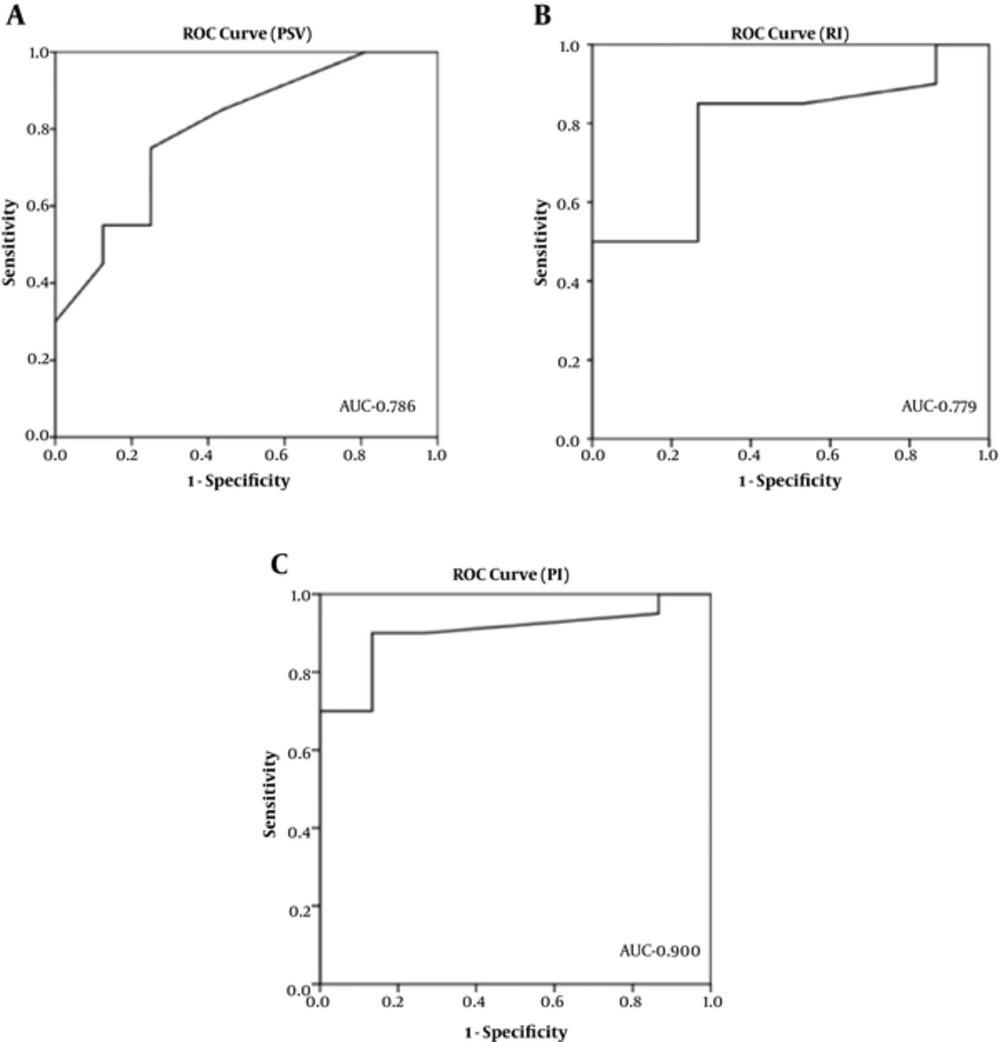
In this study, the mean values of PSV, RI, and PI were significantly higher in malignant tumors compared to benign lesions. In addition, all of these indices, particularly PI, had high sensitivity and specificity for differentiating malignancies from benign lesions. The findings of this study are similar to some previous studies. For example, Chao et al. reported that PSV, RI, and PI are higher in carcinomas; however, unlike our investigation, they did not find any cut-off point to distinct benign and malignant tumors according to these characteristics (
3). Studying on 70 breast masses, Stanzani et al. demonstrated that RI ≥ 0.73 is significantly predictive of malignancy (
15). Grischke et al. demonstrated that the presence of blood flow in tumors is a highly specific finding (specificity: 93%) for differentiating malignant from benign breast masses. Other Doppler parameters (such as RI ≥ 0.80) minimally increased the specificity. In their study, sensitivity, specificity, and positive predictive value of Doppler examination to detect malignant breast tumors were 80%, 90%, and 93%, respectively (
8).
4.1. Conclusions
In this study, we aimed at investigating the diagnostic accuracy of spectral Doppler ultrasound to determine the malignant potential of breast masses.
In conclusion, although we cannot reliably categorize a breast mass as malignant or benign only based on Doppler ultrasound, this study emphasizes that color and spectral Doppler entail additive information to B-mode ultrasound examination in order to suspect breast malignancies.