
1. Context
1.1. Introduction on Emerging Cancer Surge
Neoplasms are the second leading cause of death in the world. Incidence rates of all types of cancer have increased in most countries during recent decades. A recent report of international agency for research on cancer (IARC) has stated that about 14,000,000 patients with recent diagnosis of neoplasms were detected in 2012 and more than 8 million people have died because of cancer. It also predicted that by the end of 2030, the number of new cases of cancer will be about 22 million and subsequently more and more deaths would be encountered (1).
Almost 80 percent of this increase in cancer related deaths will be disproportionately in less developed countries like the Middle East region. Incidence in this area is expected to double by the middle of 2020. This cancer surge is sure to be a shock for people (1). Outside the Middle East borders, there are also some regions that have similar cancer wave: Algeria`s cancer crisis is an obvious example of this transition. Between 2008 and 2013, the number of people suffering from all types of neoplasms increased by 50% in the country (1), but this review discusses evidence related to the current status on cancer prevention, in the Middle East region as a great part of the world which has 3.05% of total population of the world (1).
1.2. Definition of Physical Activity
PA is any motion made by muscle contraction and always increases energy consumption beyond the basal level. Exercise is one type of PA which has a specific format and plan, with aim of achieving better physical fitness. Exercise has two main types: isometric or static, and isotonic or dynamic. From another standpoint, it includes aerobic and anaerobic types. Aerobic exercise often is accompanied with higher heart rate and more energy consumption such as walking, running, swimming, or bicycle riding. Anaerobic exercise may increase muscle size and strength. Some of activities related to this type are resistance training or weight lifting. Amount and volume of PA has three indices: intensity, duration and frequency. Frequency means the number of sessions during a limited period, duration is the amount of time spent in each session and intensity is the rate of energy consumption per the metabolic equivalent of task (MET). One MET is our energy expenditure rate in sitting position, and is equivalent to an oxygen uptake of 3.5 mL per kg body weight per minute for an adult of 70 kg. Based on intensity definition activities are categorized into three classes: light [1.6 - 2.9 METs], moderate [3.0 - 5.9 METs], and vigorous (high) intensity activities [> 6 METs] (2).
PA has four sub-groups: vocational, household, transportation, and recreational. Occupational activities are any activities which are job-related like lifting, walking and pushing. Household activity are generally performed in house. Transportation consists of travelling some distance like going on foot, or bike riding. Recreational activities include activities that are done in pastime, such as running, jogging, biking or playing (2) (Table 1).
Table 1.
Some Examples for Moderate and Vigorous Intensity Activities (3)
| Moderate Intensity Activities | Vigorous Intensity Activities | |
|---|---|---|
| Home activities | Mowing the lawn, to broom yard or house, garden maintenance | Digging, carrying and hauling, carpentry |
| Sports | Golfing, badminton, downhill skiing, double tennis, volleyball | Soccer, field or ice hockey, cross-country skiing, singles tennis, basketball |
| Exercise and leisure | Walking, Yoga, dancing, leisurely bicycling, ice and roller skating, horseback riding | Jogging or running, fast bicycling, aerobic dance, circuit weight training, swimming, material arts |
| Occupational activities | Walking and lifting as part of the job (farming, machine repair, custodial work) | Heavy manual labor (forestry, construction, firefighting) |
1.3. Main Mechanisms of Physical Activity against Cancer
Although we know there are complex interactions of many various factors in preventing cancer, the definite mechanism of neoplastic process prevention is still ambiguous. Change in energy consumption, reducing body mass index (BMI) and insulin resistance are the most important causes (4). For example, about endometrial cancer it is notable that 60% of disease is due to obesity and risk in overweight people is 3.5 times greater than normal population. So exercise can play a crucial role indirectly through weight loss (5), but weight loss does not explain all impacts of PA in cancer prevention (4). Sedentary lifestyle has inevitable effects on increasing risk of neoplasm by several mechanisms including changes in estrogens and testosterone level, higher resistance to insulin, producing inflammation and compromised immune function (6). According to some review studies physical inactivity contribute to 9% of breast and 10% of colon cancer cases in European countries (5).
PA also can alter tumor initiation by modifying mechanisms which activate carcinogens, particularly by enhancing activity of cytochrome P450 system. This preventive process may also happen due to enhancing selective enzymes responsible in detoxification pathways, like glutathione-S-transferase. Along with regulating processes of tumor progression, exercise has a preventive role by inhibitory effects on promotion and progression stages of carcinogenesis, like modifications in cell proliferation, apoptosis and differentiation, and suppressing angiogenesis (7). About the relationship between genome instability and obesity we can refer to a comprehensive study which showed that p53, as a main tumor suppressor, can trans-activate genes related to coordinating the two major pathways of energy production (8).
Among possible mechanisms for the observed relationship of PA with obesity and cancer, traditionally there was a focus on sex hormones. However, new markers have recently been reported, like insulin resistance, and some changes in level of other hormones particularly leptin, increased inflammation and compromised immunity. PA and energy balance can affect all of aforementioned markers (6).
Sex Steroid Hormones. Women with high estrogen level (unopposed by progesterone) are at the higher risk of endometrial cancer and those with simultaneously high androgen and estrogen level are at higher probability for developing breast cancer. PA, due to its effects on age of menarche and regulation of menstrual function, has an important role in reducing breast cancer risk. Also in postmenopausal females, PA can decrease total serum level of all sex steroid hormones. In fact, the important effect of PA is because of changes in body composition, which means women with higher PA level have higher level of sex hormone binding globulin (SHBG) and lower sex steroids, so they tote lower risk of cancer in their life (6).
Inflammation. Chronic systemic inflammation is strongly associated with developing cancer. Inflammatory factors, such as C-reactive protein (CRP), serum amyloid A, interleukin-6 (IL-6) and TNF-α are now being noticed as cancer activity markers (6).
Metabolic Hormones. Insulin resistance or even impaired glucose tolerance could result in higher risk of breast, colon, pancreas, endometrium, and stomach cancers. Insulin as hormone has a facilitating effect on tumor initiation by decreasing apoptosis and can change in some protein synthesis process including SHBG with aforementioned effects on sex steroid hormones availability. Even acute episodes of PA are often accompanied by improvement in glucose uptake and subsequently declining in insulin resistance for a few hours. Also we can declare that the higher-intensity exercise is more effective than exercise of longer duration (6).
1.4. Physical Inactivity, a Modifiable Risk Factor
Nowadays a large number of adults are concerned about developing cancer. Lack of PA and obesity is always among top risk factors. As a recent study on more than 800 Irish respondents in 2015 showed, the majority of people properly know that PA has preventive effects on cancer development (9). Based on the Irish research for the non-smoker part of population, the most important modifiable risk factor is physical inactivity. One-third of all deaths according to cancer are directly attributed to diet and PA habits and also one-third are because of tobacco exposure (5).
A large cohort study in Iran found that there is a strong association between higher total mortality and increased body size at ages 15 or 30 in both males and females. Adolescent obesity is more associated with cancer mortality, while early adulthood obesity is accompanied by cardiovascular mortality (10). In fact, obesity, sedentary lifestyle and two problem regarding diet (first one: the increasing trend toward fast food consumption can lead to its worldwide harmful effects, and the second one: poor quality fast food because of government inability to efficiently control on dietary material production) are the most serious etiologies of cancer surge in the Middle East region (3, 11, 12). Moreover, an increase in smoking has been seen in this area, for example in some Arabian countries in this area between 1990 and 2012 smoking rate increased by nearly 500% (1).
The majority of cancer risk factors are not modifiable factors and even comprehensive data on such factors are not appropriate recommendations for population (13). Because of accumulating evidence, there is an increasing interest in PA among other modifiable risk factors for primary cancer prevention (14). It has been earlier confirmed that regular PA decreases the risk of developing many degenerative diseases including some types of neoplasms (15). During last 20 years many epidemiological researches on this topic has generated a strong body of evidence describing the benefits of PA in relation to cancer risk (16). Moreover, in European studies the PA role on mortality has been confirmed. However, there is no consensus on the effects of other types of activity on morbidity and mortality in adults, especially in developing countries. Some researchers believe PA has long-term effects on morbidity, others state that this role decreases after the 4th decade (10). Eventually the most important point is that since a large proportion of people in developing countries have sedentary lifestyle, even a small risk may be associated with high attributable fraction. Thus, PA represents a powerful public health measure for reducing cancer risk (17).
2. Evidence Acquisition
2.1. Search Strategy and Study Selection
A comprehensive search was performed in three major databases including: Cochrane, Pubmed and Trip database (up to January 2016) by two independent investigators. The keywords were “cancer/neoplasm”, “prevention”, “exercise/physical activity” and “Middle East” within titles, MeSH and abstracts. Moreover, subtype of cancer including: lung, breast, colon, prostate and bladder cancers were added to search box. We limited our results to English-language and human studies. Resulted 97 titles were reviewed. Among them, thirty-two abstracts were relevant. Fourteen articles were excluded and eighteen were selected by two reviewers. In cases of disagreement, decision was made by a senior (third) author. Full texts of all eighteen studies were obtained and reviewed by both authors. Cancer preventive effects (as relative risks) were extracted and summarized in Table 2, but due to heterogeneity in different designs of included studies and limited number of studies for each cancer type in the Middle East region, meta-analysis for pooled data was not performed (Figure 1).
Table 2.
Risk Reduction and PAR for Different Cancer Types
| Cancer Site | Breast | Colorectal | Endometrial | Prostate | Lung |
|---|---|---|---|---|---|
| RR, % | 15 - 70 | 30 - 50 | 35 - 40 | 10 - 20 | 20 - 50 |
| PAR, % | 9 - 20 | 17 - 19 | 24 | 14 | 21 - 24 |
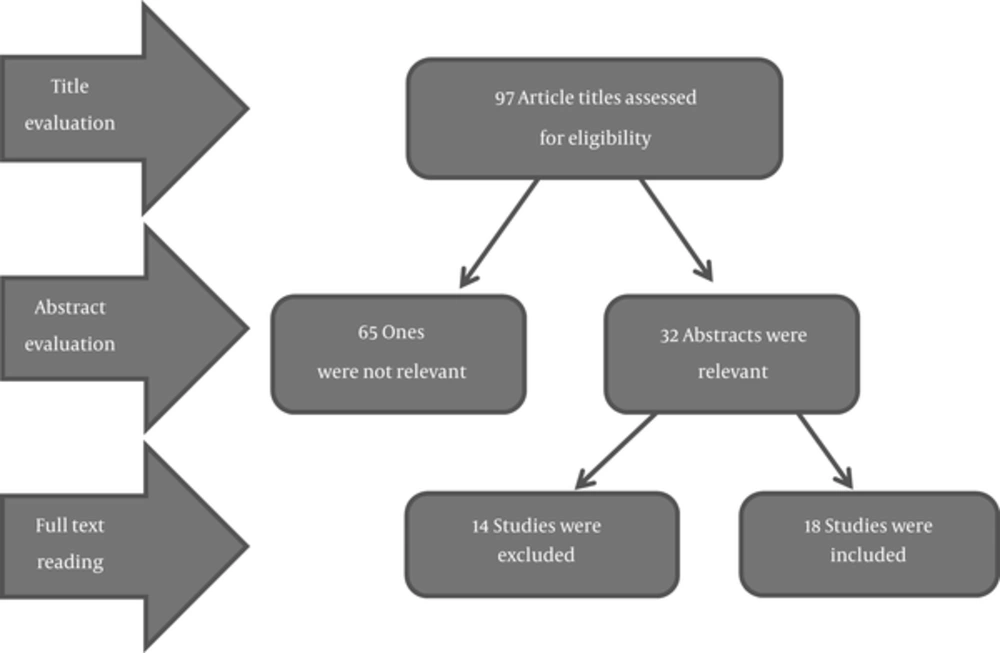
Figure 1.
Flow Diagram of the Study
2.2. Assessment and Measurement of Physical Activity
As this strong relationship between PA and cancer prevention is becoming more comprehensive, essential needs for further investigation would be defined more clearly (14). But assessment of PA is still the most important methodological limitation in this issue. Although nowadays we know much about this relationship, particularly on preventing colon and breast cancers, huge uncertainty exists regarding the strength, consistency and dose-response of the associations between PA and most neoplasm types (16).
Measurement of PA is a complex process and assessment of its validity is very challenging. There are various methods for measuring PA, each of them has some specific limitations. PA measurement has two types of methods: subjective methods and objective ones. Subjective methods are more convenient and inexpensive in large samples. These methods are self-administered or taken by interview. Some of them are questionnaires, recalls, diaries, and logs. Main limitation of this type is recall bias, which means uncertainty on subjects` reports. Objective methods can be more precise on classification of different PA levels. New methods like personal computers (PC), smart phones or other electronic media devices are increasingly used. They largely improve PA measurement. It should be noticed that objective methods are expensive and inaccurate in measurement of upper limb activities and aquatic exercises (2).
3. Results
3.1. Risk Reduction for Various Cancer Types
Interventional studies, almost all of which have been conducted in developed countries, demonstrated that physical activity can decrease breast cancer incidence up to 70% and decline colon cancer risk about 30% - 40%. Their results all suggest 30 - 60 minutes of medium to high intensity PA in a day. The more prominent result is a dose-response relationship between higher levels of PA and further risk reduction (14). Some other studies suggest that obesity might alter the relationship between cancer prevention and PA. In addition to cancer prevention, PA plays a great role in weight reduction through modulation of energy consumption and subsequent cancer risk reduction (7). This issue is more important when we know that based on IARC reports, 25% of all cancer cases of the world in 2007 were caused by overweightness or obesity, and a sedentary lifestyle (6).
Breast and Colon Cancers. Some interventional studies have showed that PA and healthy diet can change biomarkers of developing cancer. In a review in 2007, investigators detected a large decline in serum level of estrogen, testosterone, and insulin after a 1-year period moderate intensity exercise program (45min per day, 5 days per week) in overweight postmenopausal women who have sedentary lifestyle. Also they showed a big decrease in colon crypt cell proliferation in middle-aged to older men who had closely adherence to a 1-year exercise program consisted of 60 min per day, 6 days per week. Therefore, lifestyle modification has an inevitable impact on cancer prevention (6). In a review article with 48 studies on breast CA, investigators found a powerful negative relationship between postmenopausal breast cancer and PA, with risk reductions about 20% - 80%. On the other hand, about premenopausal breast cancers, there was no strong evidence. Totally for both pre and post-menopausal breast cancers, preventing effect of PA was equal to 15% - 20%. Also a dose-response relationship was detected in the majority of studies included in this review. A trend analysis showed a 6% breast cancer risk reduction (95% CI = 3% - 8%) for each additional hour of PA per week (18). Another review evaluated the preventive effect of PA on site-specific cancers and found this relationship about colon and breast cancer. The best properties of PA including exercise type, intensity, duration, and frequency is not so clear, but it is obviously age and gender-specific (19).
Prostate Cancer. About prostate cancer some researchers stated that there is no risk difference among various levels of PA in population and some others have documented even a small increased risk, but the majority of studies demonstrated a significant small protective effect for PA (20). It should be noticed that despite intensive exercise, PA in leisure and vocational activity has no protective impact (21).
Bladder Cancer. PA also may have protective role on developing bladder cancer through improving immune system and decreasing chronic inflammation. PA can also be preventive through obesity control against bladder cancer. In a meta-analysis in 2013 with a total of 15 studies (more than 5 million subjects and about 27,000 cases of bladder cancer), PA was associated to declined risk of bladder cancer [relative risk (RR) = 0.85, 95% CI = 0.74 - 0.98]. Results were similar for cohort studies and case–control studies. Findings were also comparable for recreational and occupational PA, and they were largely consistent for moderate and vigorous activity (22).
Lung Cancer. About lung cancer a meta-analysis including 28 studies in 2016 declared that PA can decrease the cancer risk in former and even current smokers. Results were consistent among different geographical groups of people. The summary analysis showed a negative relationship between lung cancer risk and PA (RR = 0.76; 95% CI: 0.69 - 0.85). Identical results were seen for all cancer subtypes, like adenocarcinoma, squamous carcinoma and small cell type. However, due to lack of studies including never smokers, there is a need for additional research in this field (23). In one word we can say that based on existed evidence PA can decrease the overall risk for lung cancer about 20% - 50% in men and 20% - 30% in women, and there is a strong dose-response relationship (24).
3.2. Current Conditions in the Middle East
The Middle East region consists of 16 countries: Egypt, Turkey, Iran, Iraq, Bahrain, Lebanon, Oman, Qatar, Saudi Arabia, Syria, Yemen, Cyprus, Palestine, Jordan, Kuwait, and United Arab Emirates. As we said before, there has been a new emerging surge of cancer for the Middle East region to occur in last 2 decades. The number of cases suffering from all cancer types would be expected to double by the year 2020, which equals a growth rate of nearly 3 times greater than that of the rest of the world (1).
Regarding the unique culture of this area and traditional tribal system, we may expect a lower cancer incidence rate comparing to other countries. For example alcohol consumption in these countries due to serious prohibition in Islam religion is much lower than the other parts of world, also about cigarette smoking there is a socio-cultural prohibition especially for adolescents. Then we could say two of the most powerful cancer risk factors are less popularized in the region. However, there are many important factors contributing to this high incidence rate including new emerging westernized diet, more common sedentary lifestyle despite that of past decades with high PA in rural lands, less prohibition on smoking due to cultural transition, agricultural and industrial pollution, lower compliance of people (about one fourth) for contributing in regular cancer screening programs, etc. (1). For example, in Saudi Arabia about three out of every four people do not go for their regular cancer screening, despite its low costs. Another issue is that women are not allowed to do their pop smear screening unless they are married. Also in these countries it is quietly unacceptable to perform breast examination or mammogram by a male doctor (1).
Another example is in Lebanon. Through a six-year follow up study (1998 - 2004), a sharp rise of the adjusted age-standardized rates (ASR) in total incidence of cancer in both sexes had been detected (an approximate increase of 60%), especially for lung, bladder and breast cancer (25). In Iran according to some cancer registries, there have been a large number of gastric and esophageal cancer cases during recent decades especially in north provinces. Among all causes of mortality in this country, cardiovascular disease and cancer totally account for more than 70% of non-traumatic deaths (17).
Unfortunately, in some of the Middle Eastern countries, population-based cancer registries are not so precise to estimate global disease burden (GBD) and attributable risk (AR) of PA as a preventive measure in cancers. According to one of the large studies in Iran about 51,000 new cases of cancers are diagnosed annually and 35,000 cancer related deaths occur (26). The common specific causes of death were: cardiovascular disease (52%), consisted of mainly ischemic heart disease (IHD) and cerebrovascular accident (CVA), followed by cancer (21.5%) including stomach, breast and esophagus cancer as the most common sites for cancer in the country. The most fatal cancer types in Iran are stomach, esophagus, breast and lung (10). In Iran the incidence rates for esophageal and stomach cancer are much higher than the world average. On the other hand, rate of lung, breast and cervix cancers is lower than the world rates (27). According to a 5-year cohort study which began in 2004 on more than 50,000 adult persons, 38% of all types of cancer in Iran are in gastro-intestinal system, while in the US this proportion is less than 20% (10) and about 19% in Jordan and Egypt (26).
4. Conclusions
4.1. Summary of Reviews
As mentioned earlier, a large review demonstrated that a 1-year program of moderate intensity exercise can lead to 20% - 80% risk reduction for post-menopausal breast cancer (18). Another review study found a definite risk reduction for colon cancer (40% - 50%), endometrial (35% - 40%) and breast cancers (40% - 50%). There is also a probable risk reduction for other cancers including ovary, lung or prostate cancer, but no certain result is available for gastric, hematologic, esophageal, pancreatic or other genitourinary malignancies (14, 28). In one of the largest reviews, researchers declared that population-attributable risk (PAR) of PA in European males is 17%, 21% and 14% for colon, lung and prostate cancer, and in women 19%, 20% and 24%, for colon, breast and lung cancer, respectively. Approximately 9% - 19% of all cancer cases are attributable to insufficient PA (16). Specific parameters (RR and PAR) for the PA impact in preventing common cancer types are shown in Table 2 including breast, colon, lung, bladder and prostate cancers, but the preventive effect of PA is less consistent for cancers of the stomach, pancreas and kidney; however it should be mentioned that the most powerful risk reduction by means of PA is about breast and colon cancers (5).
Physical inactivity, along with diet, tobacco and alcohol, is the crucial issue through which we can improve the primary prevention of cancer. Physical inactivity is a largely modifiable risk factor that can greatly decrease the risk of many cancers (16). Those who are engaged in a regular moderate-vigorous intensity PA have lower cancer risk. As we said before the main risk reduction are about colon cancer (22%), breast cancer (75%), diabetes (35%) and cardiovascular conditions (49%) including IHD and CVA (29).
In addition, PA is a pivotal way to maintain a healthy weight, and as mentioned before overweight people are at higher risk for developing some types of cancer including esophagus, colon, rectum, breast, endometrium and kidney (5). In brief, regular changes in diet is a difficult but efficacious method to reduce cancer. Moreover, high intake of some food may result in elevated risk of some cancers, including red meat consumption and colorectal neoplasms. Also healthy diet is important in lowering the cardiovascular disease risk (30).
4.2. Some Recommendations
To better deal with the epidemic surge of cancer in developing countries, preventive measures should receive the highest priority and some economic decisions like increasing price of fast foods, e.g. by means of extra tax, helping to provide more affordable and easily accessible subsidized healthy food and allocating more budget on measures which can promote exercise among urban people, e.g. public sports facilities and bikeway. Also some creative policies for cessation of smoking and excessive alcohol consumption, strict quality control and labeling of food products and implementing more accessible cancer screening programs are necessary. Since a large proportion of people have sedentary lifestyle, exercise is a unique powerful risk factor. PA except for its role in primary prevention indirectly -due to better lifestyle- can result in higher compliance of age-specific cancer screening programs and help to early detection of common neoplasms (Secondary prevention) (8, 11).
European evidence suggests 30 - 60 minutes of moderate or vigorous-intensity activity, at least 5 days per week as a public health recommendation (16). Also according to guidelines of American Cancer Society, 150 minutes of moderate activity or 75 minutes of vigorous activity per week is strongly recommended to have primary preventive effect of PA against large part of diseases especially cancer (5). So public health policymakers should strongly support PA as a powerful component of cancer prevention programs (16). For example, we can make people more physically active by easier access to beautiful sidewalks and parks, providing enjoyable environments for PA in schools and worksites, laws for decreasing reliance on automobiles and limiting availability of electronic media devices.
We should be aware that nutrition, along with exercise is the basic point of healthy life. Some helpful measures are: providing more affordable fresh foods in schools and worksites and reducing availability of fast foods and routine drinks especially in schools or universities. We should know that spending longer time in worksites and having more multiple wage earner households decrease the available time for making healthy foods, so it can result in higher consumption of high-calorie fast foods (5).
In short, some pivotal measures like avoiding tobacco exposure, consuming a healthy diet and staying physically active can substantially decrease one’s risk of cancer. In addition, these measures are greatly protective against IHD, CVA and diabetes (5). All of us could easily limit our sedentary behaviors such as excessive lying down, prolonged sitting or watching TV, overuse of smart phones or other electronic devices (5) (Table 3).
Table 3.
Recommendations to Avoid Sedentary Life (3)
| Recommendations | |
|---|---|
| - | Limit time spent watching TV or other forms of screen-based entertainment. |
| - | Limit using your smartphone to a specific and decreasing amount of time. |
| - | Dance with your spouse or fiends as a routine schedule in a week |
| - | Use stairs rather than an elevator |
| - | Walk to visit coworkers instead of sending an SMS or email |
| - | Use a stationary bicycle or treadmill when you do watch TV |
| - | Plan active vacations rather than only driving trips |
| - | Take an exercise break at work to stretch or take a quick walk |
| - | If you can, walk or bike to your destination |
| - | Exercise at launch with your coworkers, family or fiends |
| - | Join a sports team/group. |
| - | Wear a pedometer or set your smartphone (if it has any pedometer program) to calculate your number of daily steps and try to increase it every week. |
Finally, it should be mentioned as WHO has declared in its recent cancer report on 2016, “Priorities for cancer prevention differ on national.” Therefore, appropriate policies are necessary to improve knowledge of people about cancer. Also policymakers should decrease public exposure to carcinogens in the environment, and ensure that precise and sufficient information is provided for all levels of society and support them to adopt and implement healthy lifestyles (30). Again we seriously emphasize that based on evidence reported by institute of health metrics and evaluation (IHME), the unique way to deal with new cancer surge is certainly improving health information registry systems to better evaluate present conditions and capture more cancer cases which are currently lost (1).
4.3. Limitations
As stated above, PA assessment is still the most important methodological limitation in this topic. There are other limitations in this type of studies including: lack of adequate control for confounding biases and lack of knowledge on precise mechanisms of cancer prevention. Also there is a huge uncertainty regarding the strength, consistency and dose-response of the associations between PA and most neoplasm types. This might be due to intricacy of the variable (PA) and immature understanding of the pathogenesis of most neoplasms. Therefore, we can obviously state that there is an inevitable need to perform interventional studies and more precise observational ones to better manage these methodological limitations (31).
